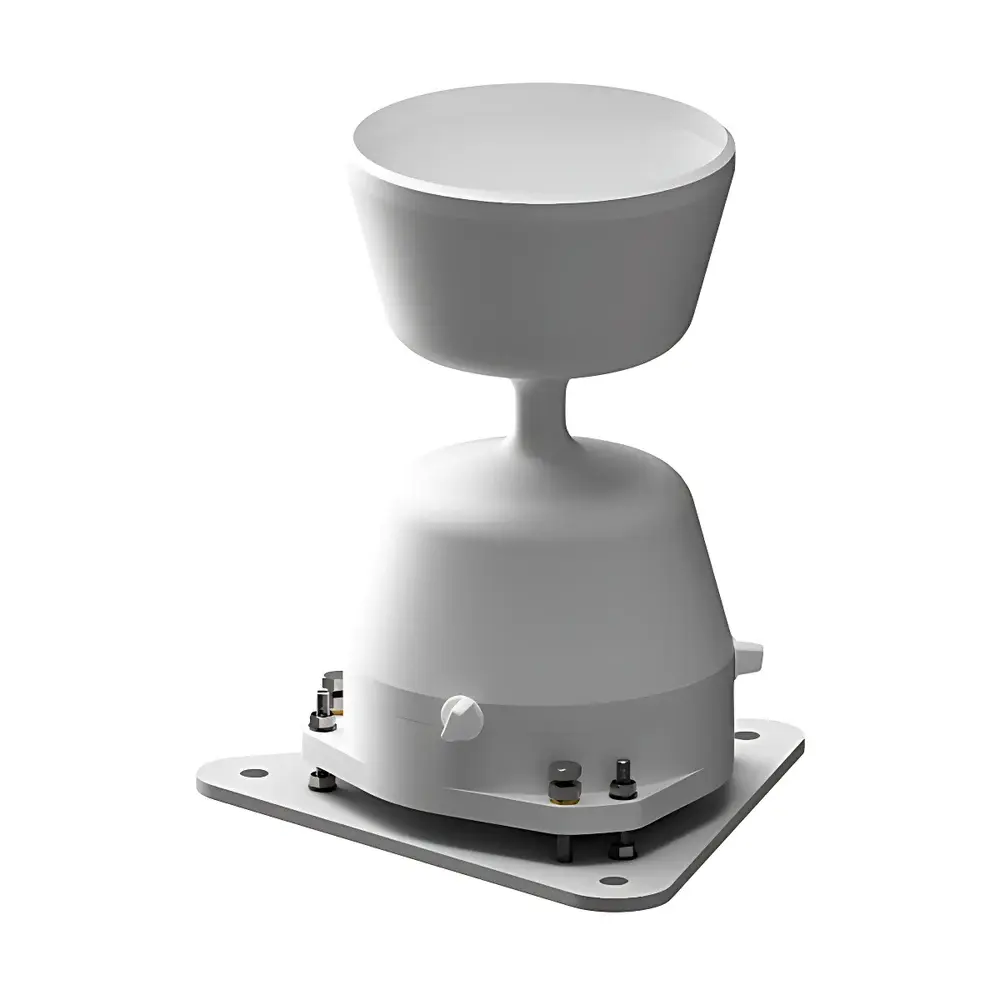
RPR Kalyx-RG Aerodynamic Tipping Bucket Rain Gauge
| Brand | RPR |
|---|---|
| Origin | United Kingdom |
| Model | Kalyx-RG |
| Measurement Principle | Aerodynamic tipping bucket |
| Output | Dry contact closure (SPST) |
| Resolution | 0.2 mm per tip |
| Accuracy | ±1% at 120 mm/h rainfall intensity |
| Maximum Rainfall Rate | 0.0–2000 mm/h |
| Operating Temperature | 1–70 °C |
| Funnel Diameter | 12.7 cm |
| Funnel Area | 127 cm² |
| Height | 225 mm (body only) |
| Weight | 700 g (body only) |
| Compliance | Meets UK Met Office 5-inch standard funnel geometry |
| Power Requirement | None (passive mechanical operation) |
Overview
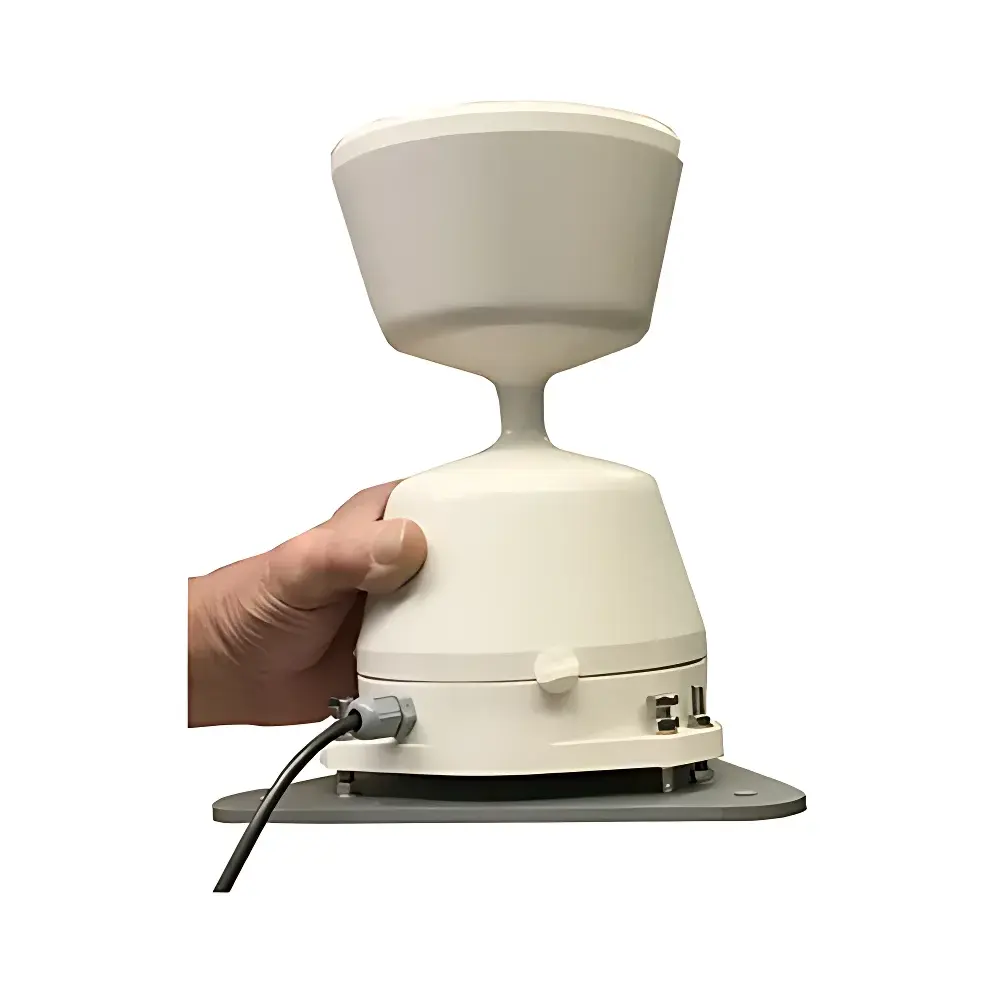
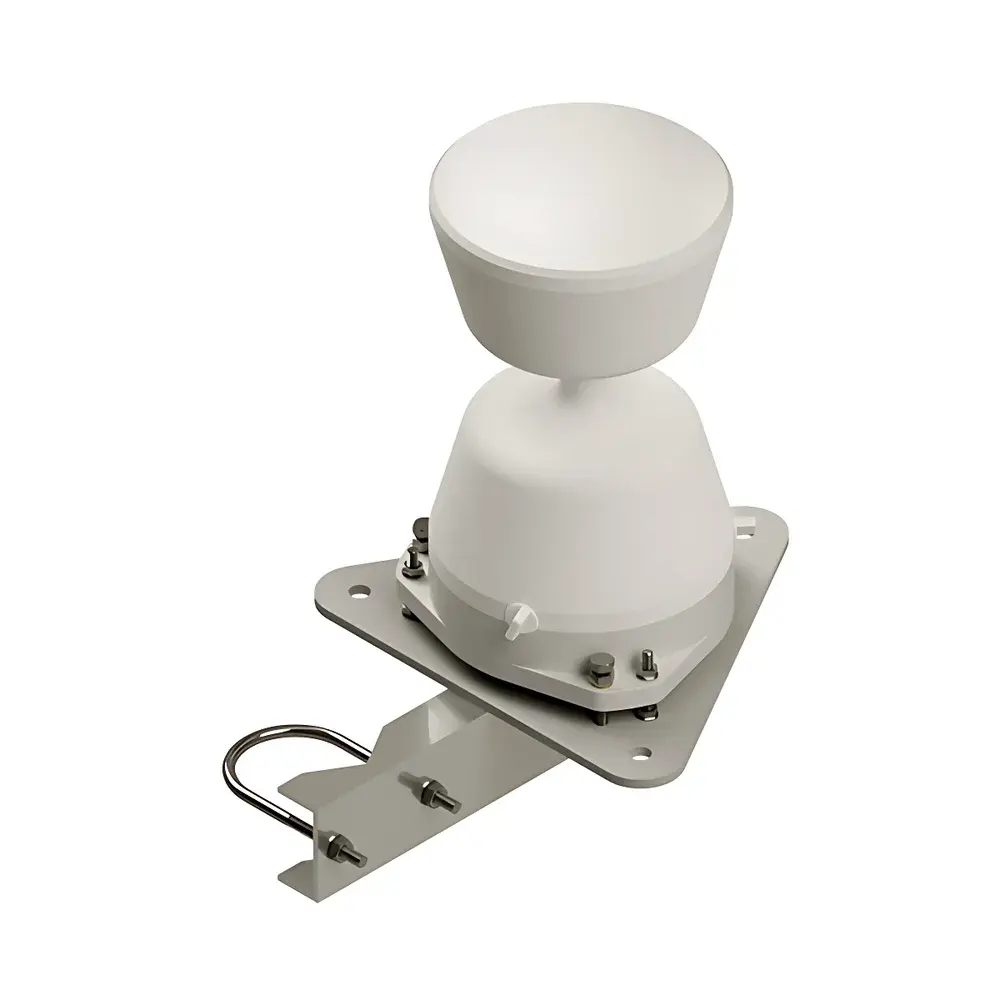
The RPR Kalyx-RG Aerodynamic Tipping Bucket Rain Gauge is a precision-engineered, passive precipitation measurement instrument designed to mitigate wind-induced undercatch—a well-documented source of systematic error in conventional cylindrical rain gauges. Unlike traditional designs, the Kalyx-RG employs an aerodynamically optimized collector geometry derived from empirical wind tunnel studies and validated against UK Met Office reference standards. Its profile minimizes flow distortion and pressure gradient effects at the orifice, reducing airflow acceleration that otherwise deflects falling hydrometeors away from the collection aperture. This design principle directly addresses the primary cause of undercatch—particularly at wind speeds exceeding 3 m/s—where conventional gauges may underestimate true precipitation by up to 20% under moderate-to-heavy rainfall conditions. The gauge operates on a purely mechanical tipping mechanism, requiring no external power, and delivers discrete, time-stamped precipitation events via a dry SPST contact closure signal compatible with industry-standard data loggers.
Key Features
- Aerodynamic collector housing engineered to reduce wind-induced undercatch, validated against UK Met Office 5-inch (12.7 cm) funnel diameter standard
- High-reproducibility tipping bucket fabricated from low-density, UV-stabilized polypropylene with calibrated 0.2 mm per tip resolution
- Passive, zero-power operation—no batteries or external voltage required
- Compact form factor (225 mm height, 700 g body weight) enabling deployment in space-constrained or remote sites
- Integrated mounting interface compatible with standard pole mounts and OEM weather station platforms including Gill MetConnect and MaxiMet systems
- Optional integrated micro-data logger available—designed to nest within a dedicated recess inside the gauge housing for co-located timestamped event logging
Sample Compatibility & Compliance
The Kalyx-RG is suitable for continuous outdoor deployment across diverse environmental regimes, including urban microclimates, agricultural fields, hydrological catchments, and flood-prone low-lying zones. Its construction materials meet ISO 4689-2:2019 requirements for UV resistance and thermal stability over the full operating range (1–70 °C). The 127 cm² effective collection area and 0.2 mm resolution align with WMO Guide to Meteorological Instruments and Methods of Observation (CIMO Guide, Chapter 5) recommendations for operational rain gauge performance. While not certified to IEC 60529 IP67, its sealed tipping mechanism and UV-stabilized housing provide robust protection against dust ingress and intermittent moisture exposure typical of long-term field use. The device complies with national calibration traceability frameworks when used with NIST-traceable or UKAS-accredited verification procedures.
Software & Data Management
As a pulse-output sensor, the Kalyx-RG interfaces natively with any data acquisition system supporting dry-contact input channels—including Campbell Scientific CR series, Onset HOBO, Delta-T Devices DL2e, and generic SCADA/PLC controllers. Each tip generates a momentary closure event, enabling precise temporal resolution of rainfall onset, intensity, and accumulation. When paired with the optional embedded micro-data logger, raw tipping events are timestamped using an onboard real-time clock (RTC) with ±2 s/month accuracy and stored in non-volatile memory (up to 12 months of 1-minute interval data). Export formats include CSV and ASCII-compatible text files, supporting direct ingestion into hydrological modeling tools (e.g., HEC-HMS, SWMM), GIS platforms, and cloud-based environmental monitoring dashboards. Audit trails and configuration logs comply with GLP-aligned metadata recording practices but do not implement FDA 21 CFR Part 11 electronic signature functionality due to its non-regulated measurement class.
Applications
- Hydrological monitoring in small- to medium-scale catchments where high spatial density of low-cost, high-fidelity gauges is required
- Urban meteorology networks assessing localized convective rainfall patterns and stormwater runoff dynamics
- Low-budget hydro-meteorological stations deployed for climate resilience planning in developing regions
- Agricultural water budgeting and irrigation scheduling support through field-level precipitation validation
- Citizen science initiatives and educational meteorology programs requiring rugged, maintenance-free instrumentation
- Early-warning flood forecasting systems where rapid response to intense short-duration rainfall events is critical
FAQ
Does the Kalyx-RG require periodic recalibration?
Yes—annual verification against a known volume standard (e.g., calibrated syringe or gravimetric method) is recommended per WMO guidelines to maintain ±1% accuracy confidence.
Can it be installed on a rooftop without additional shielding?
While the aerodynamic shape improves performance relative to standard gauges, installation on unshielded rooftops remains suboptimal; WMO recommends placement at 2 m above ground on an open, horizontal surface with no obstructions within 2× the height of adjacent objects.
Is the 0.2 mm resolution hardware-defined or software-configurable?
It is mechanically fixed—the bucket geometry and pivot sensitivity are factory-calibrated to deliver exactly 0.2 mm equivalent depth per tip; no firmware or scaling adjustments alter this fundamental resolution.
What is the minimum detectable rainfall rate?
Theoretical detection threshold is ~0.05 mm/h based on thermal noise margin and contact bounce suppression circuitry in compatible loggers; however, practical lower limit is governed by logger sampling interval and event debouncing settings.
How does it compare to weighing-type rain gauges in terms of accuracy?
Weighing gauges offer superior absolute accuracy and continuous mass-based integration, especially for light drizzle or snowmelt; the Kalyx-RG excels in cost-per-unit scalability, power autonomy, and reliability under high-intensity tropical downbursts where weighing mechanisms may saturate or clog.