
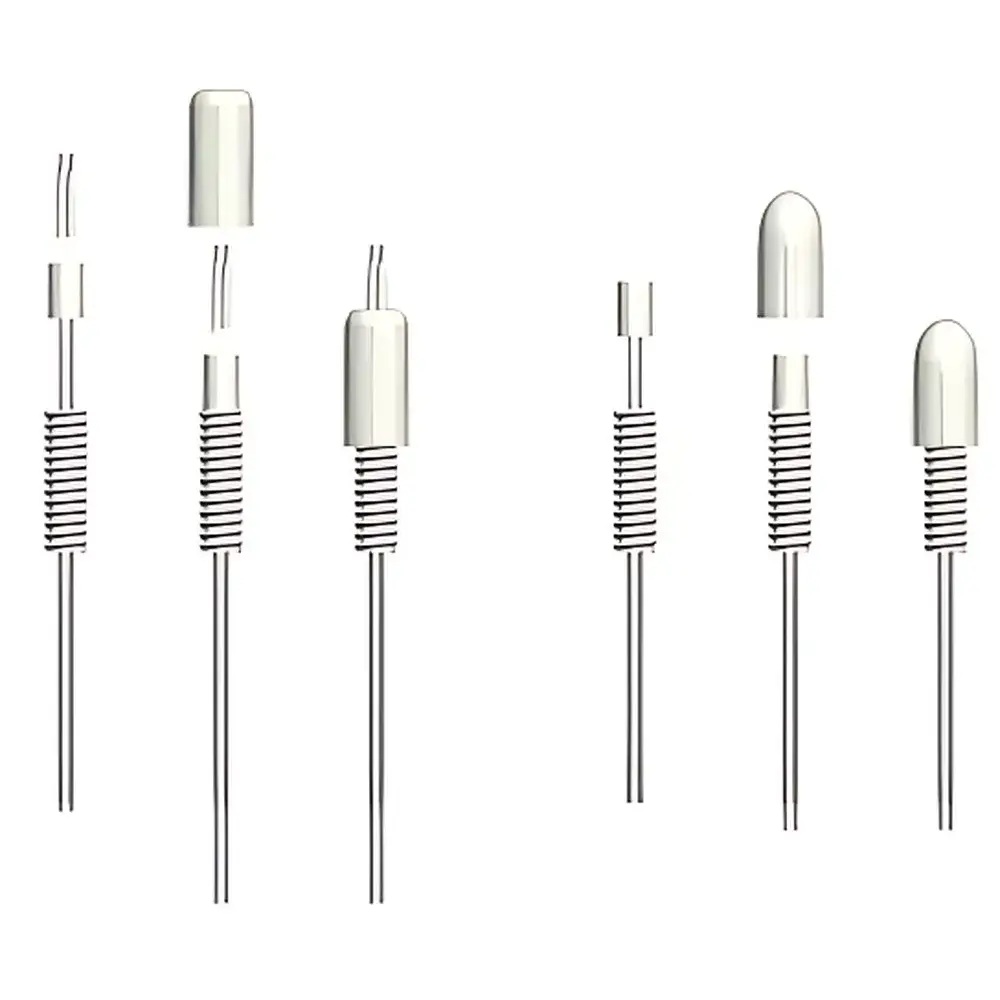
RWD 62021 Dual-Channel Intracerebral Microinjection System
| Brand | RWD |
|---|---|
| Origin | Shenzhen, China |
| Manufacturer Type | OEM Manufacturer |
| Product Origin | Domestic (China) |
| Model | 62021 |
| Pricing | Upon Request |
Overview
The RWD 62021 Dual-Channel Intracerebral Microinjection System is an engineered precision neurosurgical tool designed for stereotactic delivery of pharmacological agents into two distinct bilateral or unilateral brain targets in rodent models. Built upon the principles of mechanical coaxial alignment and modular interlocking geometry, the system enables simultaneous or sequential administration of identical or dissimilar compounds—such as viral vectors, neurotransmitters, siRNA, or small-molecule therapeutics—into spatially separated nuclei with micron-level positional fidelity. Its core architecture integrates dual stainless-steel cannulae mounted within a calibrated polymeric base, ensuring minimal tissue displacement during chronic implantation and repeat dosing. The system is explicitly developed for compatibility with standard small-animal stereotaxic frames (e.g., RWD 68020 series), guide cannula holders, and programmable syringe pumps (e.g., RWD 33000 series), forming a traceable, GLP-aligned workflow for preclinical neuroscience research.
Key Features
- Dual-cannula design with independently adjustable protrusion lengths (G1 for injection inner tubes; G2 for cap cores), enabling differential targeting depth control across two channels
- Four standardized configurations (Class I–IV) differentiated by outer/inner diameters (D), base height (B), and default cannula length (C), each optimized for specific rodent species and target nuclei
- Customizable center-to-center spacing (C.C) from 0.5 mm to 3.0 mm in 0.1 mm increments—critical for precise bilateral targeting in structures such as the hippocampus, striatum, or amygdala
- Interchangeable polymeric base diameters (E = 3.5 mm or 5.0 mm) and matching lock nut (F1/H1) and cap (F2/H2) dimensions, ensuring mechanical stability under repeated torque application
- Modular assembly comprising five precision-machined components: dual-metal cannulae, cap core, injection inner tube, locking nut, and cap—each laser-marked for lot traceability
- Material compliance: 316L stainless steel cannulae (ISO 5832-1), medical-grade PEEK and POM polymer bases (USP Class VI), and silicone-free surface finish to prevent adsorption of biomolecules
Sample Compatibility & Compliance
The RWD 62021 system supports intracerebral delivery in mice (Class I and III), rats (Class II), and neonatal or dwarf mouse models (Class IV). It is validated for use with standard PE tubing (ID 0.12 mm–0.28 mm), Hamilton syringes (10 µL–100 µL), and low-backpressure infusion pumps operating at flow rates from 0.01 µL/min to 10 µL/min. All configurations meet ISO 13485:2016 design control requirements for Class I medical devices (non-invasive, non-sterile components). While the system itself is supplied non-sterile, it is compatible with ethylene oxide (EtO) and gamma irradiation sterilization protocols when used in GLP-compliant behavioral or toxicology studies. Documentation packages include material declarations per REACH and RoHS, biocompatibility test reports (ISO 10993-5 cytotoxicity, ISO 10993-10 sensitization), and dimensional inspection certificates traceable to NIST standards.
Software & Data Management
As a hardware-only delivery platform, the RWD 62021 does not incorporate embedded firmware or onboard software. However, it is fully interoperable with third-party pump control environments—including World Precision Instruments (WPI) Micro4, Harvard Apparatus PHD Ultra, and KD Scientific Legato series—via standard TTL/RS-232 interfaces. Experimental metadata (e.g., C.C spacing, G1/G2 protrusions, animal ID, injection volume/timing) can be logged in ELN systems compliant with 21 CFR Part 11 (e.g., LabArchives, Benchling) using structured CSV templates provided in the RWD NeuroTools Suite. Each system ships with a unique serial-numbered calibration sheet listing measured values for B, C, C.C, D, E, F1/F2, H1/H2, G1, and G2—enabling full audit trail reconstruction for regulatory submissions.
Applications
- Bilateral comparative pharmacology: Co-administration of agonist/antagonist pairs into mirror nuclei to assess functional laterality
- Cell-type-specific circuit interrogation: Simultaneous AAV delivery (e.g., Cre + DREADD) into upstream/downstream nodes of a defined pathway
- Controlled-release kinetics: Independent infusion of fast-acting neuromodulators (e.g., glutamate) and slow-diffusing tracers (e.g., fluorescent dextrans)
- Chronic multi-dose paradigms: Repeated injections over days/weeks via implanted guide cannulae without re-stereotaxic surgery
- Developmental neuropharmacology: Targeted delivery into subcortical regions of P7–P21 pups using Class IV micro-profile geometry
FAQ
What is the minimum center-to-center spacing (C.C) achievable with custom ordering?
The minimum configurable C.C is 0.5 mm, with increments of ±0.1 mm. Spacing below this threshold compromises mechanical rigidity and increases risk of cannula bending during insertion.
Can G1 and G2 protrusion lengths be customized independently for each channel?
No—G1 and G2 are fixed per class (e.g., Class I: G1 = 5.5 mm, G2 = 3.0 mm) and cannot be asymmetrically adjusted within a single set. Customization applies uniformly across both channels.
Is the system compatible with MRI-guided stereotaxy?
Yes—non-ferromagnetic 316L stainless steel construction ensures MRI safety at field strengths up to 7 T; however, RF-induced heating must be evaluated per IEC 60601-2-33 for specific pulse sequences.
Do you provide sterile-packaged versions?
Sterilization is performed by end users per institutional biosafety protocols. RWD supplies validation data for EtO and gamma methods but does not distribute pre-sterilized kits.
How is dimensional accuracy verified prior to shipment?
Each unit undergoes coordinate measuring machine (CMM) verification against GD&T tolerances per ISO 8015, with measurement uncertainty < ±1.2 µm for all critical features (C, C.C, G1, G2). Certificates accompany every order.



