
RWD 68099II Precision Impactor for Stereotaxic Brain and Spinal Cord Injury Modeling
| Brand | RWD |
|---|---|
| Origin | Shenzhen, China |
| Manufacturer | RWD Life Science |
| Type | Domestic |
| Model | 68099II |
| Pricing | Upon Request |
| Touchscreen LCD Display | 4.3-inch, 480×272 resolution |
| Impact Velocity Range | 0.5–5.60 m/s (0.1 m/s resolution) |
| Impact Depth Range | 0–5.00 mm (0.01 mm resolution) |
| Dwell Time Range | 0–5.00 s (0.01 mm resolution) |
| Stroke Travel | 0–90 mm |
| Positioning Platform | X-axis 0–116 mm, Y-axis 0–98 mm |
| Platform Dimensions | 380 × 255 mm |
| Impact Tip Diameters | 1, 2, 3, 4, 5 mm (OD) |
| Magnetic Sensor Resolution | 0.2 µm |
| Power Supply | DC 24 V |
| Operating Pressure | 0.68–0.80 MPa |
| Ambient Temperature | 5–40 °C (41–104 °F), RH 20–80% |
| Frame Material | Anodized Aluminum with Integrated Hardened Pneumatic Cylinder |
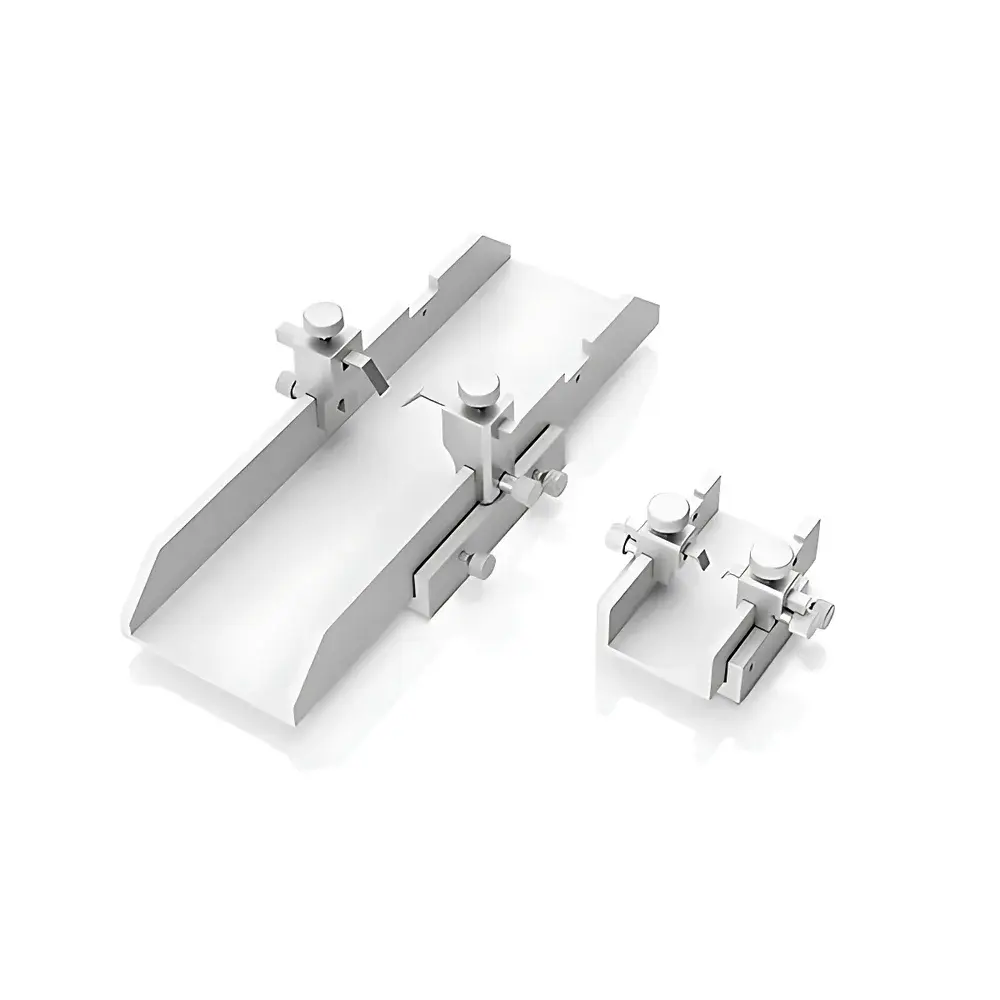
| Optional Accessories | Rotational Cranial Adapters (±30°), Spinal Support Cradles (rat: 54 mm slot width |
| mouse | 29 mm slot width), Illuminated 4–6× Magnifier |
Overview
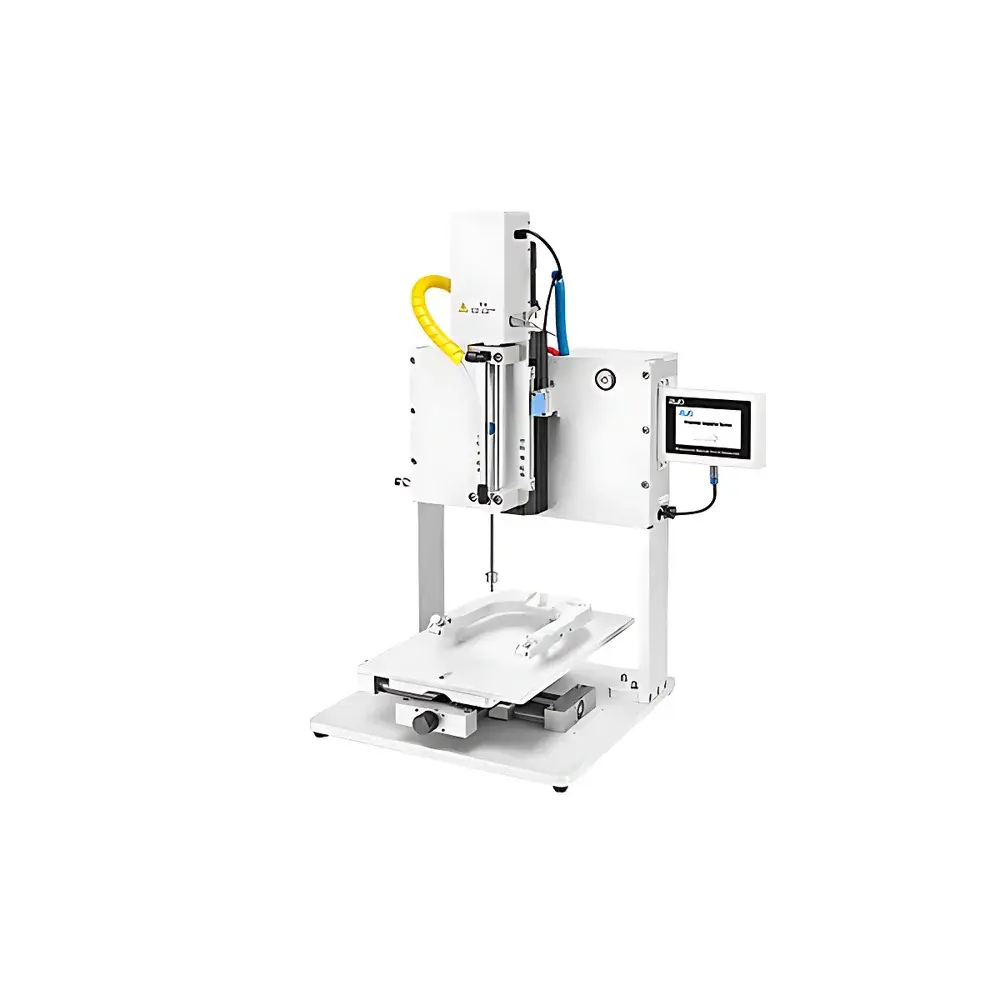
The RWD 68099II Precision Impactor is an engineered instrument designed for reproducible, quantitative induction of controlled mechanical trauma in rodent models of traumatic brain injury (TBI) and spinal cord injury (SCI). It operates on a hybrid pneumatic-electric actuation principle, integrating high-resolution magnetic position sensing with closed-loop velocity and depth control to deliver highly consistent impact parameters across experimental sessions. Unlike manual or spring-driven impactors, the 68099II enables real-time modulation of three critical biomechanical variables—impact velocity, displacement depth, and dwell time—each independently adjustable with sub-millimeter and sub-hundredth-second resolution. This level of parametric control aligns with current NIH and STAIR (Stroke Therapy Academic Industry Roundtable) guidelines for preclinical TBI/SCI model standardization, supporting translational rigor in neurotrauma research.
Key Features
- Hybrid actuation system combining pneumatic force delivery with electric servo feedback ensures stable, jitter-free impact execution—even at maximum stroke (90 mm) and peak velocity (5.60 m/s).
- Integrated magnetic linear sensor (0.2 µm resolution) provides real-time positional feedback for automatic zero-interface detection: the system autonomously identifies physical contact between impact tip and tissue surface without manual calibration or visual estimation.
- 4.3-inch color LCD touchscreen interface (480 × 272 pixels) supports intuitive parameter entry, protocol storage, and on-device review of last-run impact logs—including timestamped velocity profiles and depth curves.
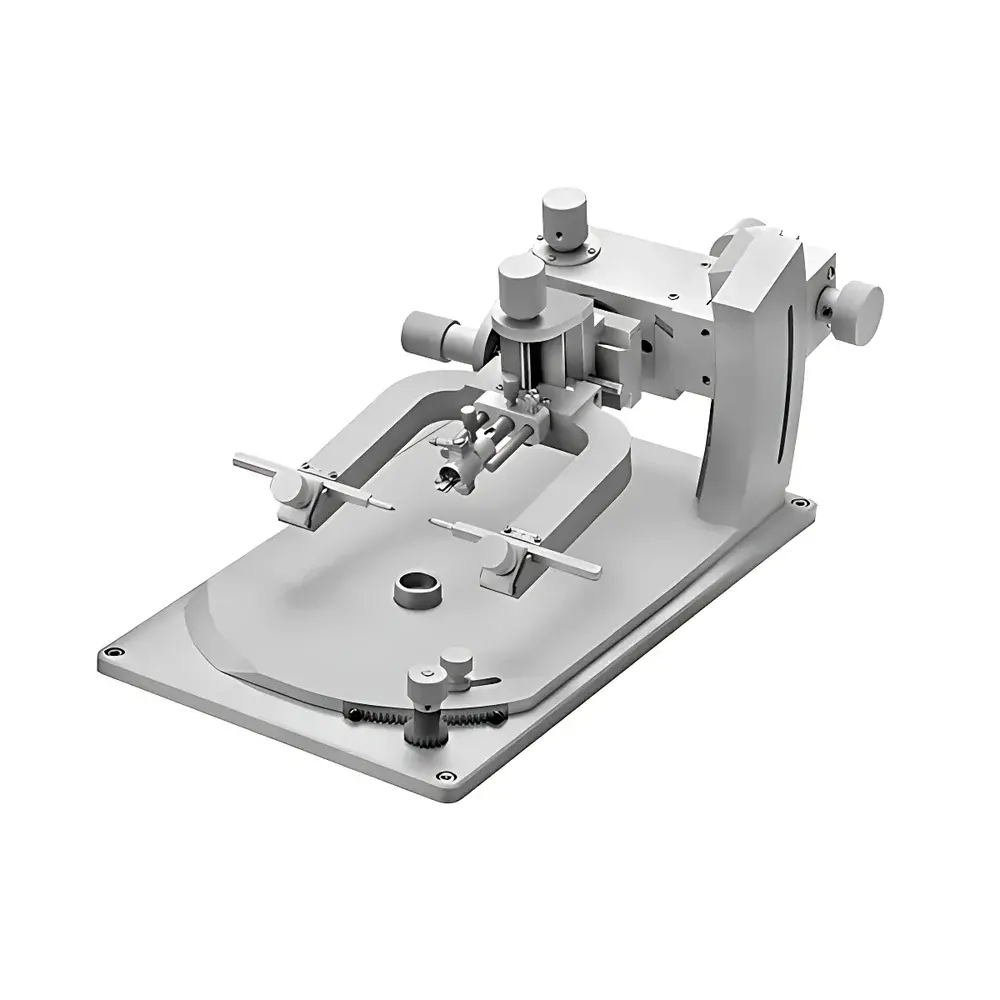
- Modular adapter architecture enables rapid reconfiguration between cranial and spinal applications: rotational cranial adapters allow ±30° coronal alignment adjustment to ensure perpendicular impact relative to dural surface; spinal cradles support ventral-lateral stabilization of exposed spinal cord, minimizing respiratory-induced motion artifacts and compression-related depth drift.
- Anodized aluminum chassis with internal hardened pneumatic cylinder delivers structural rigidity and thermal stability—critical for maintaining dimensional repeatability during multi-hour experimental sessions under ambient lab conditions (5–40 °C, 20–80% RH).
Sample Compatibility & Compliance
The 68099II is validated for use with adult Sprague-Dawley rats and C57BL/6 mice under standard stereotaxic anesthesia protocols. Its modular fixation system accommodates both standard and custom ear bar configurations (e.g., 18° rat-specific and 60° mouse-specific angles), ensuring secure skull immobilization without excessive pressure that may compromise cerebral perfusion. All cranial and spinal adapters comply with ISO 13485-aligned manufacturing controls and are compatible with widely adopted stereotaxic frames (e.g., David Kopf Instruments, Stoelting). The device supports GLP-compliant workflow documentation when paired with RWD’s optional data export module (CSV/Excel), enabling audit-ready traceability of impact parameters per animal, session, and operator.
Software & Data Management
While the 68099II operates as a standalone instrument via its embedded touchscreen controller, it supports external data logging through RS-232 or USB-C interfaces (optional). Exported datasets include full impact event metadata: initiation timestamp, commanded vs. actual velocity/depth/dwell values, sensor-derived acceleration waveform snippets (sampled at 10 kHz), and platform coordinate positions. These outputs conform to FAIR (Findable, Accessible, Interoperable, Reusable) data principles and integrate natively with common preclinical analysis platforms such as MATLAB, Python (Pandas/NumPy), and GraphPad Prism. No proprietary software installation is required for basic operation or data retrieval.
Applications
- Controlled cortical impact (CCI) modeling for mechanistic studies of blood-brain barrier disruption, neuroinflammation, and axonal injury.
- Spinal cord contusion modeling using dorsoventral or lateral impact paradigms—particularly suited for evaluating neuroprotective therapeutics and rehabilitation interventions.
- Parametric optimization of injury severity gradients (mild/moderate/severe) via systematic variation of velocity-depth-dwell combinations.
- Multi-site impact studies requiring precise spatial registration across hemispheres or spinal segments, enabled by motorized X-Y platform positioning (116 × 98 mm travel range).
- Training and standardization of surgical teams in preclinical neurotrauma models, where inter-operator variability must be minimized for multicenter study reproducibility.
FAQ
What is the recommended maintenance schedule for the pneumatic system?
RWD recommends biannual inspection of O-rings, pressure regulator calibration, and cylinder lubrication using ISO VG 32 pneumatic oil—documented in the included Maintenance Log Sheet.
Can the 68099II be integrated into automated behavioral testing suites?
Yes—the device supports TTL trigger input/output signals for synchronization with video tracking systems (e.g., EthoVision XT) or electrophysiology acquisition hardware.
Is the impact tip sterilizable?
All five stainless-steel impact tips (1–5 mm OD) are autoclavable at 121 °C for 20 minutes; repeated sterilization does not affect dimensional tolerance or surface finish.
Does the system meet FDA 21 CFR Part 11 requirements for electronic records?
When used with RWD’s optional Audit Trail Module (sold separately), the 68099II provides electronic signatures, user access logs, and immutable parameter history—fully compliant with 21 CFR Part 11 for regulated preclinical studies.
How is zero-point calibration verified post-installation?
The built-in self-test routine executes a 3-point contact verification sequence (light touch → firm contact → release), comparing sensor output against factory-traceable reference thresholds stored in non-volatile memory.



