
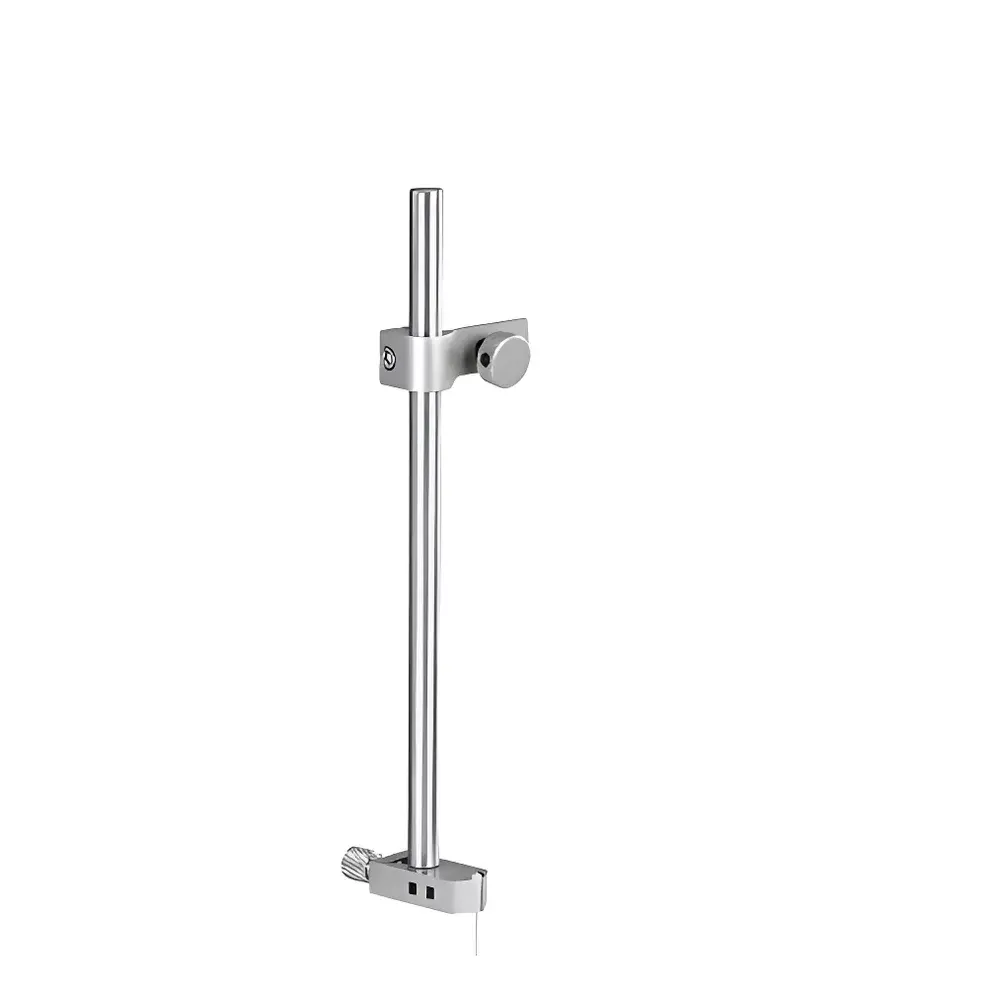
RWD 68210 Dual-Arm Micromanipulator Electrode Holder
| Brand | RWD |
|---|---|
| Origin | Shenzhen, China |
| Manufacturer Type | OEM Manufacturer |
| Country of Origin | China |
| Model | 68210 |
| Pricing | Available Upon Request |
| Electrode Clamping Range | 0.7–2.5 mm |
| Minimum Inter-Electrode Separation | 200 µm (dual-arm configuration) |
| Mounting Interface | Standard 3/8″-24 UNC or M10 threading |
| Material | Anodized aluminum alloy with stainless steel actuation components |
| Compatibility | Compatible with standard micromanipulator base plates (e.g., Narishige, Sutter, Scientifica) |
Overview
The RWD 68210 Dual-Arm Micromanipulator Electrode Holder is an engineered solution for high-precision electrophysiological recording and stimulation applications requiring simultaneous, sub-millimeter electrode positioning. Designed specifically for intracellular patch-clamp, extracellular single-unit recording, and multi-electrode array (MEA) alignment tasks, the 68210 utilizes a coaxial dual-arm architecture that enables independent yet coordinated manipulation of two microelectrodes within a tightly constrained spatial envelope. Its mechanical design follows classical lever-and-screw actuation principles, ensuring minimal backlash and high positional reproducibility (<1 µm repeatability under calibrated loading conditions). The holder integrates seamlessly with standard XYZ micromanipulators via industry-standard 3/8″-24 UNC or metric M10 mounting threads, allowing direct attachment to platforms from Narishige, Sutter Instrument, Scientifica, and other major motion-control system manufacturers. Unlike generic clamping solutions, the 68210 incorporates precision-ground collet jaws with tapered internal geometry optimized for consistent gripping force across its specified electrode diameter range (0.7–2.5 mm), minimizing slippage during prolonged recordings or dynamic stimulus protocols.
Key Features
- Dual-arm coaxial configuration enabling parallel electrode placement with minimum center-to-center spacing of 200 µm — critical for paired recordings, differential stimulation, or simultaneous intracellular/extracellular monitoring
- Adjustable collet-based clamping mechanism with calibrated torque feedback, delivering uniform holding pressure across the full 0.7–2.5 mm electrode diameter range
- Anodized aluminum housing combined with stainless steel internal actuation components for long-term dimensional stability and resistance to laboratory-grade cleaning agents
- Modular interface design supporting both vertical and horizontal electrode orientation variants (e.g., compatible with RWD 68219 horizontal-mount adapter)
- Tool-less electrode insertion/removal facilitated by spring-loaded release levers, reducing procedural downtime during multi-electrode experiments
- Zero-backlash micrometer-driven fine-positioning on both arms, referenced to engraved scale indicators with 10 µm resolution
Sample Compatibility & Compliance
The 68210 accommodates glass micropipettes (with or without filament), metal microelectrodes (tungsten, platinum-iridium, stainless steel), and polymer-coated recording shanks used in silicon-based probes. It supports standard taper geometries common in electrophysiology (e.g., 10–20° tip angles) and maintains secure grip under typical physiological saline immersion conditions. While not certified to ISO 13485 or FDA 21 CFR Part 820 as a medical device, the holder conforms to general laboratory equipment safety standards (IEC 61010-1) and is routinely deployed in GLP-compliant neuroscience research environments. Its mechanical specifications align with ASTM F2623-21 guidelines for microinstrument positioning accuracy in neurophysiological setups.
Software & Data Management
As a purely mechanical positioning accessory, the RWD 68210 does not incorporate embedded electronics or digital interfaces. However, it is fully compatible with third-party motorized manipulator control systems (e.g., Sutter MP-285, Scientifica PatchStar, Narishige MO-202) that support analog voltage input or serial command protocols (RS-232/USB-CDC). When integrated into automated rig architectures, positional metadata—including arm angle, extension length, and relative offset—is logged alongside electrophysiological data streams (e.g., via Spike2, Axograph X, or OpenEphys acquisition software) using standardized timestamp synchronization via TTL triggers or NIDAQ hardware. Audit trails for mechanical setup parameters can be maintained manually in electronic lab notebooks compliant with 21 CFR Part 11 requirements.
Applications
- Paired whole-cell patch-clamp recordings in acute brain slices or cultured neurons
- Dual-electrode voltage clamp (DEVC) experiments in oocytes or large adherent cells
- Simultaneous intracellular recording and extracellular stimulation in invertebrate ganglia preparations
- Multi-site probing of cortical layer-specific activity using vertically aligned electrode arrays
- Calibration and alignment of optogenetic stimulation fibers relative to recording electrodes
- High-density electrode placement for in vitro seizure modeling or network burst analysis
FAQ
What is the minimum achievable distance between two electrodes mounted in the 68210?
The dual-arm design allows a center-to-center separation as low as 200 µm when both electrodes are positioned at their closest mechanical limit.
Can the 68210 hold borosilicate glass pipettes with outer diameters below 0.7 mm?
No — electrodes smaller than 0.7 mm OD fall outside the specified clamping range; for sub-0.7 mm pipettes, consider the RWD 68216 model with extended lower-range capability.
Is the holder compatible with motorized micromanipulators?
Yes — the standard 3/8″-24 UNC base mount ensures compatibility with all major motorized manipulator platforms offering interchangeable headstage adapters.
Does RWD provide calibration documentation or traceable metrology reports?
RWD supplies mechanical dimension drawings and assembly tolerances per ISO 2768-mK; NIST-traceable calibration certificates are available upon request for custom-configured systems.
Can the 68210 be sterilized for in vivo use?
The anodized aluminum body withstands ethanol wipe-down and UV-C exposure; however, autoclaving is not recommended due to thermal expansion mismatch between dissimilar metals and potential degradation of lubricants in internal mechanisms.



