
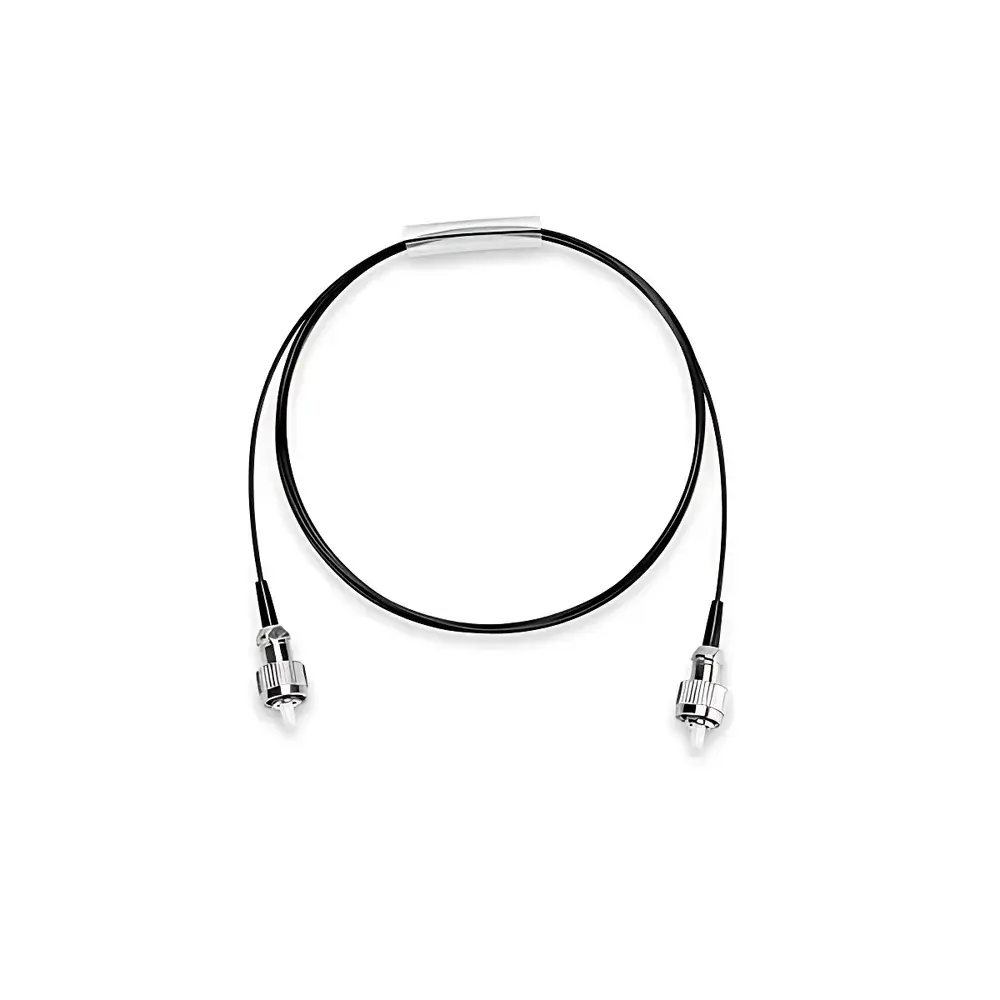
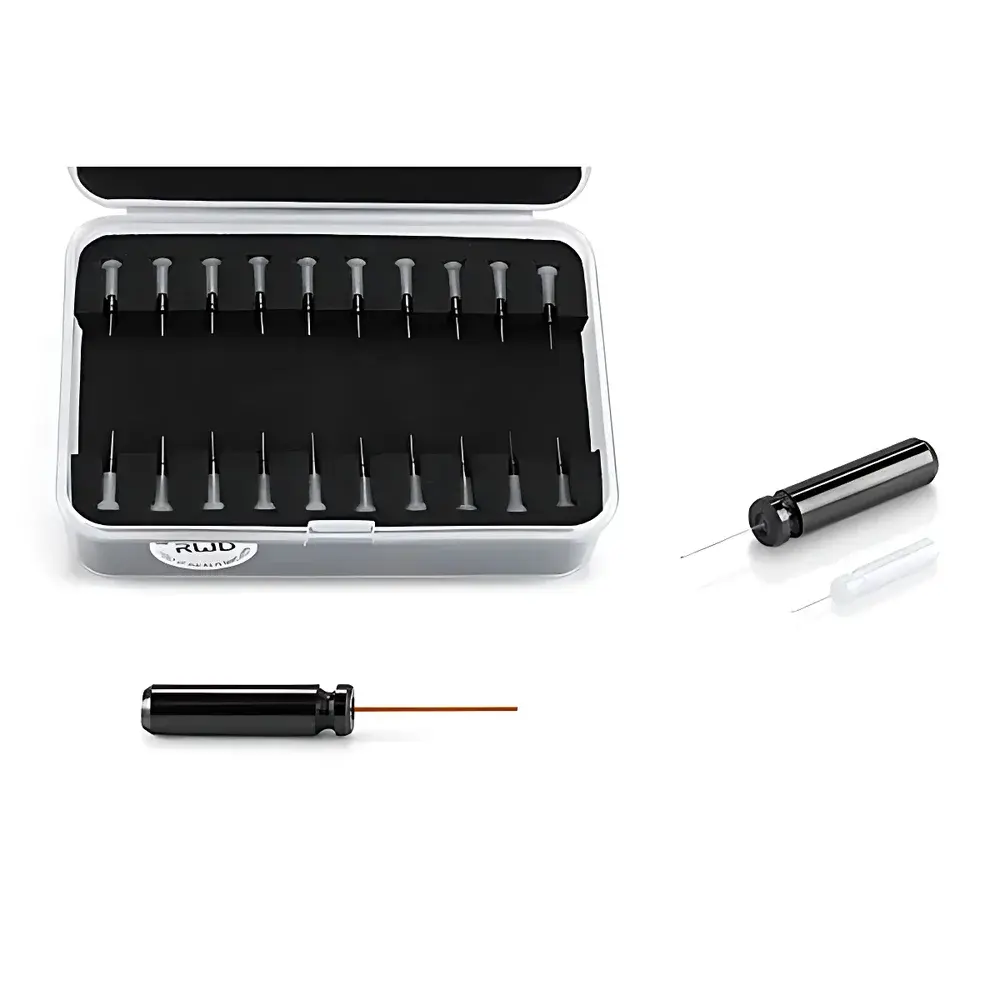
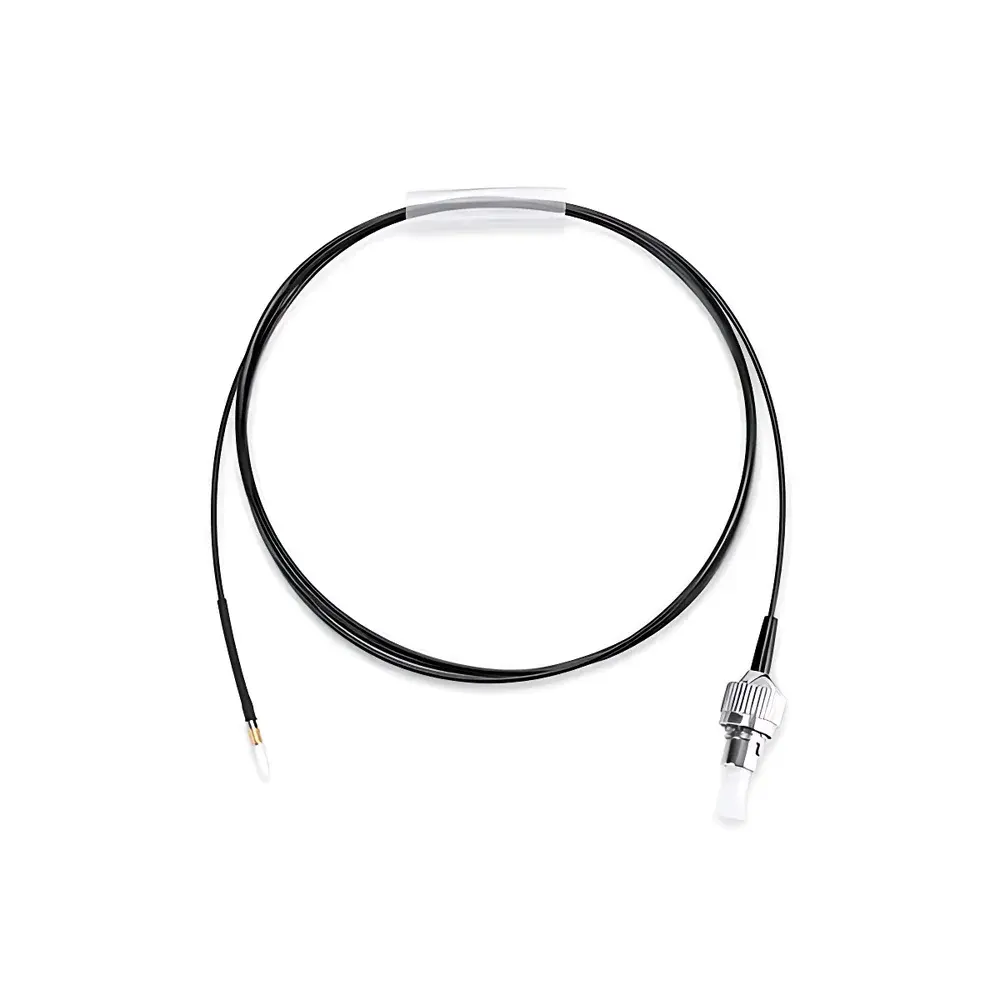
RWD Fiber Optic Patch Cables & Cannulae for Optogenetics and Fiber Photometry
| Brand | RWD |
|---|---|
| Origin | Shenzhen, China |
| Manufacturer Type | OEM/ODM Manufacturer |
| Product Category | Domestic (China-Made) |
| Model | Fiber Optic Patch Cables & Ceramic-Ferrule Cannulae |
| Pricing | Available Upon Request |
Overview
RWD Fiber Optic Patch Cables and Ceramic-Ferrule Cannulae are precision-engineered optical interfaces designed specifically for in vivo optogenetic stimulation and fiber photometry applications in freely moving rodent models. These components operate on the fundamental principle of low-loss light transmission through silica-based optical fibers with precisely aligned core geometries, enabling efficient coupling of excitation light (e.g., 473 nm, 561 nm, or 637 nm lasers) into neural tissue and high-fidelity collection of emitted fluorescence signals (e.g., GCaMP, jRGECO1a). The system integrates seamlessly with stereotaxic implantation workflows: ceramic-ferrule cannulae are chronically implanted into target brain regions using standard stereotaxic frames and secured with dental cement, while patch cables provide flexible, low-noise optical connectivity between benchtop light sources/detectors and the implanted cannulae during behavioral assays.
Key Features
- Ultra-low autofluorescence silica fiber core—optimized for minimal background interference in calcium or voltage indicator detection
- High mechanical repeatability across mating cycles: FC/PC connectors maintain consistent insertion loss (55 dB) after ≥500 connect/disconnect operations
- Ceramic ferrules (zirconia) polished to IEC 61753-1 Grade A specifications, ensuring sub-50 nm surface roughness and <0.5° angular deviation for optimal mode-field alignment
- Uniform beam profile at distal tip: M² < 1.1 measured via near-field scanning, supporting quantitative photometric calibration
- Low insertion loss (≤0.25 dB per mated interface) and high return loss (≥58 dB) validated per IEC 61300-3-35 standards
- Multiple core diameters available (e.g., 200 µm, 400 µm, 600 µm) with NA 0.39 or 0.50 to match laser divergence and detector sensitivity requirements
- Customizable cable length (0.5–3.0 m), jacket material (PVC or LSZH), and termination options (FC/PC, SMA905)
Sample Compatibility & Compliance
RWD optical interfaces are validated for use with standard optogenetic actuators (e.g., ChR2, NpHR, Chronos) and genetically encoded indicators (e.g., GCaMP6f, jGCaMP8, XCaMP-R). Cannulae are compatible with common stereotaxic implantation protocols using 26G or 33G guide cannulae and dental acrylic fixation. All components comply with ISO 10993-5 (cytotoxicity) and ISO 10993-10 (irritation/sensitization) biocompatibility testing requirements for short-term (<30 days) neural implantation. Packaging adheres to ISO 11607-1 for sterile barrier systems where applicable. Documentation supports GLP-compliant experimental recordkeeping, including lot traceability and dimensional inspection reports.
Software & Data Management
While hardware-independent, these optical components integrate natively with industry-standard acquisition platforms—including Thorlabs’ Kinesis, National Instruments DAQ systems, and open-source tools such as Bonsai or Python-based PyPhotometry. All RWD patch cables and cannulae are assigned unique serial numbers linked to calibrated optical performance datasets (insertion loss, return loss, spectral transmission curves from 400–900 nm), accessible via secure customer portal for audit-ready documentation. Firmware-agnostic design ensures compatibility with FDA 21 CFR Part 11–compliant data acquisition environments when paired with validated software stacks.
Applications
- In vivo optogenetic modulation of defined neuronal populations during operant conditioning, fear extinction, or social interaction assays
- Fiber photometry-based monitoring of calcium dynamics in projection-specific circuits across chronic recording sessions
- Combined optogenetics–photometry experiments requiring dual-wavelength excitation and emission separation
- Multi-region recordings using branched patch cables or multi-core fiber bundles
- Calibration-grade reference interfaces for validating light delivery efficiency in new viral vector or opsin expression paradigms
FAQ
What is the typical numerical aperture (NA) offered for RWD optical cannulae?
Standard configurations feature NA 0.39 (for high spatial resolution) or NA 0.50 (for increased light throughput); custom NA values are available upon request.
Are these cannulae suitable for long-term implantation (>4 weeks)?
Yes—ceramic ferrules demonstrate stable mechanical integrity and minimal tissue reactivity in murine models up to 12 weeks post-implantation, supported by histological validation data.
Do you provide optical power calibration certificates?
Each batch undergoes spectral transmission and insertion loss characterization; full calibration reports—including wavelength-dependent attenuation curves—are provided with bulk orders.
Can RWD patch cables be autoclaved?
No—standard cables are not autoclavable due to polymer jacket limitations; however, ethylene oxide (EtO) sterilization and 70% ethanol wipe-down protocols are validated for reuse in aseptic surgical settings.
Is there batch-to-batch variability in transmission efficiency?
RWD maintains ≤±2.5% variation in insertion loss across production lots, verified via statistical process control (SPC) sampling per ISO 2859-1 Level II inspection.



