
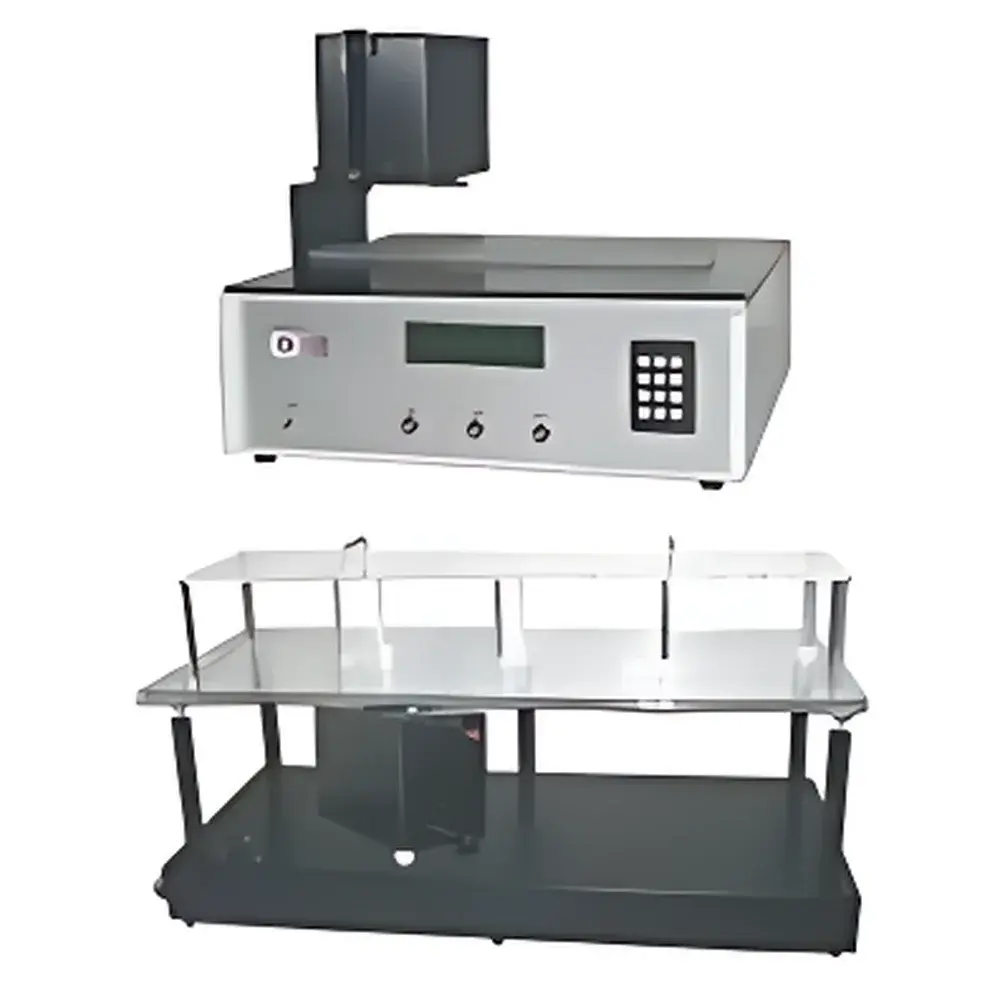
RWD Model 336 Paw-and-Tail Nociception Analyzer
| Brand | RWD |
|---|---|
| Origin | USA |
| Manufacturer Type | Original Equipment Manufacturer (OEM) |
| Import Status | Imported |
| Model | 336 Paw-and-Tail Nociception Analyzer |
| Pricing | Upon Request |
Overview
The RWD Model 336 Paw-and-Tail Nociception Analyzer is a dual-mode, thermally calibrated instrument engineered for objective quantification of nociceptive thresholds in rodent models. It operates on two validated thermal stimulation paradigms: radiant heat-induced tail-flick response and focused paw-withdrawal reflex. The device employs a precisely regulated infrared (IR) radiant heat source—compliant with ASTM F2130-22 guidelines for thermal stimulus delivery in preclinical pain research—to elicit reproducible, reflexive withdrawal behaviors. Its core architecture integrates closed-loop temperature feedback control, enabling real-time monitoring and stabilization of tail surface temperature during stimulation. This ensures stimulus consistency across trials and subjects, directly supporting GLP-compliant longitudinal studies where inter-session variability must be minimized. Designed for integration into standardized behavioral pharmacology workflows, the Model 336 supports both acute and chronic pain model evaluation—including inflammatory, neuropathic, and opioid-tolerance paradigms—without requiring physical restraint beyond standard handling protocols.
Key Features
- Dual-stimulus capability: Simultaneous support for tail-flick latency measurement and plantar paw withdrawal testing on a single platform, eliminating cross-device calibration drift and reducing per-experiment capital expenditure.
- Digitally controlled IR source: Adjustable beam intensity in 1% increments (0–100%), enabling precise titration of thermal flux to match model-specific sensitivity—critical for aged, diabetic, or genetically modified rodents with altered thermal perception.
- High-resolution timing system: Microsecond-synchronized digital timer with 0.01 s resolution and automatic cutoff upon response detection, ensuring compliance with IASP-recommended temporal precision for nociception endpoints.
- Active thermal monitoring: Integrated thermistor-based surface temperature sensor provides real-time feedback during tail stimulation; optional user-defined trigger temperature threshold prevents tissue damage and maintains stimulus fidelity per NIH Office of Laboratory Animal Welfare (OLAW) guidance.
- Non-restraint-compatible design: Heated glass platform allows unimpeded animal movement during paw testing while maintaining thermal uniformity; eliminates confounding stress artifacts associated with rigid fixation devices.
- Built-in safety logic: Automatic beam shutoff upon detected motion outside the target zone or exceeding preset exposure duration, satisfying ISO 13857 mechanical safety principles adapted for laboratory thermal equipment.
Sample Compatibility & Compliance
The Model 336 is validated for use with mice (C57BL/6, BALB/c, CD-1) and rats (Sprague-Dawley, Wistar) weighing 15–300 g. Its open-platform geometry accommodates standard housing-compatible acclimation periods and permits concurrent video recording for ethogram-based behavioral correlation. All thermal output profiles comply with ANSI Z535.4 hazard labeling standards and meet electromagnetic compatibility (EMC) requirements per FCC Part 18. The device’s firmware architecture supports audit trail generation and user-access logging, facilitating alignment with FDA 21 CFR Part 11 electronic record integrity requirements when paired with validated LIMS integration.
Software & Data Management
Data acquisition is managed via RS-232 serial interface (standard DB9 connector) compatible with Windows-based acquisition software (e.g., RWD AcqSuite v3.2+). Raw latency values, beam intensity settings, ambient temperature logs, and operator ID are timestamped and exported in CSV/Excel format. Optional USB-to-serial adapter enables direct connection to modern workstations. Exported datasets include metadata fields required for FAIR data principles (Findable, Accessible, Interoperable, Reusable), including ISO 8601 timestamps, unit-annotated columns (s, %, °C), and experiment-level annotation tags. No cloud storage or proprietary binary formats are used—ensuring full data sovereignty and long-term archival compatibility.
Applications
- Preclinical evaluation of analgesic compounds (NSAIDs, opioids, TRPV1 antagonists) using tail-flick and Hargreaves assays per ICH S5(R3) nonclinical safety guidelines.
- Longitudinal monitoring of neuropathic pain progression in chronic constriction injury (CCI) or spared nerve injury (SNI) models.
- Pharmacodynamic profiling of centrally acting agents where thermal hyperalgesia reversal serves as a primary endpoint.
- Genetic screening of nociceptor function in knock-out/knock-in lines (e.g., Nav1.7, TRPA1, ASIC3 models).
- Validation of transdermal drug delivery systems via time-course assessment of thermal threshold shifts.
FAQ
Is the Model 336 compliant with OECD Test Guideline 403 for acute toxicity studies?
Yes—the thermal stimulus parameters and animal handling protocols align with OECD TG 403 Annex 5 recommendations for sensory endpoint integration in general toxicity assessments.
Can the device be calibrated traceably to NIST standards?
Yes—RWD provides optional annual calibration services with NIST-traceable thermistor and timer verification, documented in ISO/IEC 17025-accredited reports.
Does the system support automated batch processing for high-throughput screening?
While designed primarily for investigator-led behavioral phenotyping, the RS-232 interface enables integration with third-party automation controllers (e.g., LabVIEW, Python PySerial) for scheduled multi-animal testing sequences.
What is the maximum recommended daily usage duration to ensure thermal source longevity?
Continuous operation should not exceed 4 hours per day; duty cycle management is enforced by internal thermal cutoff at 65°C housing temperature, consistent with IEC 61000-4-2 ESD immunity specifications.




