
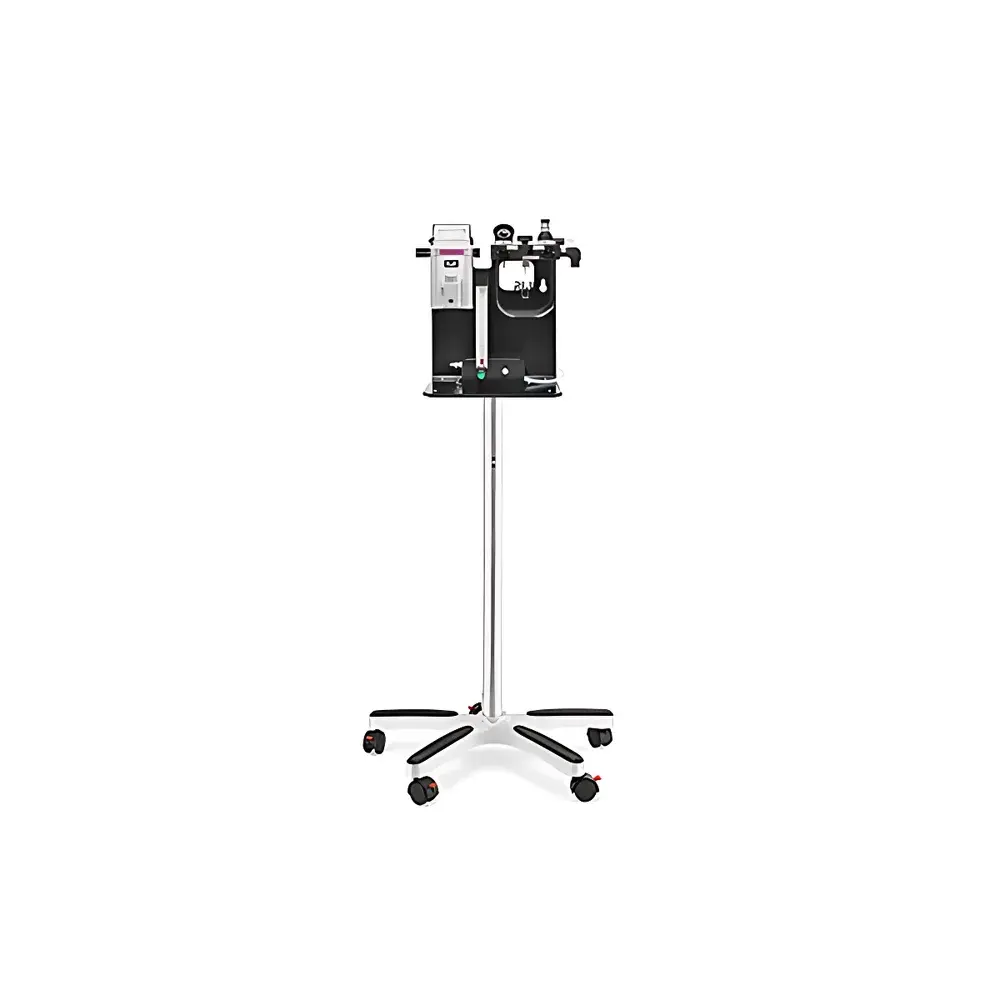
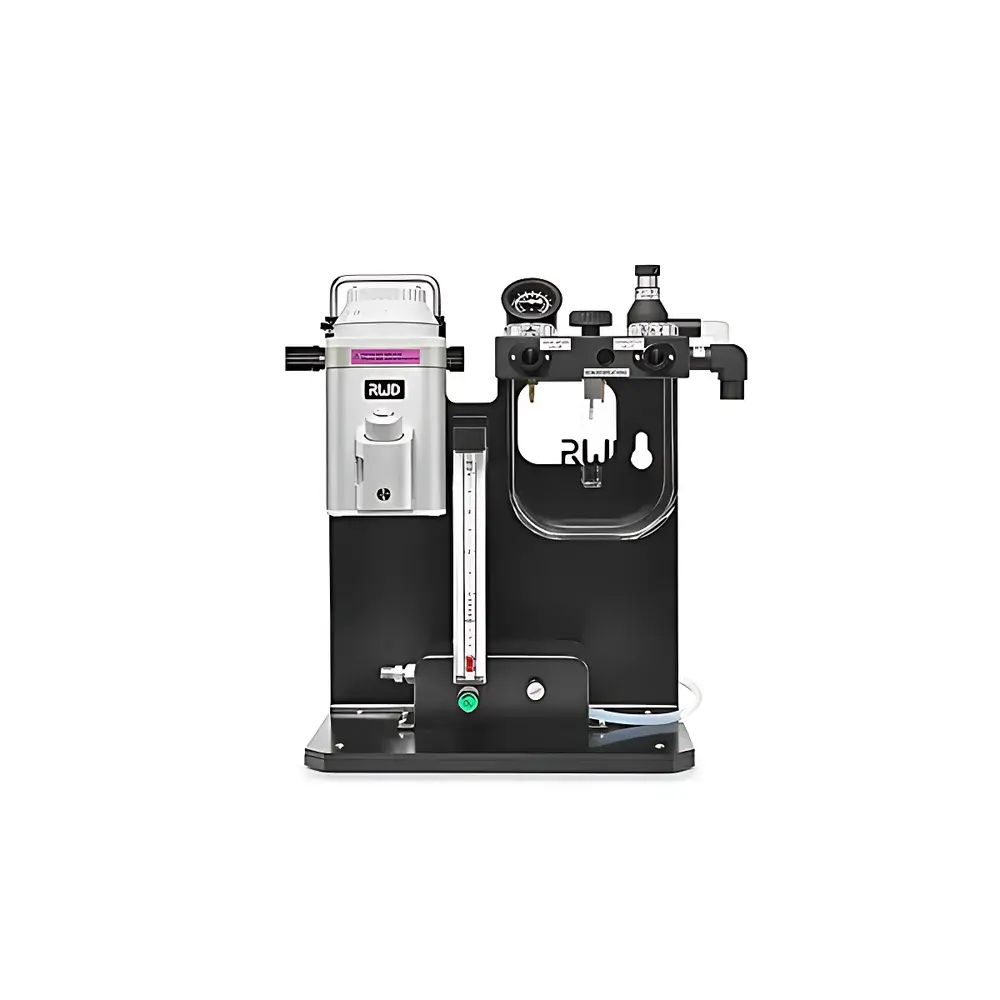
RWD R610 Desktop Universal Animal Anesthesia Machine
| Brand | RWD |
|---|---|
| Origin | Guangdong, China |
| Manufacturer Type | Manufacturer |
| Origin Category | Domestic |
| Model | R610 |
| Oxygen Flowmeter Range | 0–4 L/min |
| Vaporizer Capacity | 120 mL |
| Adjustable Anesthetic Concentration Range | 0–5% (Isoflurane), 0–8% (Sevoflurane) |
| Operating Temperature | 10–35 °C |
| APL Pressure Relief Range | −20 to +120 cmH₂O |
| CO₂ Absorber Volume | 1100 mL |
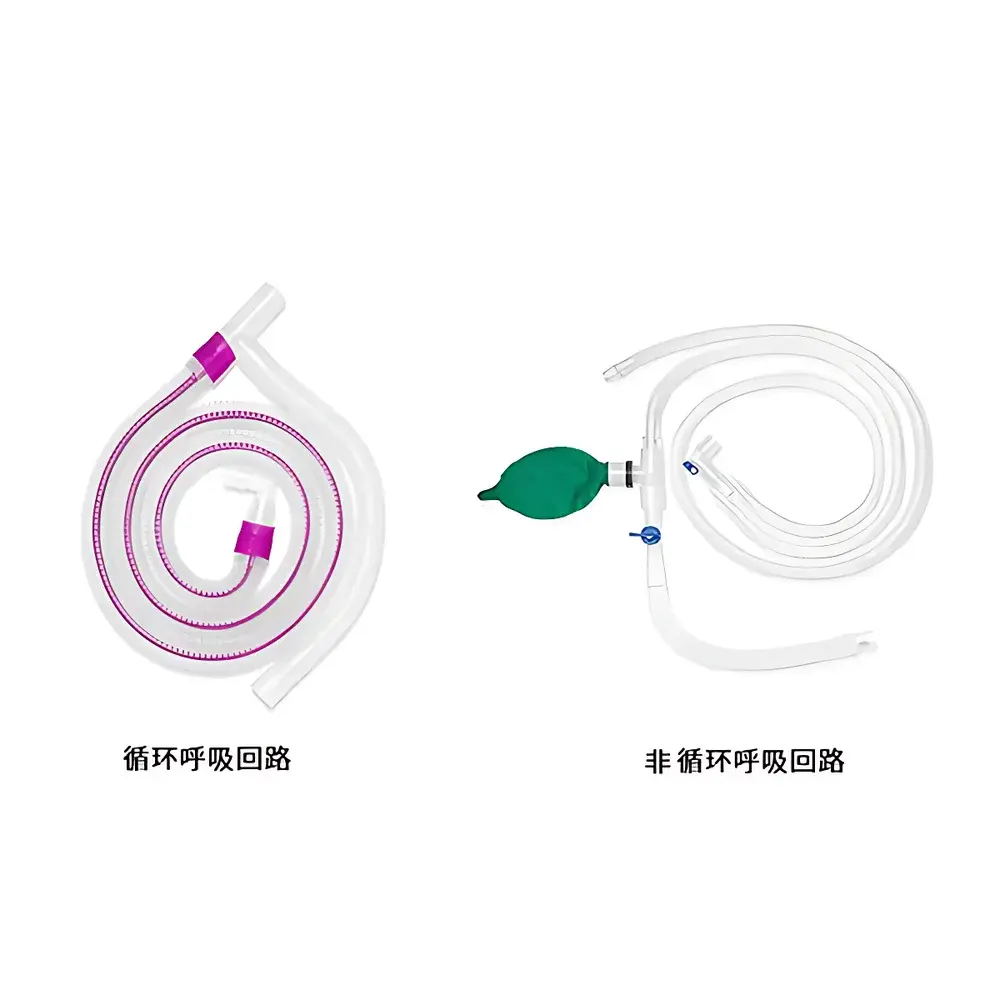
| Non-Rebreathing Mode Max. Weight | ≤7 kg |
| Rebreathing Mode Max. Weight | ≤50 kg |
| Waste Gas Management | Integrated Active Charcoal Filter Canister |
Overview
The RWD R610 Desktop Universal Animal Anesthesia Machine is an engineered solution for precise, safe, and flexible inhalational anesthesia delivery in preclinical research laboratories. Designed according to international veterinary anesthesia principles, the R610 operates on dual-mode respiratory circuit architecture—non-rebreathing (for animals ≤7 kg) and rebreathing (for animals up to 50 kg)—enabling consistent anesthetic gas delivery across species including cats, dogs, non-human primates, and swine. Its core functionality integrates calibrated oxygen flow control, temperature- and pressure-compensated vaporization, and fail-safe pressure regulation to maintain physiological stability during surgical and procedural interventions. The system complies with fundamental safety requirements outlined in ISO 80601-2-13 (Medical electrical equipment — Part 2-13: Particular requirements for basic safety and essential performance of anesthetic equipment) and supports GLP-aligned workflow documentation when integrated with compliant laboratory information management systems.
Key Features
- Dual-circuit operation: Selectable non-rebreathing (Pour Fil) or rebreathing (Easy Fil) configurations, each optimized for distinct animal weight classes and metabolic demands.
- Temperature- and flow-stabilized vaporization: Isoflurane concentration output remains stable across oxygen flow rates (0.1–4 L/min), ambient temperature fluctuations (10–35 °C), and system backpressure variations—ensuring reproducible depth-of-anesthesia.
- APL (Adjustable Pressure Limiting) valve with automatic over-pressure relief: Operates within a certified range of −20 to +120 cmH₂O, providing real-time airway pressure monitoring and passive venting to prevent barotrauma.
- Integrated 1100 mL CO₂ absorber canister: Filled with medical-grade soda lime; features colorimetric indicator for endpoint detection and tool-free, top-access design for rapid replacement without circuit disassembly.
- Active waste gas scavenging: Onboard high-capacity charcoal filter canister captures exhaled anesthetic vapors (isoflurane, sevoflurane), eliminating need for external ducting or room ventilation—reducing occupational exposure per OSHA and NIOSH guidelines.
- Rapid oxygen flush: Dedicated 100% O₂ bypass delivers ≥35 L/min flow for immediate hypoxia rescue or post-anesthetic recovery support.
Sample Compatibility & Compliance
The R610 supports intubated and mask-based anesthesia delivery for rodents (via adapter), lagomorphs, felines, canines, porcines, and non-human primates weighing between 0.2 kg and 50 kg. All wetted components—including vaporizer internals, breathing hoses, and CO₂ absorber housing—are constructed from biocompatible, autoclavable, or chemically resistant materials meeting USP Class VI and ISO 10993-5 standards. The device conforms to IEC 61000-6-3 (EMC emissions) and IEC 61000-6-1 (EMC immunity), and its mechanical design facilitates routine maintenance and calibration traceable to NIST-traceable reference standards. Optional N₂O flowmeter integration (R600-N2O-4E) enables balanced anesthetic protocols compliant with AAALAC International recommendations for multimodal analgesia.
Software & Data Management
While the R610 operates as a standalone analog-digital hybrid platform (no embedded OS), it includes calibrated analog gauges and digital LED displays for oxygen flow, vaporizer concentration, and circuit pressure—all readable under standard surgical lighting. Optional RS-232 or USB-to-serial interface modules enable connection to third-party data acquisition systems (e.g., LabChart, AcqKnowledge) for time-synchronized logging of flow, pressure, and user-adjusted setpoints. When used in regulated environments (e.g., FDA-regulated IND-enabling toxicology studies), audit trail functionality may be implemented via external electronic lab notebook (ELN) integration supporting 21 CFR Part 11-compliant electronic signatures and version-controlled configuration records.
Applications
- Chronic and acute surgical models requiring stable, titratable anesthesia depth (e.g., neurosurgery, cardiovascular instrumentation, orthopedic implantation).
- Long-duration imaging procedures (MRI, PET, ultrasound) where minimal circuit dead space and low resistance are critical for maintaining spontaneous respiration.
- Toxicology and pharmacokinetic studies requiring precise anesthetic co-administration alongside test compounds.
- Teaching laboratories conducting hands-on training in veterinary anesthetic techniques, circuit assembly, and emergency response protocols.
- GLP-compliant safety pharmacology assessments where documentation of anesthetic parameters (flow, concentration, duration) must be contemporaneous and attributable.
FAQ
What anesthetic agents are compatible with the R610?
The R610 is validated for use with isoflurane (0–5% output) and sevoflurane (0–8% output). It is not designed for desflurane, halothane, or nitrous oxide without dedicated flowmeter and vaporizer modules.
Does the R610 require external exhaust ducting?
No. The integrated active charcoal filter canister meets ISO 8573-1 Class 2 purity standards for scavenged waste gas and eliminates the need for wall-mounted vacuum systems or roof venting.
Can the R610 be used for neonatal or pediatric rodent anesthesia?
Yes—with appropriate adapters (e.g., R600-ET small-bore endotracheal tubes and face masks), the non-rebreathing mode supports animals as small as 200 g; flow rate and vaporizer settings must be adjusted per published rodent anesthetic guidelines (e.g., AVMA Guidelines on Euthanasia Annex B).
Is calibration service available with traceability documentation?
RWD-certified field service engineers provide annual calibration using NIST-traceable flow analyzers and certified gas standards; calibration certificates include uncertainty budgets and compliance statements per ISO/IEC 17025.
How often should the CO₂ absorber be replaced?
Replacement is indicated when the colorimetric indicator transitions fully from white/pink to violet, or at maximum 6 hours of continuous use—whichever occurs first—as defined in manufacturer instructions and aligned with AANA practice advisories.




