
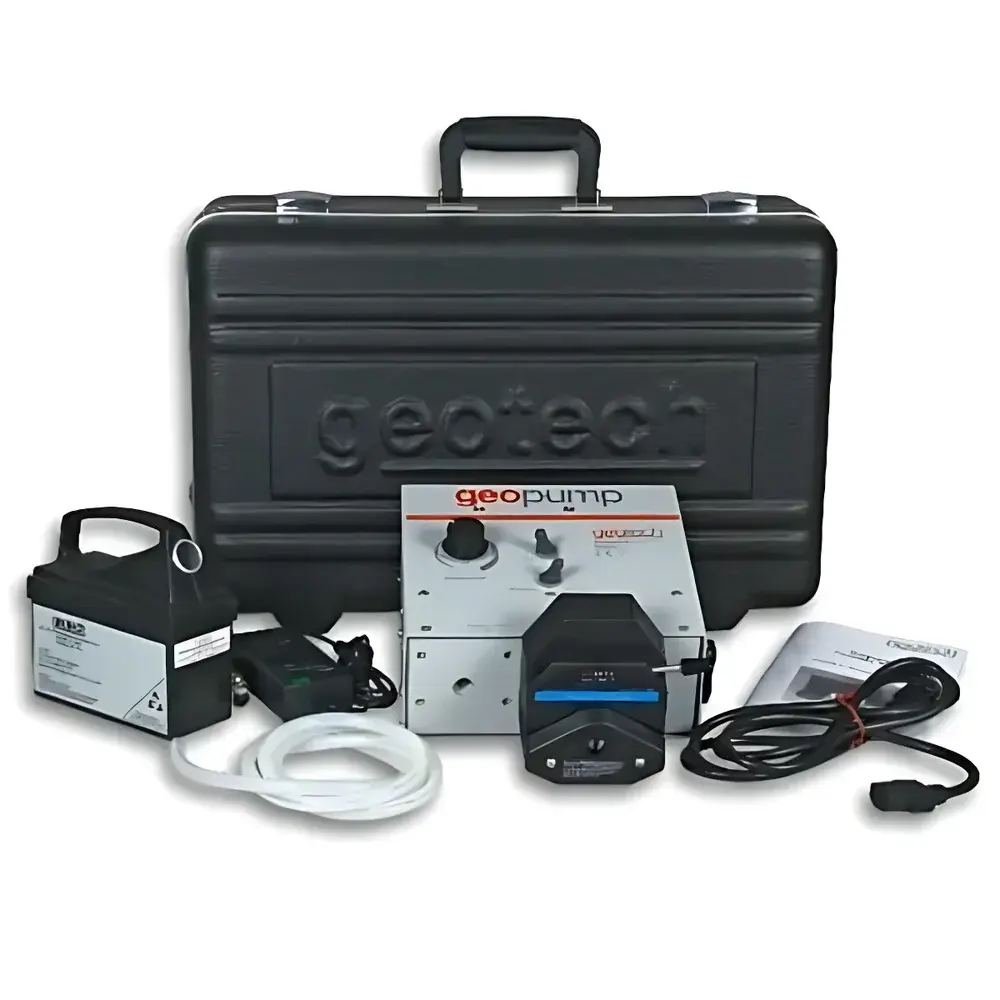
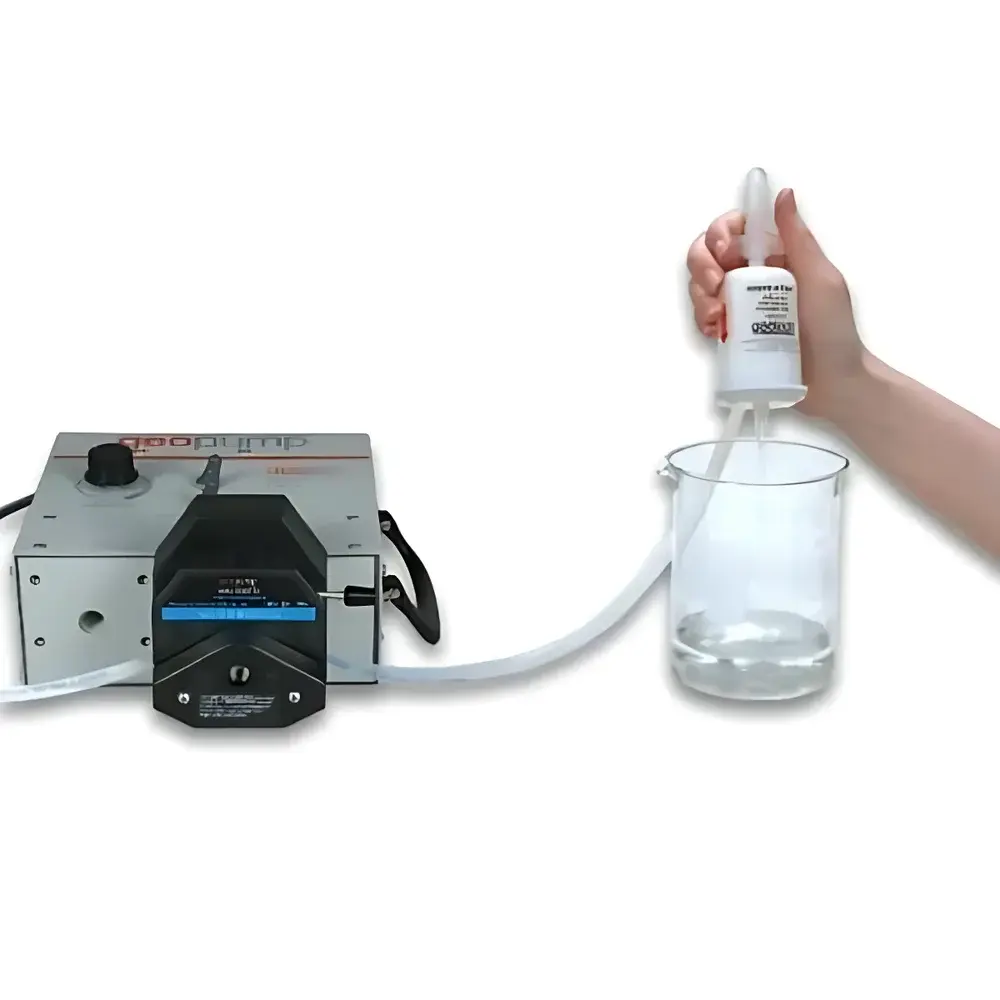
SAIL HERO Geopump I & II Portable Peristaltic Groundwater Samplers
| Brand | SAIL HERO |
|---|---|
| Origin | Hebei, China |
| Manufacturer Type | Direct Manufacturer |
| Country of Origin | China |
| Model | Geopump I / Geopump II |
| Instrument Category | Manual Water Sampler |
| Instrument Type | Portable Groundwater Sampler |
| Maximum Sampling Depth | ≤ 8.8 m below ground surface |
| Flow Rate Range (by Tubing Size) | 15# tubing: 11–1100 mL/min |
| 24# tubing | 18–1800 mL/min |
| 35# tubing | 26–2600 mL/min |
| 36# tubing | 34–3400 mL/min |
| Power Supply | AC 220 V / DC 12 V |
| Dual-Station Configuration | Geopump II only |
| Direction Control | Forward/Reverse (for backflushing) |
Overview
The SAIL HERO Geopump I and Geopump II are portable, low-flow peristaltic groundwater samplers engineered for minimal-intrusion sampling in shallow aquifer systems. Based on the principle of positive displacement via sequential compression of flexible silicone tubing, these devices deliver precise, contamination-controlled fluid transfer without internal pump components contacting the sample. This design ensures chemical inertness and eliminates cross-sample carryover — a critical requirement for volatile organic compound (VOC) analysis, regulatory compliance sampling (e.g., EPA Method 502.2, ASTM D6710), and low-flow purging protocols. The Geopump series is specifically validated for use in monitoring wells and piezometers where static water levels lie at or above 8.8 meters below ground surface (bgs), making it suitable for unconfined aquifers, landfill leachate monitoring, and brownfield site characterization.
Key Features
- Peristaltic pumping mechanism with replaceable, food-grade silicone tubing — ensuring zero metal or wetted-part contact with samples and enabling rapid decontamination between sampling events.
- Adjustable flow rate control across four standard tubing sizes (15#, 24#, 35#, 36#), supporting method-specific low-flow rates (e.g., < 500 mL/min for VOC preservation per US EPA guidance) as well as higher throughput during initial well development.
- Dual power compatibility: Operates seamlessly on AC 220 V mains supply for lab-based preparation or field-deployed DC 12 V battery power — enhancing operational flexibility during extended remote deployments.
- Geopump II model integrates two independent peristaltic stations, allowing simultaneous sampling from two wells or parallel operation for redundancy and time-efficient multi-point campaigns.
- Bi-directional motor control enables forward sampling and reverse flushing — facilitating tubing cleaning, removal of stagnant water in intake lines, and verification of purge efficiency prior to sample collection.
- Rugged, IP54-rated housing designed for field durability; lightweight (< 8.5 kg) and equipped with integrated carrying handle and quick-connect fittings for rapid setup in variable terrain conditions.
Sample Compatibility & Compliance
The Geopump series maintains full compatibility with EPA-approved sampling protocols for VOCs, SVOCs, metals, and nutrients. Its non-metallic fluid path complies with EPA SW-846 Method 5035A (closed-system purging) and supports adherence to ISO 5667-3:2018 (water quality — sampling — guidance on preservation and handling). All tubing materials meet USP Class VI biocompatibility standards and exhibit negligible extractables under typical groundwater pH (5.5–8.5) and redox conditions. The system is routinely deployed in projects requiring GLP-compliant data generation and supports audit-ready documentation when paired with field logbooks or electronic sampling management software.
Software & Data Management
While the Geopump I/II operates as a hardware-only platform (no embedded microcontroller or onboard data logging), its mechanical simplicity ensures high reliability and low maintenance in harsh environments. Users integrate the sampler into broader digital workflows via external devices: flow meters with analog output (4–20 mA) can be connected for real-time rate validation; Bluetooth-enabled handheld tablets running EPA-certified sampling apps (e.g., FieldSmart, WQX Collector) record time-stamped depth, flow rate, turbidity, and field parameter metadata. All configurations support traceable chain-of-custody documentation aligned with 21 CFR Part 11 requirements when used with validated electronic signature modules.
Applications
- Low-flow groundwater sampling for VOC analysis (e.g., benzene, TCE, PCE) in compliance with EPA Region III and California DTSC guidelines.
- Pre-sampling well purging and development using controlled reverse-flush cycles to minimize drawdown and prevent formation fines migration.
- Time-series monitoring in multi-level monitoring wells (MLMWs) where discrete interval sampling requires repeated tubing exchange and sterility assurance.
- Field deployment in regulatory-driven programs including RCRA Corrective Action, UST leak detection, and state-mandated groundwater protection plans.
- Academic hydrogeological studies requiring reproducible, low-turbidity samples for isotopic or geochemical fingerprinting (e.g., δ¹⁸O, δ²H, Sr isotopes).
FAQ
What is the maximum recommended sampling depth for the Geopump series?
The Geopump I and II are rated for static water levels up to 8.8 meters below ground surface, consistent with theoretical lift limits of peristaltic pumps operating at ambient temperature and atmospheric pressure.
Can the Geopump be used for surface water sampling?
Yes — though optimized for groundwater, the device functions reliably in shallow surface water applications (e.g., streambed piezometers, wetland porewater) when paired with appropriate intake filtration and deployment rigging.
How often should silicone tubing be replaced?
Tubing replacement frequency depends on usage intensity and sample matrix; for VOC work, single-use per well is strongly recommended. For non-VOC metals or nutrient sampling, tubing may be reused up to five times following rigorous acid-wash and blank verification protocols.
Does the Geopump II support synchronized dual-channel sampling?
No — the two peristaltic stations operate independently; synchronization requires external timing control via programmable logic controllers or manual coordination.
Is calibration required before each use?
Peristaltic flow rate is inherently dependent on tubing elasticity and motor speed; while no formal calibration certificate is issued, users must verify flow rate against a calibrated flowmeter prior to critical sampling events, especially when implementing EPA low-flow methods.







