
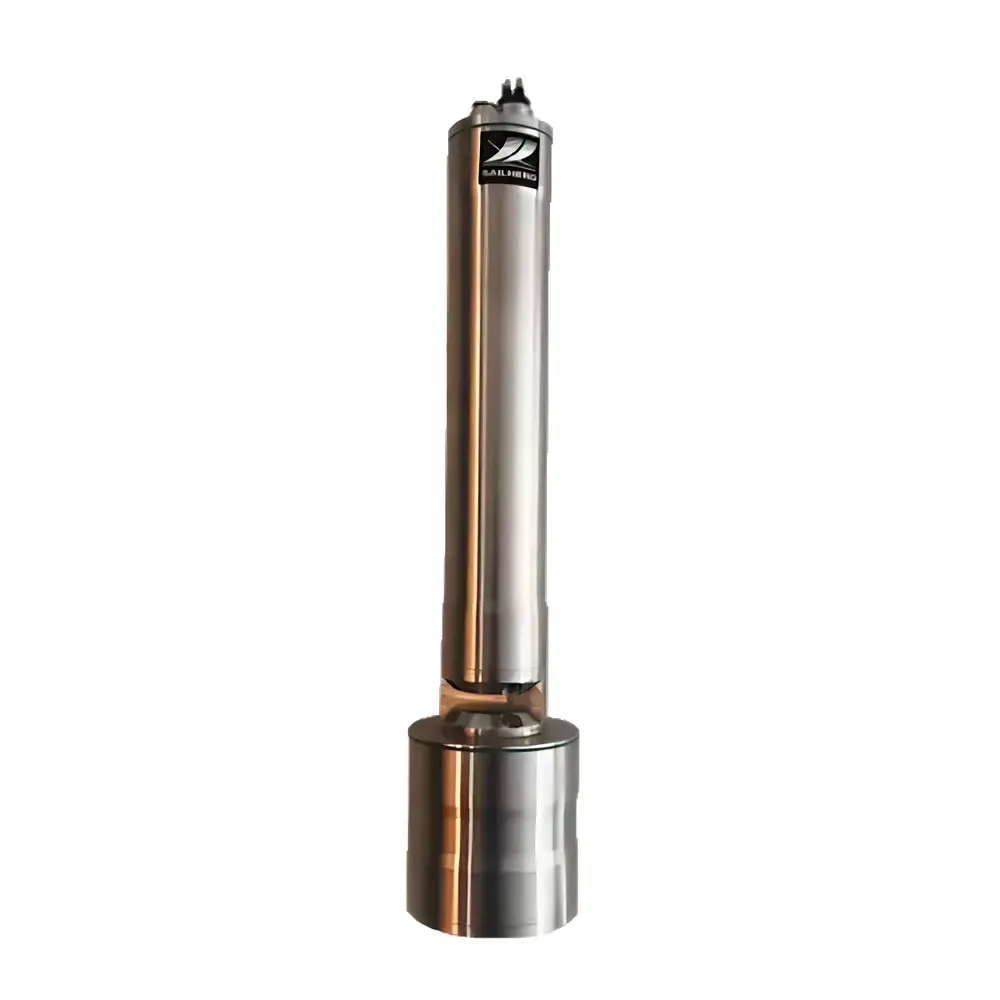
SAIL HERO XH-WQST Water Pollution Source Tracking & Early Warning Analyzer
| Brand | SAIL HERO |
|---|---|
| Origin | Hebei, China |
| Manufacturer Type | Manufacturer |
| Country of Origin | China |
| Model | XH-WQST |
| Instrument Type | Online Water Quality Analyzer |
| Measured Parameters | COD, BOD, TOC, UV₂₅₄, Color, Turbidity, Nitrate-N, Nitrite-N |
Overview
The SAIL HERO XH-WQST Water Pollution Source Tracking & Early Warning Analyzer is an advanced online environmental monitoring instrument engineered for real-time, multi-parameter water quality assessment and pollution source attribution. Utilizing full-spectrum ultraviolet–visible (UV-Vis) absorbance spectroscopy across 190–720 nm, the system captures high-resolution spectral fingerprints of aqueous samples without chemical reagents or physical pretreatment. Its core measurement principle relies on multivariate calibration models—developed via partial least squares (PLS) regression and principal component analysis (PCA)—to quantitatively resolve overlapping spectral contributions from organic and inorganic constituents. Unlike conventional single-wavelength analyzers, the XH-WQST enables simultaneous, non-destructive determination of eight critical water quality indicators: chemical oxygen demand (COD), biochemical oxygen demand (BOD), total organic carbon (TOC), UV absorbance at 254 nm (UV₂₅₄), true color (APHA units), turbidity (NTU), nitrate-nitrogen (NO₃⁻-N), and nitrite-nitrogen (NO₂⁻-N). Designed for continuous deployment in surface water intakes, wastewater effluent channels, and river basin monitoring networks, it delivers second-level spectral acquisition and sub-minute data reporting—supporting dynamic trend analysis and early anomaly detection.
Key Features
- Full-spectrum UV-Vis absorbance acquisition (190–720 nm) with <1 nm wavelength resolution and photodiode array detection
- Simultaneous quantification of eight regulated water quality parameters in a single optical path
- Double-beam optical architecture with real-time reference channel compensation for lamp drift, temperature-induced baseline shift, and flow-rate fluctuations
- In-situ measurement capability—no sample filtration, dilution, digestion, or reagent addition required
- Auto-cleaning mechanism using pressurized air pulse and ultrasonic vibration to maintain optical window integrity over extended unattended operation
- Real-time source apportionment algorithm that estimates relative contribution percentages of upstream point sources (e.g., industrial discharge, municipal WWTP outfalls, agricultural runoff) based on spectral residual analysis and spatial-temporal correlation modeling
- Unsupervised spectral anomaly detection engine trained on baseline spectral libraries; triggers alerts for unknown contaminants outside the calibrated parameter set
- Adaptive time-series forecasting module employing ARIMA and LSTM neural network hybrids to project 1–6 hour trajectories of key parameters under varying hydrological conditions
Sample Compatibility & Compliance
The XH-WQST is validated for use with raw surface water, treated effluent, and mixed urban runoff matrices exhibiting turbidity up to 200 NTU and chloride concentrations ≤2000 mg/L. It complies with ISO 7027 (turbidity), ISO 10530 (UV₂₅₄), and ASTM D5128 (color) measurement principles. While not certified to EPA Method 410.4 (COD) or Standard Methods 5210 B (BOD), its predictive outputs are traceable to reference laboratory measurements through site-specific model validation per ISO/IEC 17025 requirements. The system supports audit-ready data logging aligned with GLP and GMP documentation frameworks, including user access control, electronic signature support, and immutable event logs compliant with FDA 21 CFR Part 11 Annex 11 expectations for environmental monitoring systems.
Software & Data Management
The embedded firmware runs on a Linux-based RTOS with dual Ethernet (10/100 Mbps) and optional 4G LTE connectivity. The web-accessible HMI provides real-time spectral visualization, parameter dashboards, alarm history with timestamped spectral residuals, and GIS-integrated source mapping. All raw spectra and processed results are stored locally (16 GB internal SSD) and synchronized to secure cloud repositories via TLS 1.3 encryption. Data export formats include CSV, NetCDF, and XML conforming to WQX 3.0 schema. Remote firmware updates, model retraining via uploaded lab calibration datasets, and role-based API access (RESTful JSON endpoints) are supported for integration into SCADA, EMS, and national water information systems (e.g., China’s National Surface Water Monitoring Platform).
Applications
- River basin management: Continuous tracking of pollution plumes and identification of dominant anthropogenic inputs during dry/wet seasons
- Drinking water source protection: Early warning of accidental spills, algal bloom precursors, or industrial infiltration events
- Wastewater treatment plant compliance monitoring: Real-time verification of nitrification/denitrification efficiency and organic load variations
- Ecological restoration projects: Quantifying longitudinal changes in DOM composition and biodegradability indices (e.g., BOD/COD ratio trends)
- Regulatory enforcement: Supporting evidence-based attribution in cross-jurisdictional water quality disputes
FAQ
Does the XH-WQST require routine calibration with standard solutions?
No—its double-beam design and factory-calibrated PLS models eliminate daily standardization. Annual performance verification using NIST-traceable reference materials is recommended.
Can the system detect emerging contaminants like PFAS or pharmaceuticals?
Not directly as standalone analytes; however, unmodeled spectral deviations trigger anomaly alerts, prompting targeted grab sampling and LC-MS/MS confirmation.
What is the minimum detectable change in COD concentration?
Detection sensitivity is matrix-dependent; typical limit of detection (LOD) in clear river water is ~2 mg/L COD, validated against ISO 6060 reference method.
Is the software compatible with third-party SCADA platforms?
Yes—OPC UA and Modbus TCP protocols are natively supported, enabling seamless integration with Siemens Desigo, Honeywell Experion, and Schneider EcoStruxure systems.
How frequently does the auto-cleaning cycle activate?
Cleaning intervals are adaptive: triggered every 30 minutes during high-turbidity operation (≥50 NTU), or hourly under baseline conditions—with manual override available via web interface.
Related Products







