
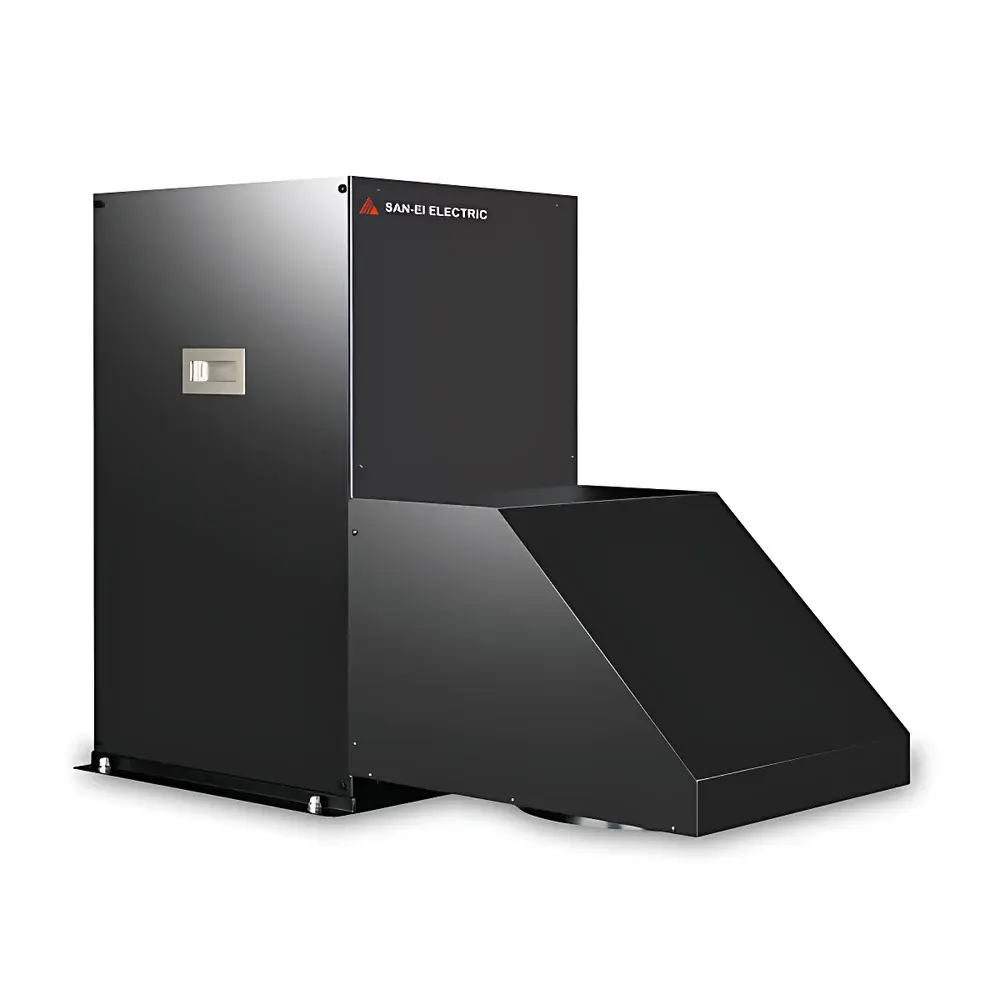
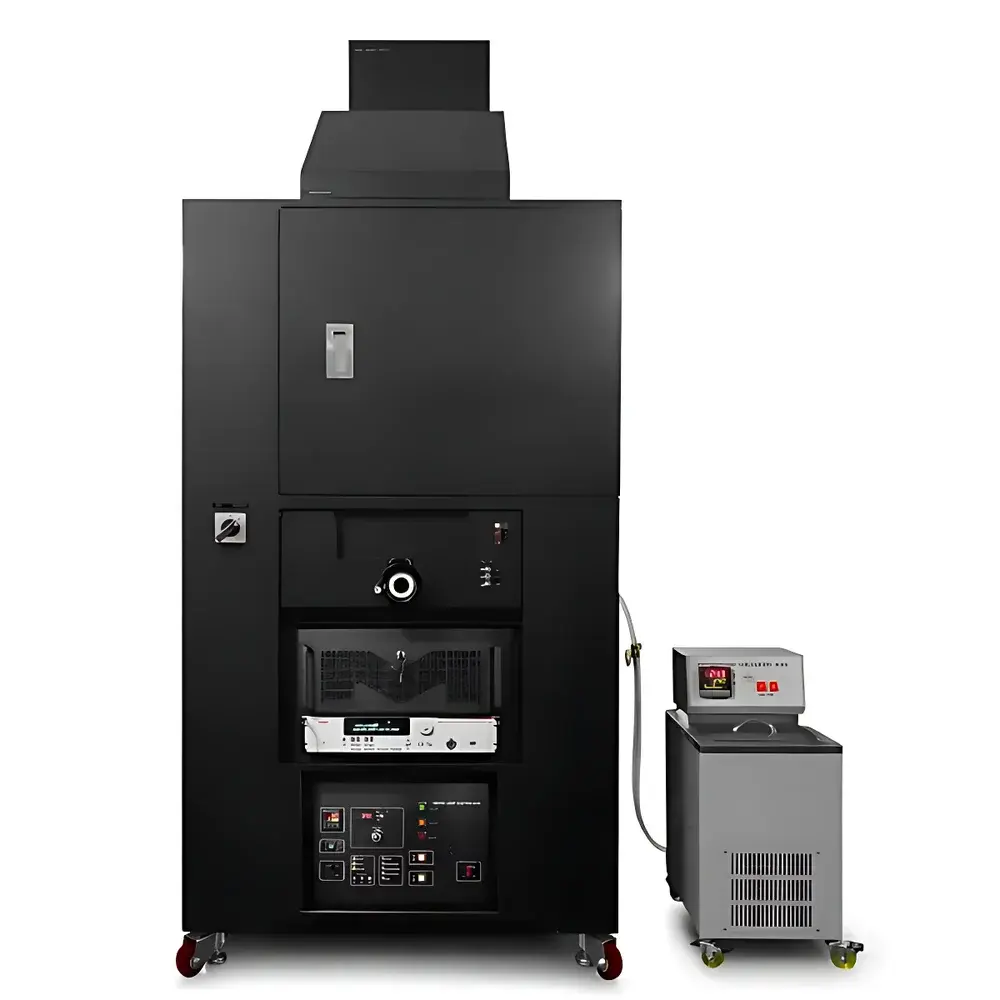
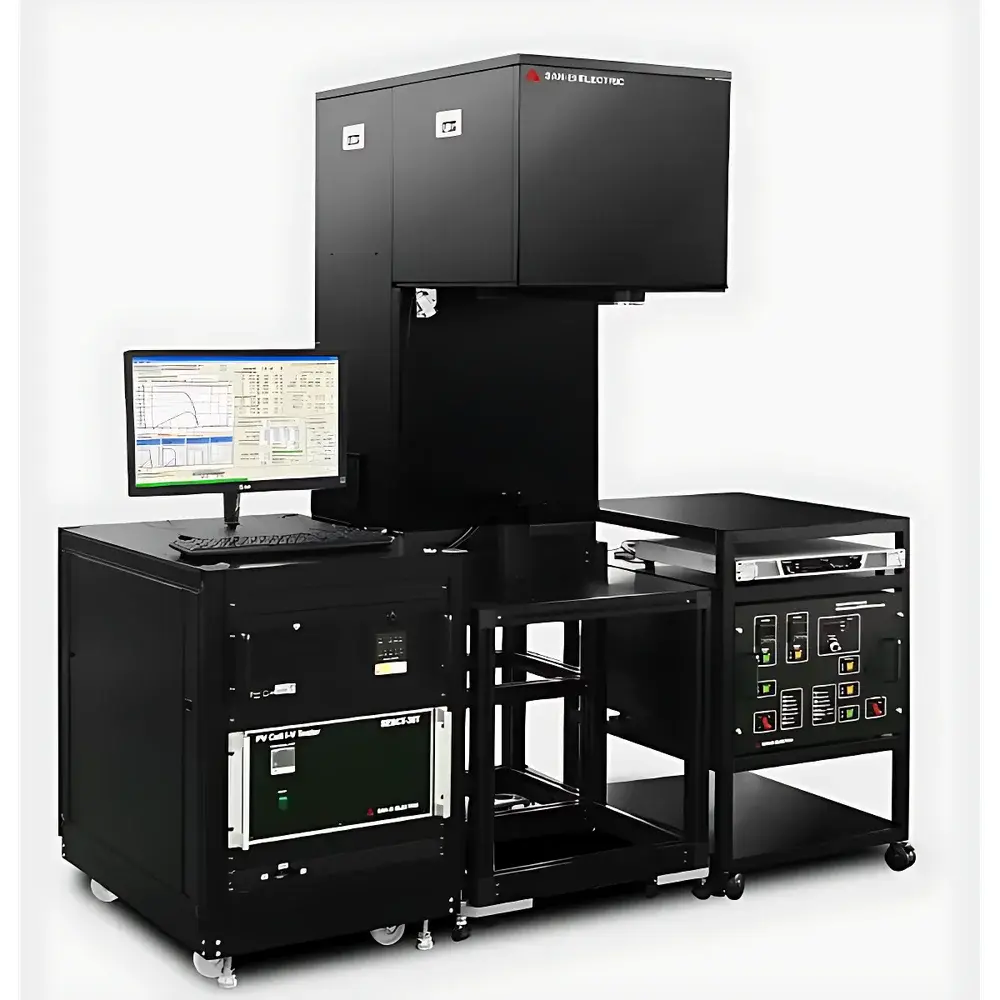
SAN-EI PCT Solar Cell I-V Measurement System
| Brand | SAN-EI |
|---|---|
| Origin | Japan |
| Model | PCT |
| Automation Level | Semi-Automatic |
| Effective Illumination Area | 4 inch to 12 inch (102 mm to 305 mm diagonal) |
| Current Measurement Resolution | 10 pA |
| Voltage Measurement Resolution | 1 µA |
| Solar Simulator Class | AAA (per IEC 60904-9:2007, ASTM E927-05, JIS C 8912) |
| Spectral Mismatch | < ±12.5% (AM1.5G) |
| Irradiance Uniformity | < 2% (Class A) |
| Temporal Instability | < 1% over ≥1 h (Class A+) |
| Adjustable Irradiance Range | 70–130% of 1000 W/m² |
| Light Source Options | 150–3000 W Xenon Arc Lamp or Halogen Lamp |
| Shutter Timing Range | 0.1 s – 9990 h |
| Lamp Life Monitoring | Integrated Hour Meter |
| Safety Features | Interlocked Shutter, Overheat Protection, Auto-Cooling Post-Operation |
Overview
The SAN-EI PCT Solar Cell I-V Measurement System is a fully integrated, research-grade photovoltaic characterization platform engineered for high-fidelity current-voltage (I-V) analysis under calibrated solar-spectrum illumination. Based on the principle of controlled steady-state illumination combined with precision source-measure unit (SMU) operation, the system enables traceable, repeatable quantification of key photovoltaic parameters—including short-circuit current (Isc), open-circuit voltage (Voc), maximum power point (Pmax), fill factor (FF), conversion efficiency (η), series resistance (Rs), and shunt resistance (Rsh). Its core illumination engine is an AAA-class solar simulator compliant with IEC 60904-9:2007, ASTM E927-05, and JIS C 8912—ensuring spectral match, spatial uniformity, and temporal stability required for inter-laboratory comparability and certification-grade testing. Designed for R&D labs, PV material developers, and quality assurance teams in academia and industry, the PCT system supports both fundamental device physics investigation and production-line evaluation protocols.
Key Features
- AAA-class steady-state solar simulator with xenon or halogen light sources (150–3000 W), configurable for AM1.5G or AM0 spectra via certified optical filters
- Integrated irradiance control from 70% to 130% of 1000 W/m², with real-time monitoring and closed-loop stabilization
- High-resolution SMU architecture supporting 10 pA current resolution and 1 µA voltage resolution—enabling low-noise characterization of emerging thin-film, perovskite, and organic photovoltaic (OPV) devices
- Dual-directional I-V sweep capability (forward and reverse scan), essential for hysteresis analysis in perovskite solar cells
- Comprehensive dark and illuminated measurement modes, including time-resolved I-t/V-t tracking, bias-stress testing, and MPPT (maximum power point tracking) for stability assessment
- Modular probe station options: temperature-controlled chuck (−40°C to +150°C), vacuum-assisted sample fixation, automated XY translation stage, and OPV-optimized contact bar fixtures
- Full remote operation via Ethernet or GPIB, with programmable shutter timing (0.1 s to 9990 h) and lamp-hour logging for preventive maintenance scheduling
- Hardware-enforced safety: interlocked shutter, thermal cutoff, auto-cooling sequence, and emergency stop circuitry aligned with IEC 61000-6-2/6-4 EMC requirements
Sample Compatibility & Compliance
The PCT system accommodates substrates ranging from 4-inch (102 mm) to 12-inch (305 mm) wafers or modules, with customizable illumination apertures up to 300 mm × 300 mm. It supports rigid and flexible substrates—including silicon heterojunction (SHJ), CIGS, CdTe, perovskite-on-glass/flexible polymer, and organic photovoltaics—via interchangeable probe fixtures and low-force contacting solutions. All calibration references are NIST-traceable or accredited by national PV metrology institutes (e.g., AIST, NREL, PTB). The system meets GLP-aligned data integrity requirements: audit trails, electronic signatures, and user-access controls are implemented in firmware. Full compliance with ISO/IEC 17025:2017 clause 7.8 (reporting of results) and FDA 21 CFR Part 11 (electronic records/signatures) is achievable through optional software licensing and validation documentation packages.
Software & Data Management
The proprietary SAN-EI PVLab Control Suite provides a unified interface for instrument orchestration, real-time visualization, and standardized reporting. It supports automated test sequences (e.g., light/dark sweeps at multiple temperatures or irradiances), batch processing of multi-sample datasets, and export to CSV, HDF5, or PV-Lib-compatible JSON formats. Built-in curve-fitting algorithms apply single-diode and double-diode models for Rs/Rsh extraction; uncertainty propagation follows GUM (Guide to the Expression of Uncertainty in Measurement) principles. Raw data files include embedded metadata: timestamp, ambient temperature/humidity, lamp hours, calibration certificate IDs, and operator credentials. For enterprise integration, RESTful API endpoints enable bidirectional communication with LIMS (Laboratory Information Management Systems) and MES platforms.
Applications
- Quantitative performance benchmarking of novel absorber materials (e.g., wide-bandgap perovskites, tandem cell subcells)
- Hysteresis evaluation and ion-migration kinetics studies via variable-scan-rate I-V analysis
- Light-soaking and thermal aging tests under controlled bias and illumination (IEC 61215-2 MQT 19 / IEC 61646)
- Quantum efficiency (QE), spectral response (SR), and incident photon-to-electron conversion efficiency (IPCE) mapping when coupled with monochromator and lock-in amplifier modules
- Process development feedback for deposition, annealing, and passivation steps in pilot-line fabrication
- Pre-certification validation prior to submission to accredited test labs (e.g., TÜV Rheinland, UL, CSA)
- Teaching laboratories requiring pedagogically structured experiments on diode ideality, recombination mechanisms, and series resistance effects
FAQ
What standards does the solar simulator comply with?
The PCT simulator meets AAA classification per IEC 60904-9:2007, ASTM E927-05, and JIS C 8912—covering spectral match (±12.5%), spatial uniformity (<2%), and temporal stability (<1% over 1 hour).
Can the system perform quantum efficiency measurements?
Yes—when integrated with an optional monochromator, calibrated reference detector, and lock-in amplifier, the platform supports full QE/SR/IPCE spectral scans from 300 nm to 1200 nm.
Is temperature control available during I-V testing?
Standard configurations include a thermally regulated chuck with ±0.1°C stability; extended-range versions support −40°C to +150°C operation with vacuum chucking.
How is calibration traceability maintained?
Primary calibration uses NIST-traceable reference cells (Si, GaAs, or InGaP) certified by AIST or NREL; all calibrations are documented with uncertainty budgets and valid for 12 months.
Does the software support automated pass/fail grading against specification limits?
Yes—customizable acceptance criteria can be defined per parameter (e.g., η ≥ 22.5%, FF ≥ 80%), with automatic flagging, statistical process control (SPC) charts, and PDF report generation.





