
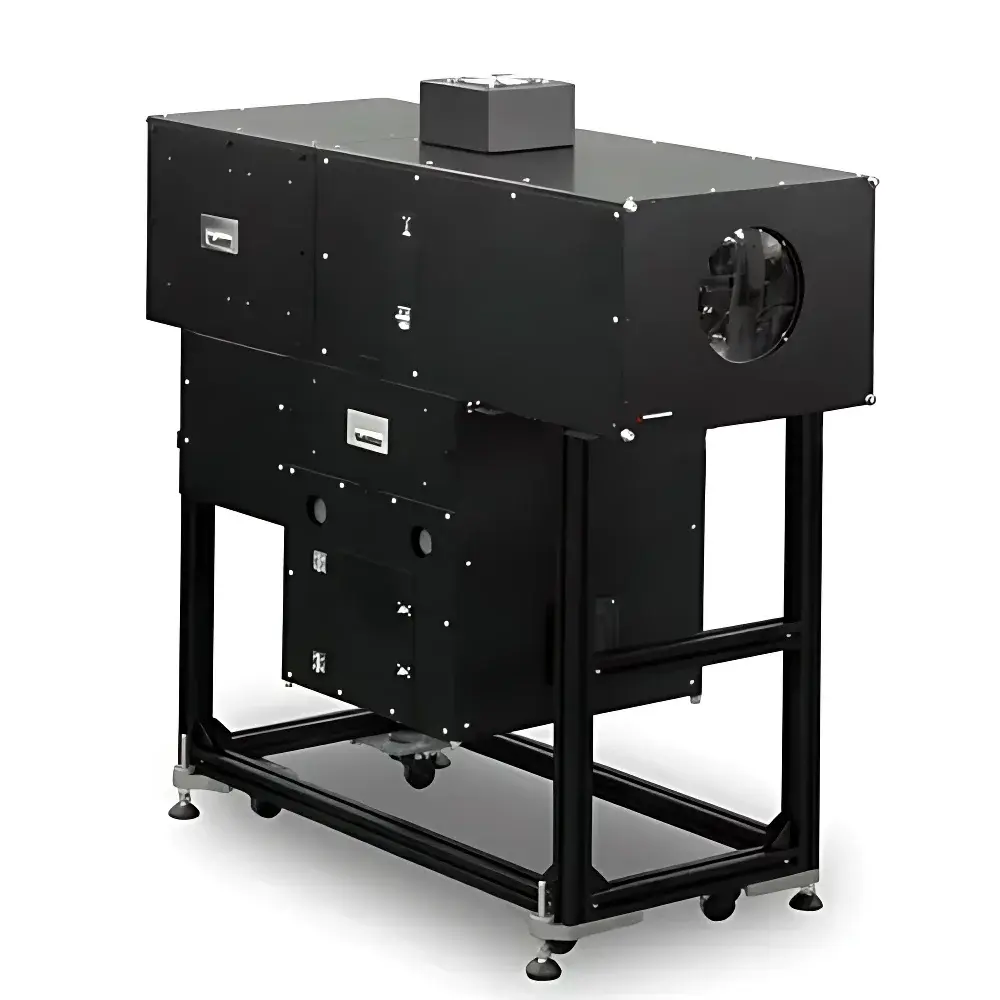
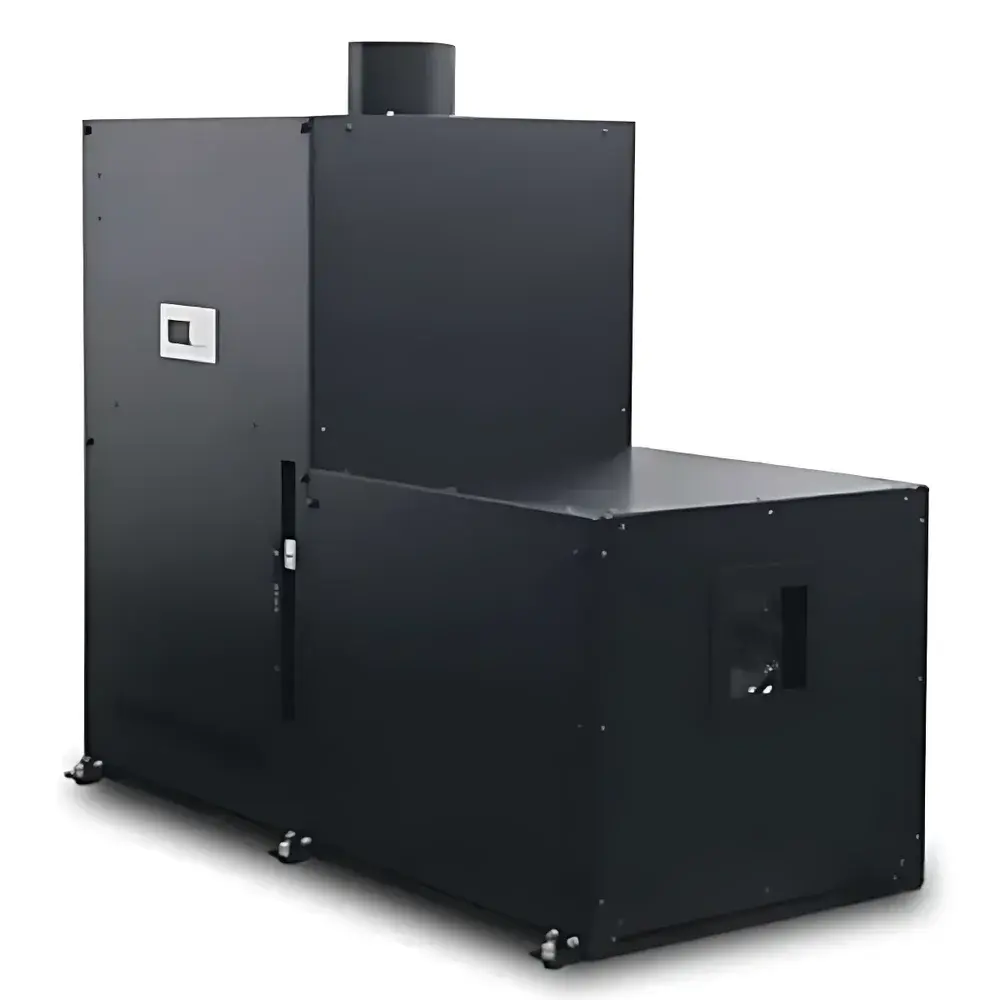
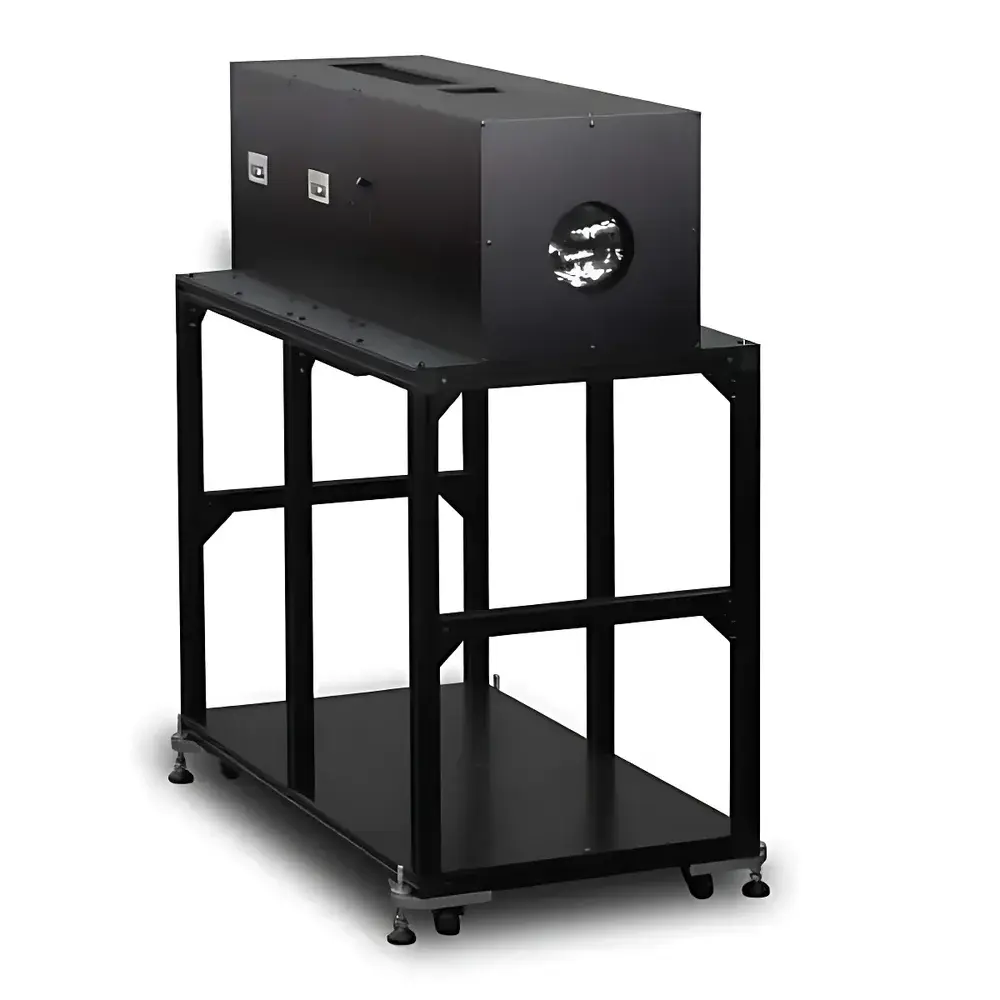
SAN-EI XHS High-Collimation Solar Simulator
| Brand | SAN-EI |
|---|---|
| Origin | Japan |
| Model | XHS |
| Illumination Mode | Steady-State |
| Spectral Range | 300–1100 nm (optional 300–1900 nm) |
| Collimation Half-Angle | <0.3° (customizable) |
| Intensity Stability | <2% (over 1 h) |
| Illumination Distance | 20–1500 mm (customizable) |
| Beam Orientation | Vertical (customizable) |
| Spectral Match | AM1.5G and/or AM0 |
| Uniformity & Illuminated Area | Custom-engineered per application requirements |
Overview
The SAN-EI XHS High-Collimation Solar Simulator is an engineered optical test source designed to replicate extraterrestrial (AM0) or terrestrial (AM1.5G) solar irradiance with exceptional beam collimation—achieving a half-angle divergence of less than 0.3°. Unlike conventional solar simulators that emit divergent or Lambertian illumination, the XHS employs a multi-stage collimation architecture incorporating precision parabolic reflectors, spatial filtering, and spectral conditioning optics to deliver near-parallel irradiance over defined working distances (20–1500 mm). This capability enables physically realistic simulation of sunlight incidence at infinity—critical for evaluating optical sensors and optoelectronic systems whose angular response, field-of-view acceptance, and signal-to-noise behavior depend on incident ray geometry. The system operates in steady-state mode, ensuring stable irradiance output (<2% intensity drift over 1 hour), and supports full spectral compliance with IEC 60904-9:2020 Class AAA requirements when configured with appropriate spectral filters and calibration traceability.
Key Features
- Optical collimation half-angle <0.3°—validated via far-field beam profiling and angular radiance mapping;
- Selectable spectral configuration: AM0 (space-grade, 1366 W/m²) or AM1.5G (terrestrial, 1000 W/m²), with optional extended NIR coverage up to 1900 nm for Si-based and InGaAs sensor validation;
- Steady-state DC operation with active thermal stabilization and real-time irradiance monitoring via NIST-traceable photodiode array;
- Fully customizable illumination geometry: vertical, horizontal, or oblique beam orientation; adjustable working distance; user-defined uniformity zone (e.g., 50 × 50 mm to 300 × 300 mm) with ±2% spatial uniformity across target plane;
- Modular optical path design accommodating integration with environmental chambers, robotic positioning stages, and automated DUT alignment systems;
- Compliance-ready architecture: supports calibration documentation aligned with ISO/IEC 17025, ASTM E927-19, and JIS C 8912 standards.
Sample Compatibility & Compliance
The XHS is purpose-built for functional and metrological testing of optically sensitive devices requiring well-defined angular irradiance conditions. It is routinely deployed for characterization of automotive ADAS components—including LiDAR receivers, camera-based object detection modules, and HUD combiner reflectivity under simulated sun-load conditions. Aerospace applications include sun sensor calibration for satellite attitude determination systems, where incident angle fidelity directly impacts pointing accuracy. The simulator meets essential regulatory benchmarks: spectral match within IEC 60904-9 Class A (spectral), Class A (spatial), and Class A (temporal); irradiance stability conforms to ASTM E927-19 Section 7.3. All factory calibrations are performed using reference cells traceable to NMIJ/AIST (Japan) and include uncertainty budgets compliant with GUM (JCGM 100:2008). System documentation supports GLP/GMP audit readiness and FDA 21 CFR Part 11–compatible electronic record retention when paired with validated control software.
Software & Data Management
Control and monitoring are managed via SAN-EI’s proprietary XHS Control Suite—a Windows-based application supporting both manual operation and script-driven test sequences. The software provides real-time irradiance logging (10 Hz sampling), spectral profile visualization, collimation verification reports, and automated calibration certificate generation. Data export formats include CSV, HDF5, and XML for downstream analysis in MATLAB, Python (NumPy/Pandas), or LabVIEW environments. Optional integration with third-party test management platforms (e.g., NI TestStand, Keysight PathWave) enables synchronization with environmental stress profiles, electrical stimulus signals, and pass/fail decision logic. Audit trails record operator ID, timestamp, parameter settings, and measurement metadata—fully compliant with ISO/IEC 17025 clause 7.10 on result reporting integrity.
Applications
- Automotive: Sunload testing of forward-facing cameras, LiDAR photodetectors, and HUD brightness compensation algorithms under collimated AM1.5G illumination;
- Aerospace: Calibration of coarse and fine sun sensors used in LEO and GEO satellite platforms;
- Display Technology: Evaluation of ambient light rejection performance in AR/VR microdisplays and automotive instrument clusters;
- Photovoltaic R&D: Angular response mapping of concentrator PV (CPV) receivers and secondary optical elements;
- Sensor Metrology: Determination of angular field-of-regard (FOR) and directional responsivity of pyranometers, spectroradiometers, and multispectral imagers.
FAQ
What spectral classes does the XHS achieve per IEC 60904-9?
The XHS achieves Class AAA rating when configured with standard AM1.5G or AM0 spectral filters and calibrated against reference cells traceable to AIST. Spectral mismatch uncertainty is reported in the calibration certificate per IEC 60904-9 Annex B.
Can the collimation angle be adjusted post-purchase?
Collimation optics are fixed at time of manufacture to ensure optical integrity. Custom collimation angles (e.g., 0.1°, 0.5°) must be specified prior to order and are implemented via dedicated collimator assembly—non-field-upgradable.
Is remote operation supported for integration into automated test benches?
Yes. The XHS includes Ethernet (TCP/IP) and RS-232 interfaces with documented SCPI command set, enabling seamless integration into automated test systems without proprietary driver dependencies.
Does the system include NIST-traceable calibration upon delivery?
Each unit ships with a full calibration report issued by SAN-EI’s ISO/IEC 17025-accredited laboratory, including spectral irradiance distribution, collimation profile, temporal stability data, and uncertainty budgets—all traceable to NMIJ/AIST primary standards.





