
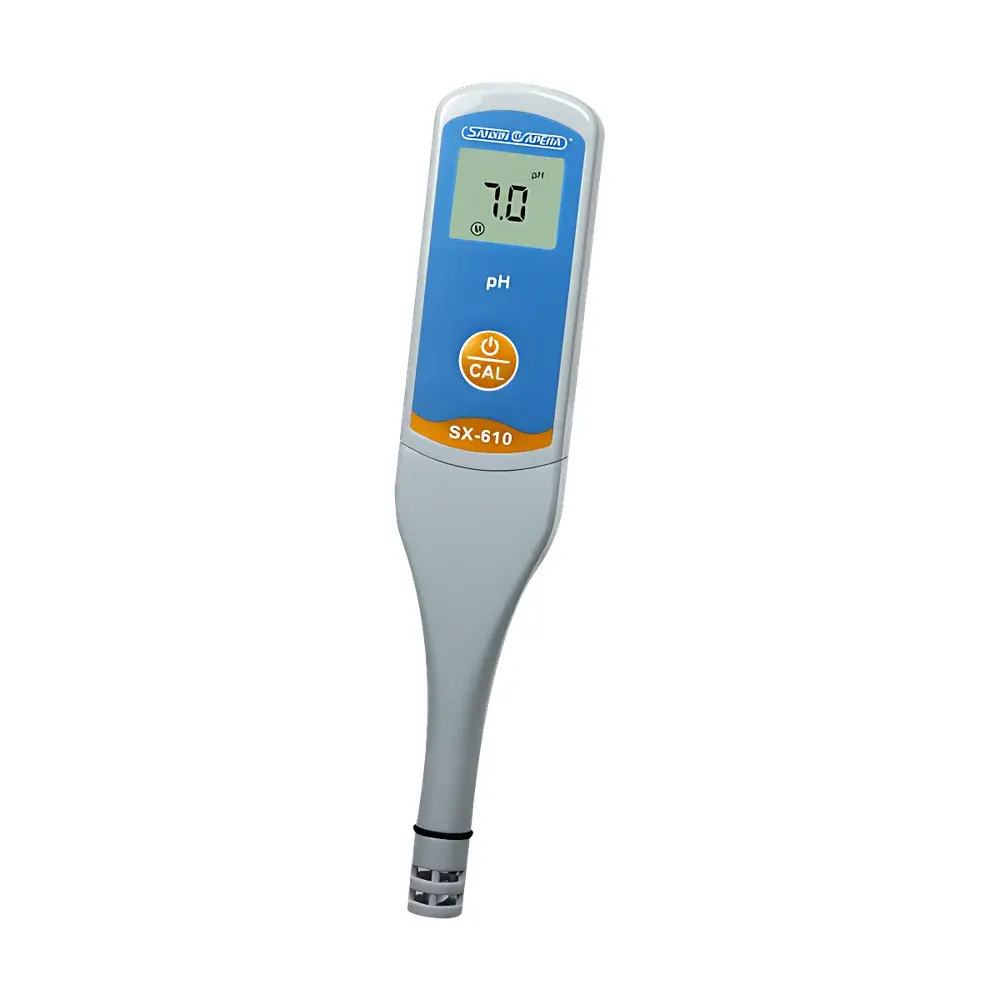
Sanxin SX610 Pocket-Sized pH Meter
| Brand | Sanxin Peri |
|---|---|
| Origin | Shanghai, China |
| Manufacturer Type | Direct Manufacturer |
| Product Category | Domestic |
| Model | SX610 |
| Instrument Type | Pen-style |
| Parameter Type | Single-parameter (pH) |
| Measurement Accuracy | ±0.1 pH |
| Measurement Range | 0.0–14.0 pH |
| Resolution | 0.1 pH |
| Calibration | One-point auto-calibration (pH 7.00) |
| Calibration Standard | NIST-traceable buffers (China version) / USA-traceable buffers (International version) |
| Temperature Compensation | Automatic, 0–60 °C (no temperature display) |
| Power Supply | Two CR2032 lithium batteries (≥100 hours continuous operation) |
| Dimensions | 148 × 29 × 14 mm |
| Weight | 43 g |
| Ingress Protection Rating | IP57 |
| Included Accessories | SX610 meter unit, pH 7.00 calibration buffer (10 mL), electrode storage solution (10 mL), spare CR2032 batteries (2 pcs), protective carrying case, user manual |
Overview
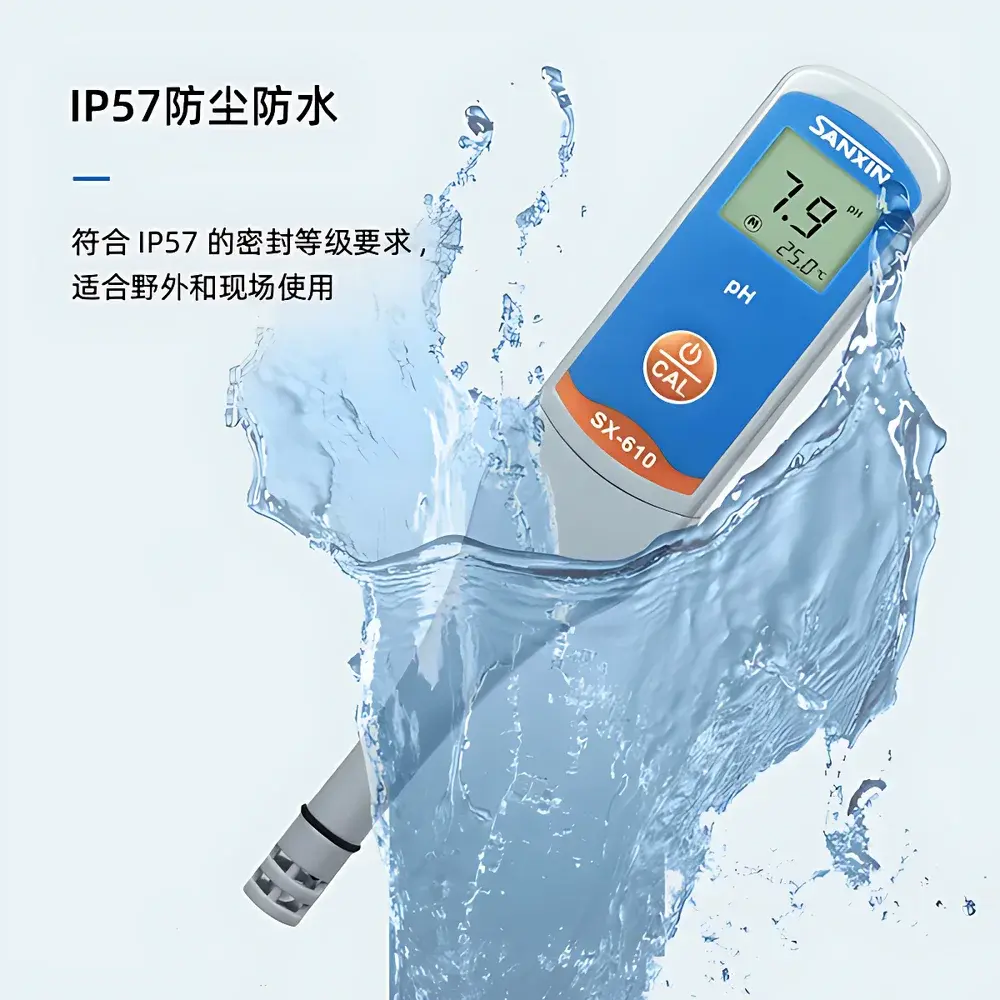
The Sanxin SX610 Pocket-Sized pH Meter is a compact, field-deployable electrochemical instrument engineered for rapid, reliable pH measurement in non-laboratory environments. Based on potentiometric principle—measuring the potential difference between a pH-sensitive glass electrode and a stable reference electrode—the SX610 delivers traceable, single-parameter pH quantification across the full aqueous scale (0.0–14.0 pH). Its pen-style form factor integrates a replaceable combination pH electrode with an embedded microprocessor that implements automatic one-point calibration at pH 7.00 and fully automatic temperature compensation (0–60 °C) without requiring manual input or temperature readout. Designed for robustness in variable ambient conditions, the device conforms to IP57 ingress protection standards—ensuring dust resistance and temporary submersion capability (up to 1 m for 30 minutes)—making it suitable for wastewater monitoring, aquaculture, food processing line checks, environmental field surveys, and educational demonstrations where portability and operational simplicity are critical.
Key Features
- Compact ergonomic design (148 × 29 × 14 mm; 43 g) optimized for one-handed operation and pocket or belt-clip carry
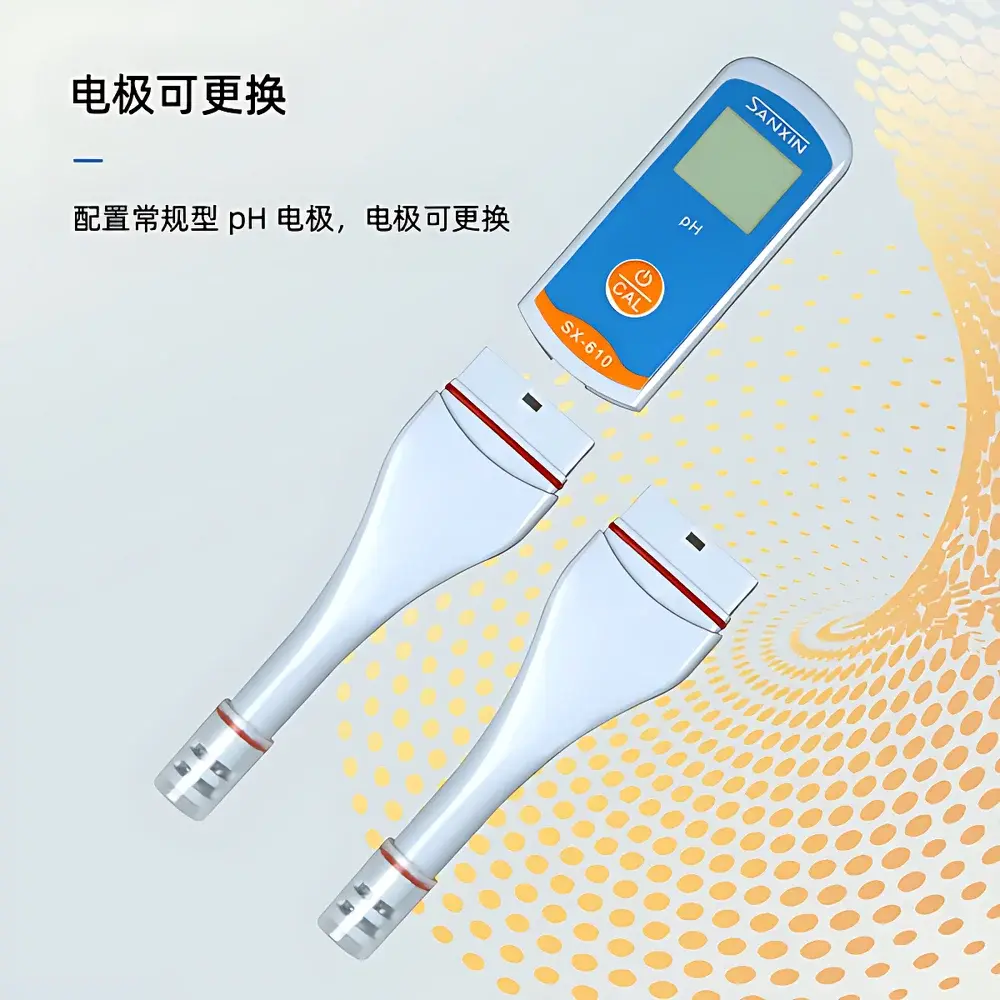
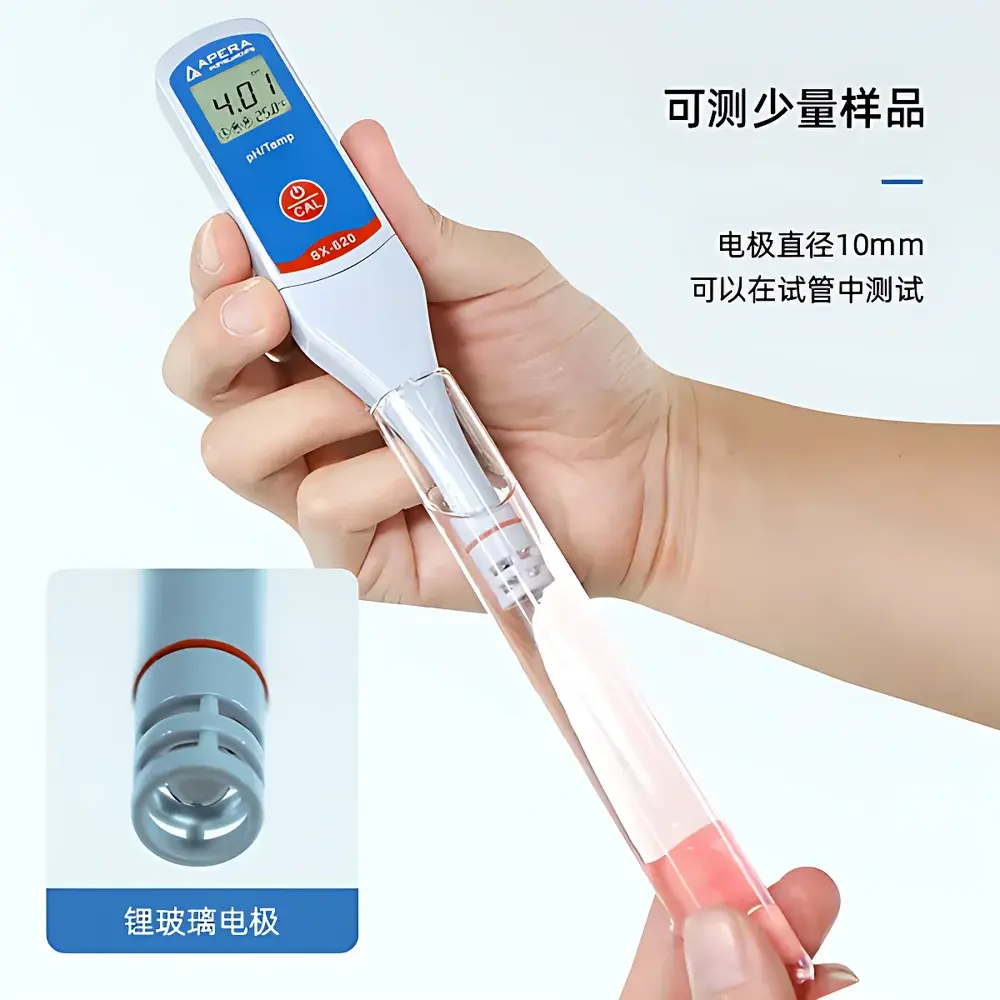
- Replaceable integrated pH electrode with 10 mm diameter sensing tip, enabling cost-effective maintenance and long-term usability
- Single-button interface with intuitive LED indicators for power status, low battery warning, electrode health alert, and auto-shutdown confirmation
- Intelligent microcontroller architecture supporting auto-calibration, auto-temperature compensation, and auto-power-off after 10 minutes of inactivity
- Dual CR2032 lithium battery configuration providing ≥100 hours of continuous measurement runtime under typical usage conditions
- IP57-rated housing constructed from chemically resistant ABS polymer, validated per IEC 60529 for field durability
Sample Compatibility & Compliance
The SX610 is intended for aqueous liquid samples with conductivity ≥100 µS/cm and total dissolved solids (TDS) ≤5,000 ppm. It is not recommended for non-aqueous solvents, highly viscous media, or samples containing high concentrations of fluoride, strong acids/bases (>2 M), or heavy metal ions that may poison the glass membrane. Calibration follows standard electrochemical protocol using certified pH 7.00 buffer solutions traceable to either NIST (for China-market units) or USA NIST-equivalent reference materials (for international distribution). While the SX610 does not generate audit trails or electronic records compliant with FDA 21 CFR Part 11, its calibration and measurement repeatability meet ASTM D1293 and ISO 10523 requirements for routine field pH assessment. The device supports GLP-aligned workflows when used with documented calibration logs and controlled buffer handling.
Software & Data Management
The SX610 operates as a standalone analog-digital hybrid instrument with no Bluetooth, USB, or data logging capability. All measurements are displayed in real time on a fixed-segment LCD with 0.1 pH resolution and retained only visually—no internal memory or export functionality is provided. Users are required to manually record readings alongside contextual metadata (e.g., sample ID, time, temperature estimate, calibration date). For regulatory documentation, laboratories should maintain external logbooks or LIMS-integrated entry forms referencing the instrument’s serial number, calibration certificate (if applicable), and buffer lot numbers. Firmware is not upgradable; functional behavior is fixed at manufacture.
Applications
- Field-based water quality screening in rivers, lakes, and municipal distribution systems
- Routine pH verification during beverage, dairy, and brewing production processes
- Aquaculture pond management and hydroponic nutrient solution monitoring
- Classroom experiments and undergraduate chemistry laboratory instruction
- Swimming pool and spa maintenance checks by facility technicians
- Soil extract analysis (using 1:1 or 1:5 soil:water suspensions prepared per ISO 10390)
FAQ
What calibration buffers are compatible with the SX610?
The SX610 requires pH 7.00 calibration buffer only. Units sold in China use NIST-traceable pH 7.00 solution; international versions ship with USA-traceable equivalents. Two-point calibration is not supported.
Can the SX610 measure temperature?
No. Although it performs automatic temperature compensation (0–60 °C), it does not display or output temperature values.
Is the electrode replaceable, and what is its expected service life?
Yes—the integrated combination electrode is user-replaceable. Under normal use with proper storage in electrode soaking solution, typical lifespan is 12–18 months. Performance degradation is signaled via slow response, drift >0.2 pH post-calibration, or failure to stabilize.
Does the SX610 comply with ISO/IEC 17025 requirements?
As a Class II portable pH meter, it may be included in accredited testing scopes when operated within documented procedures, calibrated against certified standards, and verified for performance prior to use—but it lacks features required for full traceability (e.g., digital calibration logs, uncertainty reporting).
How often should the instrument be recalibrated?
Daily calibration is recommended for critical applications; for general field use, recalibrate before each measurement session or when ambient temperature changes exceed ±5 °C.
Related Products





