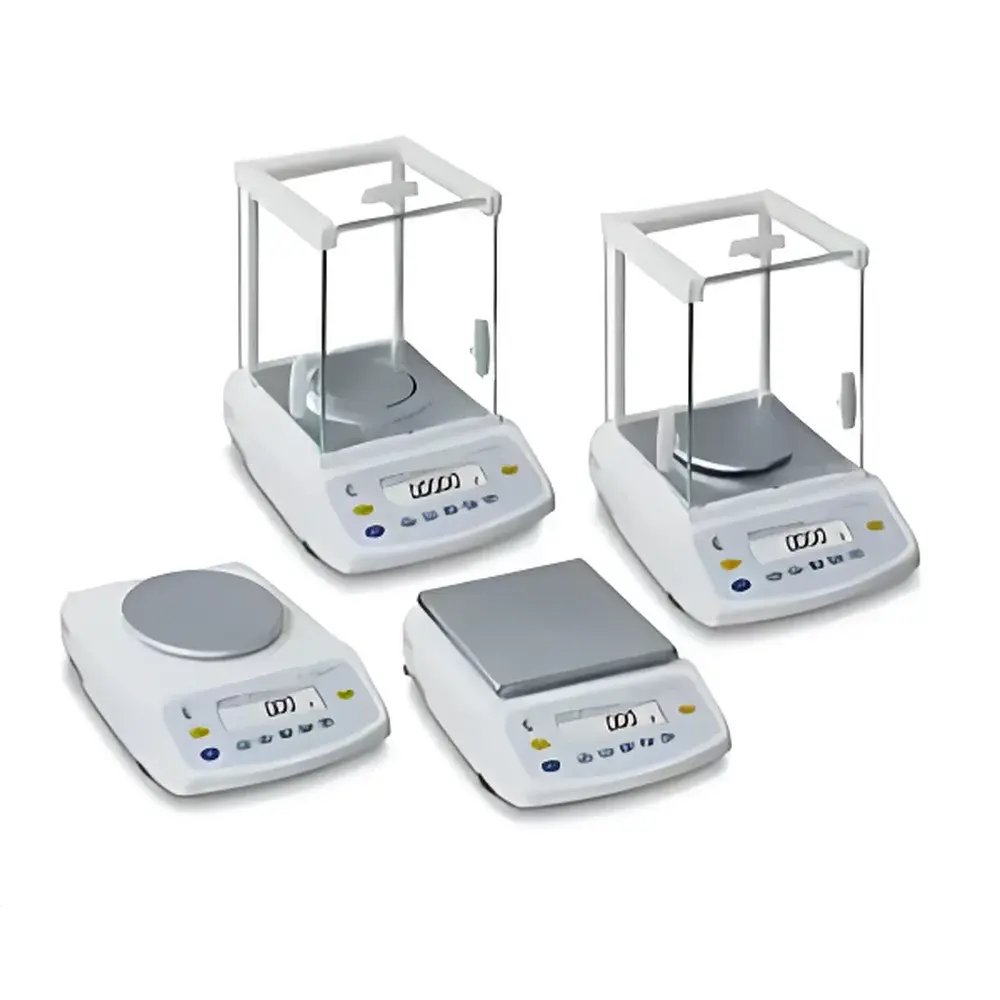
Sartorius BSA223S Precision Balance
| Key | Brand: Sartorius |
|---|---|
| Model | BSA223S |
| Maximum Capacity | 220 g |
| Readability | 0.001 g |
| Repeatability | ±0.001 g |
| Linearity | ±0.002 g |
| Pan Size | 115 mm diameter |
| Calibration | Internal (CW version) or External |
| Response Time | ≤1 s |
| Interface | RS232 |
| Compliance | GLP-ready, ISO/IEC 17025-supportive environment |
Overview
The Sartorius BSA223S Precision Balance is a high-performance laboratory balance engineered for reproducible mass measurement in quality control, R&D, and routine analytical workflows. Utilizing a monolithic dual-lever electromagnetic force compensation sensor architecture, the BSA223S delivers stable, drift-resistant weighing performance under variable ambient conditions. Its 0.001 g readability and ±0.001 g repeatability meet the technical requirements for Class II precision balances per OIML R 76-1 and ANSI/NCSL Z540-1. Designed for environments where electrostatic interference, air currents, and thermal fluctuations impact measurement integrity, the balance integrates a five-sided draft shield with anti-static coated glass, dynamic temperature compensation (DTC), and an optimized mechanical damping system to suppress vibration-induced noise—critical for consistent results on benchtops adjacent to centrifuges or HVAC vents.
Key Features
- Monolithic dual-lever electromagnetic sensor with 40 MHz microprocessor (MC1) for rapid stabilization and data processing
- Five-sided anti-static glass draft shield providing unobstructed visibility and effective electrostatic shielding
- Internal calibration (BSA223S-CW variant) with motorized built-in weight; external calibration option available
- Dynamic Temperature Compensation (DTC) algorithm continuously adjusts for thermal drift across operational temperature range (10–30 °C)
- Automatic overload protection and real-time fault diagnostics with self-diagnostics log
- Ergonomic dual tare keys (left/right positioning) and front-mounted bubble level for rapid setup verification
- Bottom-loading hook for density determination and large-volume sample weighing
- GLP-compliant data output via RS232 interface, supporting timestamped, operator-ID-tagged records
Sample Compatibility & Compliance
The BSA223S accommodates samples up to 220 g on its 115 mm diameter stainless-steel weighing pan, compatible with standard labware including beakers, crucibles, and weighing boats. Its sealed sensor housing and conformal-coated PCBs enhance resistance to dust and minor moisture exposure—suitable for non-hazardous, non-corrosive applications in ISO Class 7 cleanrooms or regulated QC labs. The balance supports audit-ready operation: all calibrations, zero adjustments, and parameter changes are logged with timestamps and user identifiers when connected to compliant LIMS or ELN systems. It aligns with foundational metrological requirements of ISO/IEC 17025:2017 (clause 6.4.10 on equipment verification), USP for balance suitability testing, and supports traceability pathways required under FDA 21 CFR Part 11 when paired with validated software.
Software & Data Management
Equipped with an industry-standard RS232 serial interface, the BSA223S transmits stabilized weight values, status flags (e.g., “stable”, “overload”, “calibrating”), and metadata—including date/time stamp, operator ID (if configured), and unit designation—in ASCII format. Output formatting is configurable (e.g., fixed-width, comma-delimited) to integrate seamlessly with LabWare LIMS, Thermo Fisher SampleManager, or custom Python/Node.js acquisition scripts. The balance’s internal memory retains the last 99 weighing events for local review. While no proprietary PC software is bundled, Sartorius provides documented command protocols and SCPI-like syntax for integration into automated workflows requiring batch logging, statistical process control (SPC) charting, or electronic signature capture.
Applications
- Pharmaceutical QC: Active pharmaceutical ingredient (API) dispensing, excipient blending verification, and tablet weight uniformity testing per USP
- Chemical formulation: Precise reagent dosing for catalyst preparation, polymer synthesis, and standard solution preparation
- Materials science: Density determination (using sinker method), powder flow characterization (mass-based feed rate validation), and coating weight analysis
- Food & beverage: Nutritional labeling compliance (net weight verification), moisture content by loss-on-drying (LOD), and portion control auditing
- Academic teaching labs: Stoichiometric experiments, gravimetric analysis, and calibration exercises emphasizing measurement uncertainty estimation
FAQ
What is the difference between BSA223S and BSA223S-CW?
The “CW” suffix denotes internal calibration capability: the CW model contains a motor-driven built-in weight and performs automatic calibration at user-defined intervals or upon power-up; the standard BSA223S requires manual external calibration using certified weights.
Does the BSA223S support density determination?
Yes—its integrated lower hook enables suspension weighing for solid density measurement using Archimedes’ principle, provided a calibrated sinker and liquid medium (e.g., water, ethanol) are used.
Is the RS232 interface compatible with modern Windows/macOS systems?
Yes—when used with a USB-to-RS232 adapter (FTDI or CP2102 chipset recommended), the interface supports direct connection to PCs running terminal emulators (e.g., PuTTY, Tera Term) or custom acquisition software.
How often should the balance be calibrated?
Per ISO/IEC 17025, calibration frequency must be risk-assessed; typical practice includes daily zero check, weekly internal calibration (CW), and annual third-party verification with traceable standards.
Can the BSA223S be used in a fume hood?
Not recommended—draft shields are not rated for chemical vapor exposure, and airflow disrupts measurement stability; use only in stable, low-turbulence ambient conditions.