
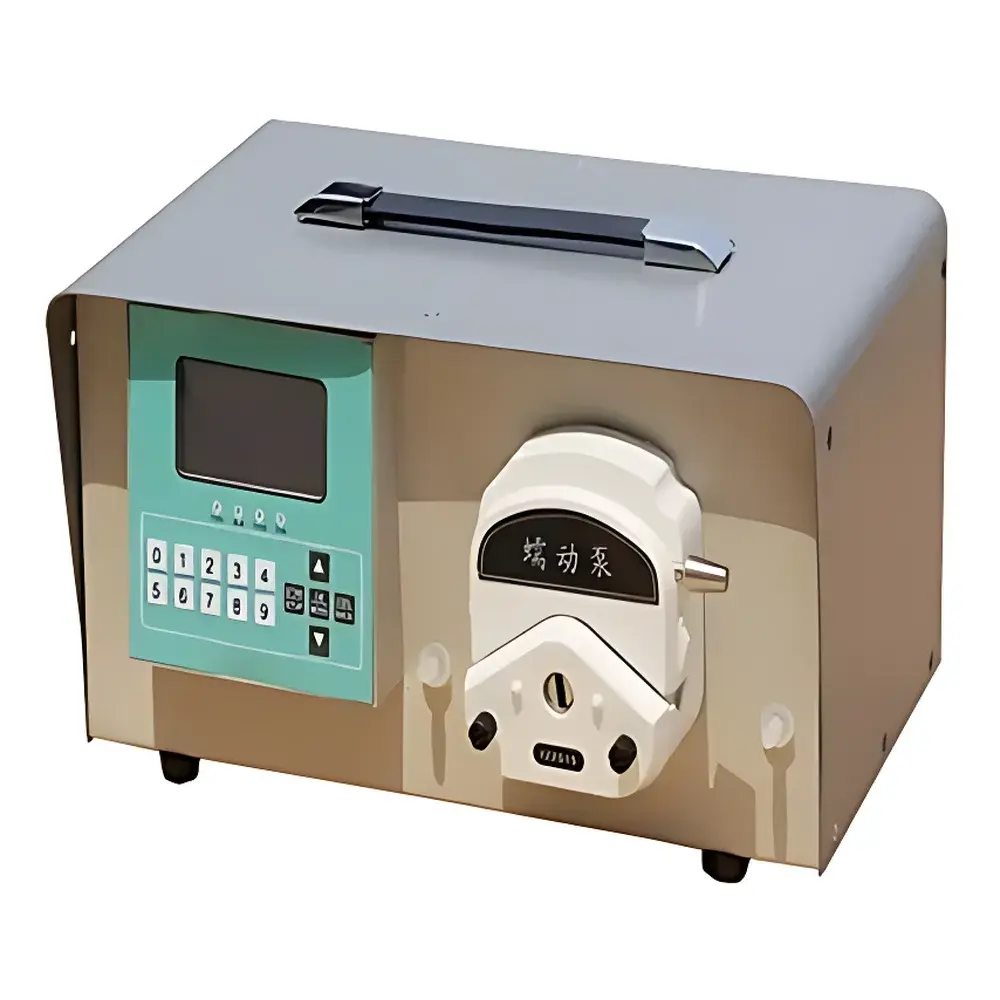
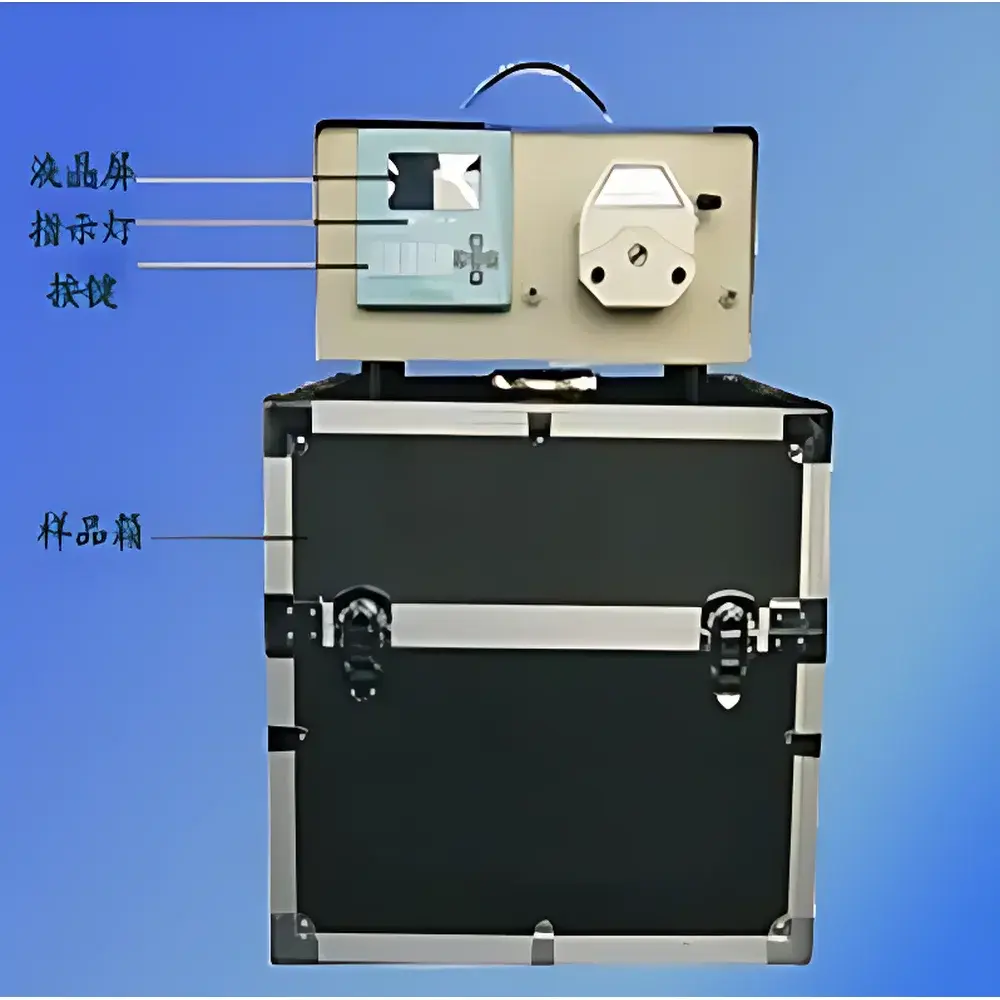
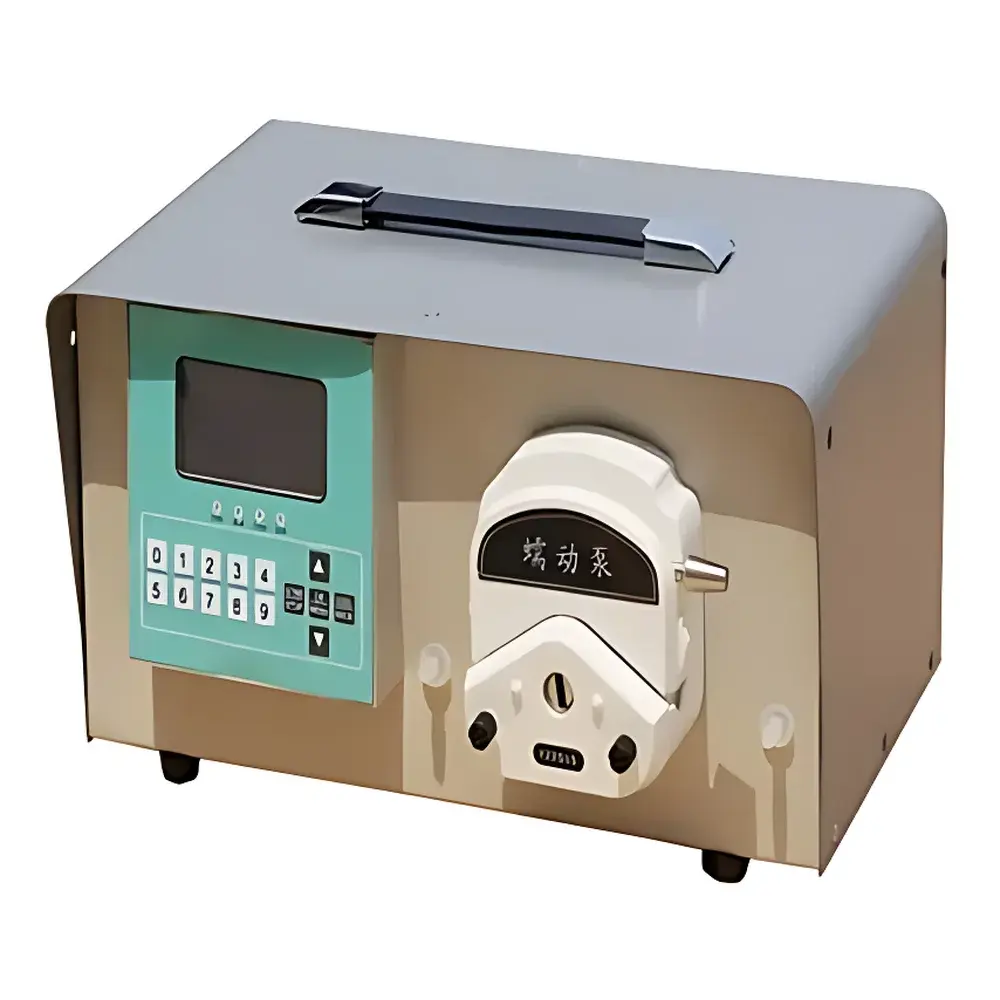
SCI-024 Portable Proportional Multifunctional Water Sampler
| Origin | Beijing |
|---|---|
| Manufacturer Type | Distributor |
| Origin Category | Domestic |
| Model | SCI-024 |
| Instrument Type | Portable Water Sampler |
Overview
The SCI-024 Portable Proportional Multifunctional Water Sampler is an integrated, field-deployable environmental monitoring instrument engineered for precise, automated water sampling in dynamic hydrological and wastewater discharge environments. It operates on the principle of proportional sampling—synchronizing sample volume with real-time flow rate—to ensure statistically representative composite samples compliant with regulatory data quality objectives. Designed to meet the technical specifications outlined in China’s HJ/T 372–2007 “Technical Requirements and Test Methods for Automatic Water Samplers”, the device integrates flow measurement (via ultrasonic or submersible level transducer inputs), intelligent sample allocation, and robust power management into a single compact platform. Its dual-CPU architecture, optically isolated signal paths, and firmware-upgradable embedded system support long-term unattended operation in remote or harsh field conditions—including municipal wastewater outfalls, riverine monitoring stations, irrigation canals, and industrial effluent points—while maintaining traceable, auditable sampling records.
Key Features
- Modular firmware architecture with dual-CPU control and multi-stage optical isolation for enhanced electromagnetic compatibility and operational stability.
- Integrated open-channel flow metering capability supporting four standard weir/flume types: V-notch (triangular), rectangular, broad-crested, and Parshall flume—enabling direct flow-proportional sampling without external flow computers.
- Flexible sensor interface: accepts 4–20 mA analog input from submersible pressure transducers or ultrasonic level sensors for continuous liquid-level and derived flow-rate calculation.
- High-reliability peristaltic pump driven by micro-stepping hybrid stepper motor, delivering consistent suction performance up to 8 m vertical lift and ≥50 m horizontal tubing length.
- Optically guided mechanical sample arm with auto-positioning accuracy for precise bottle indexing—supports both discrete (single-bottle) and composite (multi-bottle mixed) sampling protocols.
- Backlit graphical LCD interface with full Chinese-language menu navigation, password-protected configuration access, and real-time status display of sampling sequence, flow rate, and battery voltage.
- Non-volatile memory storage (≥10,000 event logs) retaining time-stamped sampling metadata—including date/time, volume, flow rate, sensor readings, and error codes—with automatic power-fail recovery and cold-start resumption.
- Dual-power operation: AC 220 V mains input or internal rechargeable DC 12 V battery pack (field-rated >3000 h continuous runtime per charge cycle).
Sample Compatibility & Compliance
The SCI-024 accommodates standard polyethylene or glass sampling bottles (24 × 1000 mL, 12 × 1000 mL + 1 × 5000 mL, or 1 × 10 L configurations), with chemically inert fluid pathways suitable for pH 2–12 aqueous matrices including municipal wastewater, surface water, and industrial effluents. Its sampling precision (±5% volume accuracy) and flow measurement uncertainty (±1% FS) align with QA/QC requirements for regulatory reporting under national environmental monitoring programs. The instrument satisfies electrical safety standards (insulation resistance >50 MΩ) and environmental operating limits (–20 °C to +60 °C). While not certified to ISO/IEC 17025 or EPA Method 1664, its design principles and documentation traceability support GLP-aligned field data collection workflows.
Software & Data Management
Data export is supported via RS-232 and RS-485 serial interfaces, enabling integration with SCADA systems or third-party telemetry platforms. Sample event logs and flow profiles are stored in timestamped ASCII format for post-processing in Excel or statistical software. Remote triggering—via dry-contact closure or Modbus RTU command—is implemented for centralized networked monitoring. Firmware updates are performed in-field using standard USB-to-serial adapters and vendor-provided configuration utilities, ensuring long-term adaptability to evolving sampling protocols without hardware replacement.
Applications
- Regulatory compliance sampling at municipal wastewater treatment plant (WWTP) discharge points.
- Time-weighted or flow-proportional composite sampling for BOD, COD, TSS, and nutrient analysis in rivers and reservoirs.
- Industrial effluent monitoring under discharge permit conditions requiring proportional representation.
- Source water intake characterization for drinking water utilities.
- Hydrological studies involving seasonal flow variation and sediment load estimation.
- Emergency response deployments for spill tracking and plume delineation.
FAQ
What flow measurement methods does the SCI-024 support?
It accepts analog (4–20 mA) inputs from ultrasonic or submersible pressure level sensors and calculates flow using pre-programmed hydraulic equations for triangular, rectangular, broad-crested, and Parshall flumes.
Can the sampler operate fully autonomously in off-grid locations?
Yes—its internal rechargeable 12 V battery supports >3000 hours of continuous operation; solar charging compatibility is achievable via optional external charge controllers.
Is the sampling sequence programmable for mixed-mode operation?
Yes—users may configure combinations of time-based, flow-triggered, level-proportional, and fixed-volume sampling within a single mission profile.
How is data integrity ensured during power interruption?
All critical parameters—including clock time, sampling schedule, and last-executed step—are retained in non-volatile memory; the system resumes operation automatically upon power restoration.
What maintenance intervals are recommended for field deployment?
Peristaltic pump tubing should be replaced every 6 months under continuous use; level sensor calibration is advised prior to each seasonal deployment cycle.
Related Products







