
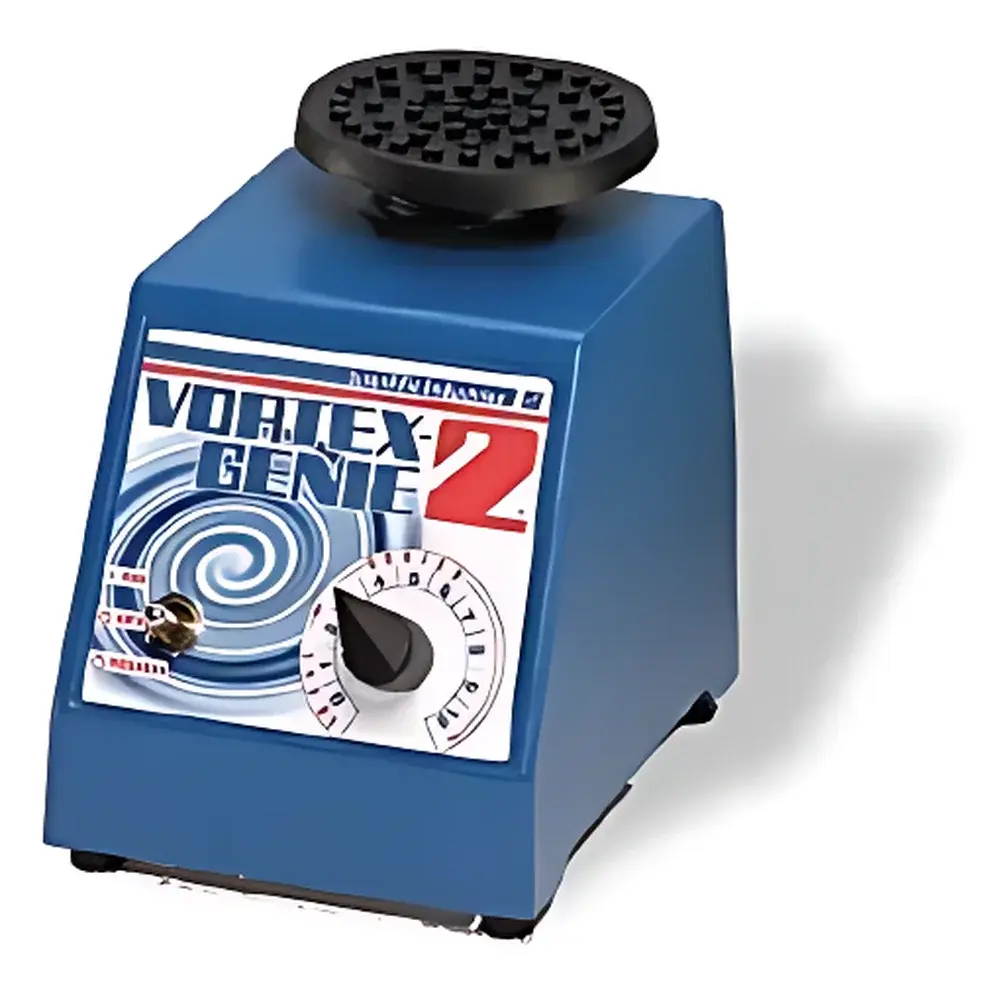
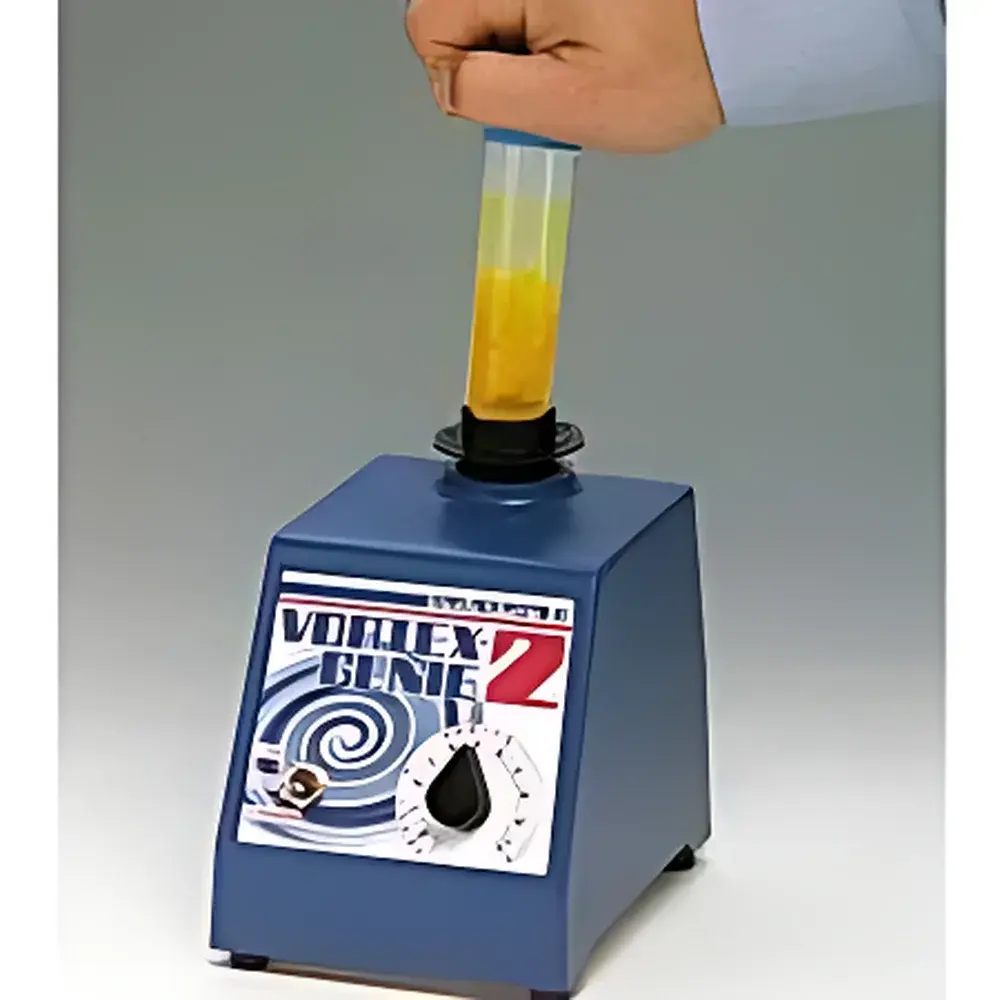
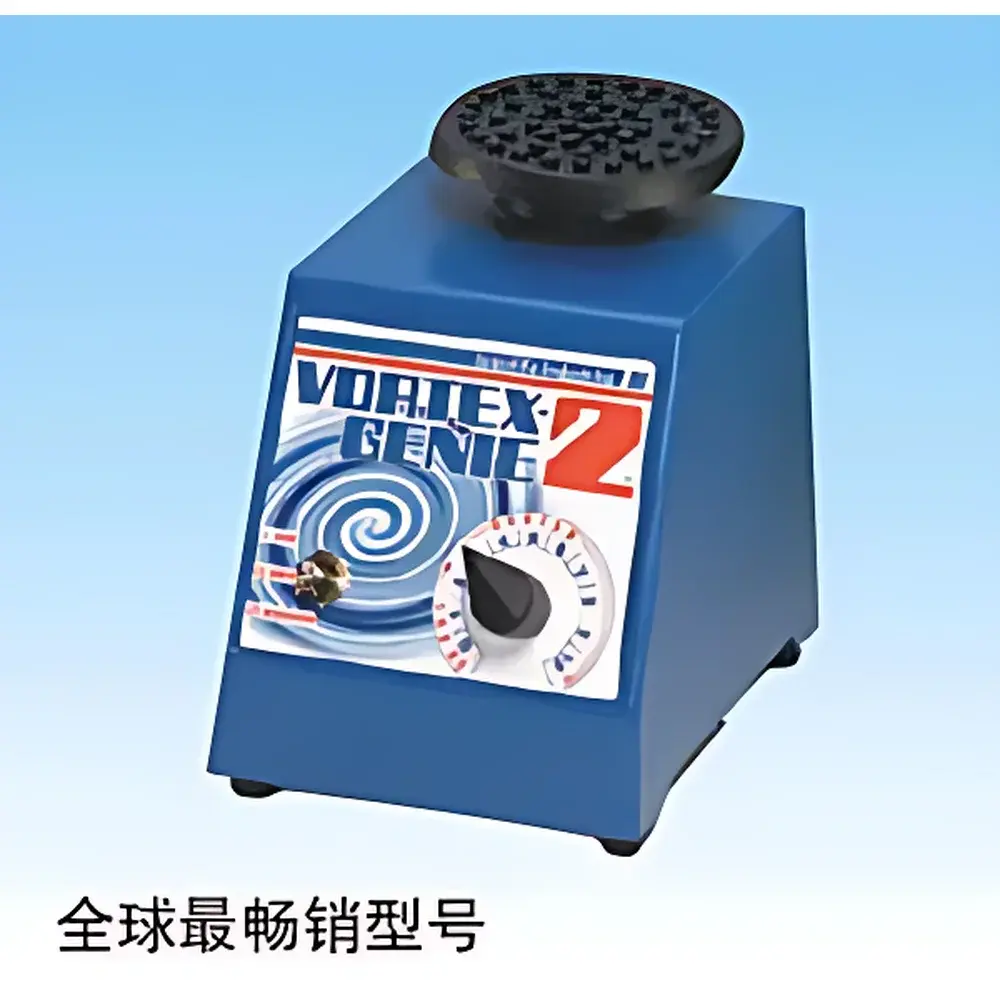
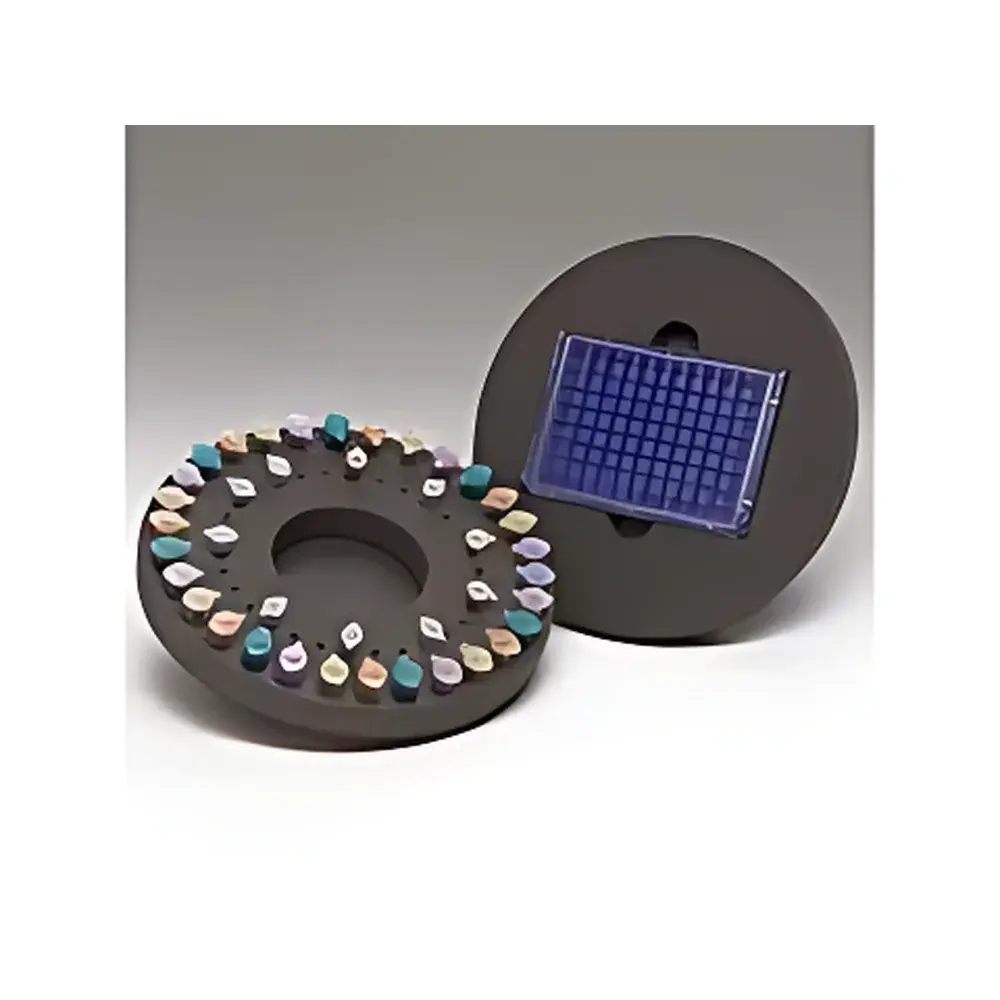
Scientific Industries Vortex-Genie 2 Benchtop Vortex Mixer
| Brand | Scientific Industries |
|---|---|
| Origin | USA |
| Model | Vortex-Genie 2 (SI-0256) |
| Speed Range | 600–3000 rpm |
| Operating Modes | Continuous, Touch-Activated, Variable-Speed |
| Motion Type | Orbital (Circular) |
| Amplitude | 4 mm |
| Housing Material | Cast Iron |
| Speed Indication | Analog Dial Scale |
| Power Input | 230 V, 50 Hz, 0.5 A |
| Weight | 4 kg |
| Dimensions | 165 × 122 × 165 mm |
| Certifications | UL, CSA, CE |
| Warranty | 2 Years |
Overview
The Scientific Industries Vortex-Genie 2 is a precision-engineered benchtop vortex mixer designed for consistent, repeatable sample homogenization across diverse laboratory workflows. Based on orbital shaking mechanics—where the platform rotates in a fixed horizontal circle with a 4 mm amplitude—the instrument generates controlled turbulent mixing through centrifugal force and fluid shear, enabling rapid suspension of particulates, resuspension of pellets, and uniform dispersion of reagents in tubes, microplates, and flasks. Its cast iron housing provides inherent mechanical stability and vibration damping, minimizing energy loss and ensuring long-term operational fidelity. As a globally recognized standard in routine lab practice, the Vortex-Genie 2 supports reproducible mixing under both GLP-aligned manual protocols and high-throughput automated workflows when integrated with compatible accessories.
Key Features
- Three-position power switch enables seamless transition between continuous operation, momentary touch-activation (for brief, operator-controlled pulses), and variable-speed adjustment—optimizing control for sensitive samples or time-critical steps.
- Robust cast iron chassis (4 kg total mass) ensures minimal displacement during high-speed operation, preserving platform alignment and reducing acoustic noise in shared lab environments.
- Analog dial scale offers intuitive, non-digital speed referencing across the full 600–3000 rpm range—eliminating calibration drift concerns associated with electronic displays while maintaining traceable setting repeatability.
- Orbital motion profile (4 mm amplitude) delivers balanced shear-to-lift ratio, preventing excessive foaming in protein solutions or cell suspensions while achieving efficient mixing in viscous media such as glycerol-based storage buffers.
- UL, CSA, and CE certifications confirm compliance with international electrical safety standards, supporting deployment in regulated environments including ISO/IEC 17025-accredited testing laboratories and pharmaceutical QC labs operating under GMP guidelines.
Sample Compatibility & Compliance
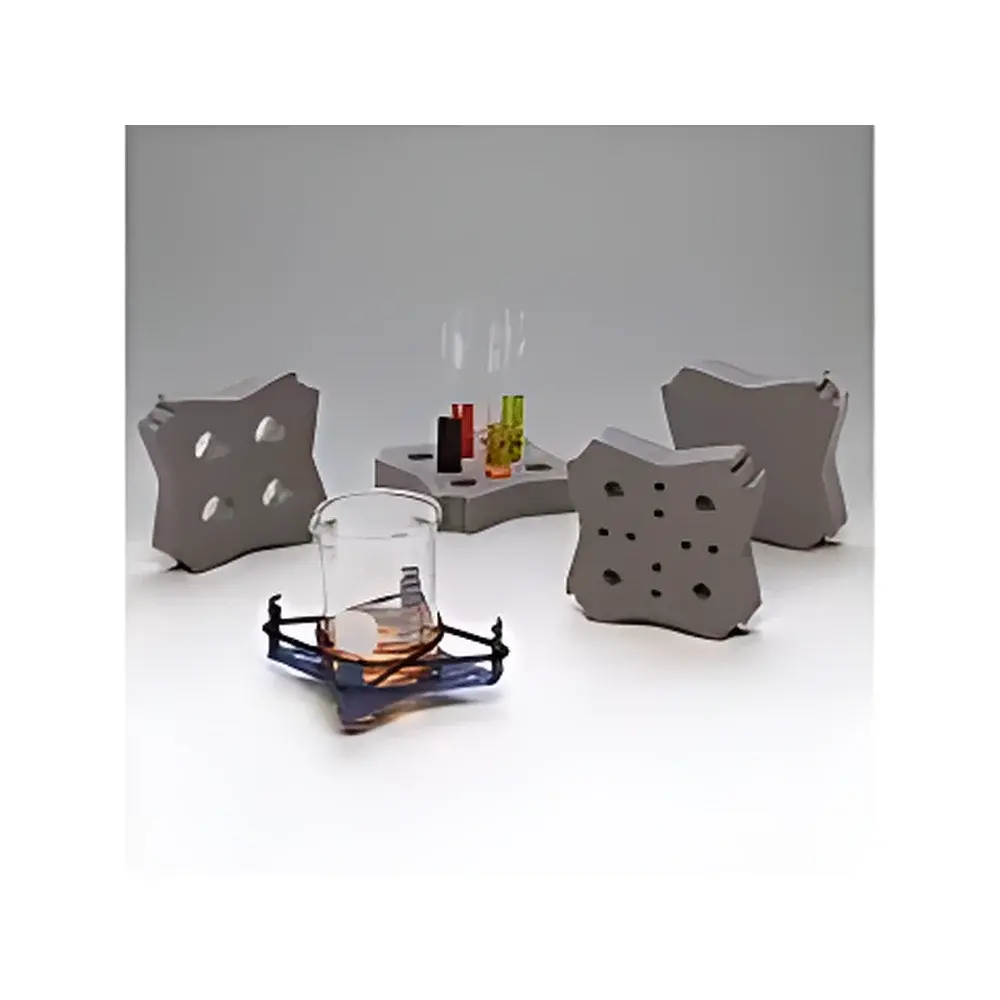
The Vortex-Genie 2 accommodates a broad spectrum of container formats via interchangeable accessory platforms. Standard equipment includes a universal rubber cup insert for single 12–18 mm tubes and a 3-inch flat platform for beakers or low-profile vessels. Optional kits expand capability: the H301 Multi-Sample Kit supports simultaneous mixing of up to 96 wells in microtiter plates (e.g., 96-well ELISA plates) using dedicated plate inserts, while the H302 Large-Sample Kit enables secure handling of conical tubes (9–37 mm diameter), centrifuge bottles, and flasks via adjustable rubber belts and contoured inserts. All accessories are chemically resistant to common solvents (e.g., ethanol, isopropanol, dilute acids/bases) and autoclavable (up to 121 °C, 15 psi). No regulatory claims regarding sterile processing are made; users must validate cleaning and sterilization procedures per internal SOPs and applicable FDA 21 CFR Part 11 data integrity requirements when used in cGMP contexts.
Software & Data Management
The Vortex-Genie 2 operates as a standalone electromechanical device without embedded firmware, network interfaces, or digital logging capabilities. This analog architecture eliminates cybersecurity vulnerabilities, firmware update dependencies, and software validation burdens—making it inherently suitable for environments where ALCOA+ principles (Attributable, Legible, Contemporaneous, Original, Accurate) are enforced through procedural documentation rather than electronic audit trails. Speed settings are recorded manually in lab notebooks or LIMS entries alongside sample IDs and mixing duration. For laboratories requiring electronic record linkage, integration with external timers or programmable PLCs can be implemented at the facility level without modifying the instrument’s certified configuration.
Applications
- Resuspension of lyophilized reagents and bacterial cell pellets prior to downstream analysis (e.g., PCR, Western blotting, enzyme assays).
- Homogenization of immunoassay reagents in microtiter plates to ensure uniform antigen-antibody binding kinetics.
- Pre-analytical sample preparation for clinical chemistry—including whole blood anticoagulant mixing, serum separation verification, and urine sediment resuspension.
- Quality control testing of suspensions and emulsions in pharmaceutical development (e.g., particle dispersion uniformity per USP light obscuration methodology).
- Support of ASTM D4097 (Standard Test Method for Determining the Stability of Emulsions by Centrifuge Method) through standardized agitation pre-centrifugation steps.
FAQ
Is the Vortex-Genie 2 compatible with 240 V / 60 Hz power supplies?
No—this unit is configured for 230 V, 50 Hz operation. A separate 240 V / 60 Hz variant (SI-0256-240) is available upon request and requires explicit ordering confirmation.
Can the instrument be mounted in a biosafety cabinet or cold room?
Yes, provided ambient temperature remains within 10–40 °C and relative humidity does not exceed 80% non-condensing. The cast iron housing resists thermal contraction effects better than polymer alternatives.
Does the 2-year warranty cover accessory components?
Warranty applies to the base unit only. Accessories (e.g., H301, H302 kits) carry a separate 90-day limited warranty against manufacturing defects.
Is speed calibration traceable to NIST standards?
While the analog dial is factory-set and stable over time, formal speed calibration services—including NIST-traceable verification—are available through authorized Scientific Industries service centers upon request.
What maintenance is required to sustain performance?
Routine cleaning of the platform and inserts with 70% isopropanol; periodic inspection of rubber components for cracking or compression set; no lubrication or internal servicing is recommended or supported.



