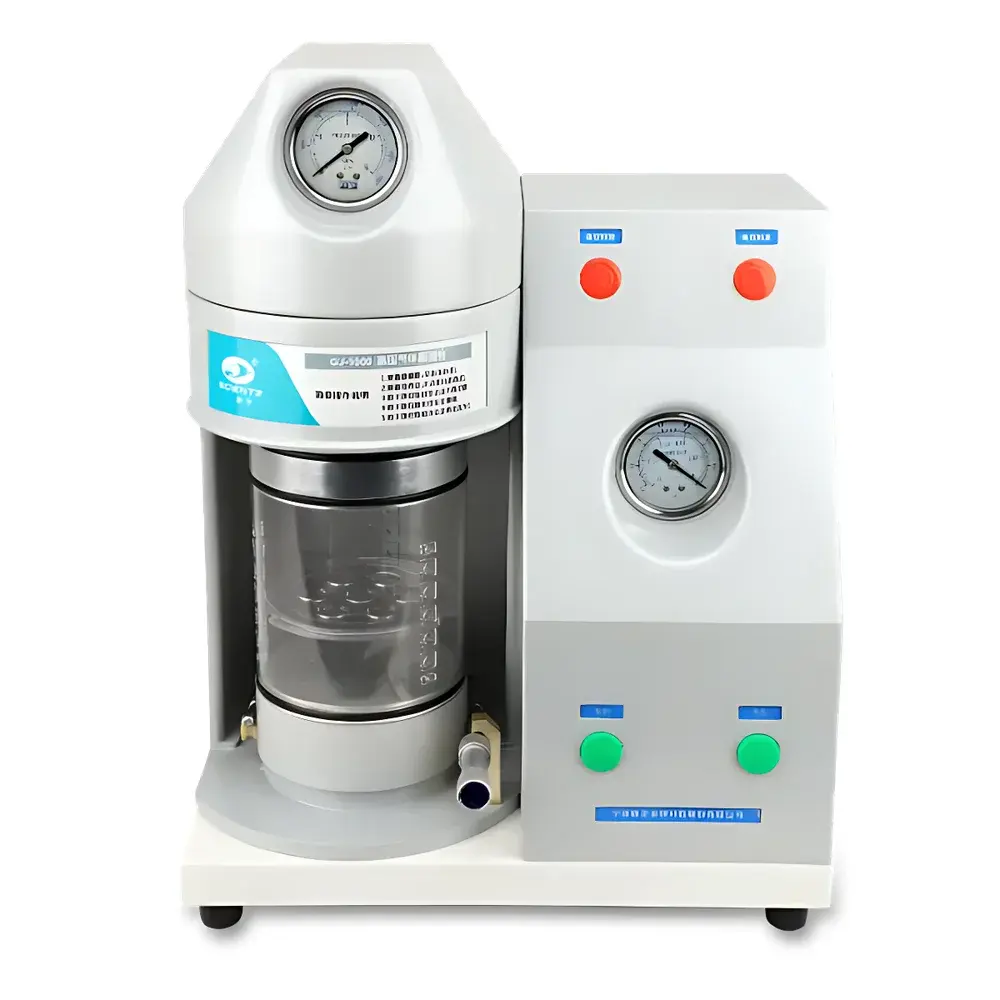
Scientz GJ-1000 High-Pressure Pneumatic Gene Gun
| Brand | Scientz |
|---|---|
| Origin | Zhejiang, China |
| Manufacturer Type | OEM Manufacturer |
| Region of Origin | Domestic (China) |
| Model | GJ-1000 |
| Pricing | Upon Request |
Overview
The Scientz GJ-1000 High-Pressure Pneumatic Gene Gun is a precision biophysical delivery system engineered for particle-mediated nucleic acid transfer into eukaryotic cells, intact tissues, and whole organisms. It operates on the principle of helium-driven ballistic microprojectile bombardment—commonly referred to as biolistics—where DNA- or RNA-coated microparticles (typically gold or tungsten, 0.6–1.6 µm in diameter) are accelerated to supersonic velocities via transient high-pressure gas pulses. This method enables transient or stable transfection without viral vectors, preserving native cellular architecture and avoiding enzymatic degradation pathways associated with chemical or electroporation-based methods. The GJ-1000 employs rupture discs made from polyimide film of calibrated thickness to precisely control helium pressure buildup; upon reaching the disc’s burst threshold (3–12 MPa), a shockwave accelerates the microcarrier assembly toward the target with reproducible kinetic energy. Its design prioritizes operational repeatability, biosafety compliance, and compatibility with sterile tissue culture workflows.
Key Features
- Adjustable helium pressure range: 3–12 MPa, enabling empirical optimization for diverse cell types, plant tissues, and developmental stages
- Interchangeable rupture discs: Polyimide-based burst membranes available in rated pressures of 3.5, 4.5, and 7 MPa—certified for consistent mechanical failure thresholds
- Modular carrier membrane options: Selectable flight membranes (for low-density targets) or stainless-steel mesh carriers (for high-mass or viscous samples)
- Removable circular bombardment chamber: Fully autoclavable, corrosion-resistant stainless-steel design facilitating rapid decontamination between runs
- Integrated vacuum manifold: Compatible with standard laboratory vacuum pumps (≤10 Pa base pressure) to minimize air resistance during particle transit
- Low consumables cost: Approx. USD $2.50 per shot (excluding helium supply), based on standard gold/tungsten powder usage and disc replacement
Sample Compatibility & Compliance
The GJ-1000 supports a broad spectrum of biological matrices—including suspension-cultured mammalian cells, adherent monolayers, primary explants, embryonic tissues, pollen grains, and intact plant organs (e.g., leaves, cotyledons, meristems). Its non-viral mechanism avoids biosafety level (BSL)-2+ containment requirements for most plasmid-based applications. All wetted components comply with ISO 8573-1:2010 for compressed gas purity class 4, and the rupture disc calibration protocol aligns with ASTM F2714-19 for pressure-sensitive device validation. The system meets GLP documentation standards for traceable parameter logging when paired with external pressure transducers and vacuum gauges.
Software & Data Management
While the GJ-1000 operates via manual pressure regulation and vacuum actuation, its experimental parameters—including burst pressure setting, vacuum hold time, carrier type, particle size, and nucleic acid loading concentration—are structured for integration into LIMS or ELN platforms. Users may document each run using standardized templates compliant with 21 CFR Part 11 Annex 11 requirements for audit trails, electronic signatures, and version-controlled protocols. Scientz provides editable SOP templates covering sterilization cycles, disc lot traceability, and inter-laboratory reproducibility validation—supporting FDA, EMA, and PMDA submission readiness for preclinical gene delivery studies.
Applications
- Transient functional genomics: Rapid overexpression or knockdown screening in non-transformable cell lines
- Plant genetic engineering: Stable transformation of recalcitrant species (e.g., poplar, citrus, conifers) where Agrobacterium fails
- DNA vaccine development: In vivo epidermal or mucosal delivery for immunogenicity assessment in rodent and porcine models
- Cancer biology: Delivery of CRISPR-Cas9 ribonucleoprotein complexes into tumor spheroids or organoids
- Parasitology research: Transfection of apicomplexan protozoa (e.g., Eimeria spp.) with reporter constructs for invasion kinetics analysis
- Gene therapy vector optimization: Comparative evaluation of promoter activity across tissue-specific enhancer elements
FAQ
What helium purity grade is required for optimal performance?
Helium must meet ISO 8573-1 Class 4 specifications (dew point ≤ –40°C, oil content ≤ 0.01 mg/m³, particulate ≤ 0.1 µm). Industrial-grade helium is not recommended due to moisture-induced disc embrittlement.
Can the GJ-1000 be used under biosafety cabinet conditions?
Yes—the compact footprint (320 × 280 × 260 mm) and external vacuum port allow safe operation inside Class II A2 cabinets when configured with HEPA-filtered exhaust routing.
Is regulatory documentation available for ICH-GCP or ISO 13485 alignment?
Scientz provides a Device Master Record (DMR), Design History File (DHF) summary, and ISO 13485:2016 certification for manufacturing quality systems—available upon NDA execution.
How is burst pressure calibrated and verified?
Each rupture disc batch undergoes hydrostatic pressure testing per ASTM F2714; calibration certificates include mean burst pressure ±2σ tolerance and lot-specific temperature compensation curves.
What maintenance intervals are recommended for long-term reliability?
Vacuum pump oil replacement every 500 hours; O-ring inspection every 100 shots; chamber surface passivation annually using nitric acid dip per ASTM A967.