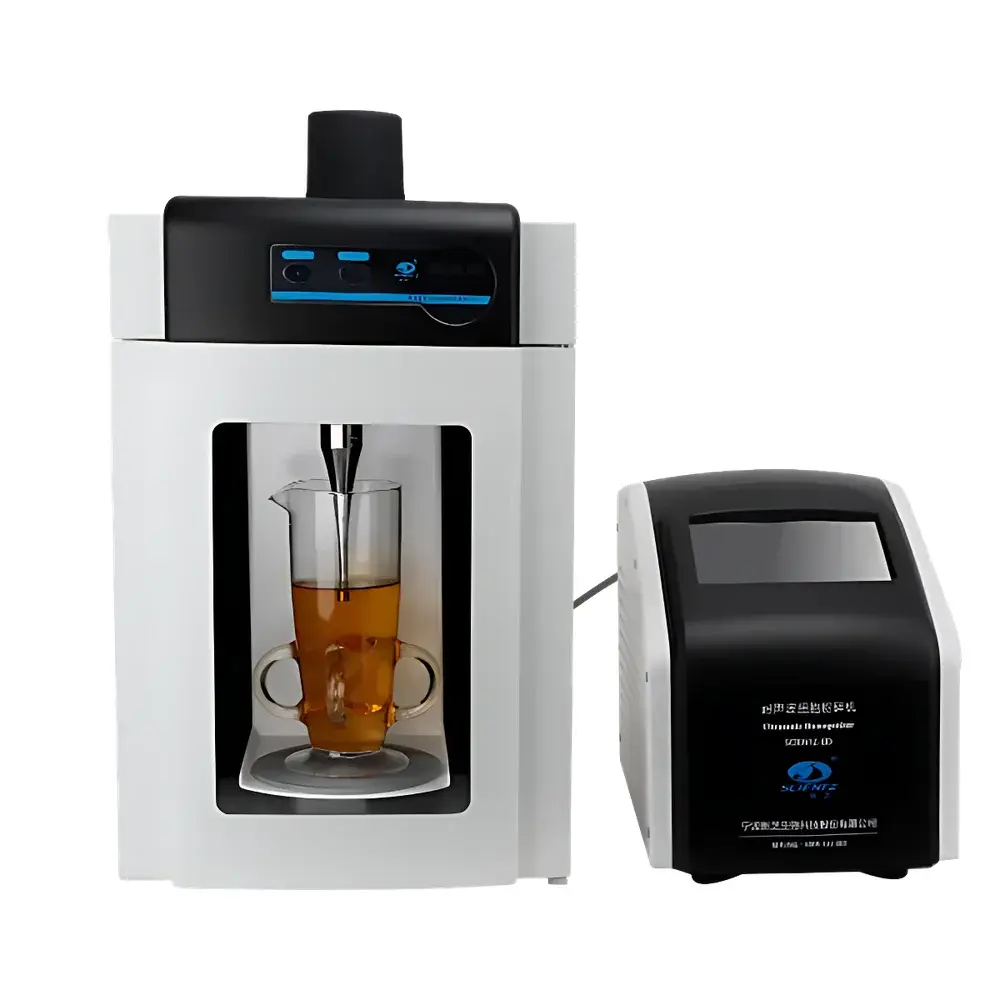
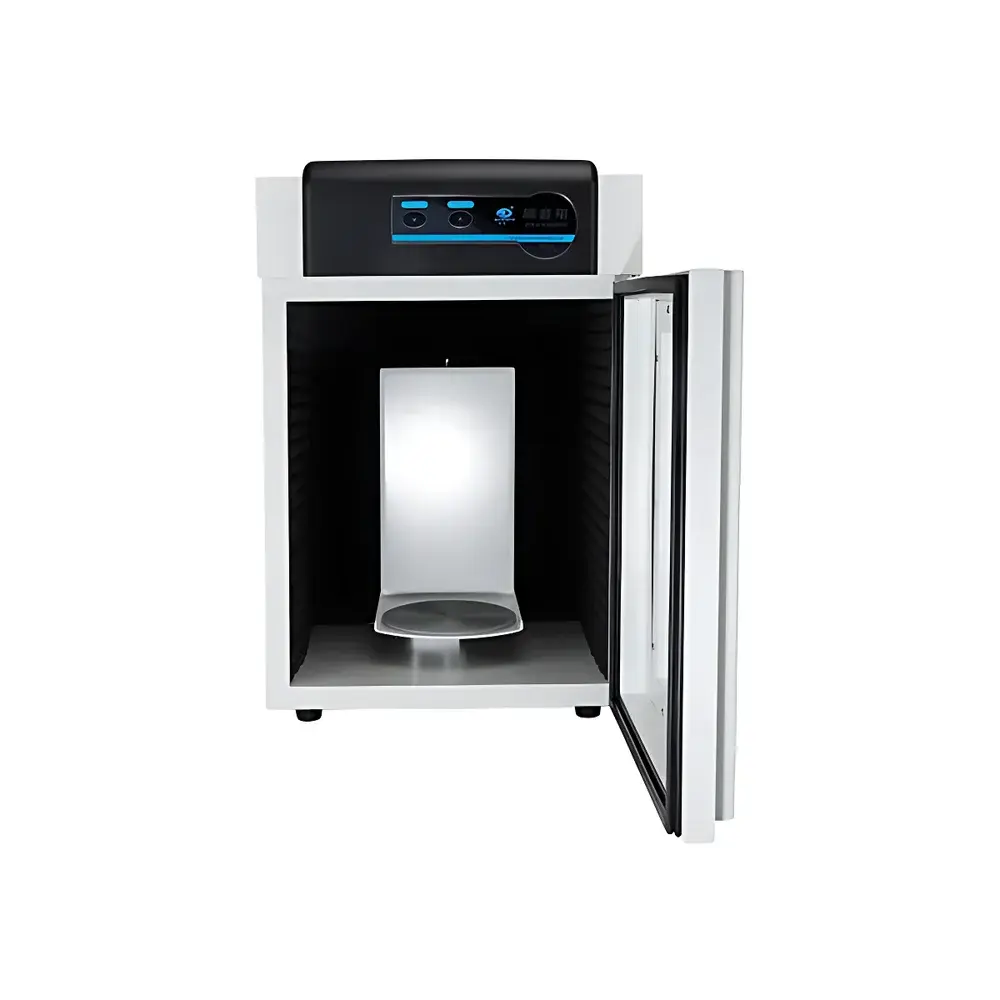
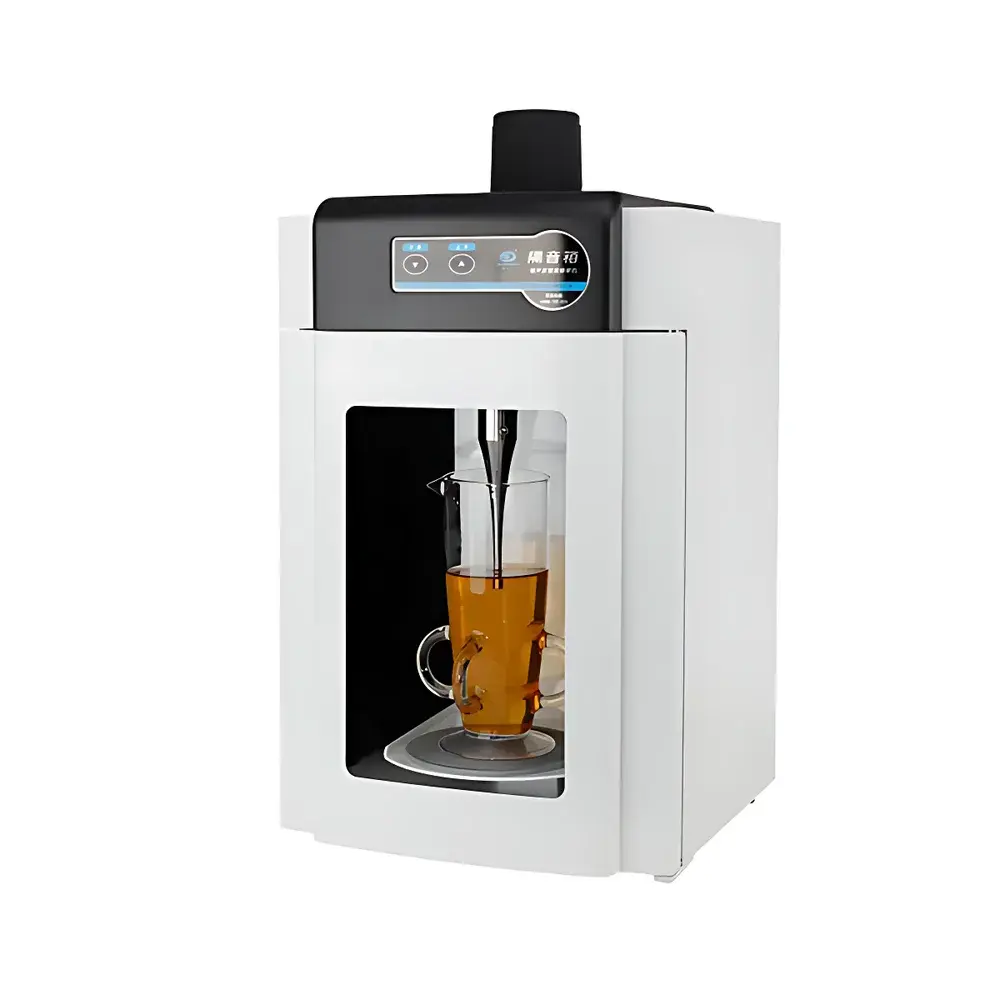
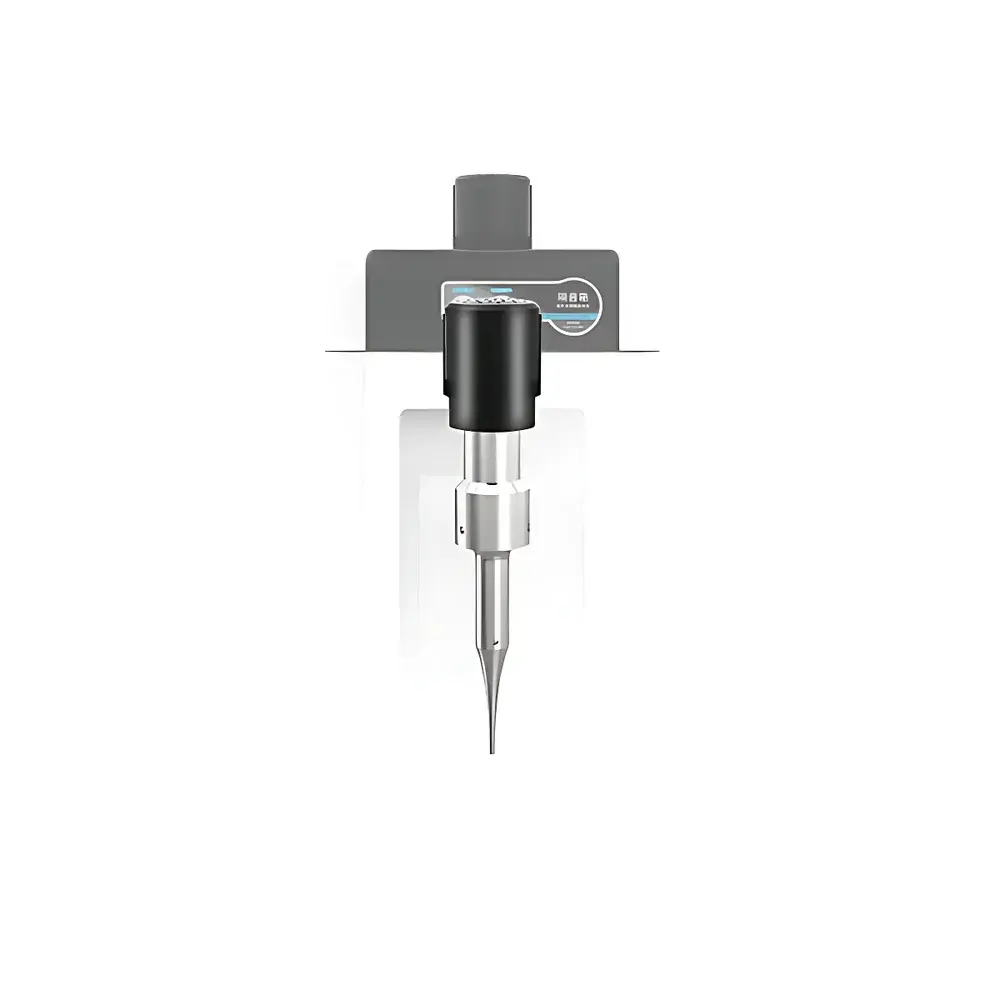
Scientz JY88-IIN Ultrasonic Cell Disruptor
| Brand | Scientz |
|---|---|
| Origin | Zhejiang, China |
| Manufacturer Type | Direct Manufacturer |
| Instrument Type | Ultrasonic Cell Disruptor |
| Ultrasonic Power | 250 W |
| Operating Frequency | 20–25 kHz |
| Temperature Control Range | 0–99.9 °C |
| Sample Volume Capacity | 10–200 mL |
| Sample Throughput | Single-sample processing |
Overview
The Scientz JY88-IIN Ultrasonic Cell Disruptor is an engineered benchtop system designed for controlled, reproducible cell lysis and particle disruption via high-intensity ultrasonic cavitation. It operates on the physical principle of acoustic cavitation—where rapid pressure oscillations generated by a 20–25 kHz piezoelectric transducer induce transient microbubble formation, growth, and violent collapse within the liquid medium. This implosive event produces localized shockwaves, microstreaming, and shear stresses exceeding 10⁴ Pa at the microscale—sufficient to rupture membranes of mammalian cells, bacterial walls, viral capsids, and spore coats without significant thermal denaturation when operated with temperature monitoring. The system integrates a titanium alloy probe (horn) coupled to a calibrated amplitude-controlled generator, enabling precise energy delivery into viscous or heterogeneous suspensions. Its architecture supports both direct immersion (probe-type) and indirect (bath-coupled) configurations, though the JY88-IIN is optimized for probe-based applications requiring high spatial energy density and sample-specific control.
Key Features
- 250 W continuous ultrasonic output with digital power regulation (0–100% in 1% increments), ensuring consistent energy delivery across variable sample viscosities and volumes.
- Programmable time control (0.1 s–99 h 59 min 59 s) with dual-mode operation: continuous ultrasonication or adjustable pulse cycles (on/off duration independently set) to minimize thermal accumulation during sensitive biomolecular extractions.
- Integrated Peltier-cooled jacketed vessel support and real-time temperature feedback loop (0–99.9 °C range, ±0.5 °C accuracy), critical for preserving labile proteins, nucleic acids, and enzyme activity during lysis.
- Digital interface with memory storage for up to 20 user-defined protocols—including amplitude, duration, pulse ratio, and temperature setpoint—enabling method standardization and GLP-compliant workflow replication.
- Multi-level safety architecture: automatic shutdown triggered by over-temperature (>100 °C), overload current detection, and elapsed-time alarm; probe detachment sensing prevents no-load operation damage.
Sample Compatibility & Compliance
The JY88-IIN accommodates sample volumes from 10 mL to 200 mL in standard cylindrical vessels (e.g., 15–50 mL conical tubes, 250 mL jacketed beakers). It effectively disrupts Gram-positive and Gram-negative bacteria (e.g., E. coli, B. subtilis), yeast (S. cerevisiae), mammalian cell lines (HEK293, CHO), plant tissues (leaf homogenates, root extracts), and environmental biofilms. For regulated environments, the instrument supports audit-ready documentation when paired with external data loggers compliant with FDA 21 CFR Part 11 requirements. While not certified to ISO/IEC 17025, its performance aligns with common method validation benchmarks referenced in ASTM E2649 (standard guide for ultrasonic cleaning verification) and USP (bacterial endotoxin testing sample preparation).
Software & Data Management
The JY88-IIN operates via an embedded microcontroller with a backlit LCD touchscreen interface. All parameter inputs, runtime logs, and alarm events are timestamped and stored internally. Protocol recall and execution require no PC connectivity—however, optional RS-232 or USB-to-serial adapters enable integration with LIMS or custom Python/MATLAB scripts for automated batch processing and metadata tagging. Exported CSV logs include power output (%), actual temperature (°C), cumulative sonication time (s), and fault codes—facilitating traceability in QC/QA workflows per ISO 9001 or GMP Annex 11 guidelines.
Applications
- Nucleic acid isolation: Chromatin shearing for ChIP-seq, genomic DNA fragmentation for library prep, and RNA extraction from fibrous or lipid-rich tissues.
- Protein solubilization: Release of inclusion bodies from E. coli expression systems and membrane protein extraction from cultured neurons or microsomal fractions.
- Nanomaterial processing: Deagglomeration of carbon nanotubes, graphene oxide dispersions, and rare-earth nanoparticle suspensions for colloidal stability assessment.
- Pharmaceutical development: Particle size reduction of herbal extracts, emulsification of parenteral lipid formulations, and catalytic acceleration of esterification/hydrolysis reactions.
- Environmental analysis: Extraction of intracellular metabolites from activated sludge flocs or soil-associated microbes for metagenomic profiling.
FAQ
What is the maximum recommended sample volume for optimal cavitation efficiency?
For probe-based operation, 100–150 mL in a 250 mL jacketed beaker provides optimal acoustic coupling and heat dissipation. Volumes below 10 mL require micro-probes (not included) to avoid excessive localized heating.
Can the JY88-IIN be used for non-contact sonication (e.g., in a water bath)?
No—the JY88-IIN is configured exclusively for direct probe immersion. Non-contact applications require dedicated ultrasonic baths or cup-horn systems.
Is calibration traceable to national standards?
Power output is factory-calibrated against NIST-traceable acoustic intensity meters (IA = 10–50 W/cm² at probe tip); certificate provided upon request.
Does the system meet electromagnetic compatibility (EMC) requirements for laboratory use?
Yes—complies with IEC 61326-1:2013 for measurement/control equipment in laboratory environments (Class B emission limits).
How often should the titanium probe be inspected for erosion?
Visual inspection recommended after every 200 hours of cumulative operation; replacement advised if tip diameter reduction exceeds 10% or surface pitting is observed under 10× magnification.