
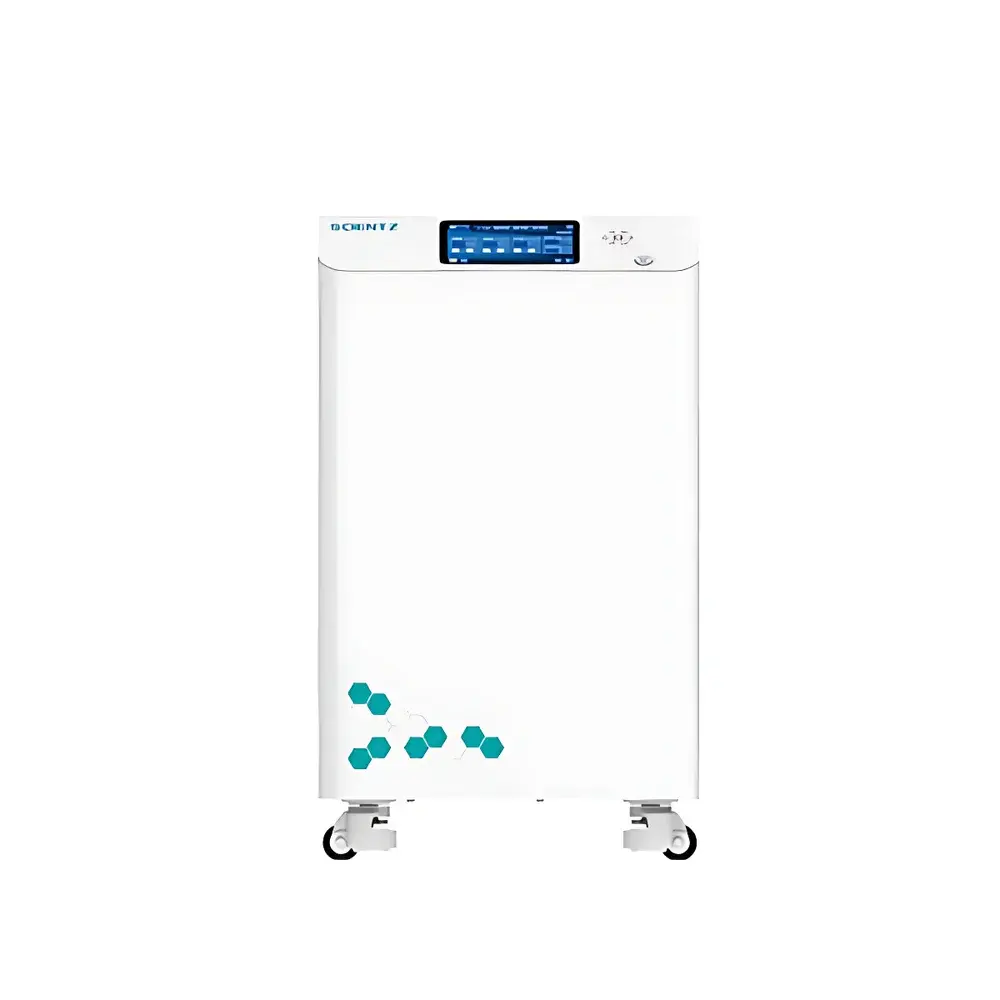
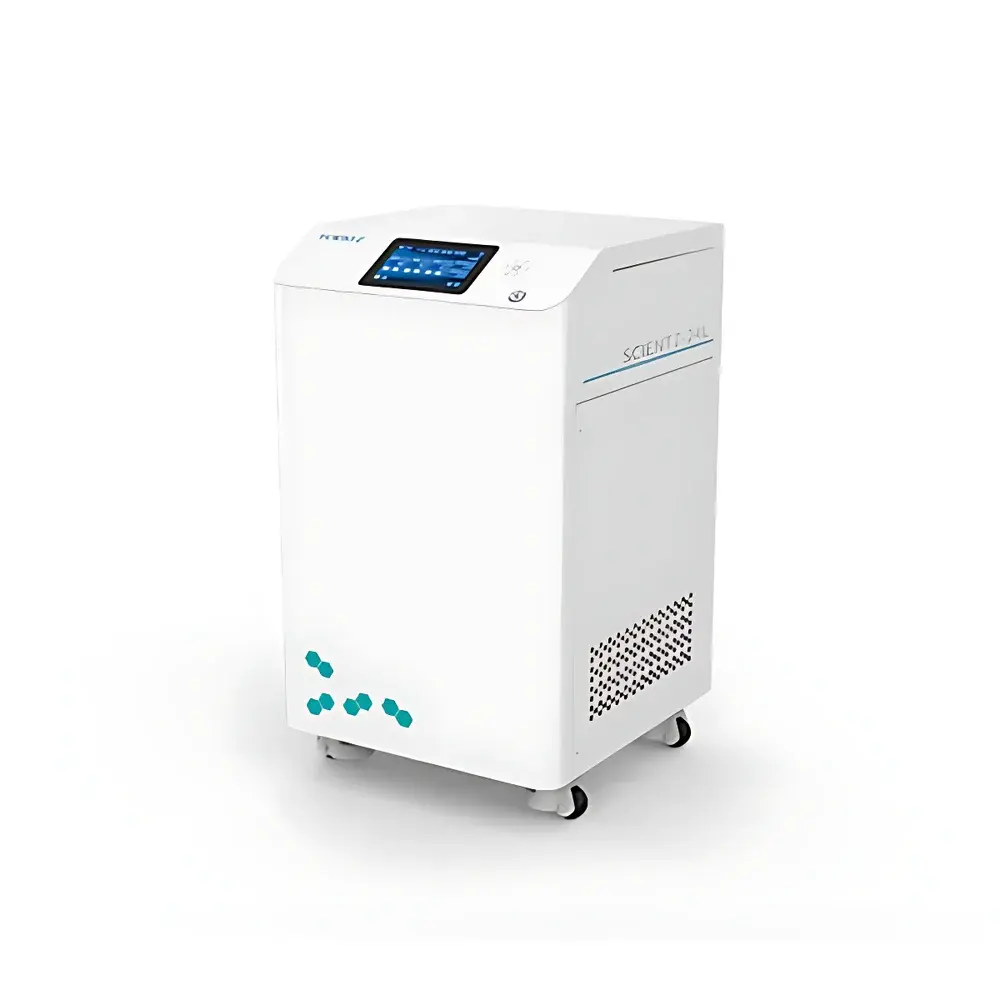
Scientz SCIENTZ-24L High-Throughput Tissue Grinder
| Brand | Scientz |
|---|---|
| Origin | Zhejiang, China |
| Manufacturer Type | Direct Manufacturer |
| Country of Origin | China |
| Model | SCIENTZ-24L |
| Pricing | Available Upon Request |
Overview
The Scientz SCIENTZ-24L High-Throughput Tissue Grinder is an engineered solution for rapid, reproducible mechanical homogenization of biological and non-biological samples using high-frequency vertical oscillation. Based on the principle of bead-beating—where kinetic energy from reciprocating motion transfers to grinding media (e.g., stainless steel, tungsten carbide, or zirconia beads) inside sealed centrifuge tubes—the instrument achieves efficient cell lysis and matrix disruption. This mechanism enables simultaneous processing of up to 24 samples without cross-contamination, making it suitable for downstream applications requiring intact nucleic acids (DNA/RNA) and functional proteins. Integrated refrigeration maintains sample temperature below 10 °C during operation, mitigating thermal degradation—a critical requirement for preserving labile biomolecules in genomics, proteomics, and metabolomics workflows. Designed for compliance with routine laboratory quality standards, the SCIENTZ-24L supports GLP-aligned sample preparation protocols across academic, pharmaceutical, agricultural, and food safety laboratories.
Key Features
- High-throughput capacity: Simultaneous homogenization of 24 samples in standard 2 mL or 5 mL centrifuge tubes
- Intuitive color touchscreen interface with pre-programmed and user-defined protocols
- Integrated compressor-based cooling system (operating range: –10 °C to +25 °C) for temperature-sensitive biomolecule preservation
- Vertical oscillation architecture ensuring uniform energy distribution and high inter-sample reproducibility (CV < 5% for RNA yield across replicate tissues)
- Full-seal tube configuration: Each sample rotates independently within its own tube, eliminating carryover risk
- Safety-certified enclosure with electromagnetic door lock and automatic motor cutoff upon lid opening
- Low-noise operation (< 65 dB(A)) achieved via vibration-dampened chassis and precision-balanced drive assembly
- Direct cryo-preparation compatibility: Tubes may be pre-chilled or loaded with dry ice prior to grinding
Sample Compatibility & Compliance
The SCIENTZ-24L accommodates diverse sample classes—including mammalian tissues (liver, brain, kidney), plant material (leaves, seeds, roots), microbial cultures (E. coli, yeast, spores), environmental matrices (soil, sludge, feces), and synthetic materials (polymers, resins, pharmaceutical tablets). Its flexible grinding media selection (stainless steel, hardened steel, tungsten carbide, zirconia, alumina, agate, PTFE) allows optimization for hardness, contamination sensitivity, and energy transfer efficiency. For regulated environments, the instrument supports audit-ready documentation when paired with LIMS-integrated software (see Software & Data Management). While not certified to ISO/IEC 17025 or FDA 21 CFR Part 11 out-of-the-box, its design facilitates integration into GMP/GLP-compliant workflows through traceable parameter logging, operator authentication, and electronic record retention.
Software & Data Management
The built-in controller stores up to 100 user-defined methods with adjustable parameters: oscillation frequency (100–2000 rpm), cycle duration (10 s–99 min), pause intervals, and cooling setpoints. All executed runs are timestamped and logged internally with method ID, operator code, and real-time temperature monitoring. Optional USB export enables CSV-formatted run reports for inclusion in electronic lab notebooks (ELNs) or analytical data packages. When deployed in regulated settings, third-party software extensions can provide 21 CFR Part 11-compliant electronic signatures, audit trails, and role-based access control—ensuring alignment with pharmaceutical QC and clinical research requirements.
Applications
- Genomic DNA and total RNA isolation from fibrous or lipid-rich tissues (e.g., adipose, brain, plant stems)
- Microbial cell wall disruption for metagenomic library preparation
- Protein extraction under denaturing or native conditions for Western blotting or mass spectrometry
- Soil and sediment homogenization for environmental DNA (eDNA) analysis
- Pharmaceutical tablet disintegration studies and excipient dispersion testing
- Pre-analytical sample conditioning for HPLC, GC-MS, and ICP-MS workflows
FAQ
What types of grinding media are compatible with the SCIENTZ-24L?
Stainless steel, hardened steel, tungsten carbide, zirconia, alumina, agate, and PTFE beads are supported; selection depends on sample hardness, required purity, and downstream analytical sensitivity.
Can the instrument operate without active cooling?
Yes—cooling is optional and programmable; ambient-temperature operation is valid for robust samples like soil or dried plant tissue.
Is validation support available for regulated laboratories?
Scientz provides IQ/OQ documentation templates and calibration guidelines; full PQ must be performed per site-specific SOPs and regulatory jurisdiction.
What tube formats are supported?
Standard configurations include 24 × 2 mL or 24 × 5 mL conical-bottom centrifuge tubes; custom adapters for 0.5 mL or 15 mL formats are available upon request.
How is maintenance performed?
Routine cleaning involves wiping external surfaces and sterilizing adapters with 70% ethanol; no internal lubrication or scheduled part replacement is required within the first 5 years of typical use.



