
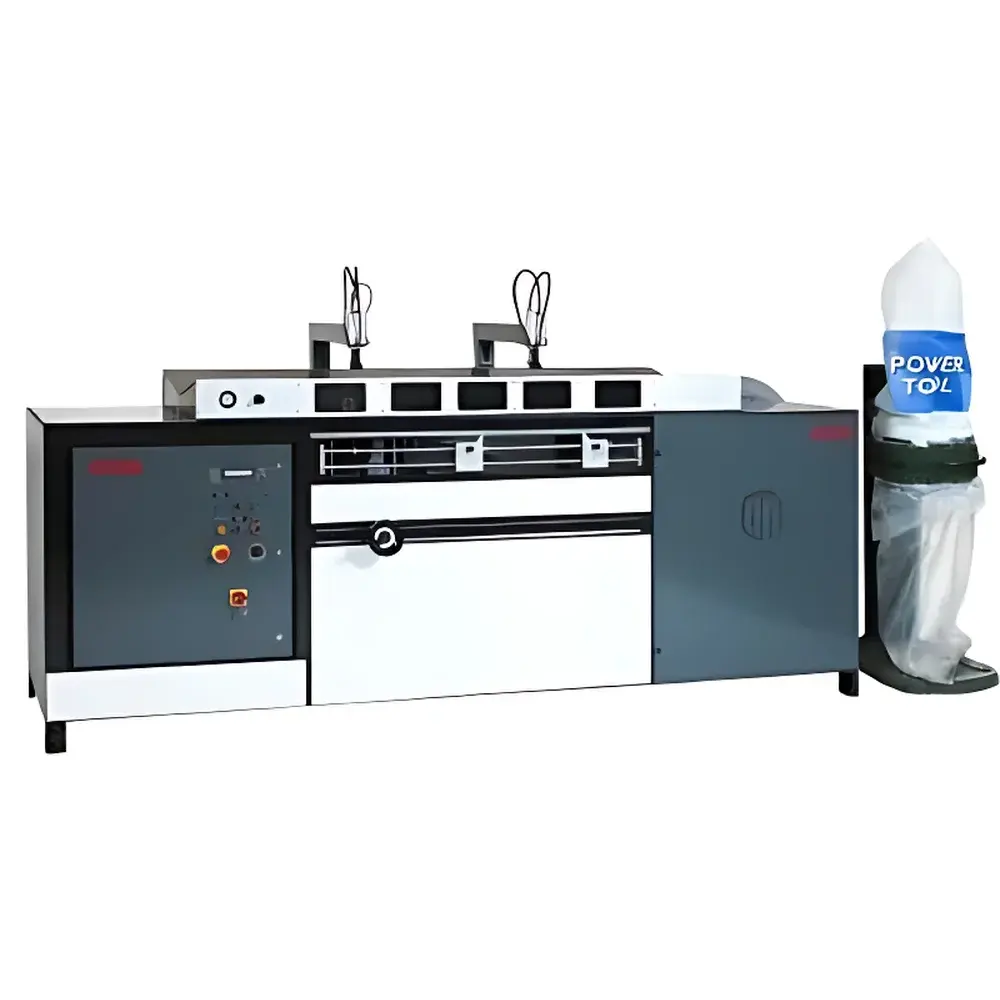
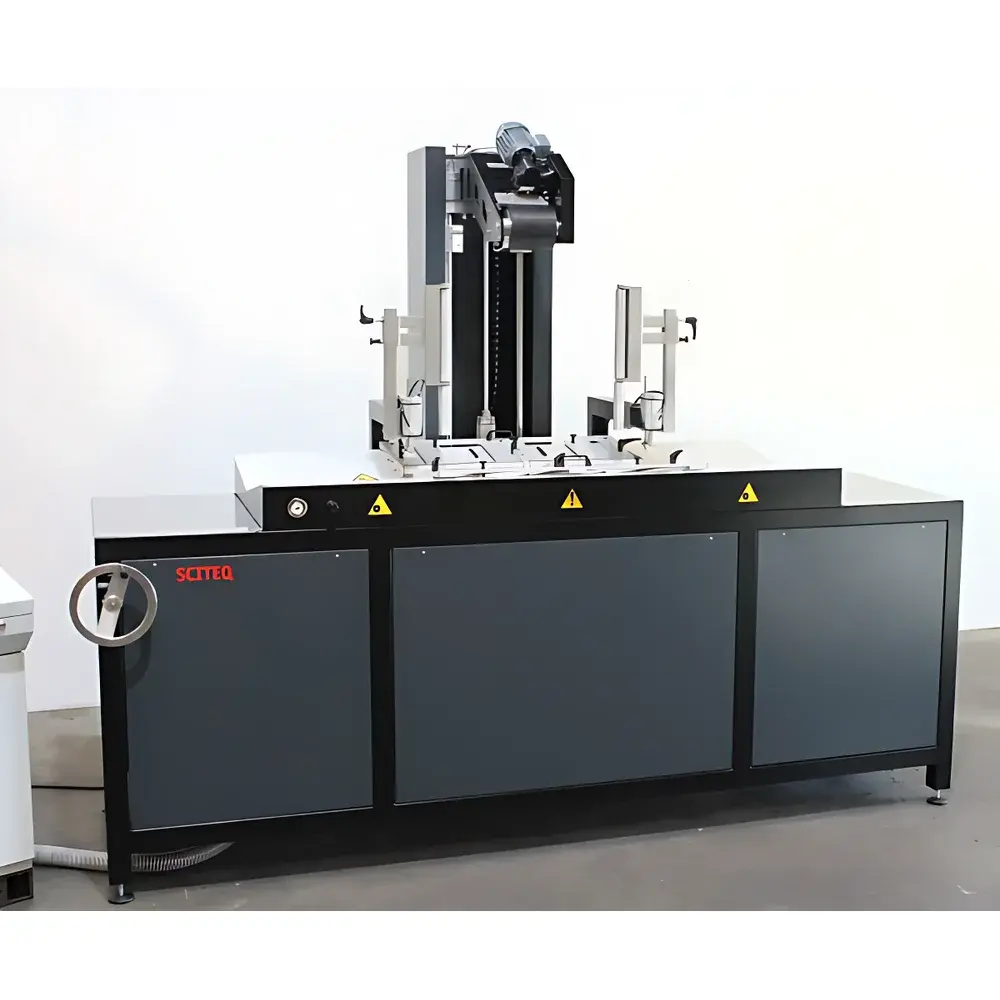
Sciteq HCP Slow Crack Growth Notching Machine
| Brand | Sciteq |
|---|---|
| Origin | Denmark |
| Manufacturer Type | Authorized Distributor |
| Origin Category | Imported |
| Model | Sciteq HCP |
| Pricing | Upon Request |
Overview
The Sciteq HCP Slow Crack Growth Notching Machine is a precision-engineered instrument designed exclusively for the preparation of standardized notched specimens in polyethylene (PE) pressure pipes, in strict compliance with international standards governing slow crack growth (SCG) resistance evaluation. SCG—also known as notch stress cracking resistance—is a critical failure mode in PE piping systems subjected to long-term hydrostatic pressure and environmental stress. The HCP machine implements a controlled mechanical notching process based on the principle of orthogonal milling under precise kinematic constraints, ensuring geometrically reproducible 60° V-grooves that meet the dimensional tolerances specified in ISO 13479, EN 1555-2, CEN/TS 1555-3, BS EN ISO 13479, I.S. EN ISO 13479, and GB/T 18476. Unlike manual or non-calibrated cutting methods, the HCP delivers traceable, operator-independent groove geometry essential for valid comparative testing in accredited laboratories.
Key Features
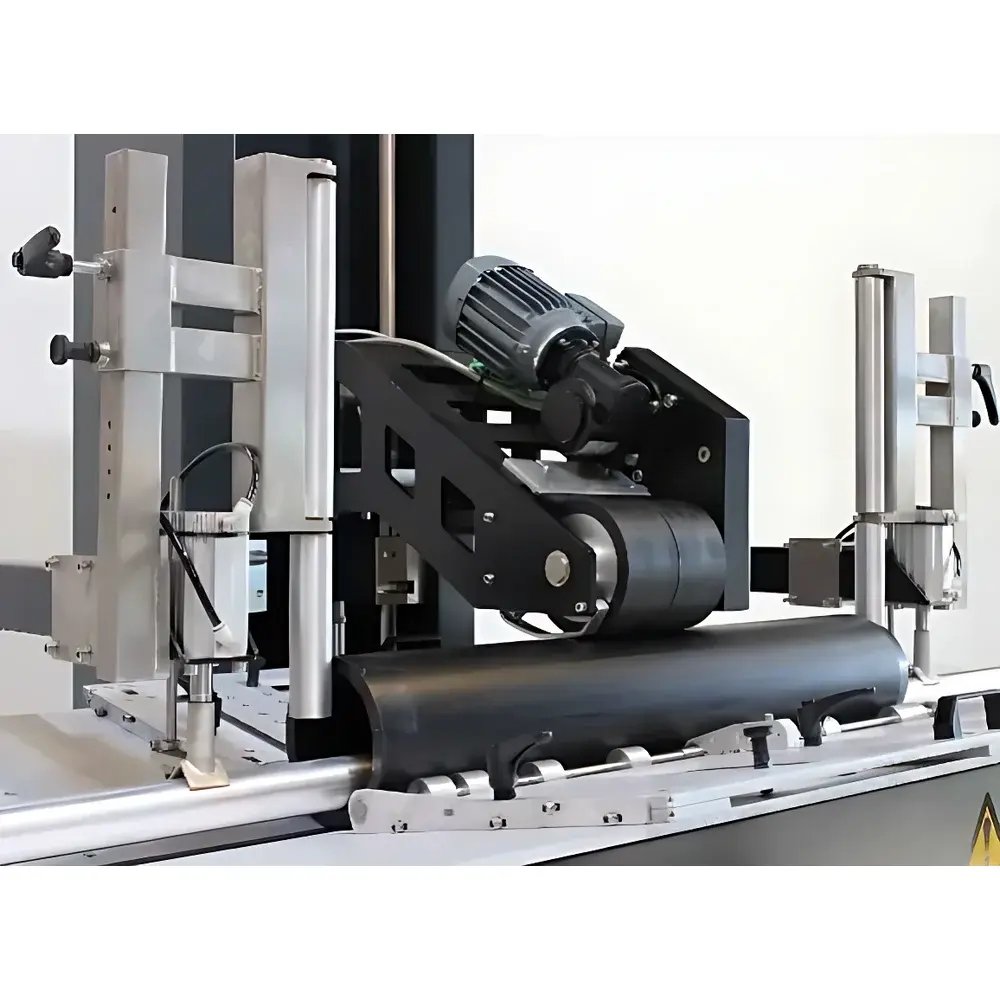
- Precision 60° V-groove generation using dual-right-angle carbide-tipped milling cutters (Ø76.2 × 12.5 × 25.4 mm), engineered for consistent edge geometry and minimal thermal distortion.
- Controlled feed rate: adjustable between defined minimum and maximum values (standard nominal feed speed: 150 mm/min), synchronized with spindle rotation (700 rpm) to maintain optimal chip load and surface finish.
- Automated pneumatic clamping system with dual cylinders ensures coaxial alignment of pipe specimens—critical for uniform notch depth and avoidance of eccentric loading during subsequent hydrostatic testing.
- Notch depth control calibrated to 20% of wall thickness at the pipe end, calculated and applied automatically per specimen, in accordance with ISO 13479 Annex A requirements.
- Integrated safety interlock system prevents cutter activation unless both guard doors are fully closed; physical barrier design prohibits hand access to the milling zone during operation.
- LED illumination integrated into the notching chamber enables real-time visual verification of groove formation, cutter engagement, and surface integrity prior to specimen removal.
- Cutter lifetime specification: ≥100 meters of cumulative notching length under standard PE80/PE100 conditions—documented via tool wear monitoring protocols aligned with ISO/IEC 17025 internal calibration procedures.
Sample Compatibility & Compliance
The HCP accommodates PE pipe specimens with outer diameters ranging from 20 mm to 315 mm (custom configurations available upon request). Minimum specimen length is 125 mm or equal to the outer diameter—whichever is greater—as mandated by ISO 13479 Clause 6.2. All machined notches conform to the angular tolerance (±2°), depth tolerance (±0.05 mm), and surface roughness (Ra ≤ 3.2 µm) requirements outlined in EN 1555-2:2010 Annex B. The instrument is validated for use in GLP-compliant and ISO/IEC 17025-accredited laboratories; its output supports full traceability when paired with Sciteq’s certified hydrostatic pressure test workstations (e.g., HPT Series) and ASTM D1598/D1599-compliant test environments.
Software & Data Management
The HCP operates as a standalone electromechanical system without embedded firmware or digital control interface. However, it integrates seamlessly into laboratory information management systems (LIMS) through documented SOPs and manual logbook entries compliant with FDA 21 CFR Part 11 principles (when used in regulated environments). Each notching operation is recorded with specimen ID, OD, wall thickness, notch depth, date/time, and operator signature—enabling full audit trail reconstruction. Sciteq provides a comprehensive validation package including Installation Qualification (IQ), Operational Qualification (OQ), and Performance Qualification (PQ) templates aligned with ISO/IEC 17025:2017 Clause 6.4.2 requirements for equipment verification.
Applications
- Preparation of notched specimens for ISO 13479-based slow crack growth testing of PE100, PE80, and multilayer PE pipes.
- Specimen conditioning for ASTM F1473 (ESCR of PE pipes) and ASTM D5617 (notch tensile testing).
- Quality assurance in pipe manufacturing plants performing routine QC according to EN 12201-2 and ISO 4427 series standards.
- Research and development of novel PE formulations requiring comparative SCG performance benchmarking.
- Third-party certification laboratories conducting type testing per PED 2014/68/EU Annex I, Section 4.2.2 (long-term mechanical behavior).
FAQ
Is the HCP compatible with non-PE polymer pipes (e.g., PP-R or PVC-U)?
No—the HCP is specifically calibrated and validated for polyethylene (PE) materials per ISO 13479. Use with other thermoplastics requires revalidation of cutter geometry, feed parameters, and thermal management, and is not supported under Sciteq’s warranty or regulatory documentation.
Does the machine include calibration certificates for traceability?
Yes—each unit ships with a factory-issued calibration report covering spindle runout (<0.02 mm), feed axis linearity (±0.1 mm over 100 mm), and angular accuracy of the 60° guide assembly (±1.5°), all traceable to DKD/DAkkS-accredited reference standards.
Can the HCP be integrated with automated hydrostatic test systems?
While the HCP itself is mechanically standalone, its specimen output is fully interoperable with Sciteq’s HPT-series hydrostatic test stations and third-party systems meeting ISO 1167-1:2006 dimensional and sealing interface specifications.
What maintenance schedule is recommended for the milling cutter?
Cutter replacement is advised after 100 meters of cumulative notching or upon observed deviation in groove geometry (verified via optical comparator or stylus profilometer), whichever occurs first. Sciteq supplies certified replacement cutters with batch-specific metrology reports.
Is operator training provided?
Yes—Sciteq offers on-site or remote installation qualification and operator competency training, covering safe operation, alignment verification, preventive maintenance, and IQ/OQ documentation completion in accordance with ISO/IEC 17025:2017 Clause 6.2.5.



