
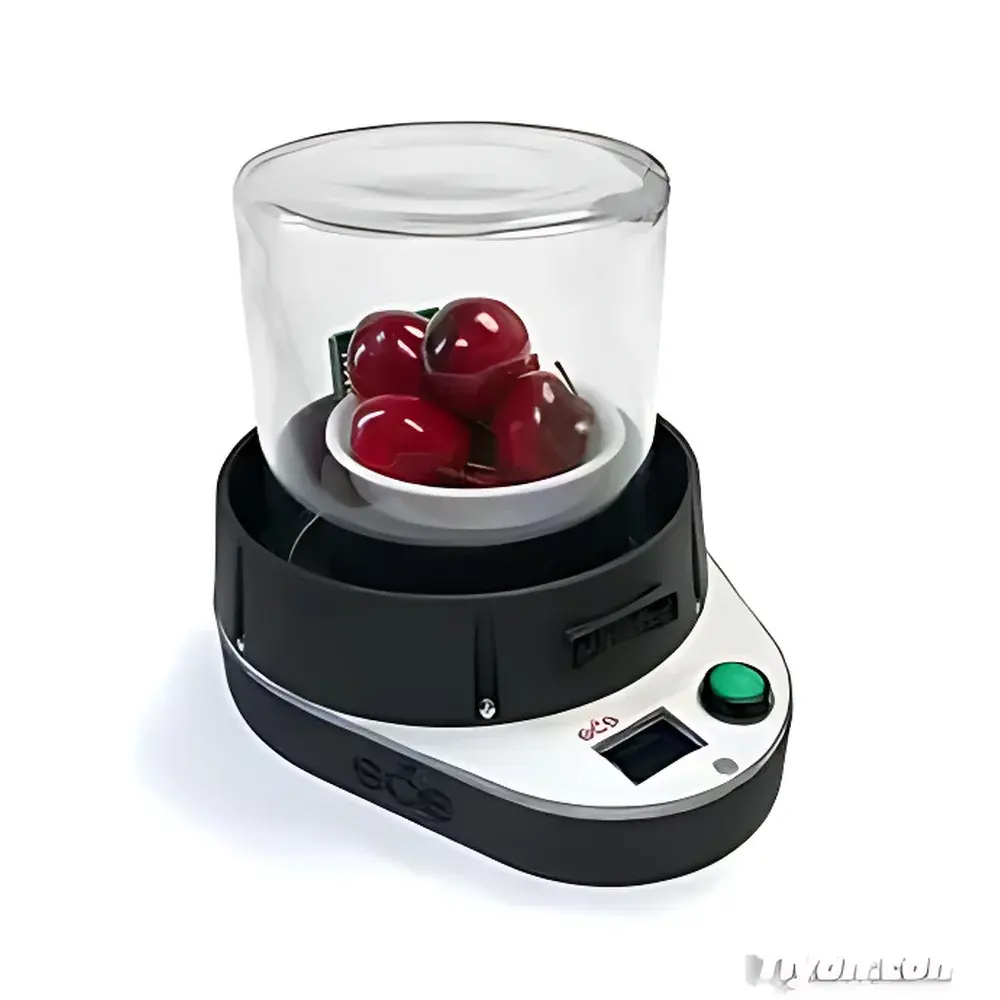
SCS MicroPod Postharvest Monitoring System for Small Fruits
| Brand | SCS |
|---|---|
| Origin | USA |
| Model | MicroPod |
| Chamber Volumes | 330 mL and 740 mL |
| Sample Throughput | Up to 288 samples simultaneously |
| Measurement Duration | Continuous CO₂ respiration monitoring >1.5 hours |
| Output Unit | mL CO₂ / kg fruit / h |
| Automation | Programmable endpoint termination |
| Data Interface | Web-based remote monitoring, real-time graphing, and CSV export |
| Compliance | Designed for GLP-aligned experimental workflows |
Overview
The SCS MicroPod Postharvest Monitoring System is an engineered solution for high-resolution, non-destructive respiratory phenotyping of small-fruit commodities during postharvest storage and ripening. Built upon SCS’s proprietary SafePod platform, the MicroPod applies closed-system, dynamic headspace gas analysis to quantify CO₂ evolution rates—directly linked to mitochondrial activity and metabolic status—in intact, unprocessed fruit. Unlike gravimetric or indirect proxy methods, the MicroPod measures real-time CO₂ accumulation within sealed, temperature-controlled chambers using calibrated infrared (IR) gas sensors, enabling precise calculation of respiration rate in standardized units (mL CO₂ / kg fruit / h). Its design targets biological variability inherent in small fruits—such as cherries, blueberries, strawberries, and table grapes—where mass-specific metabolic flux differs significantly from larger horticultural crops due to surface-area-to-volume ratio, cuticle permeability, and tissue heterogeneity. The system supports both short-term kinetic profiling (e.g., response to ethylene or temperature shifts) and extended stability trials under controlled atmosphere conditions.
Key Features
- Two interchangeable chamber volumes (330 mL and 740 mL) optimized for sample mass ranging from 10 g to 200 g—ensuring appropriate headspace-to-biomass ratios for statistical robustness and sensor linearity.
- Modular architecture supporting up to 12 independent MicroPod units per controller, enabling parallel testing of 288 discrete samples across variable treatments (e.g., cultivars, harvest dates, MAP gas compositions, or precooling regimes).
- Programmable endpoint logic: experiments automatically terminate upon reaching user-defined CO₂ thresholds or elapsed time limits (>1.5 h continuous operation), minimizing operator intervention and standardizing assay duration.
- Disposable polypropylene sample cups eliminate cross-contamination and cleaning downtime—critical for multi-user lab environments and regulatory traceability.
- Integrated environmental control compatibility: each pod interfaces with external incubators or walk-in chambers (4–25°C typical range), allowing respiration assays under physiologically relevant storage temperatures.
- Web-native data acquisition: all measurements stream in real time to a secure cloud-hosted dashboard accessible via standard browsers—no local software installation required.
Sample Compatibility & Compliance
The MicroPod is validated for use with intact, unpeeled small fruits exhibiting minimal surface damage. It accommodates heterogeneous batches without homogenization or destructive sampling—preserving natural microclimates and enabling longitudinal tracking of individual lots. The system conforms to principles outlined in ASTM D4649 (Standard Guide for Respiration Rate Testing of Fresh Produce) and supports documentation practices aligned with Good Laboratory Practice (GLP). While not FDA 21 CFR Part 11-certified out-of-the-box, audit trails—including timestamped sensor readings, user login logs, and configuration change history—are exportable in ISO 8601-compliant CSV format for internal validation and regulatory submission preparation.
Software & Data Management
Data collection, visualization, and export are managed through a responsive web application compatible with Chrome, Firefox, and Edge. Real-time CO₂ concentration curves are overlaid with derived respiration rate plots (first-order derivative smoothing applied). Users may define custom normalization parameters (e.g., per gram fresh weight, per surface area estimate, or per batch average), apply baseline corrections, and annotate metadata fields (cultivar ID, harvest date, storage duration). All datasets support batch download in machine-readable CSV with column headers compliant with FAIR (Findable, Accessible, Interoperable, Reusable) data principles. No proprietary file formats or vendor-locked analysis modules are employed.
Applications
- Determining optimal harvest windows by correlating pre-storage respiration peaks with subsequent shelf-life decay metrics.
- Evaluating efficacy of modified atmosphere packaging (MAP) films by comparing O₂ depletion and CO₂ accumulation kinetics across film permutations.
- Screening germplasm for low-respiration phenotypes in breeding programs targeting extended postharvest longevity.
- Validating cold-chain integrity through respiration rate deviations indicative of temperature abuse events.
- Supporting marketing decisions by stratifying commercial lots into shelf-life tiers based on quantitative respiration signatures rather than subjective maturity indices.
FAQ
What sample sizes are supported per MicroPod chamber?
Each 330 mL chamber accommodates 10–50 g of small fruit (e.g., ~20–50 cherries); the 740 mL chamber supports 100–200 g (e.g., ~100–200 blueberries). Sample mass must be recorded manually for unit normalization.
Can the system operate unattended overnight?
Yes—continuous monitoring beyond 1.5 hours is possible; however, CO₂ accumulation may approach sensor saturation limits depending on fruit type and temperature. Protocol optimization is recommended for extended assays.
Is calibration required before each experiment?
Zero calibration using ambient air is performed automatically at startup. Span calibration with certified CO₂ gas (e.g., 1,000 ppm in N₂) is recommended weekly or after sensor maintenance.
Does the system measure O₂ consumption?
No—the MicroPod quantifies CO₂ evolution only. O₂ measurement requires optional integration with third-party paramagnetic or electrochemical O₂ analyzers via analog output interface.
How is data security handled in the web platform?
All communications use TLS 1.2+ encryption; user accounts enforce role-based access control (RBAC); and raw data resides in SOC 2 Type II–compliant infrastructure hosted in the United States.



