
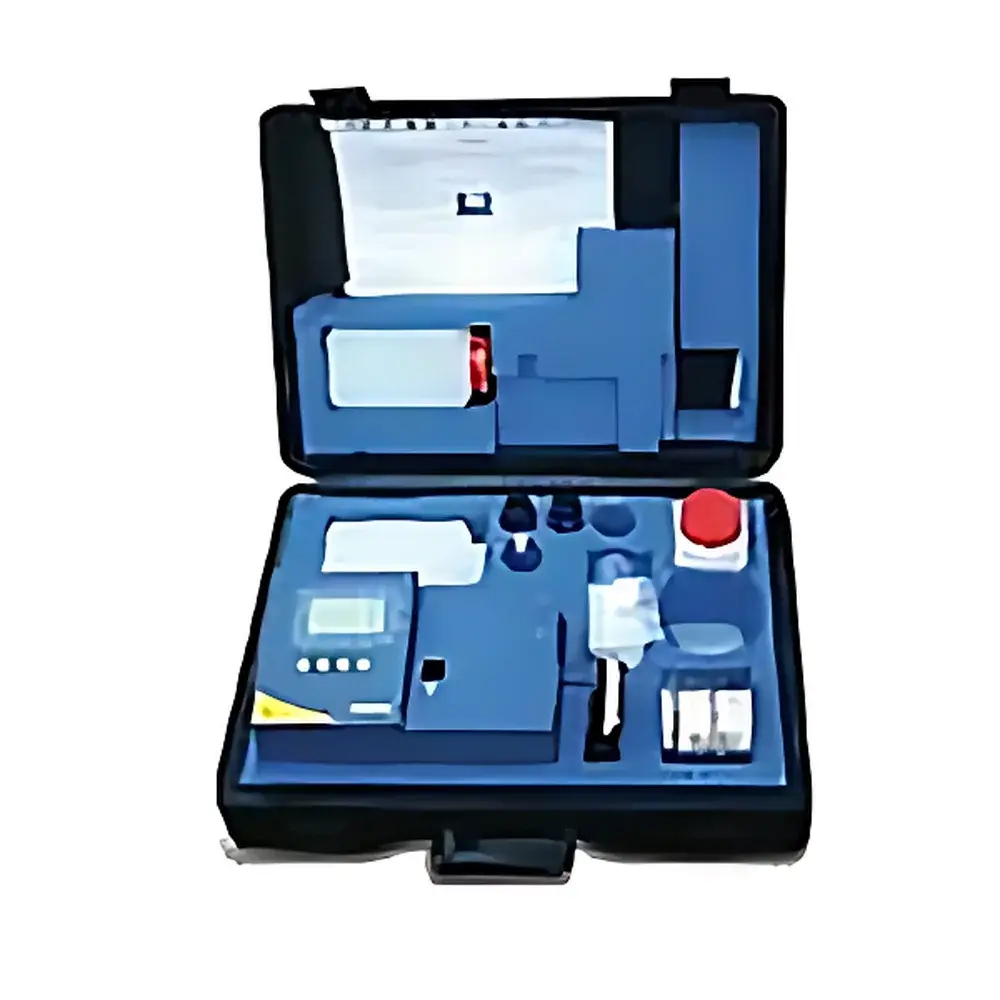
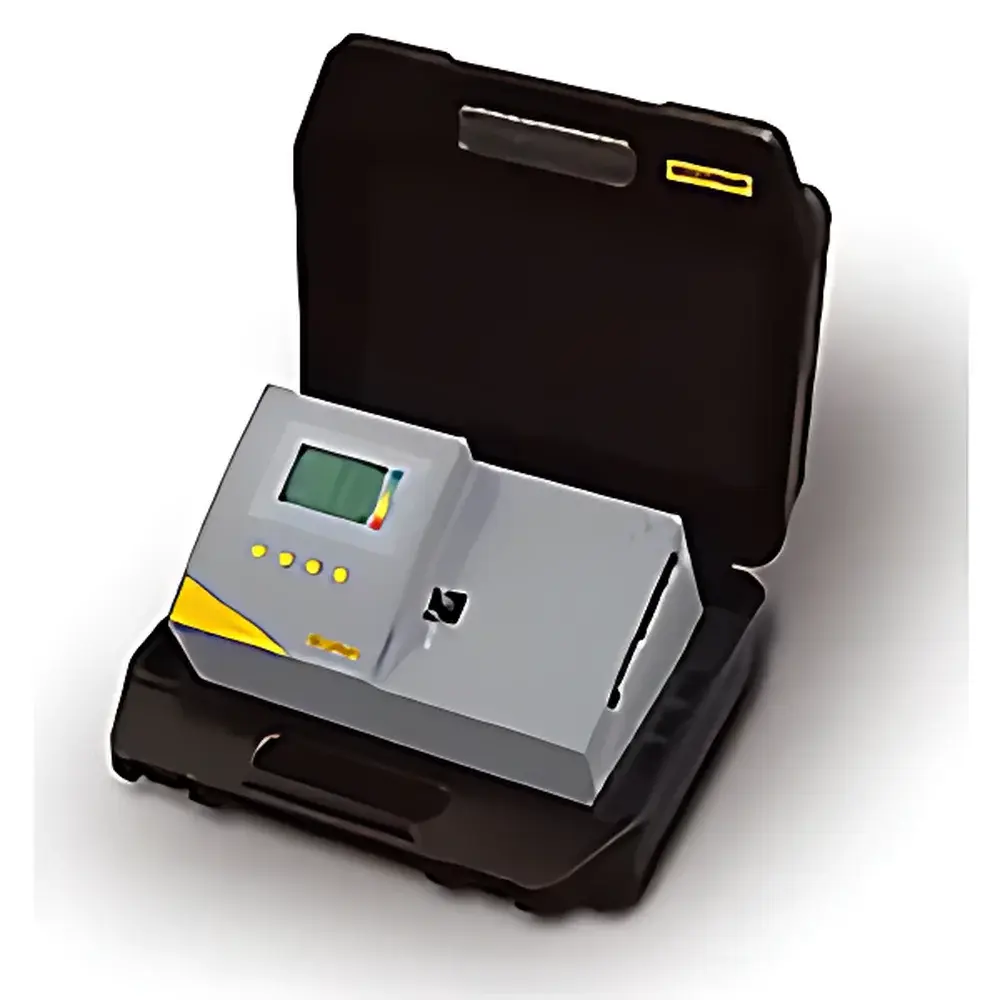
SECOMAM PASTEL UV-HAP Portable PAH Analyzer for On-Site Soil Screening
| [Brand | SECOMAM (distributed by AQUALABO) |
|---|---|
| Origin | France |
| Model | PASTEL UV-HAP |
| Detection Target | US EPA Priority List 16 PAHs |
| Measurement Range | 20–2000 mg/kg (dry weight) |
| Analysis Time | ≤20 min per sample (including extraction and UV scanning) |
| Detection Principle | UV-Vis Spectrophotometric Quantification of PAH-Enriched Organic Extracts |
| Compliance | Designed for field-deployable screening aligned with ASTM D5887, ISO 18287, and EPA Method 8310 pre-screening guidance |
| Software | UVPro v3.x with calibration management, audit trail, and CSV export] |
Overview
The SECOMAM PASTEL UV-HAP is a purpose-built portable analyzer engineered for rapid, quantitative on-site screening of polycyclic aromatic hydrocarbons (PAHs) in soil matrices. Unlike immunoassay-based field kits that deliver only qualitative or semi-quantitative outputs, the PASTEL UV-HAP applies UV-Vis spectrophotometry to quantitatively determine total concentration of the 16 US EPA priority PAHs—naphthalene, acenaphthylene, acenaphthene, fluorene, phenanthrene, anthracene, fluoranthene, pyrene, benz[a]anthracene, chrysene, benzo[b]fluoranthene, benzo[k]fluoranthene, benzo[a]pyrene, indeno[1,2,3-cd]pyrene, dibenz[a,h]anthracene, and benzo[g,h,i]perylene—within a single, integrated workflow. The instrument operates on the principle of spectral absorbance quantification following standardized solvent extraction (acetonitrile), solid-phase cleanup (anhydrous Na₂SO₄ dehydration), and dilution-controlled UV scanning (190–400 nm). Its design adheres to the functional requirements of preliminary site assessment under ASTM D5887 (Standard Guide for Selection of Soil Screening Levels) and supports tiered decision-making in accordance with ISO 18287 (Soil quality — Guidance on field screening methods). It does not replace accredited laboratory analysis (e.g., GC-MS per EPA Method 8270D), but delivers statistically robust, field-validated surrogate data to prioritize sampling grids, delineate contamination boundaries, and monitor remediation progress in real time.
Key Features
- Field-deployable UV-Vis spectrophotometer with fixed-pathlength quartz cuvette (10 × 5 mm) and thermally stabilized optical bench for measurement reproducibility across ambient temperature ranges (5–40 °C)
- Integrated UVPro software enabling user-defined calibration curves, batch processing, and automatic calculation of both PAH concentration (mg/kg) and the Biodegradability Index (BI), a proprietary metric derived from spectral shape analysis correlating with microbial degradability potential
- Validated extraction protocol requiring only 5 g of air-dried, homogenized, and <2 mm-sieved soil—no fume hood or certified lab environment required
- Complete on-site workflow execution within ≤20 minutes: extraction (10 min), filtration/dilution (5 min), UV scan (≤1 min), and result reporting (≤4 min)
- Ruggedized housing rated IP54, battery-operated (≥6 h continuous use), and compliant with IEC 61326-1 for electromagnetic compatibility in industrial field settings
Sample Compatibility & Compliance
The PASTEL UV-HAP has been validated across diverse soil types—including sandy loam, clay-rich subsoils, and aged hydrocarbon-contaminated fill—spanning organic carbon content from 0.5% to 8.2%. It is insensitive to common interferents such as humic substances (when extraction is performed under controlled pH and solvent polarity), metal oxides, and aliphatic hydrocarbons below C20. While not intended for regulatory compliance reporting per se, its performance meets the data quality objectives (DQOs) for Tier 1 screening outlined in EPA OSWER Directive 9200.1-55 and supports GLP-aligned field documentation when paired with UVPro’s optional electronic logbook (timestamped, operator-ID-tagged, and exportable to LIMS). All reagents supplied meet ACS/ISO 648 purity standards; acetonitrile is HPLC-grade (≥99.9%), and anhydrous sodium sulfate is assay-certified (≥99.0%).
Software & Data Management
UVPro software runs on Windows 10/11 and provides full traceability: every measurement includes embedded metadata (date/time, operator ID, GPS coordinates via optional Bluetooth module, instrument serial number, and calibration version). Audit trails record all parameter modifications, recalibrations, and data exports in immutable .log files compliant with FDA 21 CFR Part 11 requirements for electronic records. Raw absorbance spectra (ASCII format), processed concentration values, BI scores, and QC flags are exportable as CSV or PDF reports compatible with environmental data management systems (EDMS) and GIS platforms. Calibration models may be updated in situ using reference standards traceable to NIST SRM 1647f (PAH in soil matrix).
Applications
- Preliminary site characterization prior to Phase II investigation—reducing lab submission volume by up to 70% through intelligent hot-spot targeting
- Real-time monitoring of thermal desorption, biopile, or soil washing treatment efficacy at defined intervals (e.g., day 0, 7, 14, 28)
- Verification of excavation boundaries during removal actions to prevent over-digging or residual contamination
- Long-term natural attenuation studies tracking temporal PAH depletion kinetics across seasons
- Regulatory negotiation support—providing defensible, field-corroborated data for risk-based corrective action (RBCA) frameworks
FAQ
Does the PASTEL UV-HAP comply with regulatory method requirements for final decision-making?
No—it is designed and validated as a screening tool per ASTM D5887 and EPA guidance. Confirmatory analysis must be performed by an ISO/IEC 17025-accredited laboratory using GC-MS or HPLC-FLD.
Can it differentiate individual PAH compounds?
No. It reports total concentration of the 16 EPA PAHs as a summed value, based on co-elution-informed spectral deconvolution—not compound-specific resolution.
Is method training required to operate the system?
Minimal training is required. The workflow follows a step-by-step graphical interface in UVPro; full operational competency is typically achieved within 4 hours of supervised practice.
What maintenance is needed for long-term field reliability?
Annual optical alignment verification and cuvette pathlength calibration using NIST-traceable neutral density filters are recommended. No consumable optics or lamps require replacement within the first 5 years of typical use.
How are calibration standards prepared and stored?
Certified PAH-spiked soil reference materials (e.g., NIST SRM 1647f, ERM-CC014) are used for initial calibration. In-field calibrants are prepared as solvent-based stock solutions (acetonitrile) and stored at –20 °C in amber vials; stability is verified quarterly via control charting.
Related Products







