
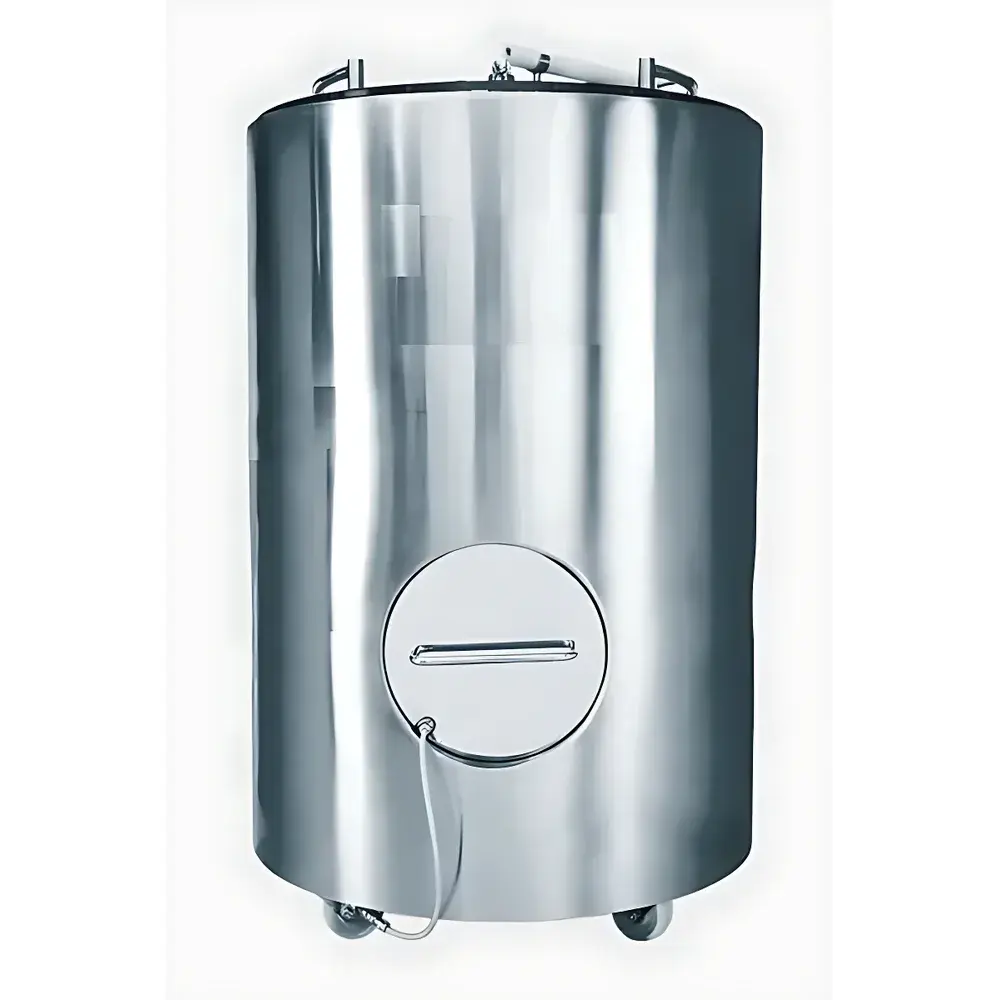
S Series Seed Pelletizing Machine
| Origin | Liaoning, China |
|---|---|
| Manufacturer Type | Distributor |
| Origin Category | Domestic |
| Model | S Series |
| Pricing | Upon Request |
Overview
The S Series Seed Pelletizing Machine is an industrial-grade, continuous-feed pelletizing system engineered for high-precision seed coating and encrustation. Based on proven RTF (Rotary Tumbling Fluidized) technology—originally developed in Germany—the machine applies uniform, multi-layered functional coatings (e.g., clay-based binders, nutrients, biocontrol agents, polymers, or pesticides) onto individual seeds via controlled tumbling, atomized spray, and gentle drying within a single integrated process chamber. Unlike batch coaters or pan pelletizers, the S Series operates under steady-state hydrodynamic conditions that ensure consistent particle residence time, precise droplet impact energy, and optimal film formation. This enables reproducible pellet integrity, sphericity (>92% roundness), and shell strength—critical parameters for downstream mechanical handling, vacuum seeding, and precision pneumatic planting systems used in modern agronomic operations.
Key Features
- RTF-based rotary fluidized bed architecture with adjustable drum inclination, rotational speed (0.5–12 rpm), and airflow velocity (0.3–2.5 m/s) to accommodate diverse seed morphologies—from fine lettuce and carrot seeds (0.5–1.2 mm) to large soybean or corn kernels (5–10 mm).
- Modular design supporting scalable throughput: HJ-400-S (400 kg/h nominal capacity) through HJ-1500-S (1500 kg/h), with interchangeable nozzles, spray manifolds, and drying zones to maintain coating uniformity across batch sizes.
- 100% single-seed processing capability verified per ISO 5600-2:2021 (Seed Processing Equipment — Performance Testing), eliminating clumping or double-coating through real-time optical singulation monitoring and adaptive feed gate control.
- Stainless-steel (AISI 304) contact surfaces compliant with FDA 21 CFR Part 110 (Current Good Manufacturing Practice in Manufacturing, Packing, or Holding Human Food) and EU Regulation (EC) No 183/2005 (feed hygiene).
- Integrated PLC with HMI interface enabling recipe storage, parameter logging, and audit-ready event history—fully traceable for GLP/GMP-aligned seed certification workflows.
Sample Compatibility & Compliance
The S Series accommodates a broad spectrum of agricultural and horticultural seeds, including but not limited to Brassica spp. (cabbage, broccoli), Solanaceae (tomato, pepper), Poaceae (wheat, rice, maize, sorghum), Fabaceae (soybean, alfalfa), Asteraceae (lettuce, sunflower), and forestry species (pine, eucalyptus). It also processes non-seed granular materials such as microbial inoculants, slow-release fertilizer prills, and biochar microbeads—provided bulk density falls between 0.4–1.2 g/cm³ and particle size distribution spans 0.3–12 mm. All operational protocols align with ISO 6638 (Seed Treatment — Methods of Analysis), OECD TG 209 (Seed Coating Uniformity Assessment), and national standards GB/T 3543.5–1995 (China Standard for Seed Coating Quality Inspection).
Software & Data Management
Equipped with proprietary PelletSoft™ v3.2 control software, the system supports full-cycle data capture—including spray mass flow rate (±0.5% FS accuracy), inlet/outlet air temperature and humidity (±0.3°C / ±2% RH), drum torque (for real-time agglomeration feedback), and cumulative coating thickness estimation via calibrated optical reflectance. Data exports are structured in CSV and XML formats compatible with LIMS platforms. Electronic records comply with ALCOA+ principles (Attributable, Legible, Contemporaneous, Original, Accurate, Complete, Consistent, Enduring, Available) and support 21 CFR Part 11-compliant digital signatures when paired with validated identity management modules.
Applications
- Precision enhancement of small-seeded crops (e.g., carrots, onions, herbs) for compatibility with vacuum belt planters and finger-wheel seed meters.
- Delivery platform for biological seed treatments—such as Trichoderma harzianum, Bacillus subtilis, or mycorrhizal spores—without compromising viability during coating or storage.
- Formulation of nutrient-enriched priming pellets for drought-tolerant maize hybrids and saline-soil-adapted barley varieties.
- Regulatory-compliant pesticide microencapsulation (e.g., clothianidin, thiamethoxam) meeting EPA Pesticide Registration Notice 2003-1 and EU Regulation (EC) No 1107/2009 requirements.
- Research-scale development of smart-coated seeds with pH-responsive polymers or temperature-triggered germination inhibitors.
FAQ
What seed moisture content is recommended prior to pelletizing?
Optimal input seed moisture should be 8–12% w.b. for most dicots and monocots. Excess moisture (>14%) risks premature gelation of clay binders; insufficient moisture (<6%) reduces adhesion and increases dust generation.
Can the S Series handle organic-certified coating formulations?
Yes—provided all raw materials meet NOP (USDA Organic), EC 834/2007 (EU Organic), or JAS (Japan Agricultural Standard) criteria, and cleaning validation protocols are executed between batches.
Is retrofitting available for existing pelletizing lines?
Modular components—including RTF drums, spray manifolds, and control cabinets—can be integrated into legacy infrastructure with site-specific engineering assessment and FAT/SAT documentation.
What maintenance intervals are specified for critical components?
Nozzle assemblies require inspection every 200 operating hours; drum bearings are lubricated every 500 hours; full calibration verification is mandated annually per ISO/IEC 17025:2017 clause 7.7.
Related Products






