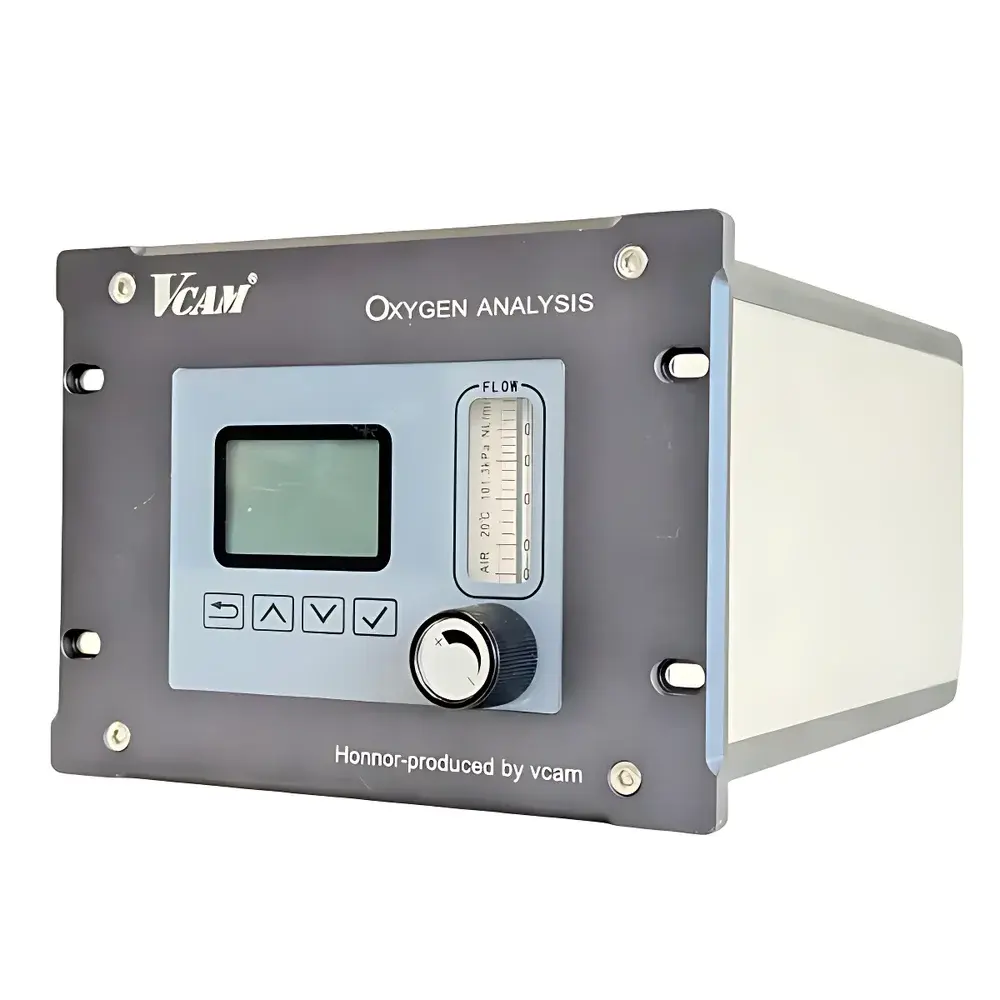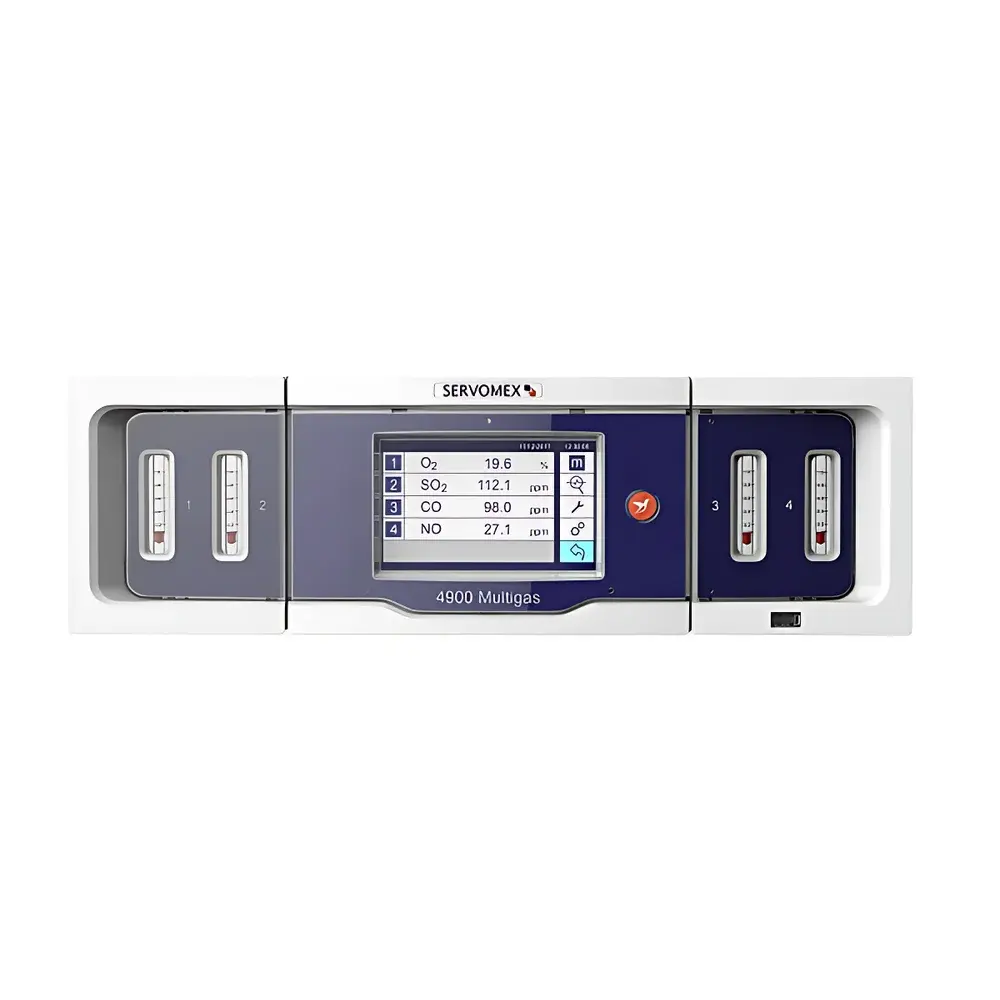
Servomex 4900 Multigas Digital CEMS Multi-Gas Analyzer
| Brand | Servomex |
|---|---|
| Origin | USA |
| Model | 4900 Multigas |
| Measurement Principles | Paramagnetic (O₂), Single-Beam Single-Wavelength NDIR (CO₂, CO, CH₄), Single-Beam Dual-Wavelength NDIR (SO₂, NO), Gas Filter Correlation NDIR (N₂O) |
| Detection Ranges | % level (O₂, CO₂, CO), ppm level (SO₂, NO, CH₄, N₂O) |
| Output Interfaces | 4–20 mA analog, RS-232/RS-485 serial, Modbus RTU, PROFIBUS DP, Modbus TCP/IP (future firmware update) |
| Optional Accessory | Catalytic NOₓ converter for NO/NO₂ differentiation |
| Compliance | Designed for EPA PS-11, EN 15267-3, and ISO 14064-1 supporting applications |
Overview
The Servomex 4900 Multigas Digital CEMS Multi-Gas Analyzer is a purpose-built, rack-mounted continuous emission monitoring system (CEMS) analyzer engineered for regulatory-grade measurement of flue gas constituents in industrial combustion and process exhaust streams. It operates on three complementary, non-consumptive optical and magnetic detection principles—paramagnetism for oxygen, single-beam single-wavelength nondispersive infrared (NDIR) for high-concentration gases (CO₂, CO, CH₄), single-beam dual-wavelength NDIR for mid-range analytes (SO₂, NO), and gas filter correlation (GFC) NDIR for low-level, spectrally overlapping species such as N₂O. This hybrid sensor architecture eliminates cross-sensitivity artifacts common in broad-band NDIR systems while maintaining long-term zero stability and minimal drift—critical attributes for unattended, year-round CEMS operation under EPA Performance Specification 11 (PS-11) and European Standard EN 15267-3 requirements.
Key Features
- Triple-technology detection platform ensuring independent, interference-resistant quantification of O₂ (%), CO₂ (%), CO (%), SO₂ (ppm), NO (ppm), CH₄ (ppm), and N₂O (ppm) simultaneously
- Rack-mountable 19-inch chassis with compact footprint (4U height), optimized for integration into existing CEMS shelters, analyzer houses, or modular skids
- Dual-range calibration capability: auto-ranging between % and ppm scales without hardware modification, enabling seamless transition from stack O₂ trim control to trace pollutant compliance reporting
- Integrated temperature and pressure compensation algorithms compliant with EPA Method 3A and EN 14792 protocols
- Modular I/O architecture supporting simultaneous analog (4–20 mA isolated channels), serial (RS-232/RS-485), fieldbus (PROFIBUS DP v1), and industrial Ethernet (Modbus TCP/IP via upcoming firmware release) communications
- Optional catalytic NOₓ converter module for selective thermal reduction of NO₂ to NO, enabling accurate NOₓ = NO + NO₂ calculation per EN 14181 QAL1/QAL3 validation criteria
Sample Compatibility & Compliance
The 4900 Multigas is designed for use with conditioned, filtered, and dried sample gas streams delivered via heated sample lines and certified CEMS extractive sampling systems (e.g., EPA Method 1–4 compliant probes, chillers, and permeation dryers). It meets the instrumental performance criteria outlined in U.S. EPA PS-11 for O₂, CO, CO₂, SO₂, and NO; supports QAL2 (Quality Assurance Level 2) calibration verification per EN 15267-3; and provides audit-ready data logging aligned with GLP/GMP traceability expectations. Its firmware architecture records all calibration events, span checks, zero validations, and diagnostic alarms with time-stamped metadata—enabling full compliance with 21 CFR Part 11 electronic record requirements when deployed with validated IT infrastructure.
Software & Data Management
The analyzer operates with Servomex’s proprietary CEMS Manager software suite, which supports remote configuration, real-time trend visualization, alarm threshold management, and automated report generation (daily, weekly, quarterly) in PDF and CSV formats. All measurement data—including raw detector signals, compensated concentration values, status flags (e.g., “sample flow low”, “cell temp out of spec”), and calibration history—are stored locally in non-volatile memory for ≥30 days and exportable via USB or network interface. The system supports Modbus register mapping for direct SCADA integration and includes built-in diagnostics for optical path contamination, detector aging, and reference cell integrity—reducing unscheduled maintenance intervals by up to 40% compared to legacy single-technology analyzers.
Applications
- Regulatory CEMS for coal-, gas-, and biomass-fired power plants (EPA 40 CFR Part 60, Subpart Da/Db; EU IED Directive 2010/75/EU)
- Continuous monitoring of cement kiln exhaust for NOₓ, SO₂, and CO compliance with BREF LCP and MACT standards
- GHG reporting under ISO 14064-1 and EPA GHGRP Subpart C/D for facility-level CO₂, CH₄, and N₂O emissions accounting
- Combustion optimization support via real-time O₂ trim feedback to boiler DCS systems
- Waste-to-energy plant stack monitoring where HCl and HF are excluded but CO, NOₓ, and CO₂ must be reported at sub-ppm resolution
FAQ
Does the 4900 Multigas require periodic consumables or reagents?
No—its paramagnetic O₂ sensor and all NDIR modules are solid-state, non-depleting technologies requiring no carrier gases, chemical scrubbers, or replacement optical filters during normal operation.
Can it meet TÜV-certified Class 1 accuracy requirements for SO₂ and NO?
Yes—when installed with an EN 15267-3 certified sampling system and calibrated per QAL1 procedures, the 4900 Multigas achieves ±2% of reading or ±0.1 ppm (whichever is greater) for SO₂ and NO at typical stack concentrations.
Is firmware upgrade support available post-purchase?
Yes—Servomex provides free firmware updates including Modbus TCP/IP enablement, enhanced alarm logic, and expanded diagnostic logging through registered customer portals with secure authentication.
What is the recommended maintenance interval for optical path cleaning?
Under typical flue gas conditions (with proper sample conditioning), optical windows require inspection every 90 days and cleaning only if particulate deposition exceeds visual threshold limits—typically once every 6–12 months.
How does the analyzer handle moisture interference in wet-stack applications?
It relies on upstream sample conditioning (chiller or permeation dryer) to maintain dew point ≤5 °C; internal humidity sensors trigger automatic compensation and alert if condensation risk exceeds design thresholds.
Related Products