
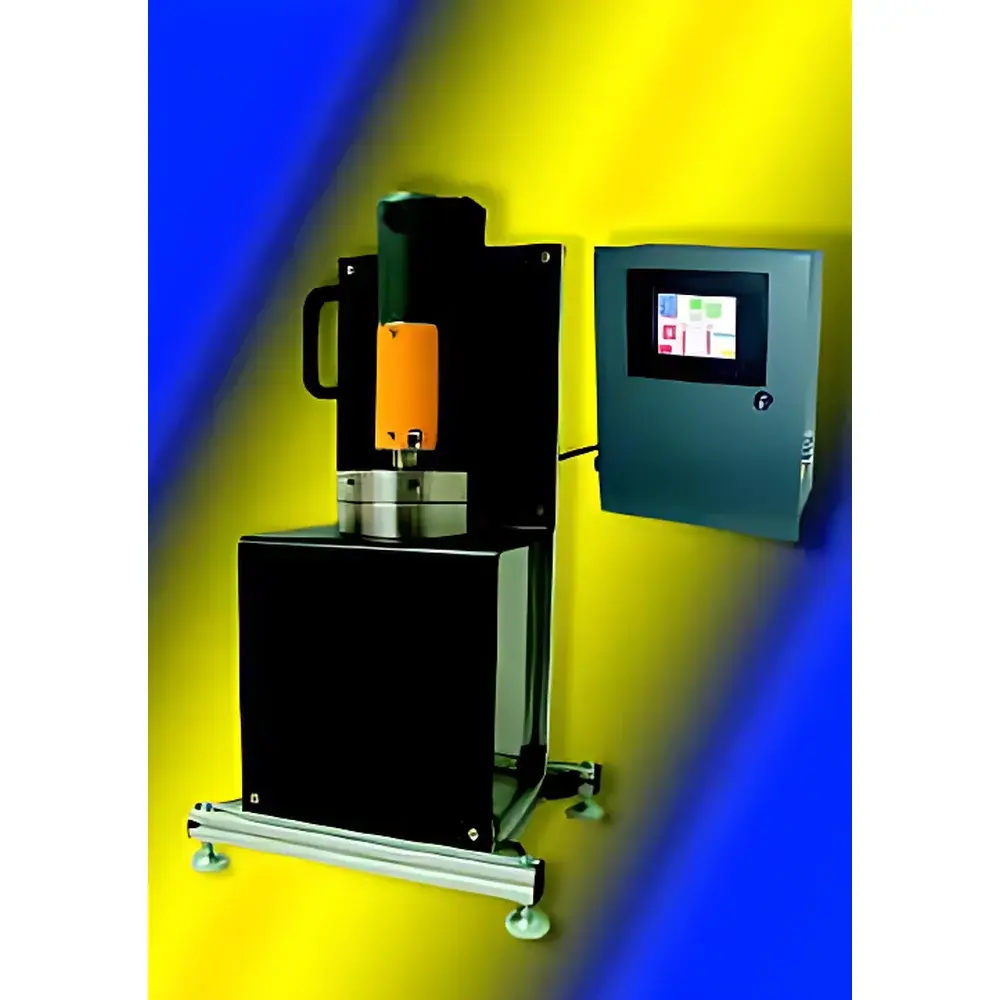
SFT HPR Series Supercritical High-Pressure Reaction System
| Brand | SFT |
|---|---|
| Origin | USA |
| Manufacturer Type | Authorized Distributor |
| Origin Category | Imported |
| Model | HPR |
| Price | USD $200,000 |
| Max Temperature | 350 °C |
| Channel Configuration | 1–4 Independent Channels |
| Extraction/Reaction Volume | 50 mL to 8 L |
| Max Pressure | 10,000 psi (68.9 MPa) |
| Max Flow Rate | 25 mL/min |
| Sample Compatibility | Plant matrices, pharmaceuticals, natural products, polymers, catalysts |
Overview
The SFT HPR Series Supercritical High-Pressure Reaction System is an engineered platform for conducting controlled chemical reactions and process development under extreme thermodynamic conditions—specifically within the supercritical fluid regime. Designed around fundamental principles of high-pressure physical chemistry, the system enables precise manipulation of reaction environments where solvents such as CO₂, ethanol, or water exhibit tunable density, diffusivity, and solvation power above their critical points. Its core architecture supports both batch and semi-continuous operation modes, with pressure and temperature profiles maintained via closed-loop PID control. The system operates across a validated range of 10,000 psi (68.9 MPa) and up to 350 °C—conditions essential for studying catalytic hydrogenation, oxidative coupling, polymerization kinetics, and supercritical fluid-assisted synthesis. All pressure-retaining components comply with ASME Boiler and Pressure Vessel Code Section VIII, Division 1, ensuring structural integrity and regulatory traceability in GLP- and GMP-aligned laboratories.
Key Features
- Magnetically coupled dual-impeller agitation system for uniform mixing without dynamic seals—eliminating leakage risk at ultra-high pressures
- Integrated rupture disc safety system certified to ASME PVE-1 standards, providing fail-safe overpressure protection
- Full-color capacitive touchscreen interface with real-time visualization of pressure, temperature, stir speed, and thermal ramp profiles
- RS-232 serial port for direct data logging into external acquisition software; compatible with LabVIEW, MATLAB, and custom SCADA architectures
- Modular reactor vessel options: bolted closure (rated to 2350 psi / 350 °C) and manual clamp closure (rated to 10,000 psi / 200 °C); optional quartz or sapphire viewport for in situ visual monitoring
- Configurable channel count (1–4) supporting parallel reaction screening or sequential process staging
- Standardized 1/4″ VCR and Swagelok fittings for seamless integration with upstream fluid delivery systems (e.g., HPLC pumps, mass flow controllers) and downstream analytical interfaces (e.g., GC, FTIR, online UV-Vis)
Sample Compatibility & Compliance
The HPR system accommodates heterogeneous and multiphase reaction mixtures including botanical extracts, active pharmaceutical ingredients (APIs), metal-organic frameworks (MOFs), supported catalysts, and thermally sensitive biopolymers. Its inert wetted materials—316 stainless steel, Inconel 718, and Hastelloy C-276—ensure compatibility with corrosive reagents (e.g., HCl, HF, oxidizing acids) and supercritical CO₂ co-solvents. The design conforms to ASTM E2913-22 (Standard Practice for High-Pressure Reactor Safety), ISO 4126-2 (Safety Devices for Protection Against Excessive Pressure), and supports audit-ready documentation per FDA 21 CFR Part 11 when paired with compliant data acquisition software. All vessels undergo hydrostatic proof testing at 1.5× MAWP and receive full material test reports (MTRs) traceable to mill heat numbers.
Software & Data Management
The embedded controller firmware provides deterministic real-time regulation of temperature (±0.5 °C accuracy), pressure (±0.2% FS), and rotational speed (±1 rpm). Users define multi-step thermal ramps, pressure holds, and agitation sequences via intuitive graphical programming. Logged parameters—including time-stamped pressure/temperature/stir curves, alarm events, and operator inputs—are exported as CSV or XML files via RS-232. Optional Ethernet gateway modules enable integration into enterprise LIMS environments. Audit trails record user login sessions, parameter modifications, and emergency shutdown triggers—meeting ALCOA+ data integrity requirements for regulated pharmaceutical and academic research applications.
Applications
- Catalytic hydrogenation and dehydrogenation under supercritical H₂ or NH₃
- Supercritical CO₂-mediated extraction and fractionation of phytochemicals (e.g., curcumin, resveratrol, terpenes)
- High-pressure polymerization of acrylics, epoxides, and lactides
- Hydrothermal synthesis of nanomaterials (e.g., TiO₂, ZnO, MOFs) in subcritical water
- Process intensification studies for continuous-flow supercritical reactors
- Accelerated stability testing of APIs under elevated p/T stress conditions per ICH Q1A(R2)
FAQ
What pressure and temperature ranges are validated for long-term operation?
Continuous operation is validated at ≤10,000 psi and ≤350 °C for vessels with manual clamping; bolted configurations support ≤2350 psi at full 350 °C.
Can the system be integrated with gas chromatography or mass spectrometry?
Yes—standard VCR ports and optional heated transfer lines enable direct coupling to GC/FID, GC/MS, or online FTIR systems for real-time effluent analysis.
Is remote monitoring supported?
While native Ethernet is optional, third-party Modbus TCP gateways can be deployed to enable SCADA-level remote supervision and alarm notification via SNMP or MQTT protocols.
What maintenance intervals are recommended for the magnetic drive assembly?
No scheduled maintenance is required; the hermetically sealed drive operates maintenance-free for ≥10,000 hours under nominal load conditions per ISO 281 life calculations.
Are validation documents (IQ/OQ/PQ) available?
Factory-issued IQ/OQ protocols are provided; PQ execution requires site-specific calibration against NIST-traceable pressure transducers and thermocouples.



