
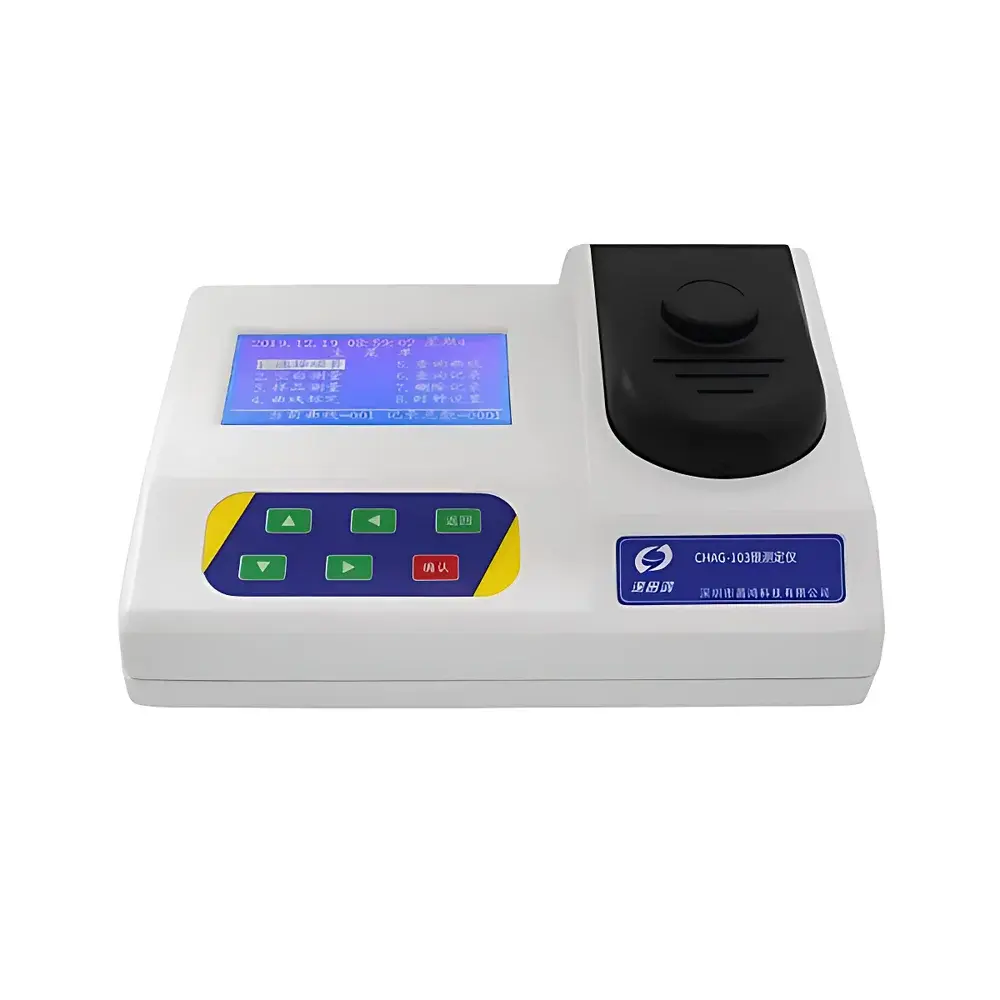
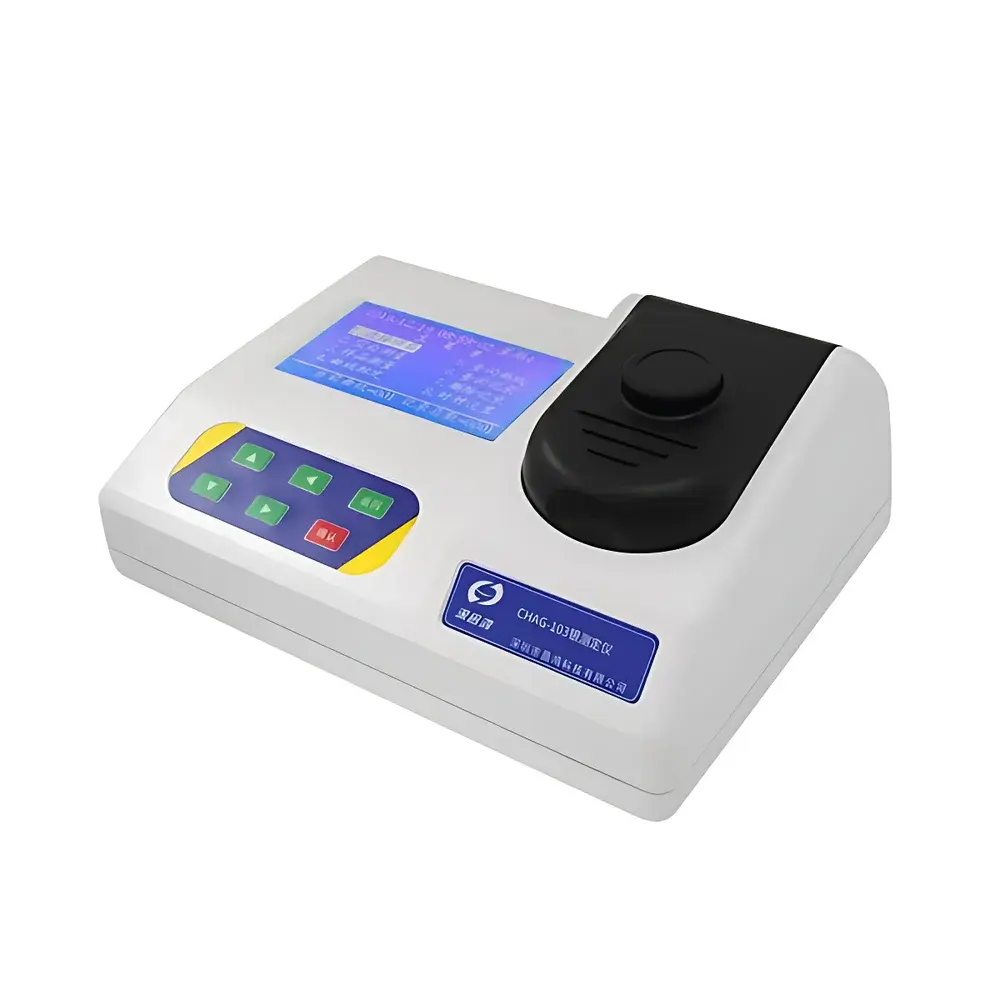
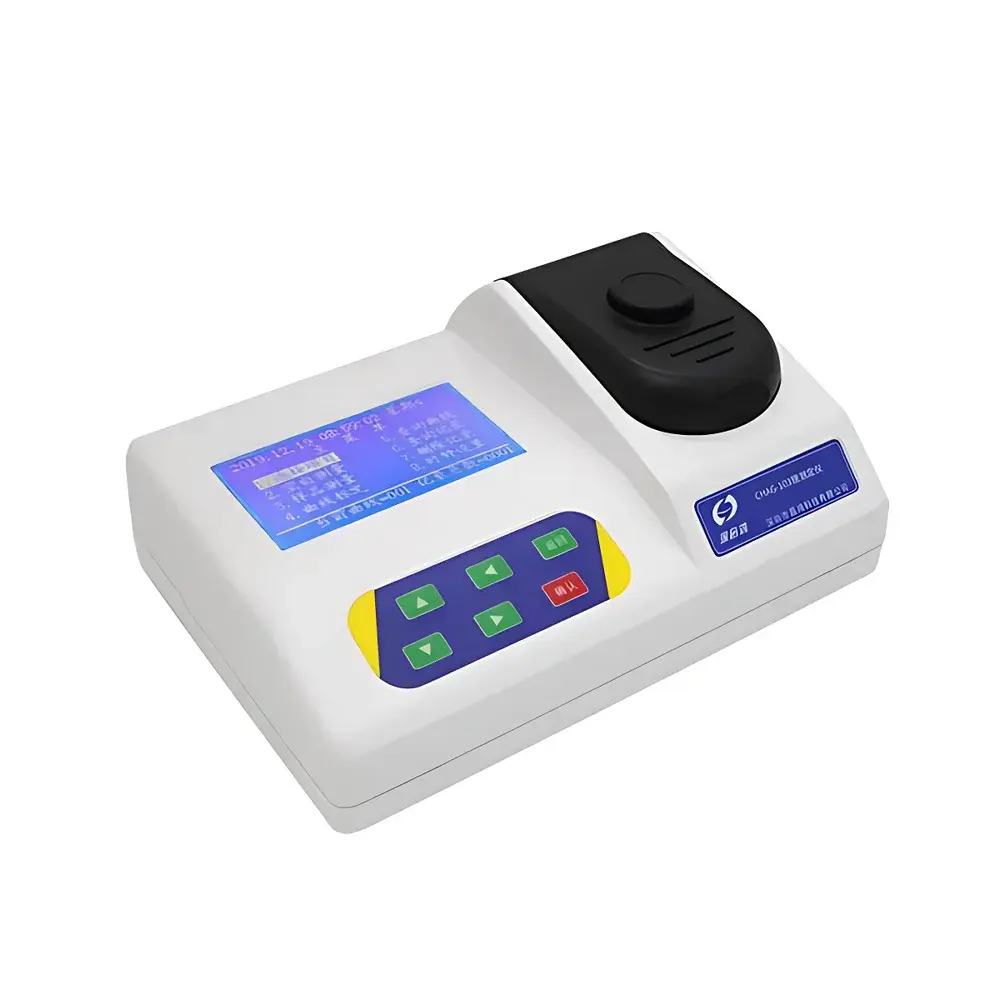
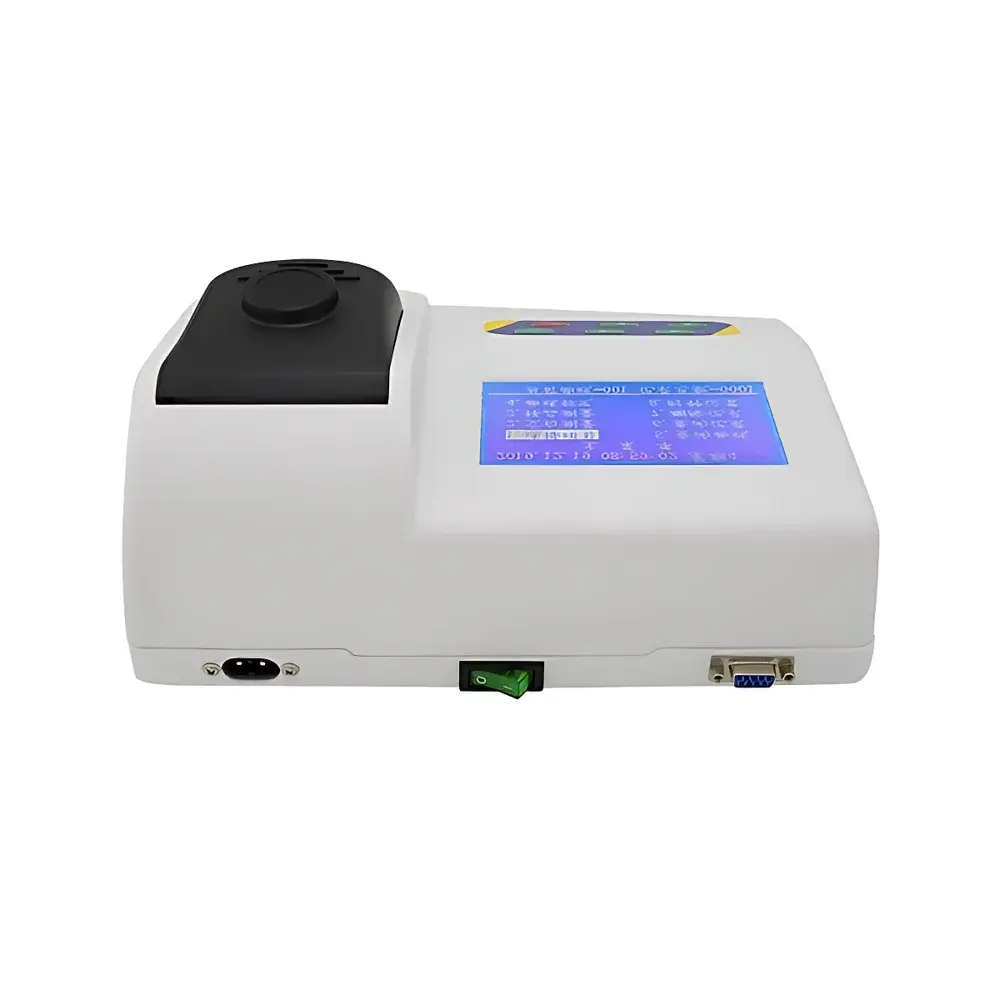
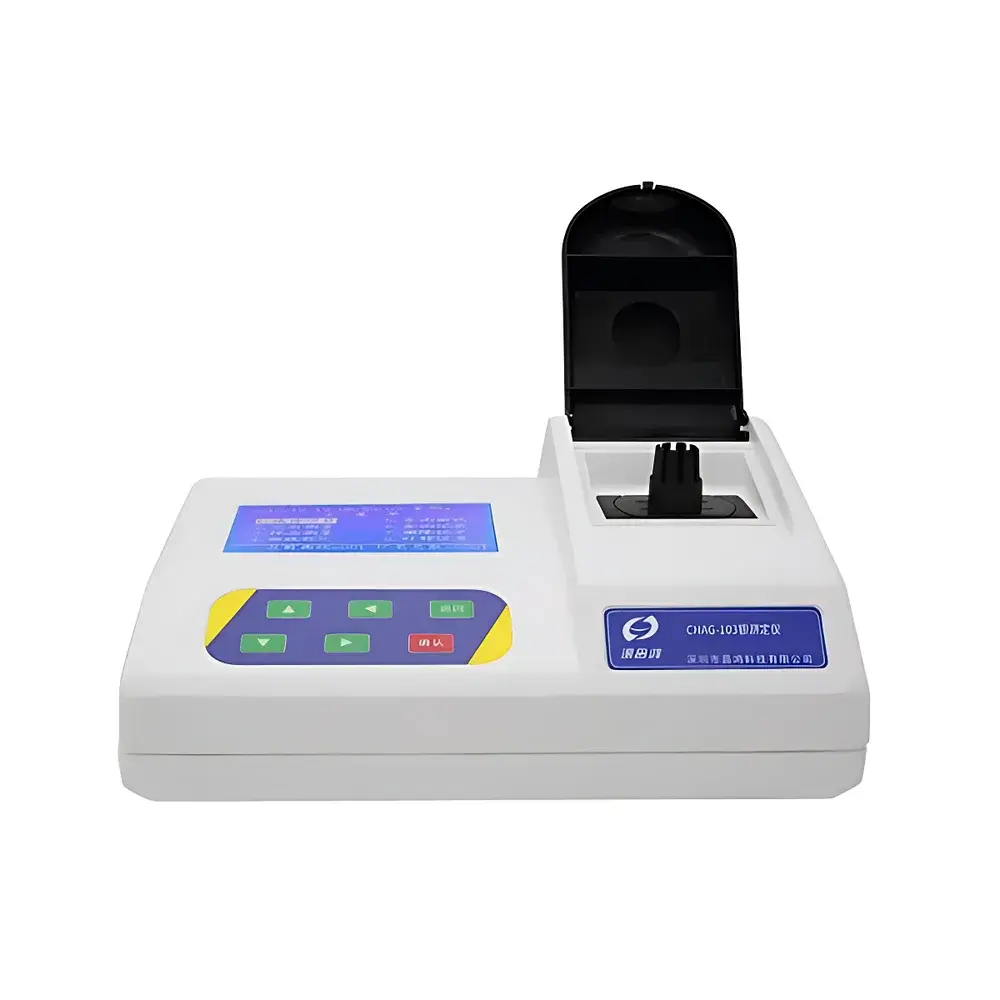
Shenchanghong CHAG-103 Silver Analyzer
| Brand | Shenchanghong |
|---|---|
| Origin | Guangdong, China |
| Manufacturer Type | Direct Manufacturer |
| Country of Origin | China |
| Model | CHAG-103 |
| Instrument Type | Benchtop Laboratory Analyzer |
| Detection Principle | Photometric (Colorimetric) Method |
| Target Analyte | Silver (Ag⁺) in Aqueous Samples |
| Analysis Time | 20 min |
| Accuracy | ≤ ±5% for water samples |
| Precision (Repeatability) | ≤ 3% RSD |
| Resolution | 0.01 mg/L |
| Measurement Range | 0.01–1.00 mg/L |
| Absorbance Drift | < 0.002 A within 20 min |
| Dimensions (W×D×H) | 266 × 200 × 130 mm |
| Weight | < 1 kg |
| Operating Temperature | 5–40 °C |
| Relative Humidity | ≤ 85% |
| Power Supply | AC 220 V ± 10%, 50 Hz ± 0.5 Hz |
| Environmental Requirements | Low vibration, minimal electromagnetic interference, no direct sunlight |
Overview
The Shenchanghong CHAG-103 Silver Analyzer is a dedicated benchtop photometric instrument engineered for the quantitative determination of dissolved silver (Ag⁺) in environmental water samples—including surface water, groundwater, wastewater effluents, and drinking water sources. It operates on the principle of colorimetric photometry: silver ions react with a proprietary chromogenic reagent under controlled pH and temperature conditions to form a stable colored complex. The intensity of absorbance at a specific wavelength—optimized via narrow-band optical filtering—is directly proportional to silver concentration, following the Beer–Lambert law. This method complies with foundational principles outlined in ISO 7027 for turbidity-corrected photometric analysis and aligns with EPA Method 200.7 (ICP-OES) validation frameworks for trace metal quantification where colorimetric alternatives are permitted for targeted screening. The CHAG-103 delivers reliable, laboratory-grade data without requiring atomic spectroscopy infrastructure, making it suitable for routine monitoring in municipal labs, environmental testing centers, and regulatory compliance facilities operating under GLP or ISO/IEC 17025 quality systems.
Key Features
- High-stability optical architecture featuring imported long-life, high-luminance LED light source and precision narrow-band interference filters—ensuring minimal spectral drift and consistent photometric response across extended operation cycles.
- Integrated 16-bit low-power microcontroller system enabling precise timing control of reaction kinetics, temperature-compensated signal acquisition, and real-time baseline correction.
- Backlit LCD display with full Chinese-language interface and intuitive menu navigation—designed for ease of use by technicians with varying levels of analytical training.
- Dual calibration capability: factory-preloaded standard curve plus user-definable calibration points (up to 10-point custom curve), supporting method adaptation for matrix-specific interferences or regulatory deviations.
- Robust housing constructed from post-molded ABS polymer with enhanced chemical resistance—validated for repeated exposure to common reagents including nitric acid, EDTA buffers, and chromogenic agents used in silver complexation protocols.
- Compact footprint (266 × 200 × 130 mm) and sub-1 kg mass facilitate deployment in space-constrained laboratories or mobile environmental field labs equipped with stable AC power.
Sample Compatibility & Compliance
The CHAG-103 is validated for use with clarified, non-turbid aqueous matrices meeting ISO 5667-3 requirements for sample preservation (e.g., acidification to pH < 2 with ultrapure HNO₃ prior to storage at 4 °C). Interference mitigation protocols are included for common co-existing cations (e.g., Cu²⁺, Fe³⁺, Pb²⁺) via masking agents and pH adjustment. While not certified to ISO/IEC 17025 as a standalone device, its performance specifications meet the minimum accuracy (±5%) and repeatability (≤3% RSD) thresholds referenced in China’s HJ 596–2010 standard for heavy metal detection in water and are compatible with internal QA/QC procedures required under US EPA Region 9 Water Quality Monitoring Guidelines. Data output supports manual audit trails; instrument operation logs can be exported via optional RS-232 interface for integration into LIMS environments.
Software & Data Management
The CHAG-103 stores up to 500 measurement records internally—including date/time stamps, sample ID, measured absorbance, calculated concentration, and operator ID (via manual entry). All stored data remain retained during power cycling. No proprietary software is required for basic operation; however, optional PC-based utility (Windows-compatible, USB/RS-232) enables batch export to CSV format for statistical analysis in Excel or validated laboratory informatics platforms. Audit functionality includes timestamped calibration history and user-modified curve parameters—supporting documentation needs for internal audits and preliminary GLP alignment. While not 21 CFR Part 11 compliant out-of-the-box, the firmware architecture allows traceable parameter changes and supports electronic signature implementation when deployed with validated third-party LIMS middleware.
Applications
- Routine surveillance of silver concentrations in industrial discharge streams subject to local environmental permits (e.g., GB 8978–1996 Class I–III limits).
- Verification of silver leaching from antimicrobial textiles, medical devices, or nanomaterial-containing consumer products in simulated aquatic exposure tests.
- Field-deployable verification of silver residuals in point-of-use water disinfection systems utilizing silver-impregnated ceramic filters or electrolytic Ag⁺ generators.
- Educational laboratories conducting standardized water chemistry experiments aligned with AP Environmental Science or university-level analytical chemistry curricula.
- Pre-screening tool prior to confirmatory analysis by ICP-MS or GF-AAS in accredited reference laboratories seeking cost-effective triage workflows.
FAQ
What sample pretreatment is required before analysis?
Samples must be filtered through a 0.45 µm membrane filter to remove suspended solids. Acidification to pH < 2 with trace-metal-grade HNO₃ is recommended if analysis is delayed beyond 24 hours.
Can the CHAG-103 measure other metals besides silver?
No—the optical path, reagent formulation, and calibration algorithms are specifically optimized for Ag⁺. Cross-reactivity with Pd²⁺ or Au³⁺ may occur but is not quantitatively validated.
Is distilled water sufficient for blank calibration?
Yes, Type II or higher purity deionized water (resistivity ≥ 1 MΩ·cm) is acceptable as zero-reference; however, matrix-matched blanks (e.g., acidified reagent water) are preferred for regulatory reporting.
How often should the instrument be recalibrated?
Daily calibration is recommended for routine use; weekly recalibration is acceptable for low-frequency applications, provided optical stability (<0.002 A drift over 20 min) is verified before each analytical session.
Does the CHAG-103 support external printer output?
Not natively—but measurement reports can be exported digitally and printed via connected host systems using standard drivers.







