
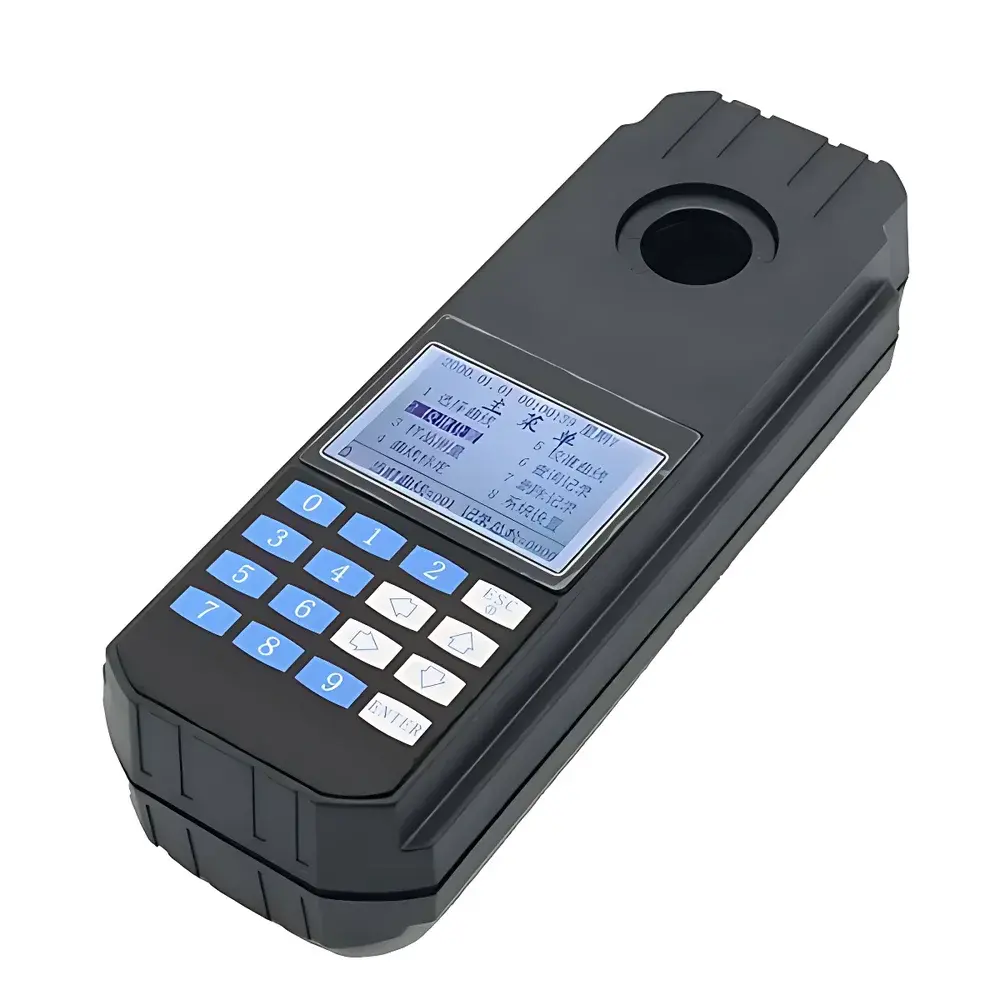
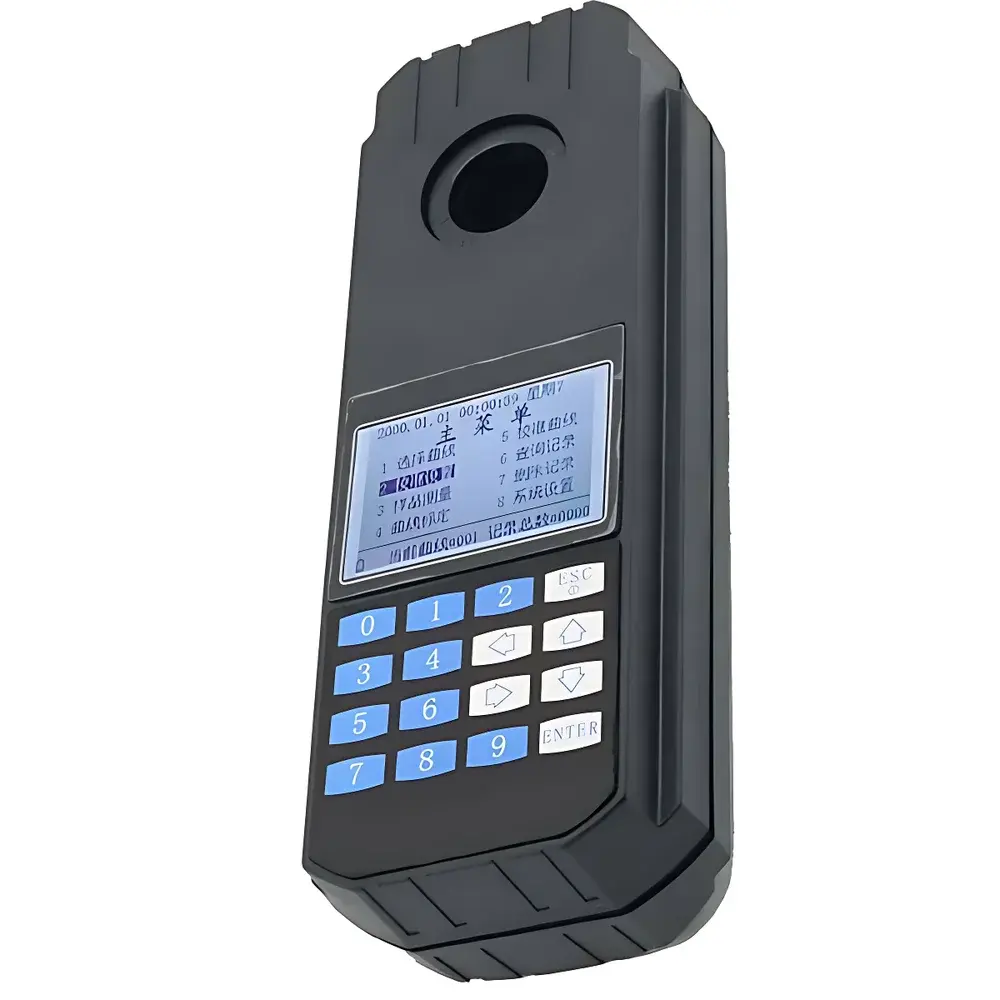
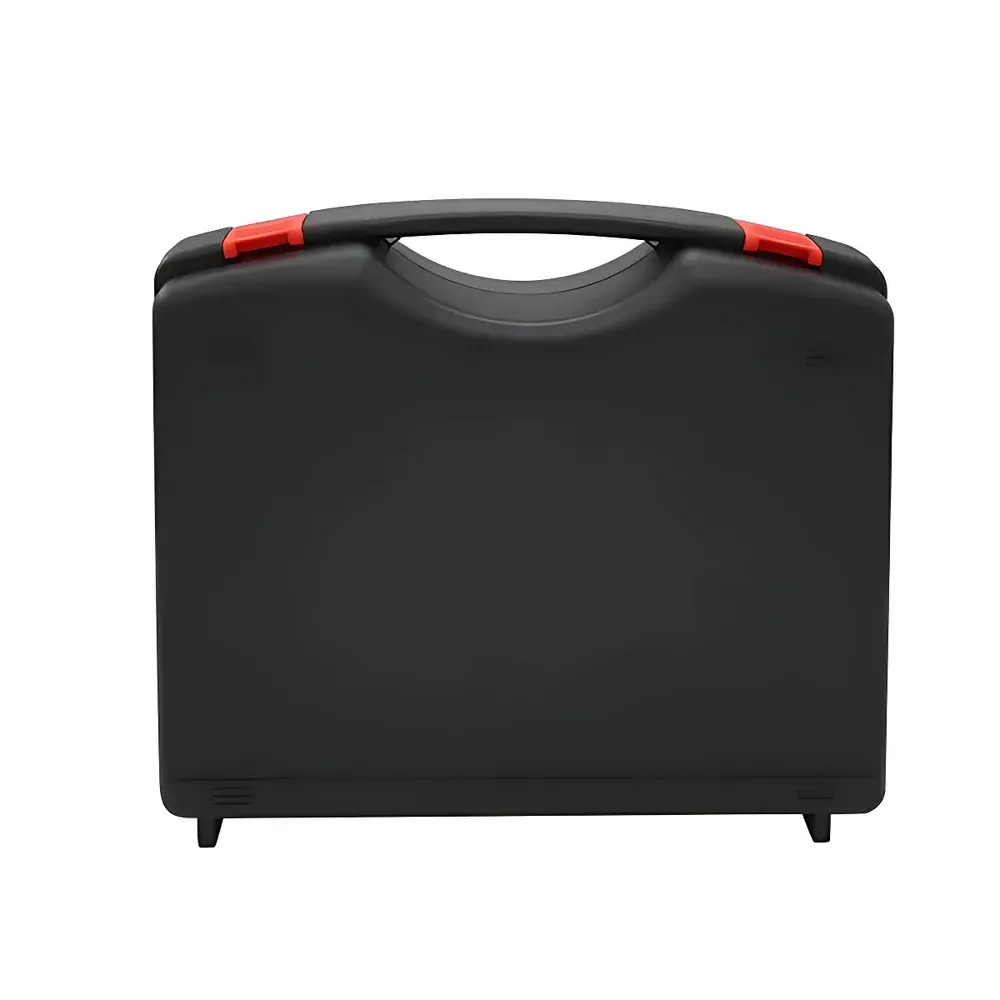
Shenchanghong CHCL-222 Portable Residual and Total Chlorine Analyzer
| Brand | Shenchanghong |
|---|---|
| Origin | Guangdong, China |
| Manufacturer Type | Direct Manufacturer |
| Instrument Type | Portable |
| Model | CHCL-222 |
| Measurement Parameters | Residual Chlorine, Total Chlorine |
| Measurement Range | 0.02–10.00 mg/L (dual-range: 0.02–2.00 mg/L and 2.00–10.00 mg/L) |
| Accuracy | ≤ ±3% of Full Scale |
| Repeatability | ≤ 3% RSD |
| Optical Stability | Absorbance drift < 0.002 A within 20 min |
| Resolution | 0.01 mg/L |
| LOD | 0.02 mg/L |
| Power Supply | 4 × AA batteries |
| Dimensions | 80 × 230 × 55 mm |
| Weight | 500 g |
| Operating Temperature | 5–40 °C |
| Relative Humidity | ≤ 85% RH |
| Protection Rating | IP65 |
| Data Storage | 199 test records with timestamp (YYYY-MM-DD HH:MM:SS), plus 20 programmable calibration curves |
| Optical System | Cold LED light source with narrow-band interference filters |
Overview
The Shenchanghong CHCL-222 Portable Residual and Total Chlorine Analyzer is a field-deployable photometric instrument engineered for rapid, on-site quantification of free residual chlorine and total chlorine in aqueous samples. It operates on the principle of DPD (N,N-diethyl-p-phenylenediamine) colorimetric reaction, where chlorine species oxidize DPD to form a stable magenta-colored compound proportional to concentration. Absorbance is measured at 515 nm using a cold LED light source and narrow-band optical interference filters—eliminating thermal drift and ensuring long-term photometric stability. Designed for compliance with standard methods including APHA 4500-Cl G (DPD method) and ISO 7393-2, the CHCL-222 delivers trace-level detection down to 0.02 mg/L with full-scale accuracy within ±3%, making it suitable for routine monitoring in municipal water distribution, disinfection validation, and process control environments where regulatory adherence and measurement reproducibility are critical.
Key Features
- IP65-rated ABS polymer housing—resistant to water ingress, dust, and chemical splashes for reliable operation in humid or outdoor settings.
- Dual-range measurement capability (0.02–2.00 mg/L and 2.00–10.00 mg/L) enables high-resolution quantification across low-dose disinfection and high-concentration industrial applications.
- Integrated real-time clock and non-volatile memory store up to 199 test results with full timestamps (year, month, day, hour, minute, second), supporting audit-ready data traceability.
- 20 programmable calibration curve slots allow pre-loading of user-defined or method-specific calibrations—reducing setup time during multi-site or multi-parameter campaigns.
- Ultra-low-power 16-bit microcontroller architecture extends battery life beyond 10,000 measurements per set of four AA alkaline cells.
- Large backlit LCD display with intuitive icon-driven interface minimizes operator training requirements and supports one-handed operation in gloves or wet conditions.
- Data retention during power loss ensures no measurement records are lost—even during unexpected battery replacement or transport interruptions.
Sample Compatibility & Compliance
The CHCL-222 is validated for use with potable water, wastewater effluent, swimming pool water, cooling tower recirculation streams, and process rinse waters. It accommodates standard 10 mm pathlength cuvettes and supports both liquid DPD reagent kits and tablet-based formulations. The analyzer meets functional performance criteria aligned with EPA Method 334.0 and ASTM D1253 for residual chlorine determination. Its optical design conforms to ISO 8466-1 for calibration model linearity verification, and its data storage architecture supports basic GLP-compliant recordkeeping—including operator ID entry (via optional alphanumeric input), measurement time stamping, and calibration history logging. While not FDA 21 CFR Part 11 certified out-of-the-box, the device’s immutable timestamped data structure facilitates integration into validated laboratory information management systems (LIMS) when paired with secure export protocols.
Software & Data Management
No proprietary desktop software is required for basic operation; however, ASCII-formatted data exports via optional USB-to-serial adapter enable seamless import into Excel, LabArchives, or custom QA/QC dashboards. Each stored record includes absorbance value, transmittance (%T), calculated chlorine concentration (mg/L), measurement date/time, and active calibration curve ID. Firmware supports field-upgradable calibration coefficients and language localization (English/Chinese firmware variants available). Audit trail integrity is maintained through write-once memory allocation—preventing post-acquisition modification of stored values. All calibration curves retain slope, intercept, correlation coefficient (r²), and date of last verification.
Applications
- Municipal drinking water treatment: verification of chlorine residual at entry points, distribution nodes, and endpoint taps per WHO and national regulatory thresholds.
- Food & beverage processing: validation of sanitizer concentrations in CIP (clean-in-place) rinse cycles and equipment surface contact water.
- Hospital and pharmaceutical facilities: monitoring of chlorinated water used in sterilization utilities and cleanroom humidification systems.
- Aquaculture and hydroponics: real-time tracking of disinfectant levels to prevent toxicity to sensitive aquatic organisms or plant roots.
- Industrial cooling water management: optimization of biocide dosing to control Legionella and biofilm formation while minimizing corrosion risk.
- Environmental field surveys: rapid screening of surface water and groundwater following disinfection events or accidental releases.
FAQ
What reagents are required for operation?
The CHCL-222 requires standard DPD-based reagents—either liquid reagent kits (e.g., DPD No. 1 for free chlorine, DPD No. 3 for total chlorine) or stabilized tablet formats compatible with 10 mL sample volumes.
Can the instrument distinguish between free chlorine and combined chlorine?
Yes—free chlorine is measured directly using DPD No. 1 reagent; total chlorine is measured after addition of potassium iodide (KI) to liberate combined chlorine, per APHA Standard Methods protocol.
Is calibration verification traceable to NIST standards?
While the instrument itself does not include built-in NIST-traceable reference standards, it accepts user-introduced certified reference materials (CRMs) for daily verification—supporting documented traceability when CRMs with valid certificates are employed.
How often must the optical system be cleaned or serviced?
The sealed cold LED and interference filter assembly requires no routine optical maintenance; only external cuvette chamber cleaning with lint-free tissue and isopropyl alcohol is recommended after each use.
Does the device support Bluetooth or Wi-Fi connectivity?
No—CHCL-222 relies on wired serial export for data transfer to ensure electromagnetic compatibility in electrically noisy industrial or utility environments.
Related Products







