
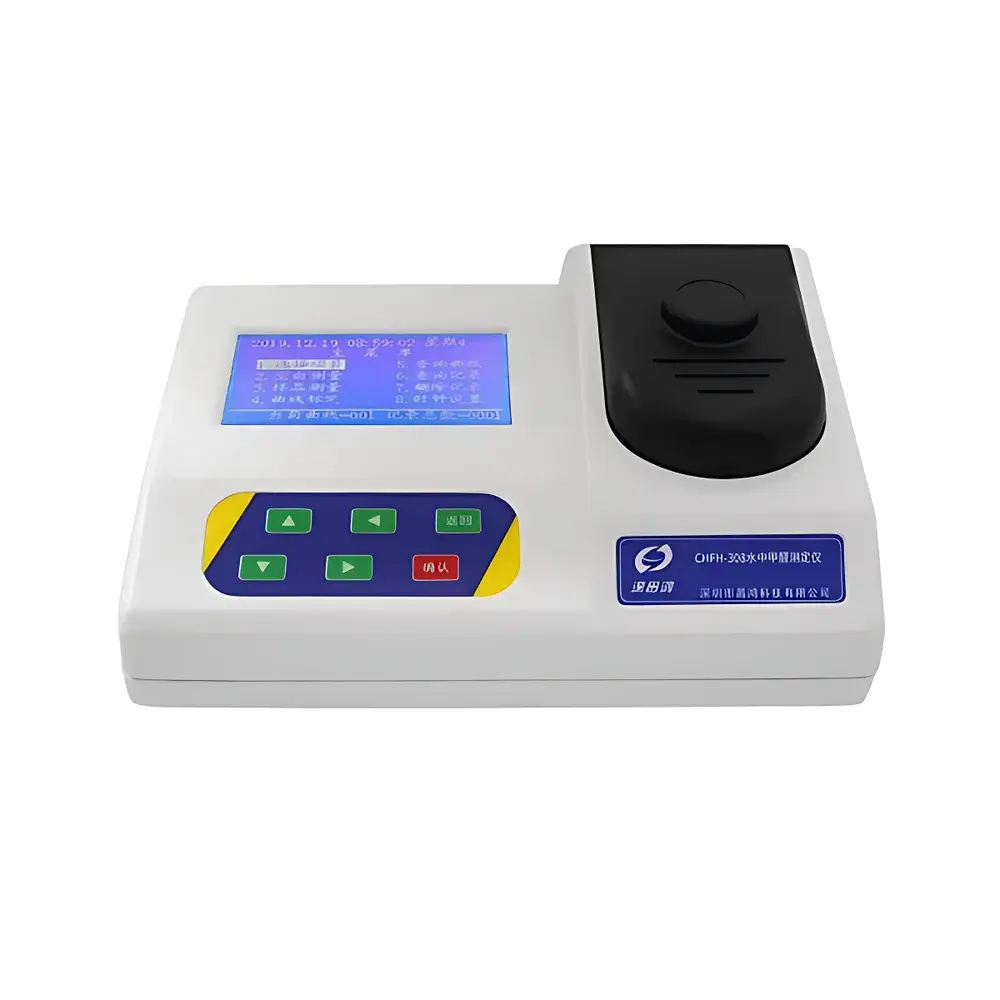
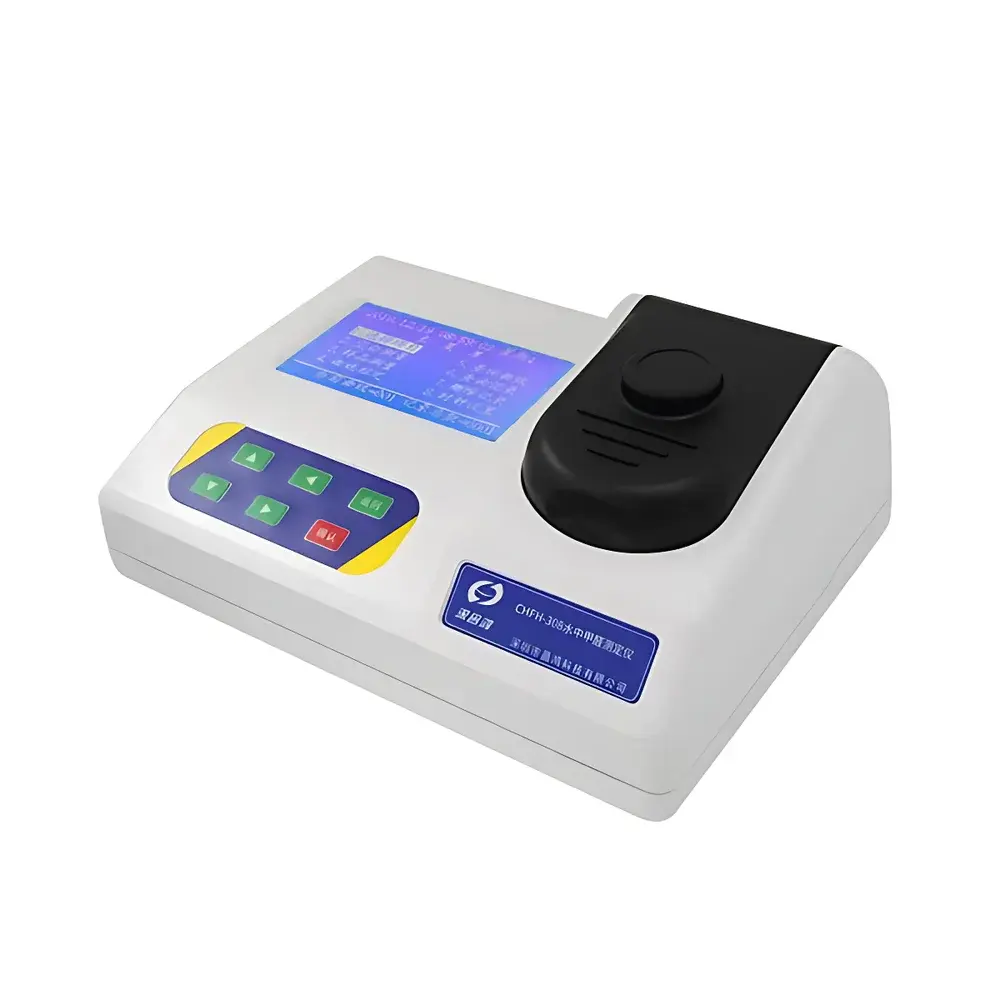
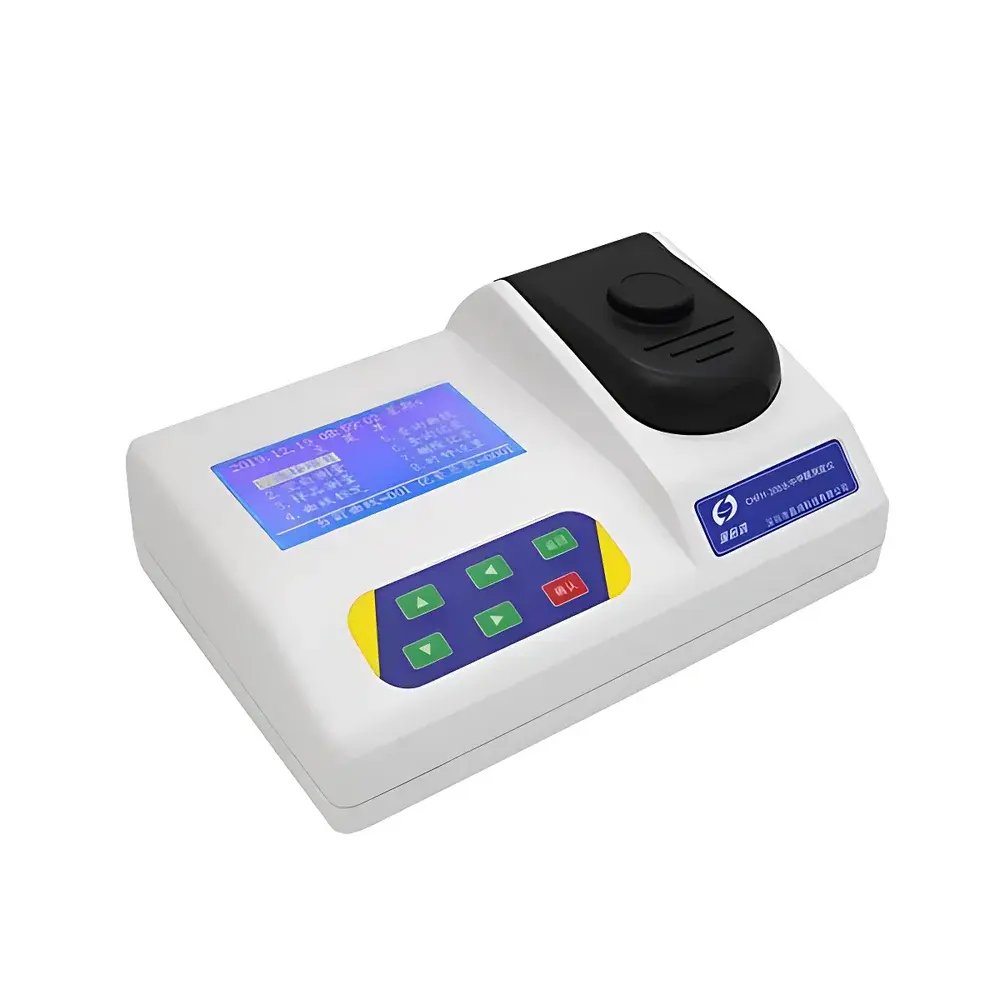
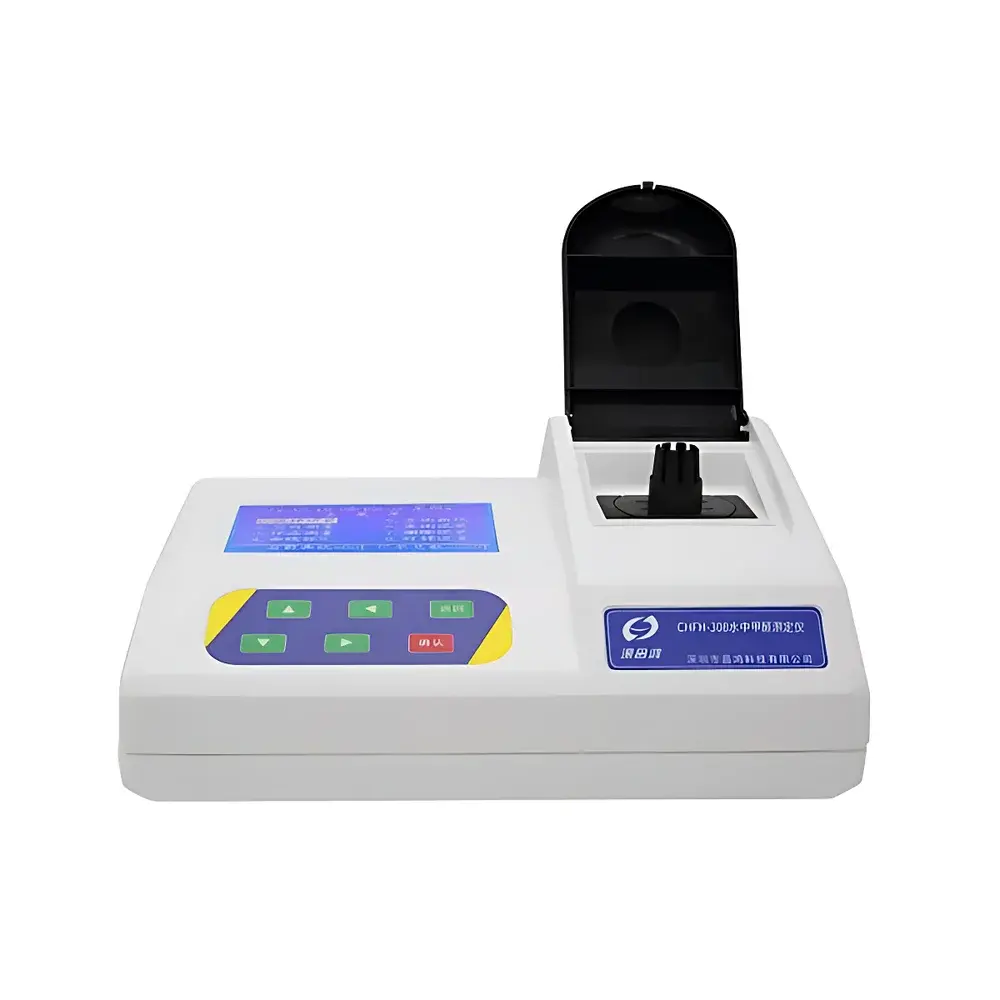
Shenchanghong CHFH-308 Formaldehyde Analyzer for Water
| Brand | Shenchanghong |
|---|---|
| Model | CHFH-308 |
| Measurement Range | 0.05–2.50 mg/L |
| Resolution | 0.01 mg/L |
| Accuracy | ≤5% FS |
| Repeatability | ≤3% |
| Optical Stability | ≤0.002 A/20 min |
| Dimensions (W×D×H) | 266 × 200 × 130 mm |
| Power Consumption | 30 W |
| Weight | <1 kg |
| Light Source | High-brightness monochromatic cold light source (100,000 h lifetime) |
| Filter System | Narrow-band interference filter |
| Display | LCD with Chinese menu interface |
| Data Storage | Onboard memory for measurement records |
| Calibration | Factory-preloaded calibration curve + user-definable curves |
| Housing Material | Corrosion-resistant molded ABS |
Overview
The Shenchanghong CHFH-308 Formaldehyde Analyzer for Water is a benchtop photometric instrument engineered for precise, routine quantification of formaldehyde in aqueous matrices using the acetylacetone (AA) colorimetric method—standardized under ISO 10566 and widely adopted in environmental laboratories for compliance monitoring. The analyzer operates on the principle of spectrophotometric detection at 412 nm, where formaldehyde reacts with acetylacetone and ammonium acetate under controlled heating to form a yellow chromophore (3,5-diacetyl-1,4-dihydrolutidine), whose absorbance is linearly proportional to formaldehyde concentration within the validated range of 0.05–2.50 mg/L. Designed for robustness in field-deployed labs and municipal water quality control centers, the CHFH-308 integrates a thermally stabilized, long-life monochromatic cold light source (rated for 100,000 hours) and a precision narrow-band optical filter system to minimize stray light interference and ensure high photometric fidelity. Its optical stability—≤0.002 A over 20 minutes—meets the baseline stability requirements outlined in ASTM D5117 for colorimetric water analyzers used in regulatory testing.
Key Features
- High-stability optical architecture featuring a monochromatic cold light source and narrow-band interference filter, delivering consistent photometric performance across ambient temperature fluctuations (15–30 °C).
- Microprocessor-controlled data acquisition and calculation engine based on a low-power 16-bit MCU, enabling real-time concentration computation and automatic zero-point correction.
- Backlit LCD display with intuitive Chinese-language menu navigation—designed for ease of use by laboratory technicians without advanced programming training.
- Onboard data storage supporting retention of up to 500 measurement records, including sample ID, date/time stamp, and concentration value—facilitating manual audit trails per GLP documentation practices.
- Modular calibration framework: includes pre-programmed factory calibration curve traceable to NIM-certified formaldehyde reference standards; additionally supports up to three user-defined calibration curves for matrix-specific compensation (e.g., wastewater with high turbidity or chloride interference).
- Durable housing constructed from injection-molded ABS with enhanced chemical resistance—validated against repeated exposure to common reagents (acetic acid, ammonium acetate, acetylacetone solutions) per IEC 60529 IP20 specifications.
Sample Compatibility & Compliance
The CHFH-308 is validated for direct analysis of clarified, low-turbidity water samples—including potable water, surface water, groundwater, treated effluent, and industrial process water—without prior distillation, provided total suspended solids (TSS) remain below 10 mg/L and free chlorine is quenched with sodium thiosulfate. For wastewater or high-organic matrices, sample dilution or pretreatment per ISO 10566 Annex B is recommended. The instrument complies with key regulatory frameworks governing water quality testing: its methodology aligns with ISO 10566:1994 (Water quality — Determination of formaldehyde — Spectrophotometric method using acetylacetone); it supports documentation practices consistent with ISO/IEC 17025:2017 (General requirements for the competence of testing and calibration laboratories); and its data handling capabilities meet basic traceability requirements referenced in US EPA Method 400.1 for colorimetric organic analyses.
Software & Data Management
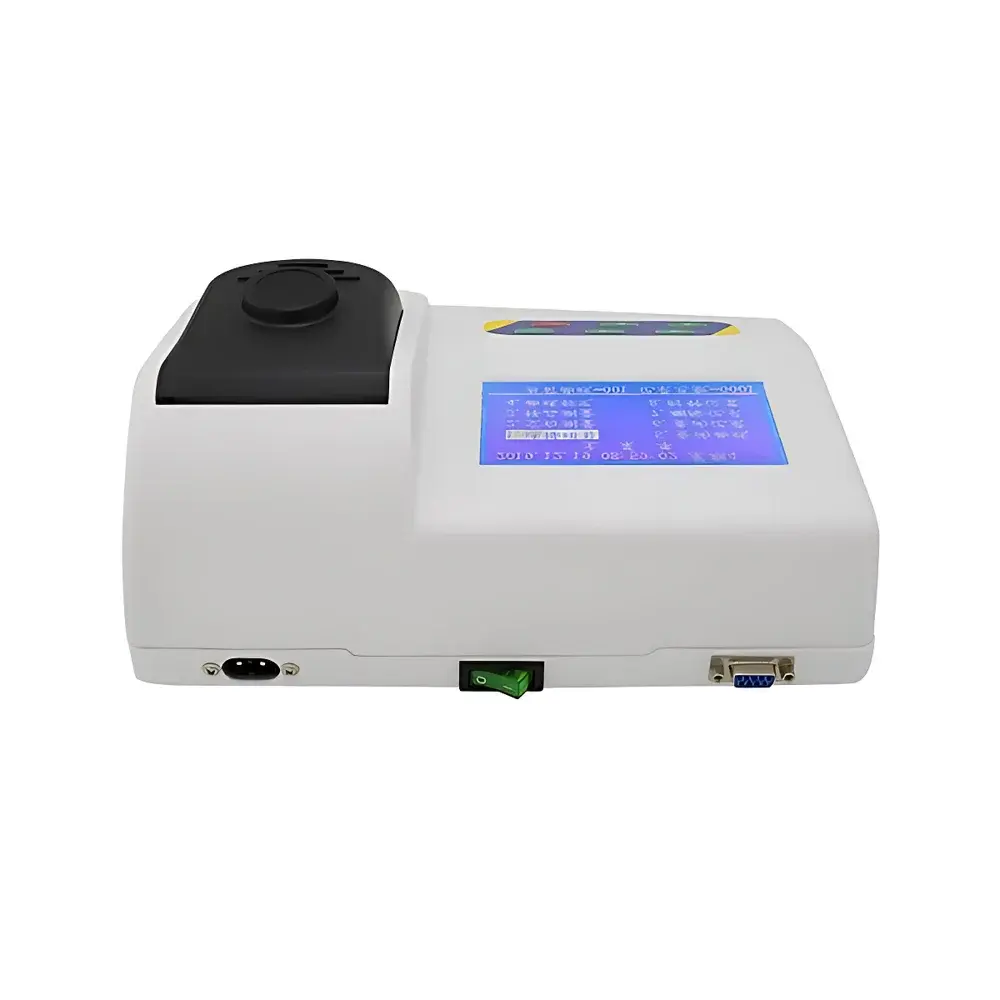
While the CHFH-308 operates as a standalone unit without PC connectivity, its embedded firmware implements essential data integrity safeguards: all measurements are time-stamped and stored with immutable read-only attributes; calibration events (including date, operator ID placeholder, and slope/intercept values) are logged separately; and the device enforces mandatory blank verification before each batch run. Though not equipped with USB or RS-232 ports, the analyzer’s internal memory structure allows export via manual transcription into LIMS-compatible spreadsheets. For laboratories operating under FDA 21 CFR Part 11 or EU Annex 11, external validation protocols (e.g., IQ/OQ/PQ) may be applied to confirm instrument performance against defined acceptance criteria for accuracy, repeatability, and linearity—particularly when used in GMP-regulated pharmaceutical water system monitoring.
Applications
- Regulatory compliance testing of drinking water supplies per national standards (e.g., China’s GB 5749–2022, WHO Guidelines for Drinking-water Quality).
- Effluent monitoring in textile, resin, and plywood manufacturing facilities where formaldehyde discharge limits apply.
- Verification of formaldehyde removal efficiency in activated carbon or advanced oxidation process (AOP) treatment trains.
- Field-based QA/QC for emergency response teams assessing post-flooding or post-industrial-accident water contamination.
- Educational use in university environmental chemistry laboratories for teaching colorimetric assay principles and analytical method validation.
FAQ
What is the recommended sample preparation procedure for wastewater samples?
For wastewater with high turbidity (>10 NTU) or interfering substances (e.g., oxidants, heavy metals), centrifugation (3000 rpm, 10 min) followed by filtration through a 0.45 µm membrane filter is required prior to analysis. Free chlorine must be neutralized with 0.1 mL of 10% sodium thiosulfate solution per 10 mL sample.
Can the CHFH-308 be used for air or soil extract analysis?
No—the instrument is specifically calibrated and validated for aqueous-phase formaldehyde determination only. Air sampling requires DNPH cartridge derivatization and HPLC-UV analysis; soil extracts require additional solvent partitioning and cleanup steps beyond the scope of this photometer’s design.
Is the reagent kit compatible with other formaldehyde analyzers?
The supplied acetylacetone-based reagent set is optimized for the CHFH-308’s reaction kinetics and optical path length. Cross-platform use is not validated and may compromise accuracy due to differences in incubation temperature control and photometric alignment.
How often should the optical system be verified?
Optical stability should be confirmed daily using a sealed air blank and certified neutral density filter (NIST-traceable, OD 0.5 and 1.0). Full verification—including wavelength accuracy and photometric linearity—is recommended every six months or after any physical impact to the instrument housing.







