
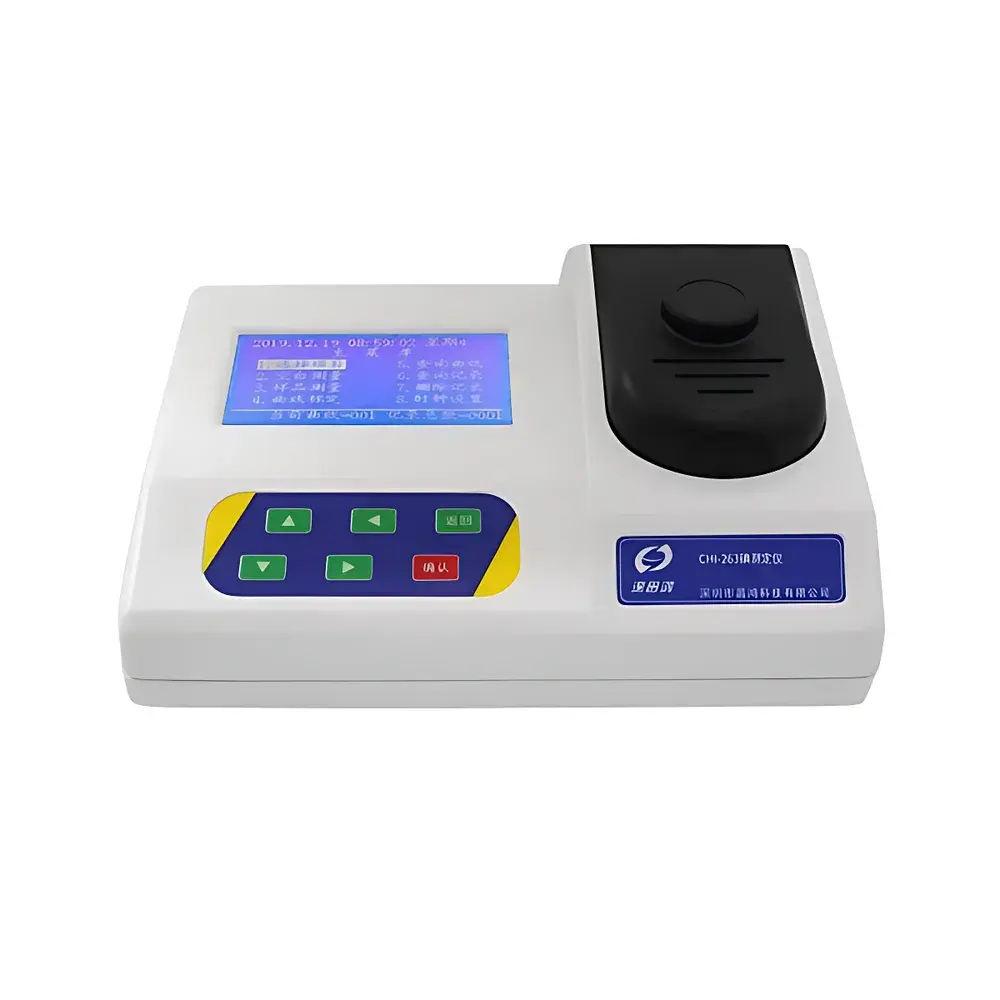
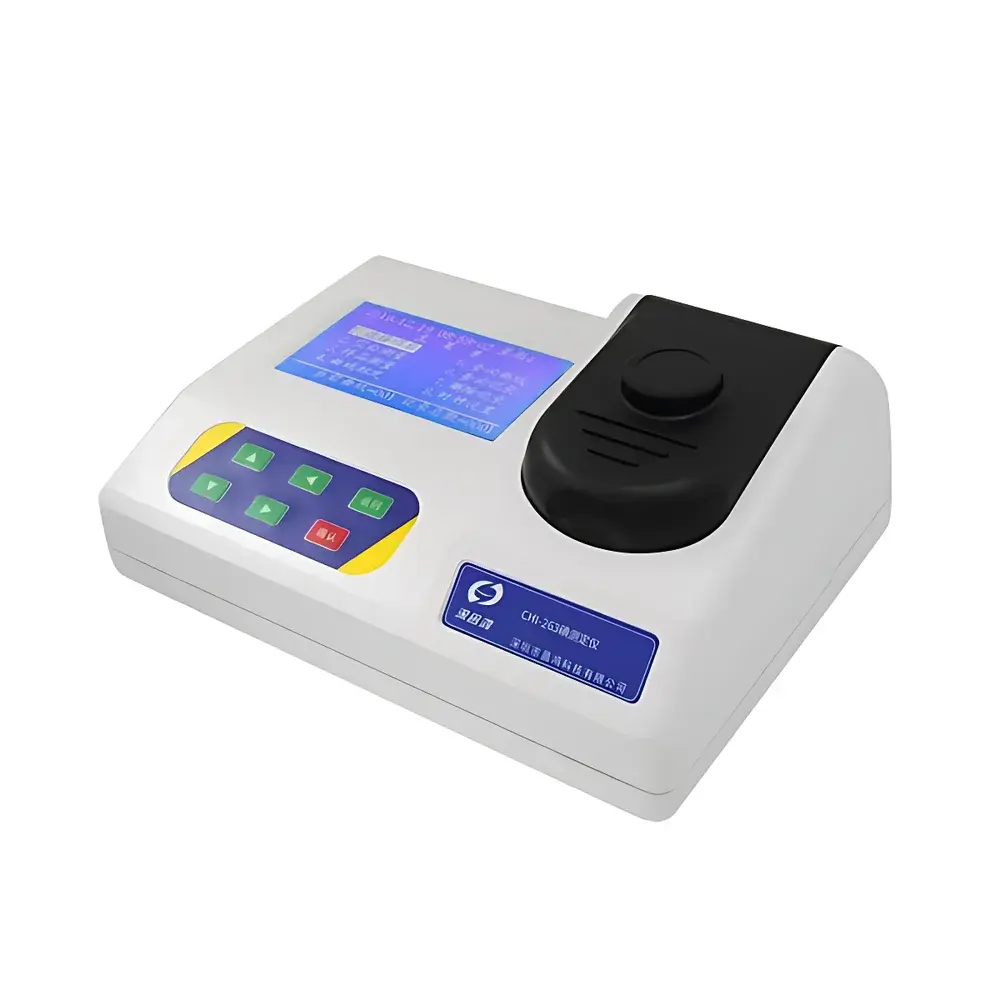
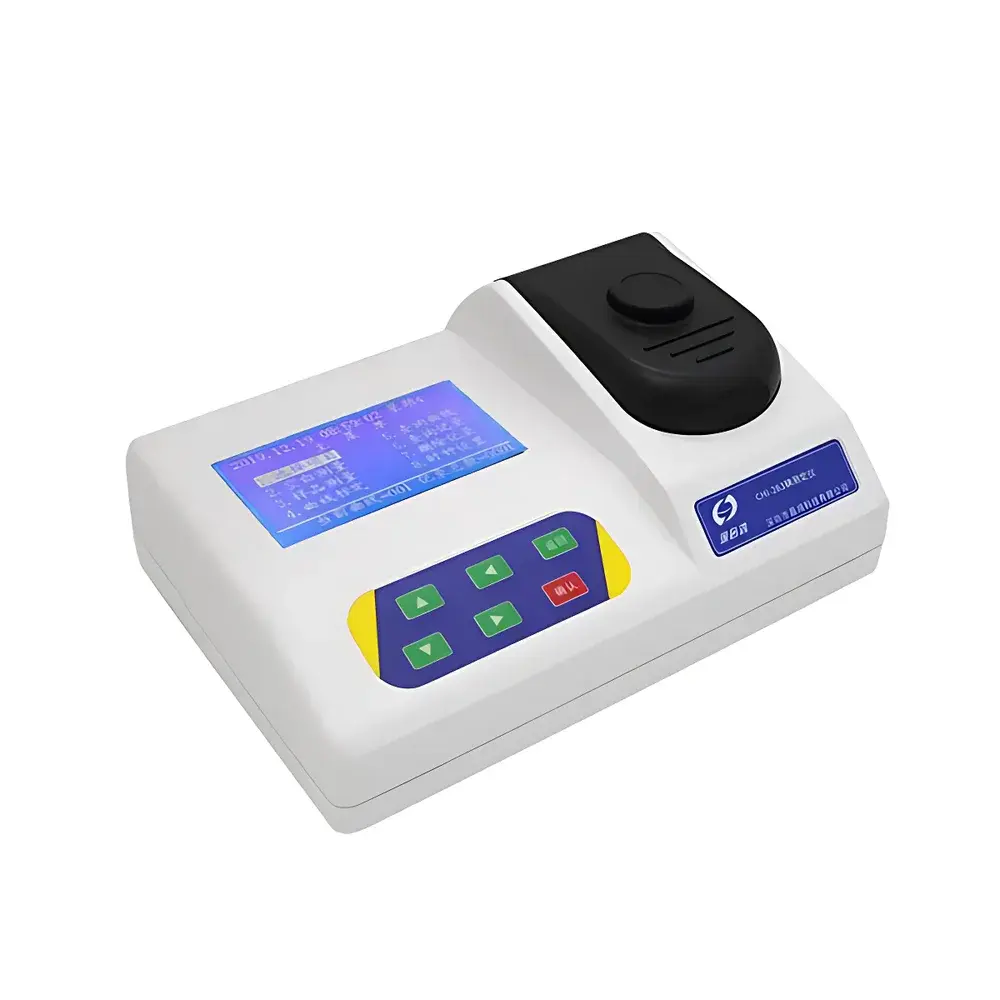
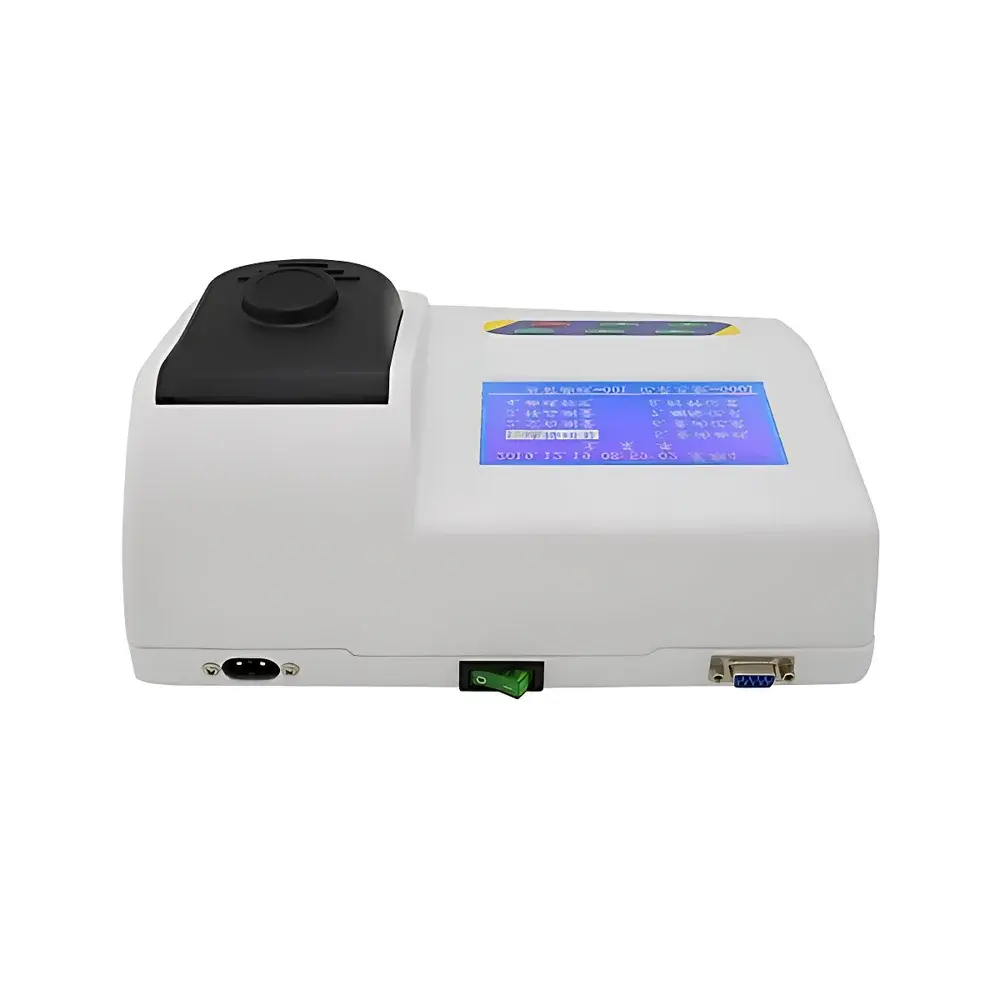
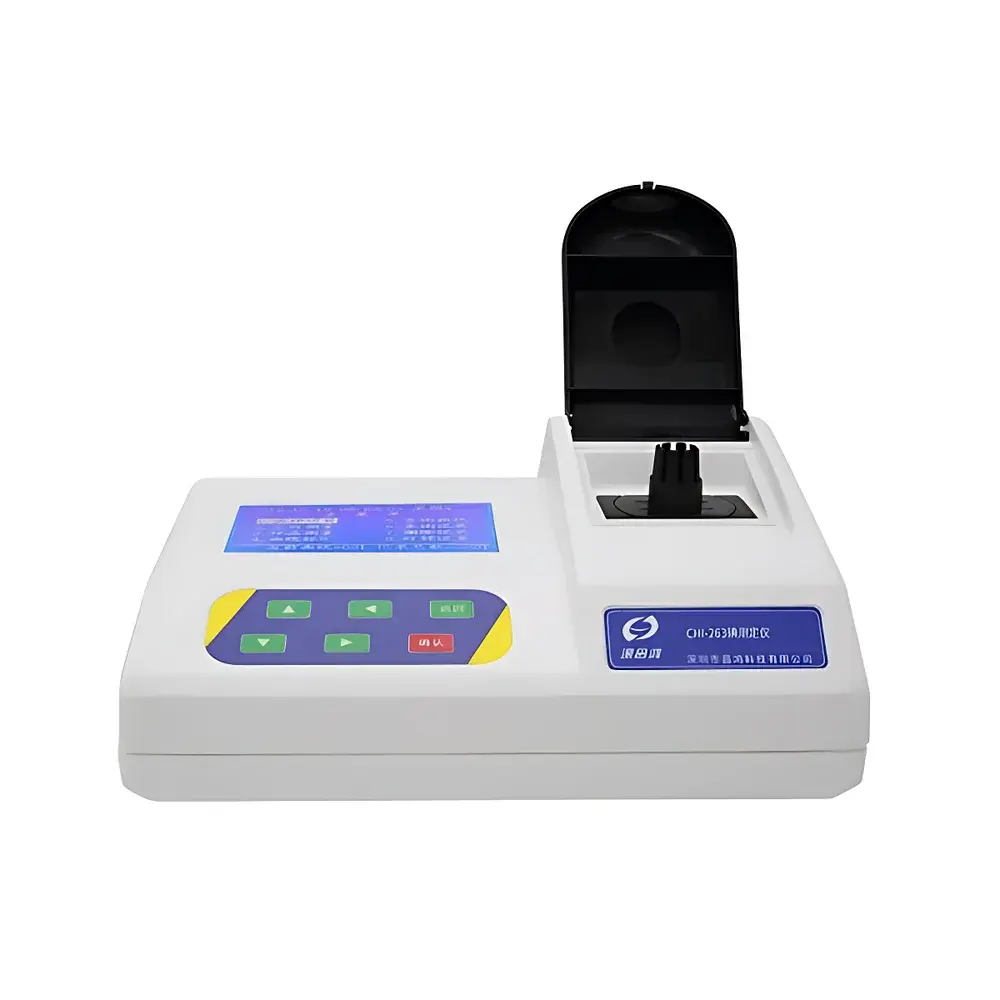
Shenchanghong CHI-263 Iodine Analyzer
| Brand | Shenchanghong |
|---|---|
| Origin | Guangdong, China |
| Manufacturer Type | Manufacturer |
| Origin Category | Domestic |
| Model | CHI-263 |
| Pricing | Upon Request |
| Measurement Range | 0.02–1.00 mg/L |
| Accuracy (Abs. Error) | ≤±5% |
| Repeatability | ≤3% |
| Optical Drift | <0.002 A in 20 min |
| Dimensions (W×D×H) | 266 mm × 200 mm × 130 mm |
| Weight | <1 kg |
| Operating Temperature | 5–40 °C |
| Relative Humidity | ≤85% |
| Power Supply | AC (220 ± 22) V, (50 ± 0.5) Hz |
Overview
The Shenchanghong CHI-263 Iodine Analyzer is a benchtop photometric instrument engineered for precise, routine quantification of iodine concentration in aqueous matrices. It operates on the principle of spectrophotometric detection using a stable monochromatic cold light source and a narrow-band optical filter system—optimized to isolate the characteristic absorption band of the iodine–starch complex or iodide-specific chromogenic reaction product (e.g., cerium(IV)–iodide or arsenite–iodine methods, depending on reagent chemistry). The analyzer employs embedded 16-bit microcontroller architecture to digitize absorbance signals, apply calibration algorithms, and directly output iodine concentration in mg/L. Designed for compliance with standard water quality testing protocols, it supports trace-level iodine monitoring in low-turbidity, non-interfering matrices where iodine speciation remains predominantly as iodide (I⁻) or total iodine under controlled oxidation conditions.
Key Features
- High-stability monochromatic cold light source (rated lifetime >100,000 hours), coupled with precision narrow-band interference filters, ensuring minimal spectral drift and high photometric reproducibility;
- Optical system calibrated for <0.002 A absorbance drift over 20 minutes—meeting ISO 7027 and ASTM D1293-derived stability benchmarks for portable photometers;
- Large backlit LCD display with full Chinese-language interface and menu navigation—designed for intuitive operation by field technicians and laboratory personnel without advanced programming training;
- Dual-curve calibration capability: pre-programmed factory calibration curve plus user-definable multi-point calibration curves (up to 10 points), supporting method validation per ISO/IEC 17025 requirements;
- Robust housing fabricated from post-molded ABS polymer—resistant to common laboratory reagents, humidity, and incidental splash exposure;
- Low-power embedded control system enabling stable performance across variable AC line conditions (220 V ±10%, 50 Hz ±1%), with built-in EMI filtering to mitigate electromagnetic interference in shared lab environments.
Sample Compatibility & Compliance
The CHI-263 is validated for use with clarified, filtered water samples exhibiting turbidity 0.5 mg/L), heavy metal ions (e.g., Fe³⁺ >0.2 mg/L), or high organic load (COD >50 mg/L), all of which may interfere with iodine–chromogen stoichiometry. It conforms to fundamental design principles outlined in ISO 8466-1 (calibration of analytical instruments) and supports documentation practices aligned with GLP and ISO/IEC 17025 clause 7.7 (measurement traceability). While not certified to US EPA or ISO 10304 series for regulatory reporting, its performance specifications meet internal QA/QC thresholds for screening-level iodine assessment in drinking water (per WHO Guideline Limit: 0.15 mg/L), surface water, wastewater effluents, and industrial process streams where iodine serves as a tracer or contaminant indicator.
Software & Data Management
Data handling is performed entirely onboard via non-volatile memory: up to 500 measurement records—including sample ID, date/time stamp, measured absorbance, calculated concentration, and operator ID—can be stored and recalled. No external software or driver installation is required; data export is manual via visual readout and transcription. The instrument supports audit-ready operation through fixed calibration history logging and user-accessible calibration verification prompts. Although lacking USB or Bluetooth connectivity, its architecture permits integration into centralized LIMS environments via manual entry or barcode-assisted logging workflows compliant with 21 CFR Part 11 Annex 11 principles (where electronic records are supplemented by handwritten logs).
Applications
- Routine iodine monitoring in municipal drinking water treatment plants—particularly where iodized salt residuals or disinfection by-product precursors require tracking;
- Environmental surveillance of iodine in rivers, lakes, and groundwater near pharmaceutical manufacturing zones or iodine-rich geological formations;
- Effluent compliance checks for iodine-containing antiseptics, radiopharmaceutical synthesis waste, or catalyst recovery streams in fine chemical production;
- Educational laboratories conducting quantitative analysis experiments on halogen redox chemistry and spectrophotometric method development;
- Field-deployable screening at water kiosks or mobile labs operating under ISO 22000 or HACCP-based water safety plans.
FAQ
What iodine species does the CHI-263 measure?
It measures total iodine reducible to iodide under the specified reagent conditions—primarily iodide (I⁻), but may include iodate (IO₃⁻) if pre-reduction is applied per standard method SOPs.
Is the instrument suitable for seawater analysis?
No—high chloride matrix (>10,000 mg/L) causes significant interference; desalination or dilution with deionized water is required prior to analysis.
Can calibration curves be transferred between instruments?
No—each unit is individually optimized during factory calibration; user-defined curves must be established per instrument using traceable NIST-traceable iodine standards.
Does the analyzer comply with FDA 21 CFR Part 11?
It does not provide electronic signature capability or automated audit trails; however, its manual data recording workflow supports Part 11 compliance when paired with controlled logbooks and SOPs.
What maintenance is required for long-term accuracy?
Annual verification using certified iodine reference standards (e.g., NIST SRM 3199) and optical path cleaning with lint-free lens tissue and isopropanol is recommended. Filter replacement is not user-serviceable.
Related Products







