
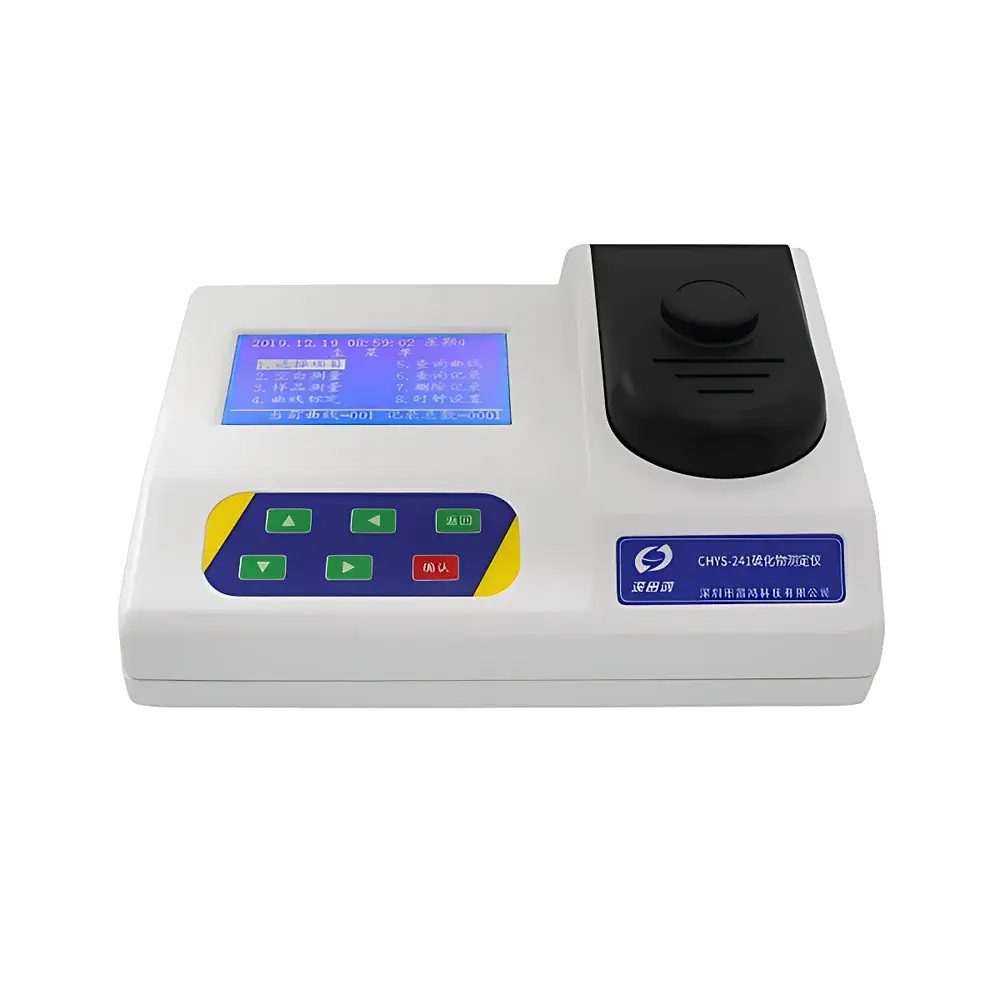
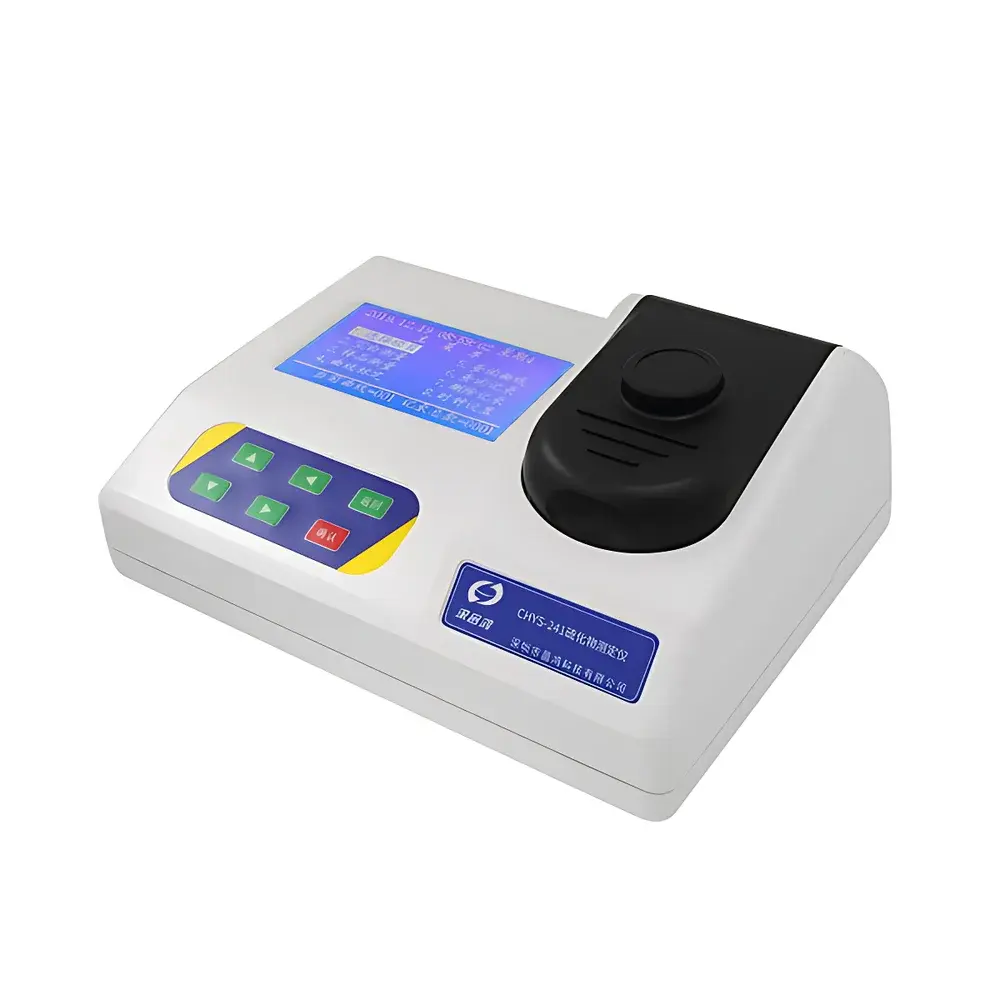
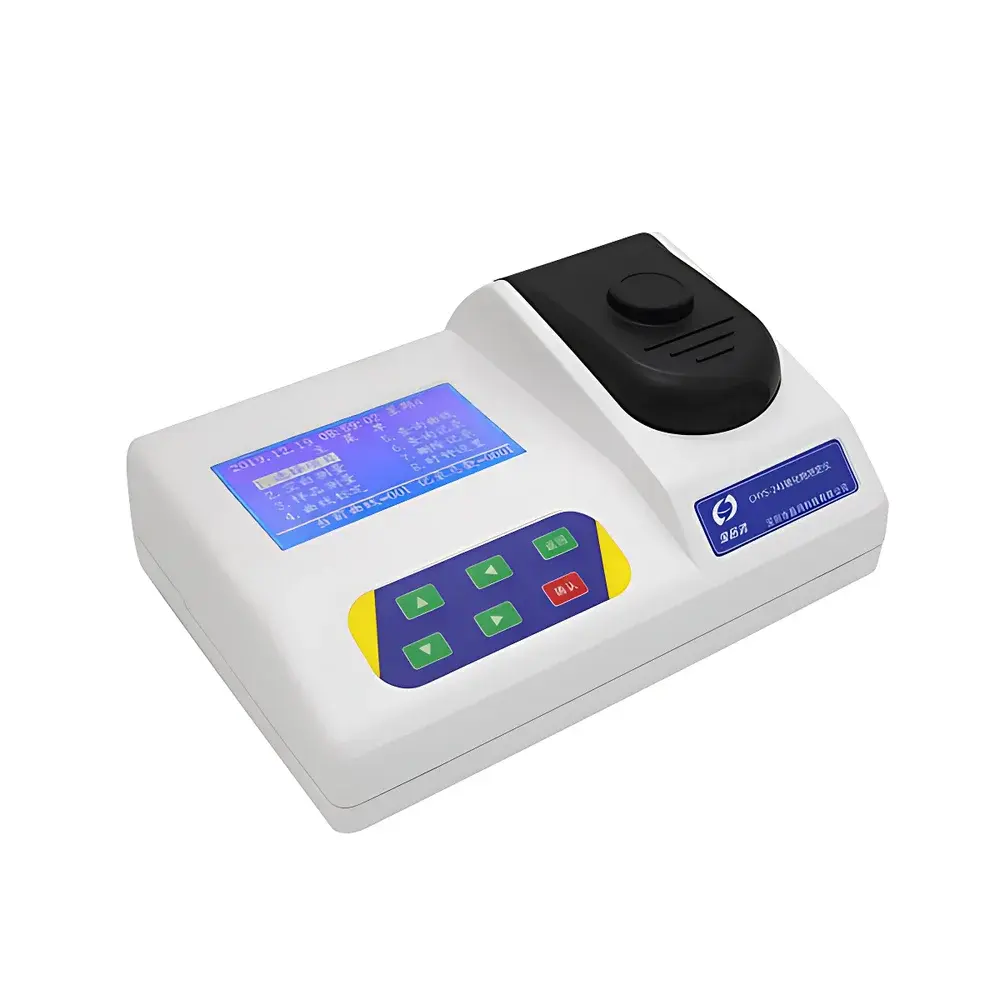
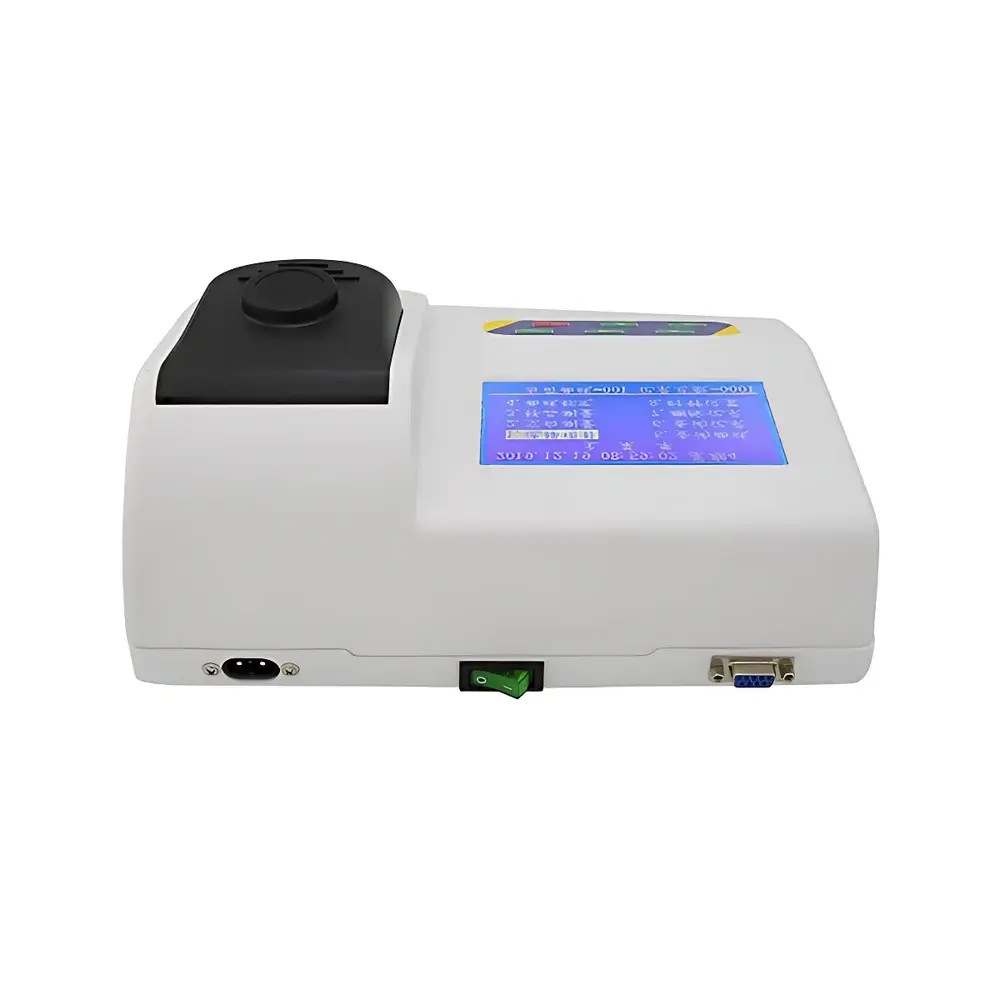
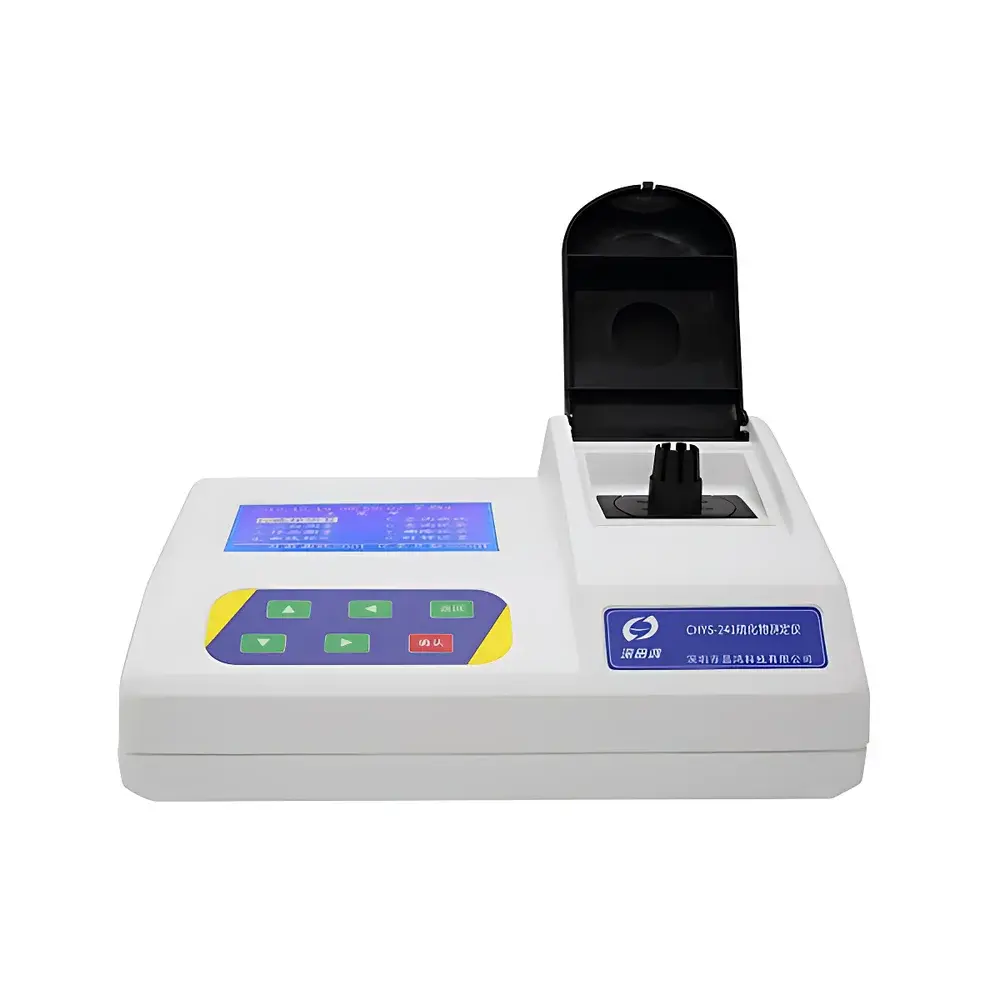
Shenchanghong CHYS-241 Benchtop Sulfide Analyzer
| Brand | Shenchanghong |
|---|---|
| Origin | Guangdong, China |
| Manufacturer Type | Manufacturer |
| Origin Category | Domestic |
| Model | CHYS-241 |
| Instrument Type | Laboratory-Grade |
| Measurement Range | 0.005–1.00 mg/L |
| Accuracy | ≤ ±5% FS |
| Repeatability | ≤ 3% RSD |
| Optical Stability | Drift < 0.002 A within 20 min |
| Dimensions (H×W×D) | 130 × 266 × 200 mm |
| Weight | < 1.0 kg |
| Operating Temperature | 5–40 °C |
| Relative Humidity | ≤ 85% RH |
| Power Supply | AC 220 V ± 10%, 50 Hz ± 0.5 Hz |
| Light Source | High-brightness, long-life (100,000 h) monochromatic cold LED |
| Filter System | Narrow-band optical interference filter |
| Display | Backlit LCD with Chinese interface |
| Data Storage | Onboard memory for measurement records and user-defined calibration curves |
| Housing Material | Corrosion-resistant molded ABS polymer |
Overview
The Shenchanghong CHYS-241 Benchtop Sulfide Analyzer is a dedicated photometric instrument engineered for precise, routine quantification of dissolved sulfide (S²⁻) in aqueous environmental samples. It operates on the principle of methylene blue spectrophotometry—where sulfide ions react with N,N-dimethyl-p-phenylenediamine sulfate and ferric chloride under acidic conditions to form a stable, intensely colored methylene blue complex. Absorbance is measured at 665 nm using a narrow-band optical system centered on a high-stability, long-life monochromatic cold LED source. The integrated 16-bit microcontroller processes raw absorbance signals via pre-programmed calibration algorithms, converting them directly into concentration values (mg/L) displayed in real time. Designed specifically for laboratory-based water quality analysis, the CHYS-241 meets core functional requirements for regulatory monitoring workflows in municipal water utilities, environmental testing labs, and industrial effluent compliance programs.
Key Features
- High-stability optical architecture featuring a 100,000-hour lifetime monochromatic cold LED light source coupled with precision narrow-band interference filters—ensuring minimal spectral drift and immunity to ambient light interference.
- Real-time photometric stability monitoring: absorbance drift remains below 0.002 A over 20 minutes, satisfying ISO 7027-1:2016 baseline stability criteria for colorimetric analyzers.
- Onboard data management with non-volatile memory supporting storage of up to 500 measurement records and retention of both factory-installed and user-defined calibration curves (up to 5 custom curves).
- Intuitive Chinese-language LCD interface with hierarchical menu navigation—designed to minimize operator training time while maintaining full parameter accessibility (zero calibration, slope adjustment, unit toggle, date/time stamping).
- Robust mechanical construction using injection-molded ABS housing with enhanced chemical resistance—validated for repeated exposure to chlorine-containing reagents, acidic digestants, and common field preservatives (e.g., zinc acetate, NaOH).
- Low-power embedded system architecture compliant with IEC 61000-4-3 (radiated immunity) and IEC 61000-4-4 (electrical fast transient) standards—enabling reliable operation in shared lab environments with multiple analytical instruments.
Sample Compatibility & Compliance
The CHYS-241 is validated for use with clarified, filtered, or centrifuged samples from drinking water, surface water, groundwater, municipal wastewater, and industrial process effluents. Sample pretreatment follows standard EPA Method 376.1 and HJ 482–2009 (Chinese Environmental Protection Standard), including acidification, distillation, or precipitation-based sulfide isolation where matrix interferences (e.g., thiosulfate, sulfite, suspended solids) are present. While not certified to ISO/IEC 17025 as a standalone device, its measurement performance aligns with the intermediate precision and trueness targets defined in ISO 5667-3:2018 (water sampling—part 3: guidance on preservation and handling of water samples) and supports GLP-compliant documentation when paired with traceable reference materials (e.g., NIST SRM 2688). Instrument output is compatible with external LIMS integration via RS-232 serial export (ASCII format).
Software & Data Management
The analyzer incorporates embedded firmware supporting dual calibration modes: fixed-point two-point calibration (zero and mid-range standard) and multi-point linear regression (up to 5 points). All calibration events—including date, operator ID (manually entered), standard concentrations, and residual errors—are timestamped and stored internally. Measurement reports include sample ID, time/date stamp, measured absorbance, calculated concentration, and pass/fail status relative to user-defined action limits. Data export is supported via ASCII-formatted serial output (9600 baud, no parity, 8N1), enabling direct ingestion into Excel, LabArchives, or proprietary QA/QC platforms. Audit trail functionality meets minimum ALCOA+ principles for raw data integrity, though full 21 CFR Part 11 compliance requires external electronic signature infrastructure.
Applications
- Regulatory compliance testing for sulfide discharge limits under local environmental protection ordinances (e.g., GB 8978–1996, China’s Integrated Wastewater Discharge Standard).
- Process control in anaerobic digestion units, where sulfide accumulation correlates with microbial inhibition and biogas corrosion risk.
- Drinking water safety verification post-chlorination or ozonation, where residual sulfide indicates incomplete oxidation or distribution system stagnation.
- Field-deployable lab support for emergency response teams assessing H₂S-generating contamination events (e.g., sewage spills, landfill leachate breaches).
- Educational laboratories conducting method validation exercises in environmental chemistry curricula per APHA Standard Methods 4500-S²⁻ B.
FAQ
What sample preparation methods are recommended prior to analysis?
Acidification followed by distillation is required for complex matrices containing interfering anions (e.g., thiosulfate). For clean water samples, direct analysis after filtration (0.45 µm) and immediate preservation with zinc acetate is acceptable.
Does the instrument support automatic wavelength selection?
No—the CHYS-241 is optimized exclusively for the 665 nm methylene blue absorption peak; no manual or automatic wavelength tuning is provided.
Can calibration curves be transferred between instruments?
Calibration parameters are stored locally and not exportable; each unit must be independently calibrated using traceable sulfide standards.
Is the device suitable for continuous unattended operation?
It is designed for discrete batch analysis only—not for flow-through or online monitoring applications.
What maintenance intervals are recommended for optical components?
LED intensity and filter transmission should be verified annually using NIST-traceable neutral density filters; cleaning of the cuvette compartment is advised after every 100 analyses.
Related Products







