
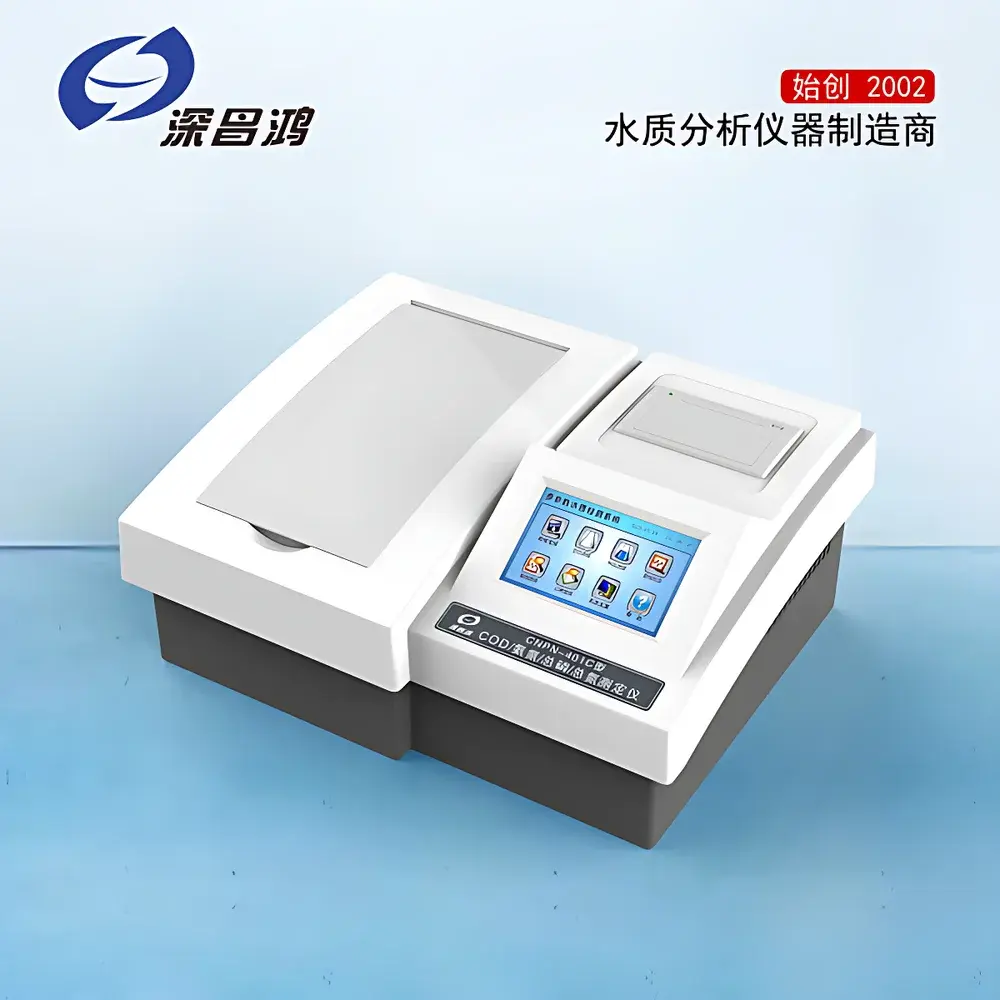
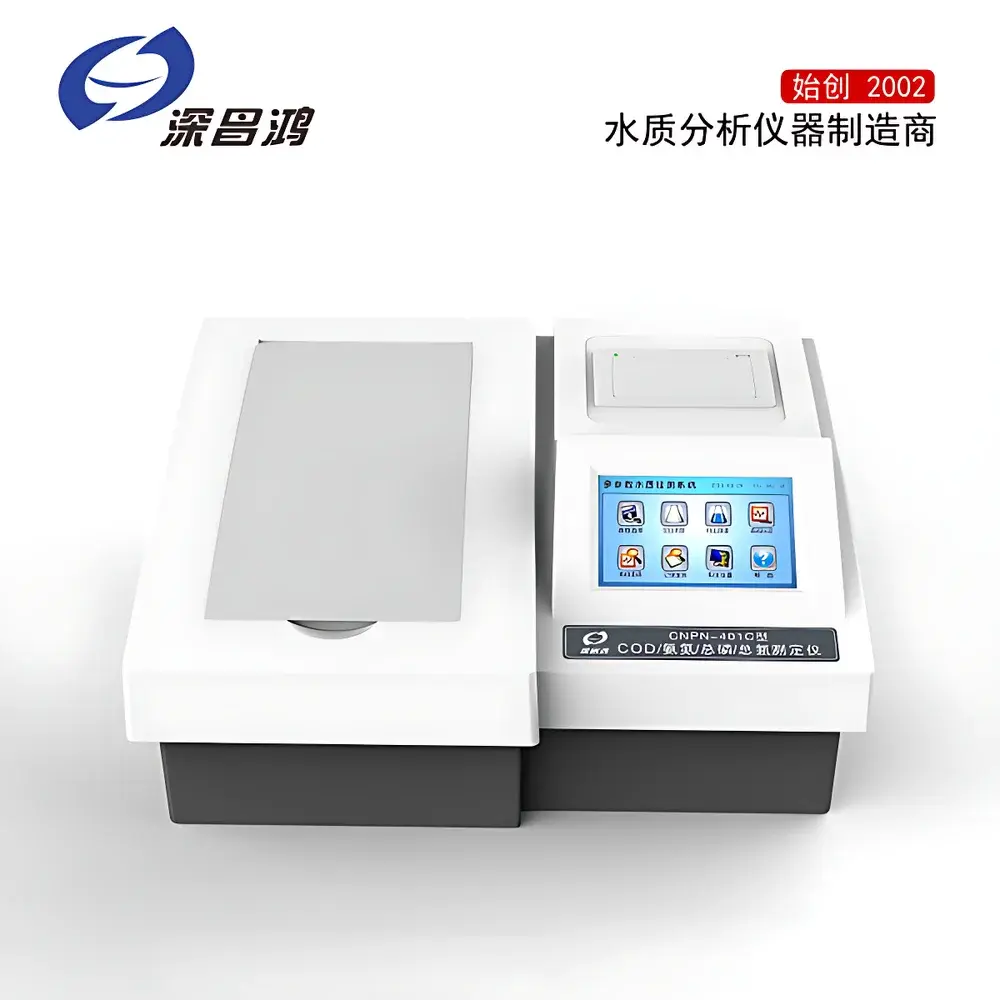
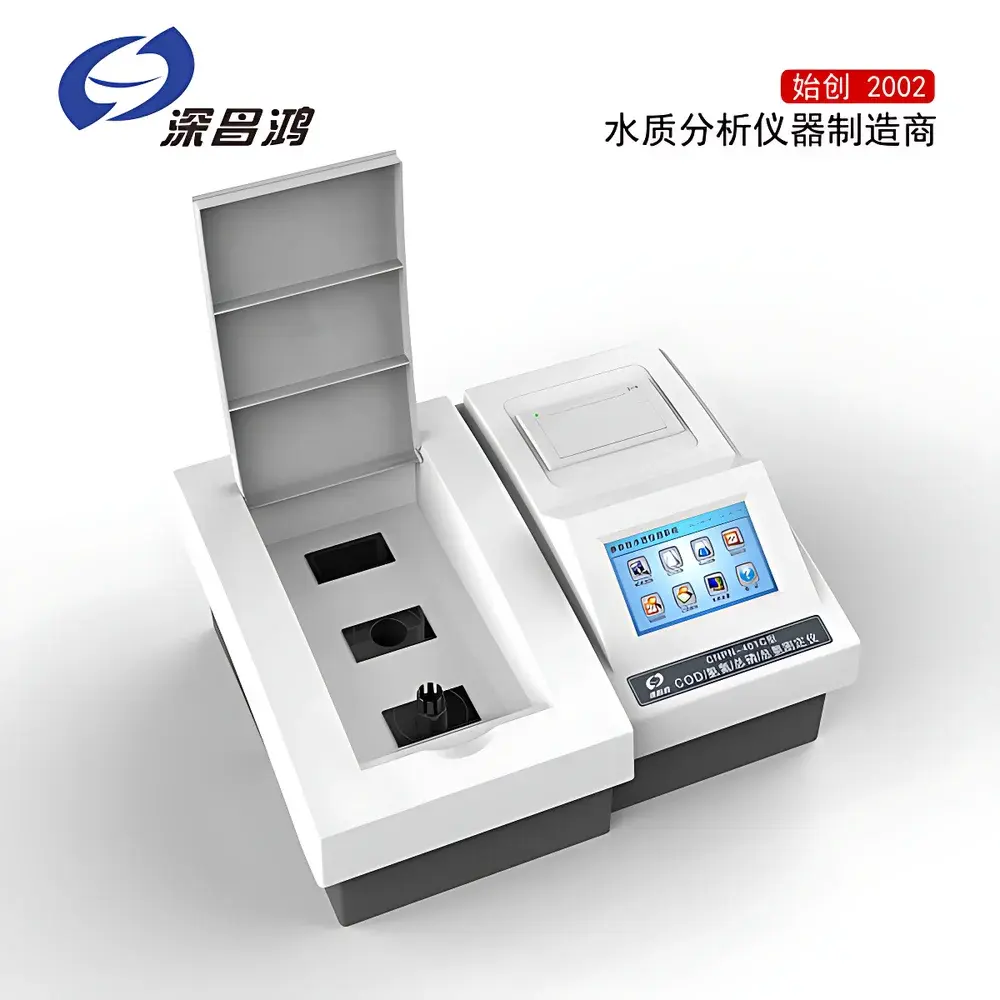
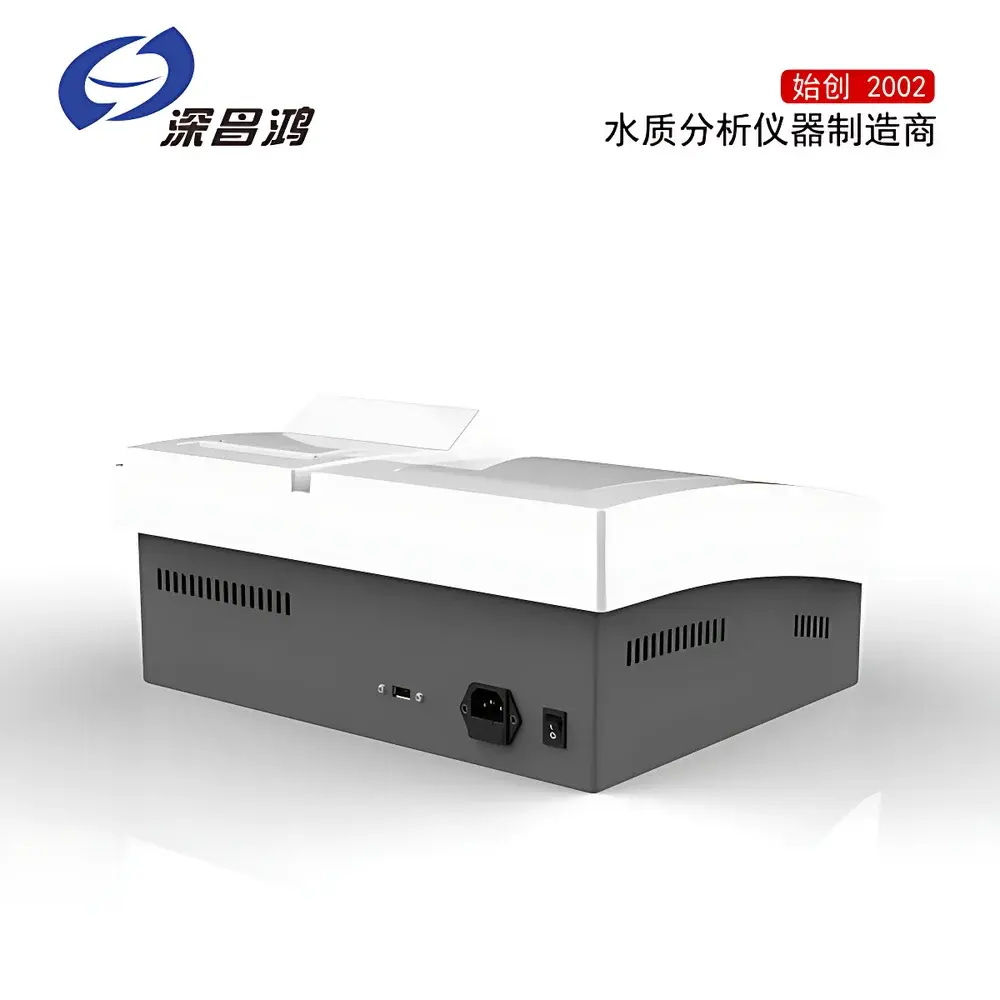
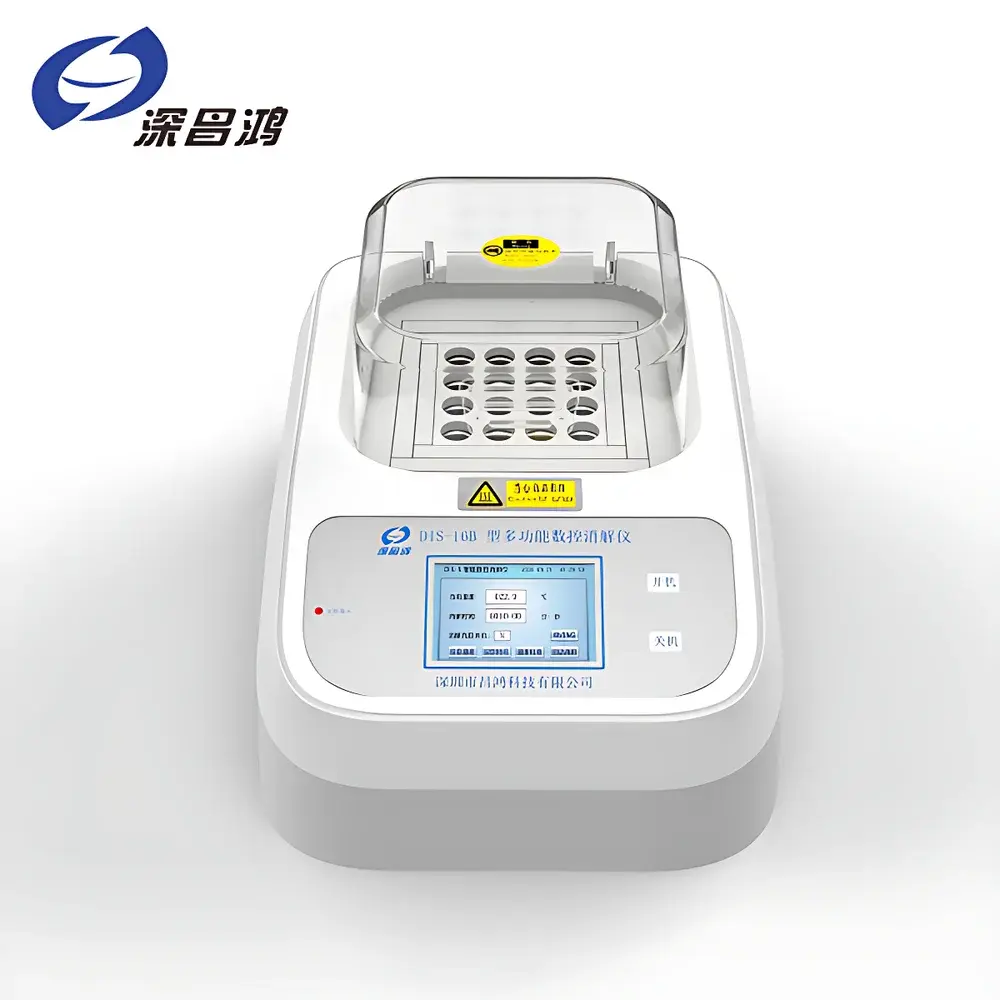
Shenchanghong CNPN-401C Multi-Parameter Water Quality Analyzer for COD, Ammonia Nitrogen, Total Phosphorus and Total Nitrogen
| Brand | Shenchanghong |
|---|---|
| Origin | Guangdong, China |
| Manufacturer Type | Direct Manufacturer |
| Country of Origin | China |
| Model | CNPN-401C |
| Instrument Type | Laboratory Water Quality Analyzer |
| Measured Parameters | COD, Ammonia Nitrogen, Total Phosphorus, Total Nitrogen |
| COD Range | 5–2000 mg/L (extendable to 20,000 mg/L) |
| Ammonia Nitrogen Range | 0.02–25 mg/L |
| Total Phosphorus Range | 0.00–10 mg/L |
| Total Nitrogen Range | 0–100 mg/L |
| COD Accuracy | ≤±5% FS |
| Ammonia Nitrogen Accuracy | ≤±3% FS |
| Total Phosphorus Accuracy | ≤±5% FS |
| Total Nitrogen Accuracy | ≤±5% FS |
| Chloride Interference Tolerance (COD) | ≤2000 mg/L |
| COD Digestion Temp | 165 °C |
| Ammonia Nitrogen Digestion Temp | 120 °C |
| Total Phosphorus Digestion Temp | 125 °C |
| Total Nitrogen Digestion Temp | 125 °C |
| Digestion Time (COD) | 15–30 min |
| Digestion Time (TN/TP) | 30 min |
| Temperature Control Range | Ambient to 200 °C |
| Temp Control Accuracy | ≤±1.0 °C |
| Optical Stability | ≤0.002 A / 20 min |
| Repeatability | ≤±3% |
| Sample Throughput | 16 samples (optional 20/25/36) |
| Display | 5-inch color touchscreen with bilingual UI |
| Data Storage | 100 calibration curves, 1000 test records |
| Interface | USB port for data export |
Overview
The Shenchanghong CNPN-401C is a dedicated benchtop multi-parameter water quality analyzer engineered for precise, standardized quantification of four critical parameters in environmental and municipal wastewater laboratories: Chemical Oxygen Demand (COD), Ammonia Nitrogen (NH₃-N), Total Phosphorus (TP), and Total Nitrogen (TN). It implements established spectrophotometric methods compliant with national and international standard protocols: COD is determined via rapid digestion followed by optical measurement at 610 nm using dichromate oxidation under acidic conditions; Ammonia Nitrogen employs the Nesslerization method (reaction with Nessler’s reagent to form a yellow-brown colloidal complex measured at 420 nm); Total Phosphorus is quantified using the phosphomolybdenum blue method after persulfate digestion; and Total Nitrogen is determined by alkaline potassium persulfate digestion followed by UV–vis detection of nitrate/nitrite after reduction. The instrument separates optical measurement and thermal digestion functions into two physically independent units—ensuring long-term photometric stability and eliminating thermal drift during absorbance acquisition.
Key Features
- Modular architecture with dedicated analyzer and programmable digestion block—eliminates cross-interference between thermal and optical subsystems.
- High-intensity, long-life cold light source with narrow spectral bandwidth ensures consistent photometric output and minimizes lamp aging effects over extended operation cycles.
- PID-controlled digestion module with ±1.0 °C temperature accuracy across a 0–200 °C range and programmable time settings (1–120 minutes) supports method flexibility beyond standard protocols—including adaptation for alternative digestion chemistries or research-grade optimization.
- 5-inch capacitive color touchscreen interface with intuitive icon-driven navigation, real-time status feedback, and dual-language support (English/Chinese) for multilingual lab environments.
- Integrated one-touch recovery function safeguards calibration curves and historical datasets against accidental deletion or system error—critical for GLP-compliant documentation integrity.
- Single-tube digestion–colorimetry workflow eliminates tube transfer steps, reducing analyst error, contamination risk, and total assay time per batch.
- USB 2.0 interface enables direct export of raw absorbance values, calculated concentrations, timestamps, operator IDs, and method metadata to external PCs for audit-ready reporting or LIMS integration.
Sample Compatibility & Compliance
The CNPN-401C is validated for use with surface water, groundwater, domestic sewage, industrial effluents, and treated wastewater matrices. Its optical design accommodates standard 16 mm round quartz or high-transmittance glass digestion–colorimetric tubes (20 included). The instrument meets core performance criteria aligned with Chinese Environmental Protection Standards (HJ/T 399–2007 for COD; HJ 535–2009 for NH₃-N; HJ 671–2013 for TP; HJ 636–2012 for TN) and provides traceable measurement uncertainty suitable for internal QA/QC programs. While not certified to ISO/IEC 17025 as a standalone device, its operational methodology supports compliance with ISO 5667 series (water sampling) and ISO 7027 (turbidity-corrected absorbance), and its data logging structure facilitates alignment with FDA 21 CFR Part 11 requirements when deployed with controlled user access and electronic signature protocols.
Software & Data Management
Embedded firmware supports storage of up to 100 user-defined calibration curves (including multi-point linear, quadratic, and polynomial fits) and 1000 test records with full metadata: date/time stamp, parameter ID, sample ID, operator code, digestion temperature/duration, measured absorbance, and final concentration. All data are timestamped and immutable post-acquisition. Exported CSV files contain column headers compliant with common laboratory informatics systems. The included data acquisition software (Windows-compatible) enables curve validation, statistical summary (mean, SD, CV%), trend plotting, and PDF report generation with configurable headers and footers. Audit trail functionality logs all configuration changes, calibration events, and user logins—supporting GLP and GMP-aligned record retention policies.
Applications
This analyzer serves routine monitoring in municipal wastewater treatment plants (WWTPs), environmental protection bureaus, third-party testing laboratories, and industrial pretreatment facilities. Typical use cases include: daily influent/effluent COD tracking per discharge permit limits; ammonia nitrogen verification prior to nitrification/denitrification stages; phosphorus load assessment for eutrophication control; and total nitrogen compliance reporting under nutrient removal regulations. Its adaptability to variable digestion protocols also supports method development for emerging contaminants requiring modified oxidative digestion—such as certain organic nitrogen species or particulate-bound phosphorus fractions.
FAQ
Is the CNPN-401C compliant with U.S. EPA or ISO standard methods?
It implements analytical principles consistent with EPA Method 410.4 (COD), EPA Method 350.1 (NH₃-N), EPA Method 365.4 (TP), and EPA Method 351.2 (TN), though formal EPA certification requires independent validation under specified lab conditions.
Can the digestion block be used independently for non-standard applications?
Yes—the digestion module operates autonomously with full temperature and timer programmability, enabling custom thermal protocols for research or specialized sample preparation.
What is the recommended maintenance interval for optical calibration?
We recommend verifying zero and span calibration with certified reference standards every 30 days or before each analytical batch when operating under regulatory scrutiny.
Does the instrument support network connectivity or LIMS integration?
Native Ethernet or Wi-Fi is not integrated; however, exported CSV files and structured metadata enable seamless ingestion into most LIMS platforms via automated folder watch or manual import workflows.
Are reagents supplied with the system compatible with international suppliers’ standards?
Reagent kits provided meet Chinese national standards (GB/T); users may substitute equivalent-grade reagents from Sigma-Aldrich, Merck, or Hach—provided lot-specific calibration verification is performed.







