
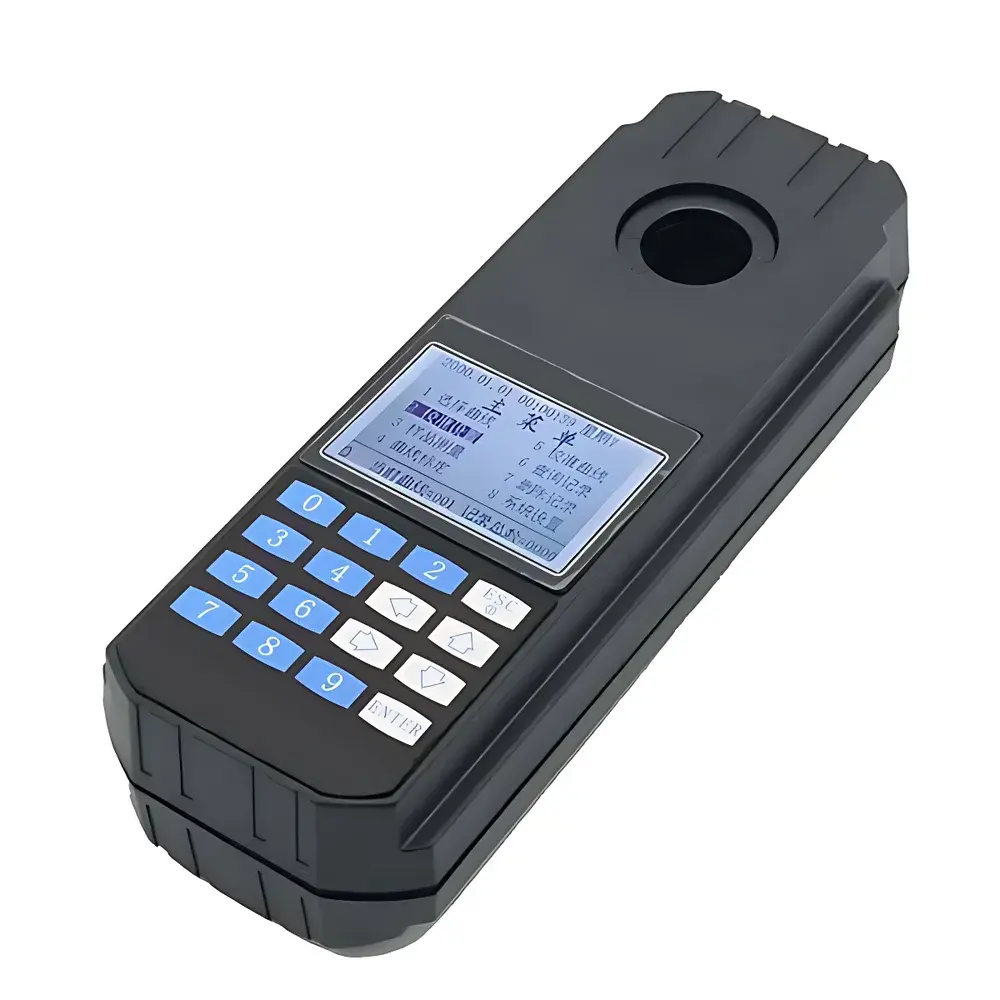
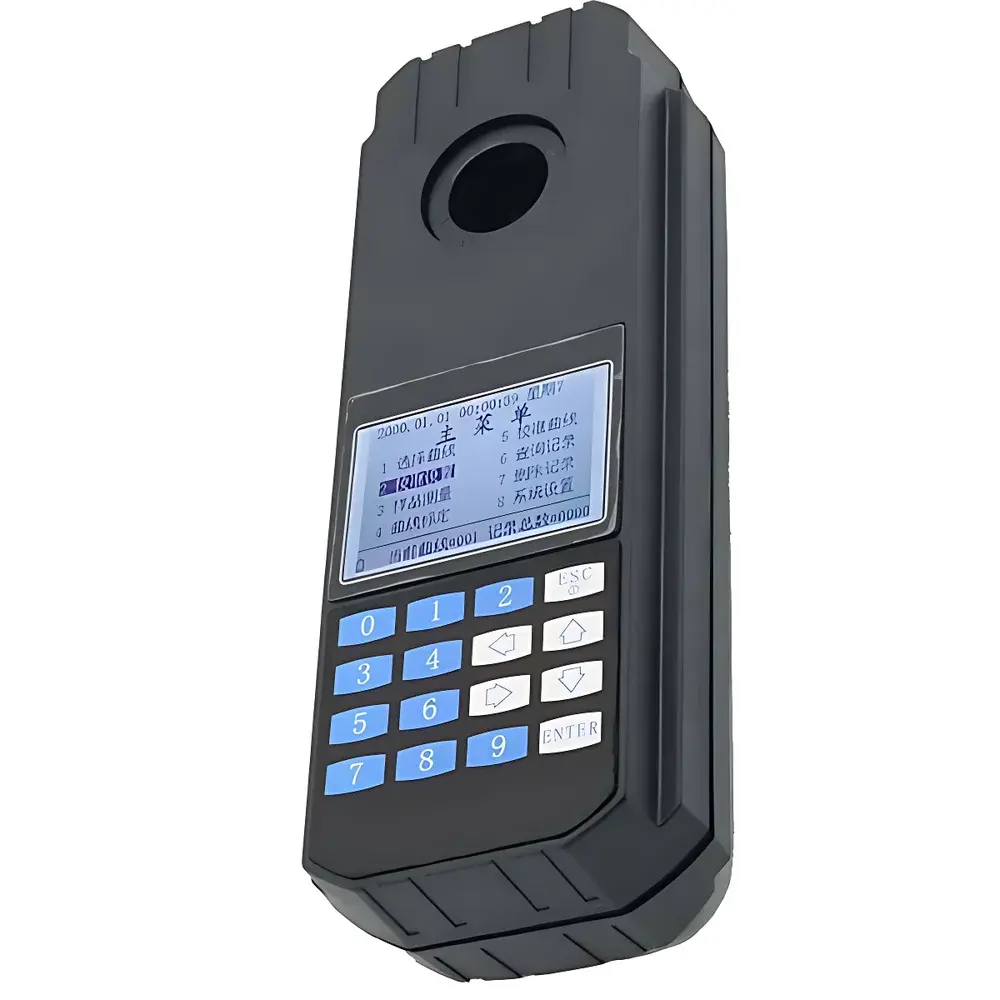
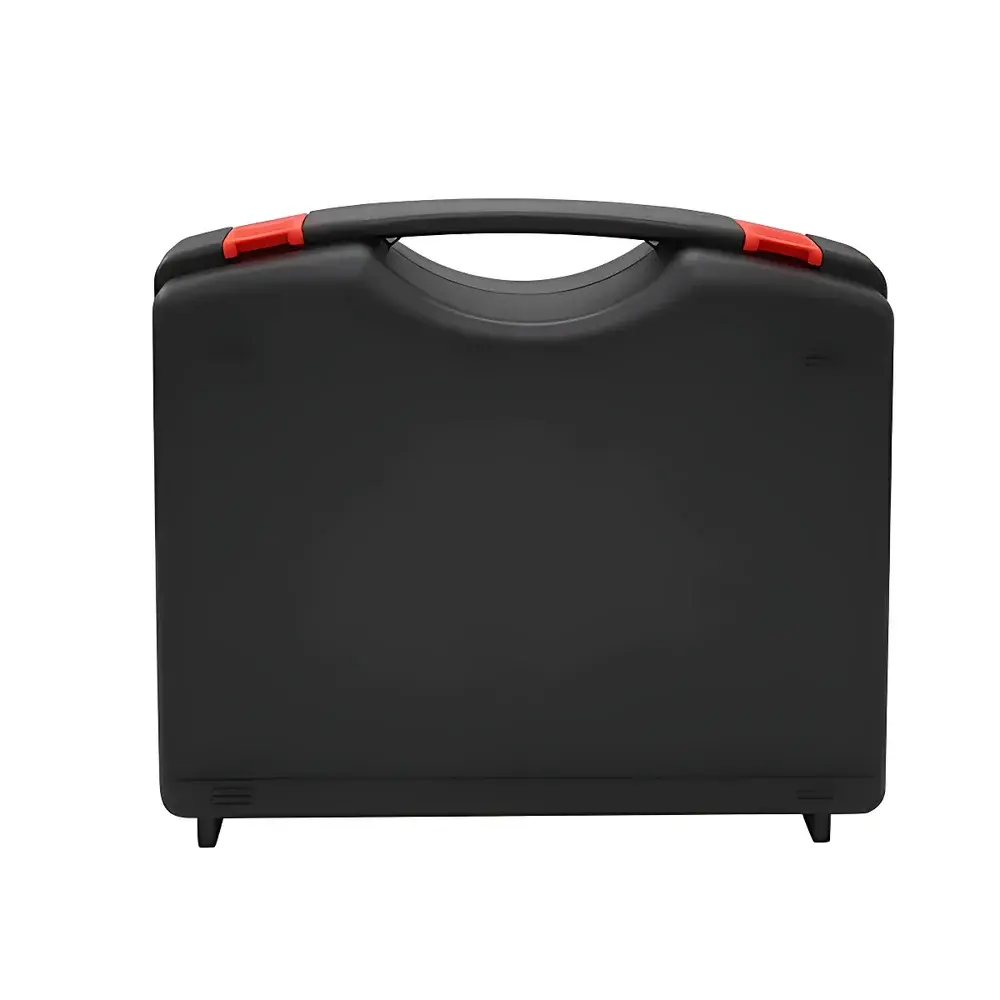
Shenchanghong PCHHDR-305 Portable Hydrazine Analyzer for Water
| Brand | Shenchanghong |
|---|---|
| Origin | Guangdong, China |
| Manufacturer Type | Manufacturer |
| Country of Origin | China |
| Model | PCHHDR-305 |
| Price | Upon Request |
| Measurement Range | 0.01–0.50 mg/L |
| Minimum Resolution | 0.01 mg/L |
| Accuracy | ≤5% FS |
| Repeatability | ≤3% |
| Optical Stability | ≤0.002 A/20 min |
| Dimensions (H×W×D) | 266 × 200 × 130 mm |
| Power Consumption | 30 W |
| Weight | 500 g |
Overview
The Shenchanghong PCHHDR-305 Portable Hydrazine Analyzer is a dedicated photometric instrument engineered for rapid, field-deployable quantification of hydrazine (N₂H₄) in aqueous matrices. It operates on the principle of spectrophotometric detection following colorimetric reaction—specifically, the reaction between hydrazine and p-dimethylaminobenzaldehyde (DMAB) under acidic conditions to form a yellow azine derivative with strong absorbance at 455 nm. This method is widely referenced in industrial water quality standards—including ASTM D3759 for boiler feedwater monitoring—and aligns with established EPA and ISO guidance for low-concentration hydrazine determination in high-purity water systems. Designed for use in thermal power plants, nuclear facilities, pharmaceutical water systems, and municipal wastewater treatment plants, the PCHHDR-305 delivers laboratory-grade accuracy in a handheld format without requiring external calibration gases or complex reagent delivery systems.
Key Features
- High-stability optical architecture featuring imported long-life (100,000-hour) high-luminance LED source coupled with precision narrow-band interference filters—ensuring minimal spectral drift and immunity to ambient light interference.
- Integrated 16-bit microcontroller platform optimized for low-power operation (30 W typical), enabling extended battery-assisted field use when paired with optional external power banks.
- Large backlit LCD display with full Chinese-language menu interface—designed for intuitive navigation by technicians with varying levels of instrumentation experience.
- Onboard data storage supporting up to 10 user-defined calibration curves and 199 timestamped measurement records (including absorbance, transmittance, concentration, and full datetime metadata).
- Ruggedized housing constructed from post-molded ABS polymer with enhanced chemical resistance—validated for sustained exposure to humid environments, chlorine-containing atmospheres, and mild acid vapors common in boiler house and lab settings.
- Factory-calibrated using NIST-traceable hydrazine reference standards; supports user-initiated recalibration via standard addition or multi-point curve fitting.
Sample Compatibility & Compliance
The PCHHDR-305 is validated for direct analysis of deionized water, boiler feedwater, condensate, and treated effluent samples within pH 4.5–7.5. Samples containing turbidity >5 NTU or suspended solids >10 mg/L require pre-filtration (0.45 µm membrane) prior to analysis. The instrument meets general requirements for portable analytical devices under ISO 7027 (optical methods for water quality) and supports traceability per ISO/IEC 17025:2017 when operated within documented SOPs. While not intrinsically certified for hazardous area use, its low-voltage DC operation and sealed enclosure allow safe deployment in non-classified zones adjacent to steam generation units and chemical dosing stations. Data integrity conforms to ALCOA+ principles (Attributable, Legible, Contemporaneous, Original, Accurate, Complete, Consistent, Enduring, Available) as implemented in routine QC workflows.
Software & Data Management
No proprietary PC software is required for basic operation; however, optional USB-to-serial interface enables export of CSV-formatted datasets—including concentration values, raw absorbance readings, calibration coefficients, and timestamps—to LIMS or Excel-based QA/QC logs. All stored data retain immutable time stamps (year/month/day/hour/minute/second) and cannot be edited post-acquisition—supporting audit readiness for GLP-compliant laboratories. Firmware updates are delivered via secure encrypted HEX files; version history and checksum validation are embedded in the bootloader to prevent unauthorized modification. Internal memory retains full data integrity during power interruption, satisfying IEC 62443-3-3 requirements for data persistence in industrial control environments.
Applications
- Monitoring hydrazine residual in high-pressure boiler feedwater to verify oxygen scavenger dosage efficacy and prevent corrosion in economizers and superheaters.
- Verification of hydrazine removal efficiency in activated carbon or catalytic oxidation polishing steps within pharmaceutical purified water (PW) and water-for-injection (WFI) distribution loops.
- Field verification of hydrazine breakthrough in ion exchange resin beds used for nuclear reactor coolant purification.
- Academic research on nitrogen-cycle inhibitors and redox-sensitive aquatic toxicants in freshwater ecology studies.
- Emergency response screening following accidental hydrazine release into surface water or groundwater sources.
FAQ
What is the recommended sample preparation protocol for turbid or colored water?
Pre-filter through a 0.45 µm syringe filter and perform a blank correction using deionized water processed identically.
Can the instrument be used for seawater or brackish water analysis?
Not without matrix-matched calibration; high chloride concentrations interfere with the DMAB reaction—users must validate recovery rates using spiked seawater blanks.
Is the reagent kit compliant with GHS labeling and SDS requirements?
Yes—each reagent vial includes UN-numbered transport classification, hazard pictograms, and bilingual (Chinese/English) safety data sheets meeting CLP and OSHA HCS 2012 standards.
How often does the optical system require verification?
Optical stability should be verified daily before first use using the included zero-standard cuvette; full performance verification against certified reference material is recommended every 30 days or after 100 measurements.
Does the device support remote firmware updates over Bluetooth or Wi-Fi?
No—firmware updates are performed exclusively via wired USB connection to ensure cryptographic integrity and prevent unauthorized access.
Related Products







