
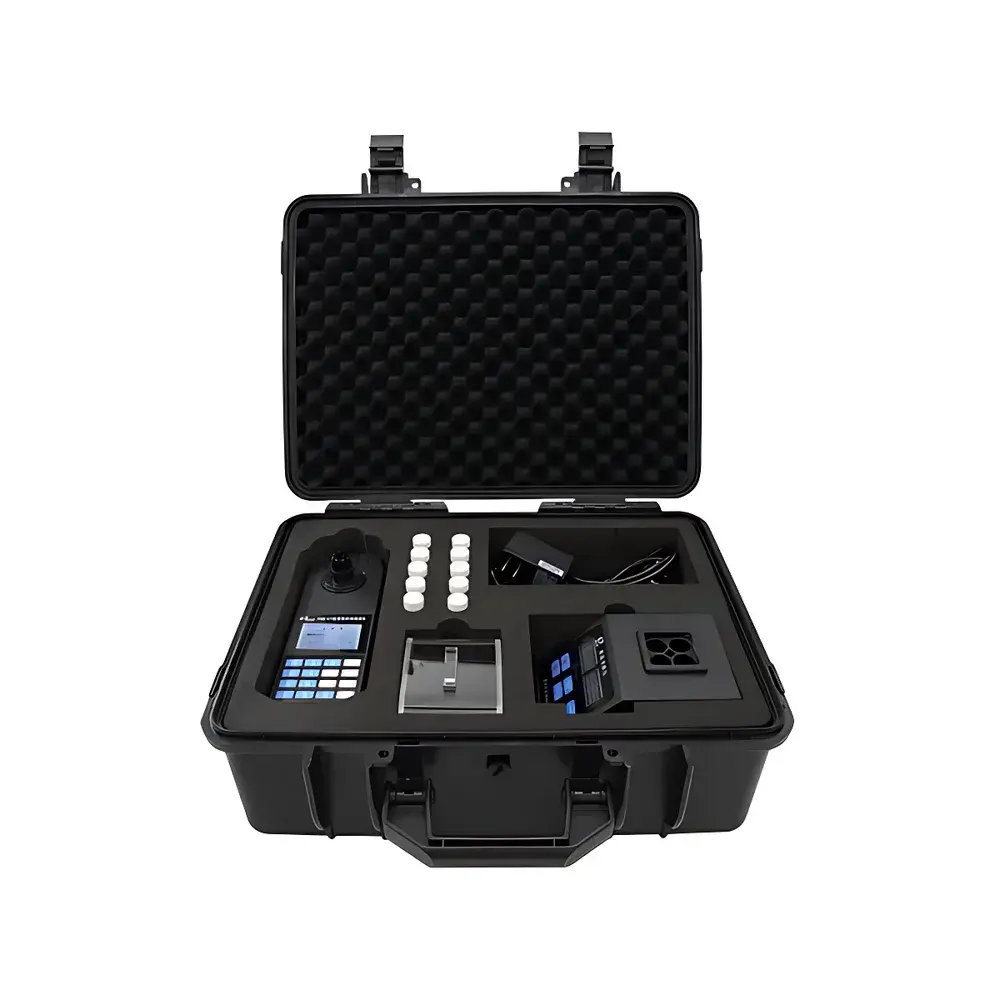
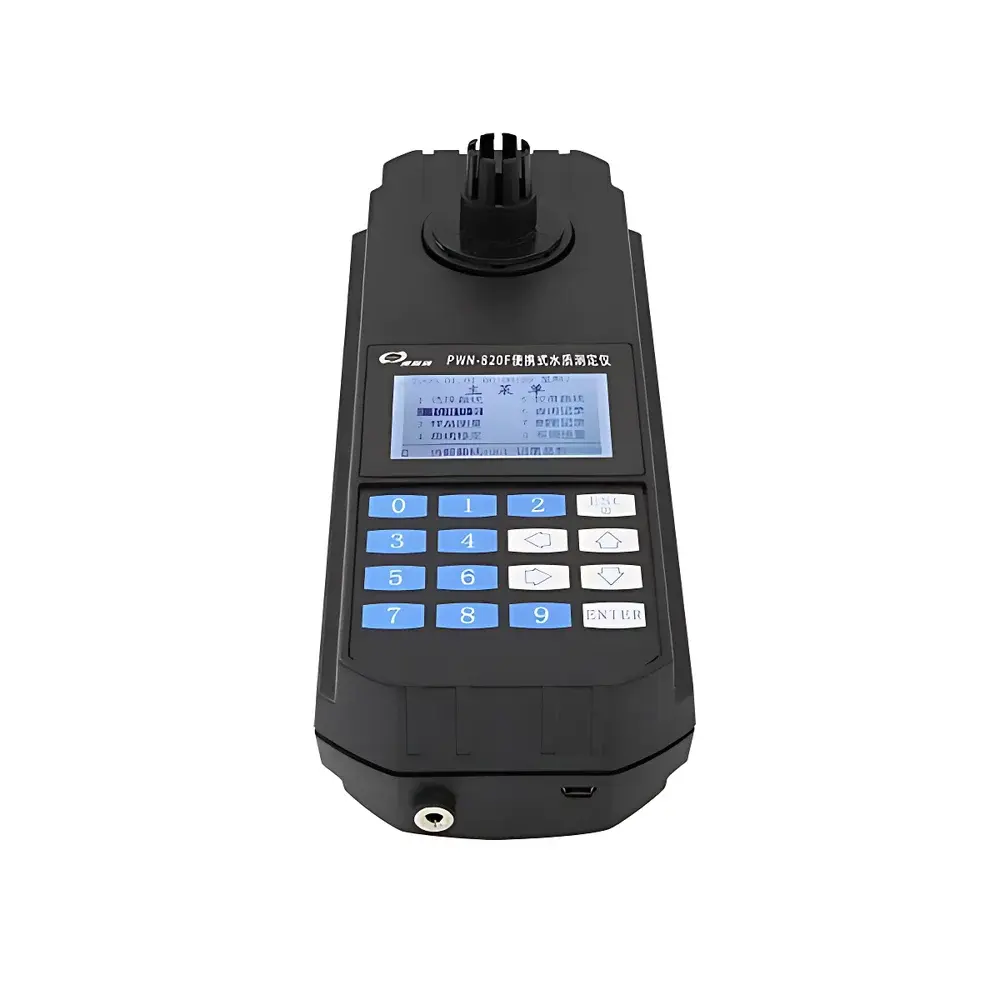
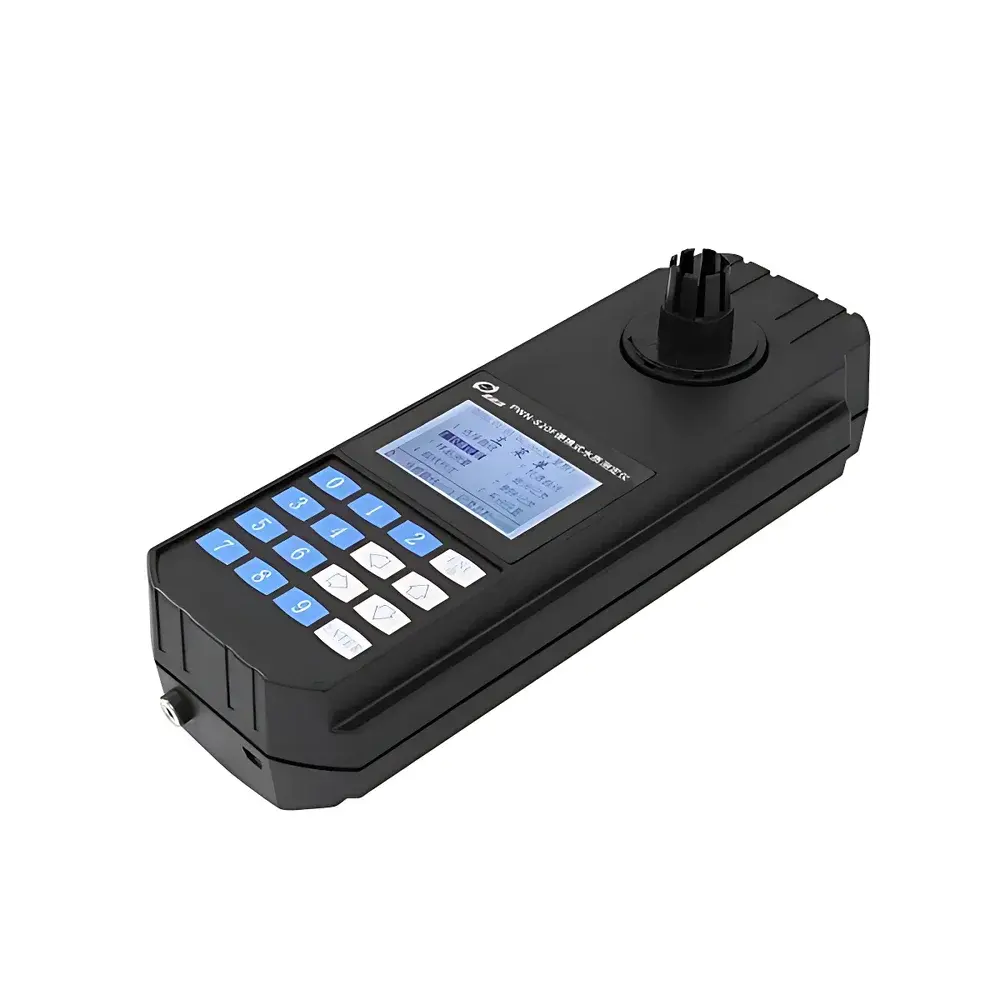
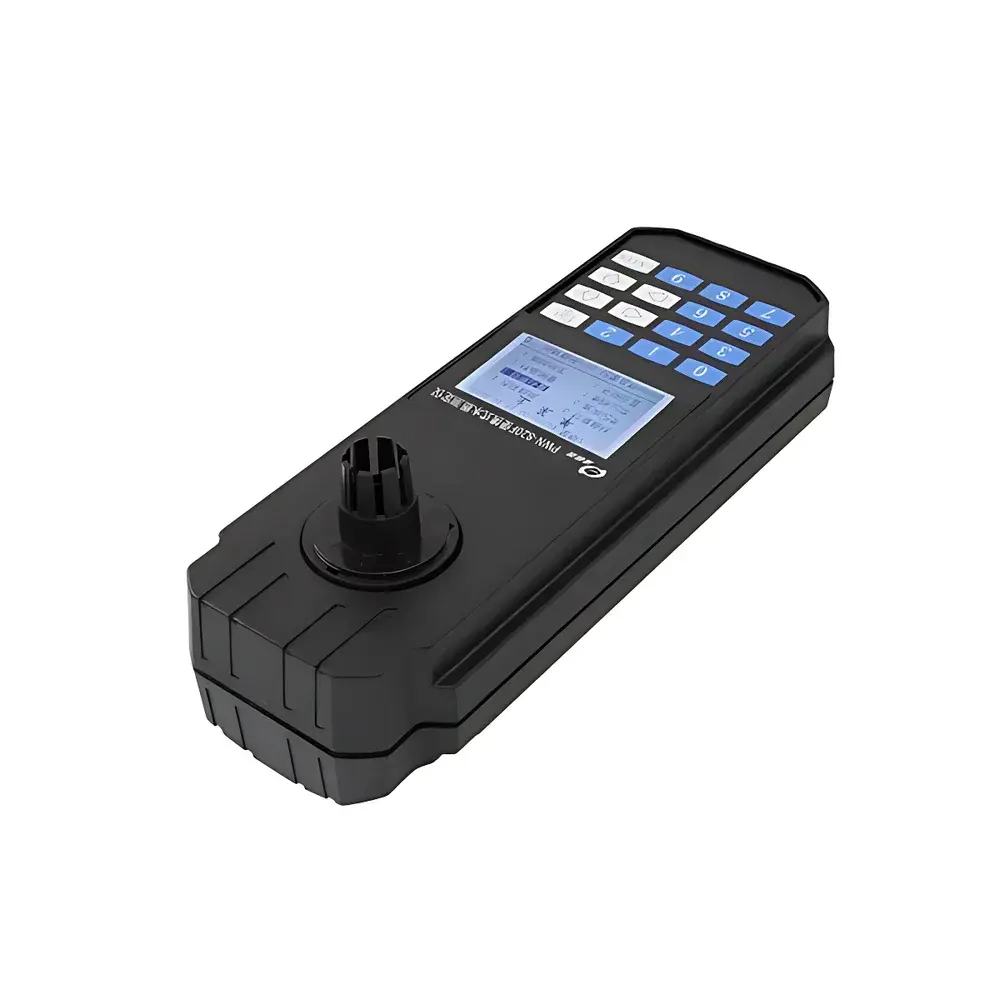
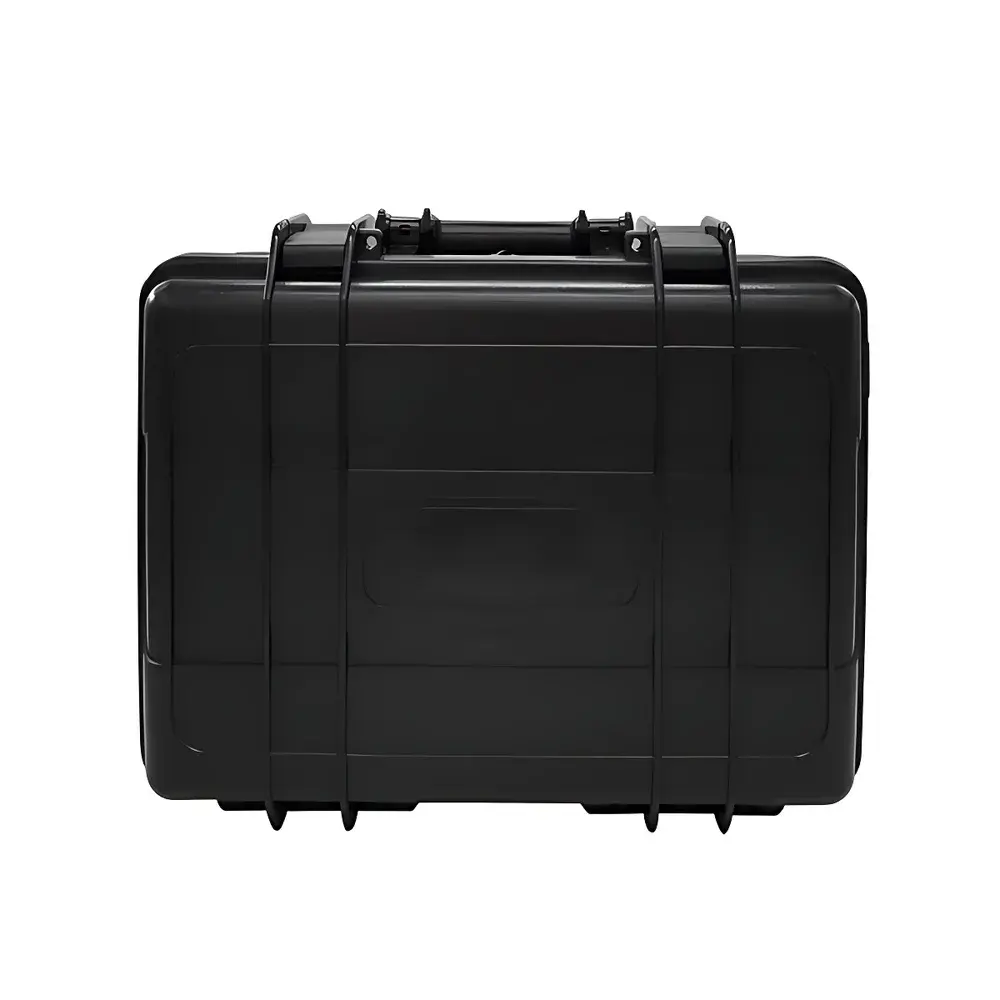
Shenchanghong PWN-820F Portable Total Phosphorus and Total Nitrogen Analyzer
| Brand | Shenchanghong |
|---|---|
| Origin | Guangdong, China |
| Manufacturer Type | Manufacturer |
| Origin Category | Domestic |
| Model | PWN-820F |
| Measurement Parameters | Total Phosphorus (TP) and Total Nitrogen (TN) |
| Instrument Type | Portable |
| Measurement Principle | High-Temperature Alkaline Persulfate Oxidation Coupled with Colorimetric Detection (UV-VIS Spectrophotometry) |
| Measurement Range | TP: 0.00–10.00 mg/L |
| TN | 0.05–100.00 mg/L |
| Accuracy | ≤ ±5% (TP & TN) and ±0.2 mg/L (TP offset) |
| Detection Limit | 0.01 mg/L (TP) |
| Resolution | 0.01 mg/L |
| Repeatability | ≤ 3% RSD |
| Optical Drift | < 0.002 A over 20 min |
| Chloride Interference Tolerance | ≤ 2000 mg/L (as Cl⁻, applicable to COD co-measurement context) |
| Dimensions | Analyzer: 80 × 230 × 55 mm |
| Digestion Unit | 105 × 160 × 90 mm |
| Enclosure Rating | IP65 |
| Data Storage | 30 calibration curves + 199 timestamped measurement records (including absorbance, transmittance, and full datetime metadata) |
| Interface | USB port for data export and PC connectivity |
| Power | DC 12 V (AC/DC adapter included) |
| Housing Material | Molded ABS polymer |
Overview
The Shenchanghong PWN-820F Portable Total Phosphorus and Total Nitrogen Analyzer is a field-deployable, dual-parameter water quality instrument engineered for rapid, on-site quantification of total phosphorus (TP) and total nitrogen (TN) in surface water, wastewater effluent, drinking water sources, and environmental monitoring campaigns. It implements standardized oxidative digestion followed by spectrophotometric detection: TP is determined via molybdenum blue colorimetry after alkaline potassium persulfate digestion at 120 °C; TN is quantified using the same digestion step coupled with the UV absorption method or salicylate-hypochlorite colorimetry (depending on reagent configuration), with subsequent measurement at specific wavelengths (typically 700 nm for TP and 220/275 nm or 630 nm for TN). The system separates digestion and optical measurement into two independent modules—ensuring thermal stability during photometric analysis and eliminating cross-contamination or drift induced by residual heat from the digester. Its compact form factor, IP65-rated ABS housing, and extended battery-ready operation make it suitable for unattended field use under variable ambient conditions.
Key Features
- Modular architecture: Independent 4-position digestion unit with PID-controlled temperature regulation (±0.5 °C accuracy) and programmable timer (0–120 min), decoupled from the optical analyzer to preserve photometric integrity.
- Stable optical platform: Cold LED light source with narrow-band interference filters ensures minimal spectral drift (<0.002 A over 20 min), critical for low-concentration trace analysis and long-term field reliability.
- High-resolution detection: 0.01 mg/L resolution for TP and 0.05 mg/L for TN, supporting compliance with national and provincial surface water quality standards (e.g., GB 3838–2002, HJ 670–2013, HJ 636–2012).
- Robust data management: Internal memory stores up to 30 user-defined calibration curves and 199 fully timestamped results—including absorbance, transmittance, concentration, and precise datetime (year/month/day/hour/minute/second)—with automatic power-fail data retention.
- Field-optimized ergonomics: Weighing under 500 g (analyzer only), dimensions of 80 × 230 × 55 mm, integrated carrying case, and 12 V DC operation with AC/DC adapter enable continuous deployment across remote sampling sites without grid dependency.
- Interference mitigation: Validated chloride tolerance up to 2000 mg/L (as Cl⁻) allows direct analysis of saline-influenced estuarine or industrial wastewater samples without pre-dilution or masking agents.
Sample Compatibility & Compliance
The PWN-820F is validated for liquid aqueous matrices including freshwater, treated wastewater, groundwater, and stormwater runoff. Sample volume requirement is 5–10 mL per test. All digestion and colorimetric protocols align with Chinese EPA standard methods: HJ 670–2013 (TP) and HJ 636–2012 (TN). While not certified to ISO/IEC 17025 or EPA Method 365.4/353.2 out-of-the-box, its performance specifications—including ≤±5% accuracy, ≤3% repeatability, and sub-0.01 mg/L detection limits—are consistent with routine monitoring requirements under GB/T 5750.5–2023 (drinking water) and HJ 91.1–2019 (wastewater sampling). The instrument supports GLP-aligned documentation through embedded timestamps and exportable CSV logs via USB.
Software & Data Management
No proprietary desktop software is required for basic operation. All calibration, measurement, and storage functions are executed onboard via intuitive button navigation and LCD interface. Timestamped datasets—including raw absorbance values, calculated concentrations, curve IDs, and operator-assigned sample IDs—are exportable in plain-text CSV format via USB connection to any Windows/macOS/Linux host. Data files retain full audit trail metadata (date, time, method ID, reagent lot if logged manually), facilitating integration into LIMS environments or QA/QC review workflows. Firmware updates are delivered via USB-loaded binary files, with version history and checksum verification supported.
Applications
- Regulatory field monitoring: Real-time TP/TN screening at river intake points, lake littoral zones, and municipal WWTP discharge channels.
- Environmental impact assessment: Pre- and post-construction baseline surveys for construction dewatering, agricultural runoff, or landfill leachate characterization.
- Drinking water safety verification: Rapid verification of treatment efficacy in decentralized systems or emergency response scenarios.
- Educational and training use: Hands-on method validation for environmental science curricula emphasizing EPA/HJ-compliant oxidation chemistry and photometric quantitation principles.
- Industrial process control: On-site verification of pretreatment efficiency in food processing, textile dyeing, or chemical manufacturing effluents.
FAQ
What digestion temperature and duration does the PWN-820F support?
The integrated 4-hole digester operates at 120 °C ±0.5 °C with adjustable timing from 0 to 120 minutes, optimized for complete oxidation of refractory organic phosphorus and nitrogen compounds per HJ 670–2013 and HJ 636–2012.
Can the instrument store calibration curves for both TP and TN independently?
Yes—up to 30 distinct calibration curves may be stored, each assignable to either TP or TN mode with unique slope/intercept parameters and wavelength settings.
Is the device compliant with data integrity requirements for regulatory reporting?
While not 21 CFR Part 11–certified, its immutable timestamped logging, non-volatile memory, and exportable CSV audit trail meet minimum ALCOA+ (Attributable, Legible, Contemporaneous, Original, Accurate) expectations for field-level environmental data capture.
How is chlorinated interference managed during TN measurement?
The alkaline persulfate digestion protocol inherently minimizes chloride interference; empirical validation confirms ≤5% bias at chloride concentrations ≤2000 mg/L, eliminating need for mercury-based masking agents.
What maintenance is required for long-term field reliability?
Routine cleaning of the optical path (cuvette holder and LED/filter assembly) every 500 measurements, periodic verification against NIST-traceable standards (e.g., potassium dihydrogen phosphate and potassium nitrate solutions), and annual calibration check using factory reference materials are recommended.







