
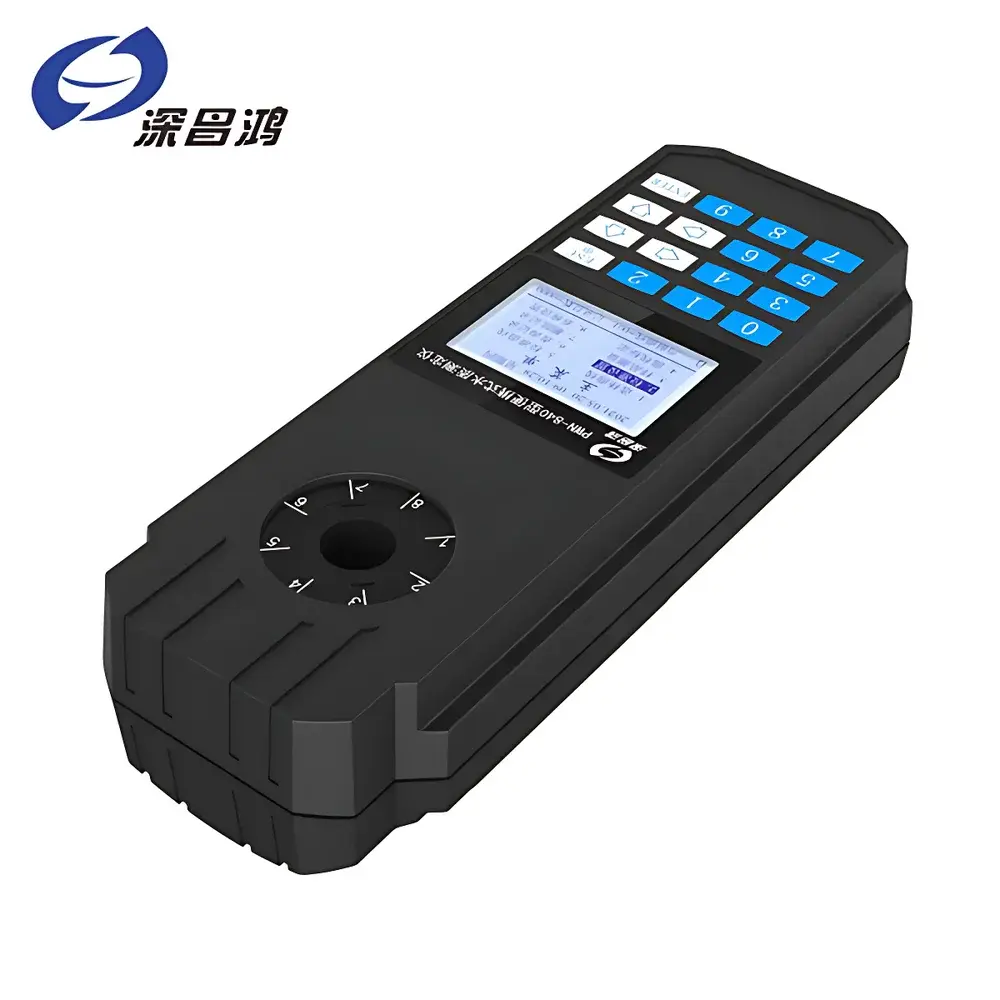
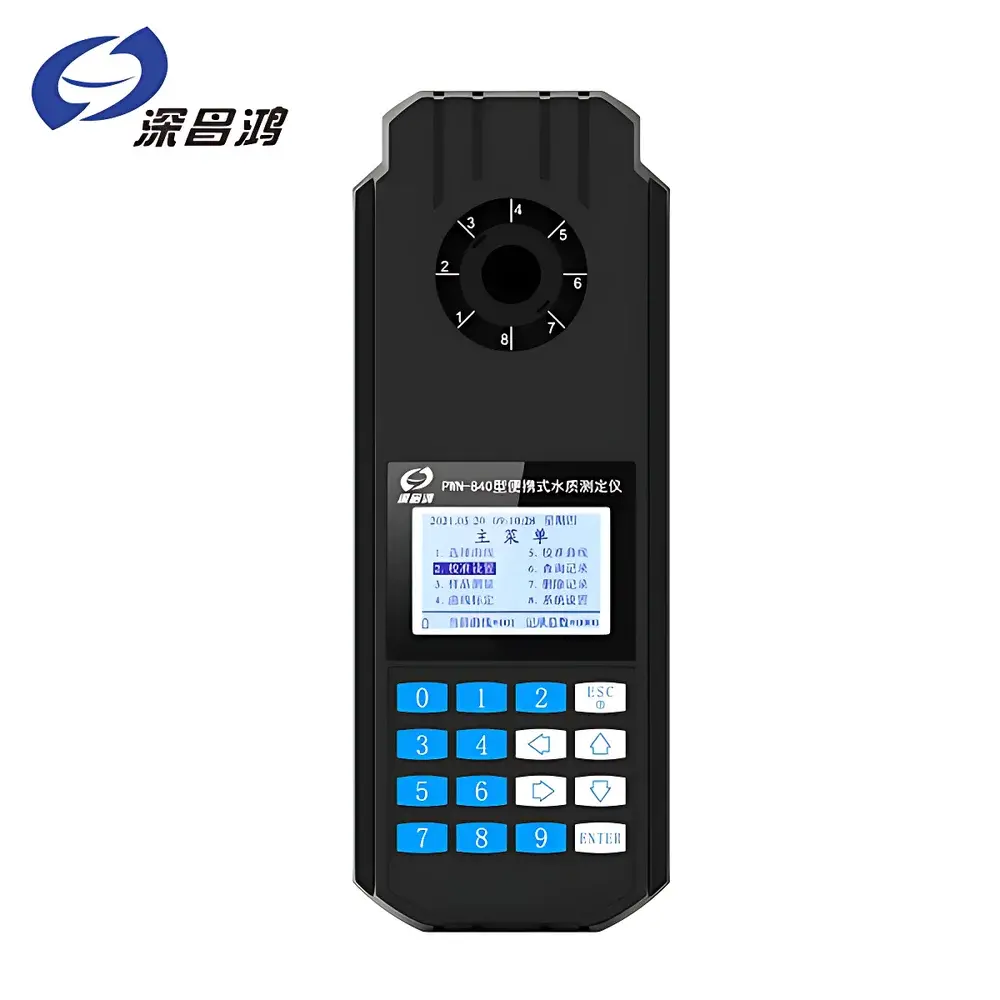
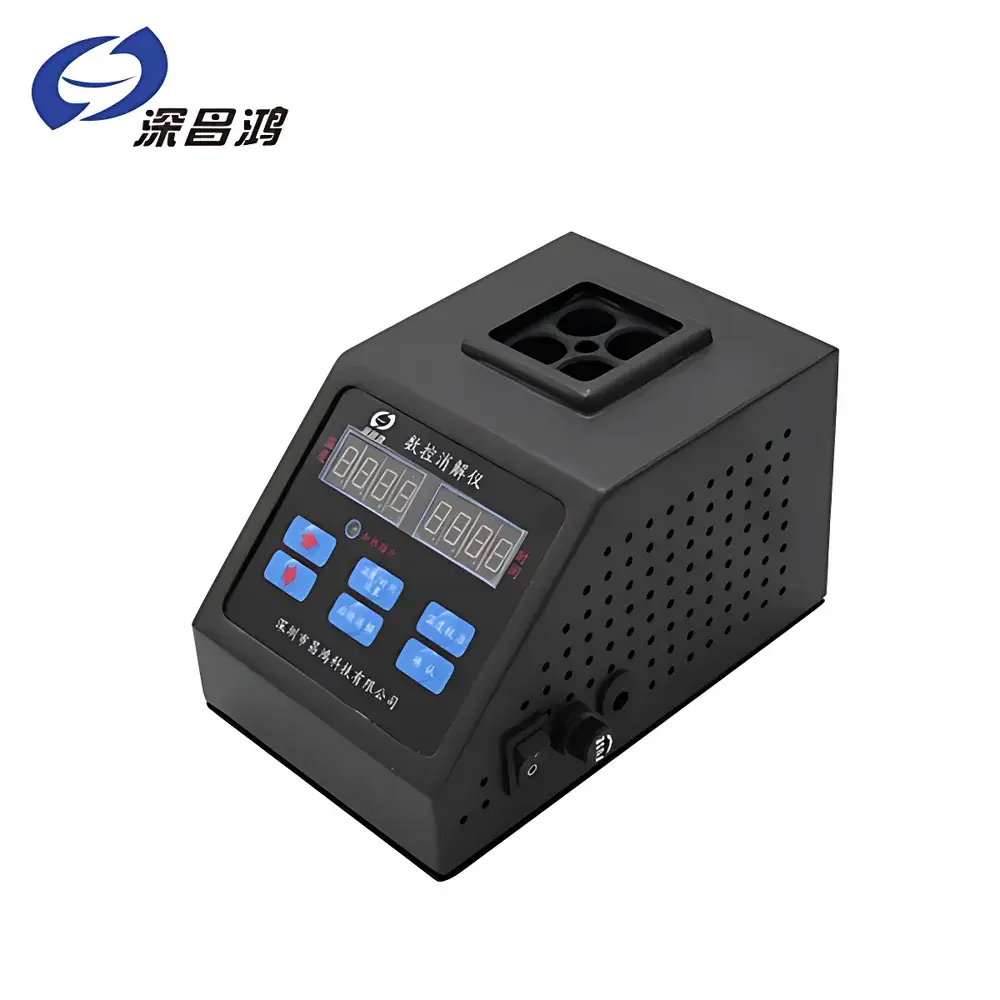
Shenchanghong PWN-840A Multi-Parameter Portable Water Quality Analyzer for COD, Ammonia Nitrogen, Total Phosphorus, and Total Nitrogen
| Brand | Shenchanghong |
|---|---|
| Origin | Guangdong, China |
| Manufacturer Type | Direct Manufacturer |
| Country of Origin | China |
| Model | PWN-840A |
| Instrument Type | Portable |
| Measurement Principle | UV-Vis Absorption Spectrophotometry (Dual-Wavelength) |
| Wavelengths | 340 nm, 420 nm, 610 nm, 700 nm |
| COD Range | 5–2000 mg/L |
| NH₃-N Range | 0.02–25 mg/L |
| Total Phosphorus Range | 0.00–10 mg/L |
| Total Nitrogen Range | 0.05–100 mg/L |
| Accuracy | ≤±5% F.S. (COD, TP, TN) |
| Repeatability | ≤±3% |
| Detection Limit | 0.1 mg/L (COD) |
| Measurement Time | 15 min (COD), 30 min (TP/TN) |
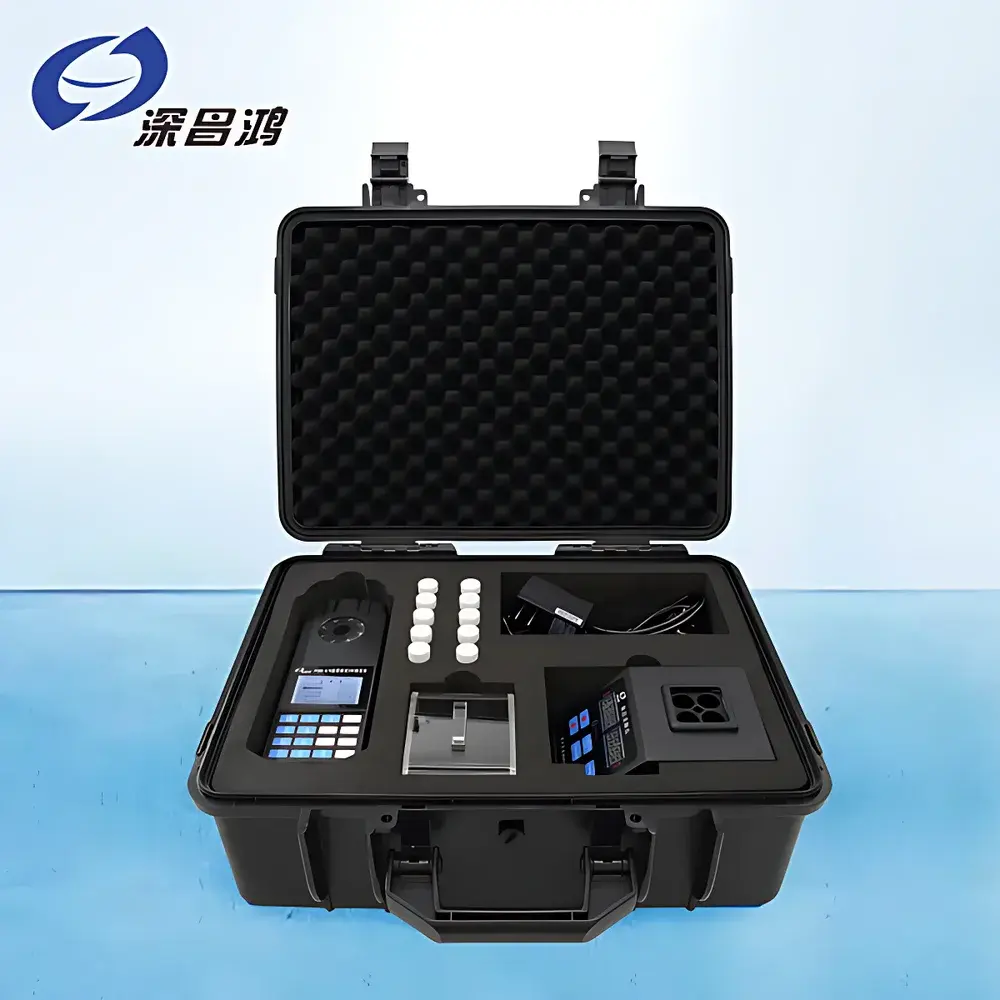
| Batch Capacity | 4 samples (standard), optional 16-sample digestion block |
| Digestion Temp | 120–165 °C |
| Temperature Control Precision | ±0.5 °C |
| Optical Stability | ≤0.002 A/20 min |
| Power Supply | Internal Li-ion battery (host), 12 V DC (car adapter), or 220 V AC |
| IP Rating | IP65 |
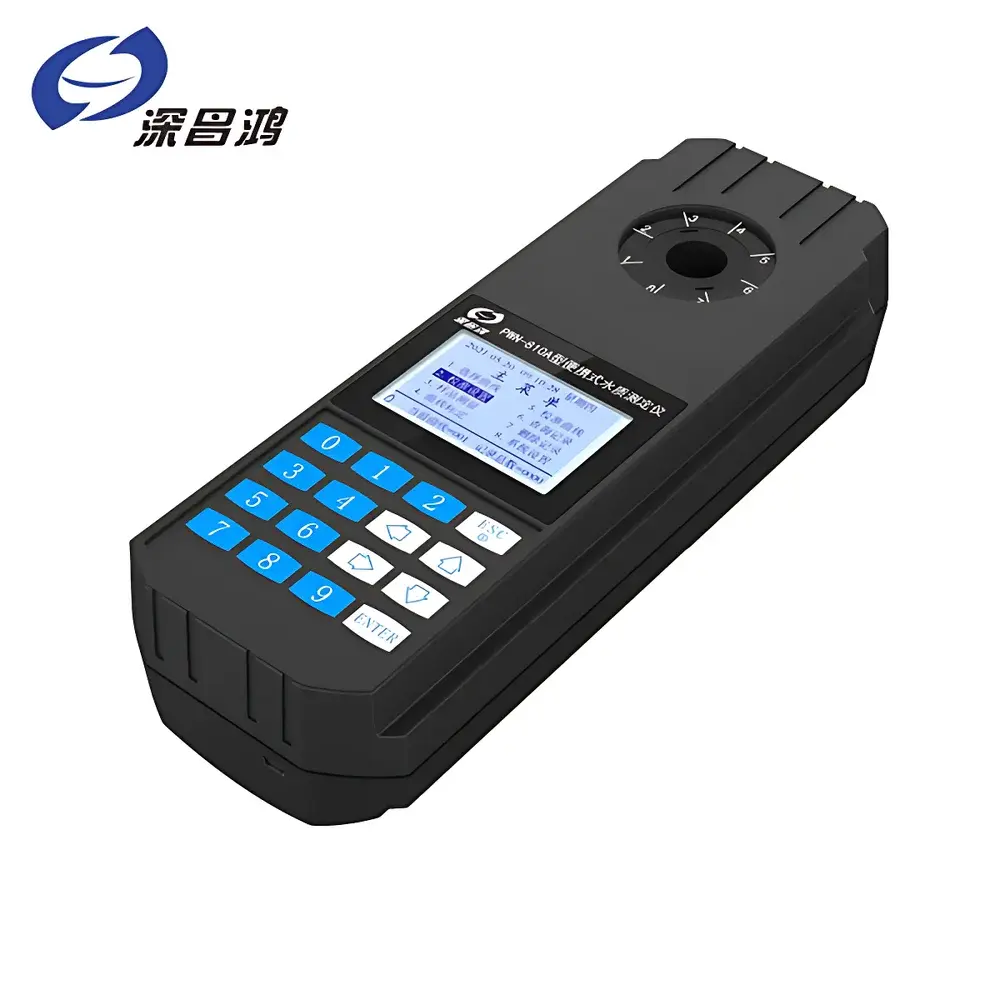
| Dimensions (Host) | 80 × 230 × 55 mm |
| Weight (Host) | 0.5 kg |
Overview
The Shenchanghong PWN-840A is a field-deployable, multi-parameter water quality analyzer engineered for simultaneous quantification of Chemical Oxygen Demand (COD), ammonia nitrogen (NH₃-N), total phosphorus (TP), and total nitrogen (TN) in freshwater, wastewater, and environmental surface water samples. It employs dual-wavelength UV-Vis absorption spectrophotometry—utilizing discrete optical channels at 340 nm (TN), 420 nm (COD/NH₃-N), 610 nm (COD), and 700 nm (TP)—to minimize spectral interference and enhance selectivity across analytes. Unlike benchtop systems requiring centralized lab infrastructure, the PWN-840A integrates a compact optical detection module with an independent, thermally regulated digestion unit, enabling on-site compliance with standard methods including HJ/T 399–2007 (COD), HJ 535–2009 (NH₃-N), GB 11893–1989 (TP), and HJ 636–2012 (TN). Its architecture adheres to fundamental photometric principles: Beer–Lambert law-based calibration, narrow-band interference filters (<5 nm bandwidth), and cold LED light sources ensuring drift-free absorbance measurement over extended field deployment.
Key Features
- Modular design with physically separated digestion and detection units—eliminates thermal crosstalk and preserves photometric accuracy during high-temperature digestion cycles.
- PID-controlled digestion block with programmable temperature range (room temperature to 200 °C) and timer (1–999 minutes); standard protocols pre-configured for COD (165 °C/15 min), TP (125 °C/30 min), and TN (120 °C/30 min).
- Ultra-low-power 16-bit microcontroller architecture: host instrument standby time exceeds six months on a single lithium-ion charge; average operating current <40 µA during measurement mode.
- Ruggedized housing constructed from injection-molded ABS with IP65 ingress protection—resistant to dust, rain, and incidental submersion during field transport or roadside sampling.
- Multi-source power compatibility: operates via internal rechargeable battery, 12 V DC input (automotive cigarette lighter socket), or universal AC/DC adapter (220 V input, 12 V output).
- Optical system features cold LED sources and precision interference filters—optical stability maintained at ≤0.002 A over 20 minutes, critical for low-concentration trace analysis.
- Data integrity safeguards include automatic timestamping (YYYY-MM-DD hh:mm:ss), non-volatile memory retention, and power-loss recovery for both calibration curves and raw measurements.
Sample Compatibility & Compliance
The PWN-840A accepts standard 16 mm OD glass or quartz digestion tubes (40 included), compatible with EPA-approved reagent kits and nationally standardized colorimetric methods. It supports matrix-adapted calibration using up to 50 user-defined curves per parameter, accommodating variations in turbidity, chloride interference (up to 2000 mg/L Cl⁻ for COD), and sample pH. The instrument meets functional requirements outlined in ISO 8466-1:1993 (calibration of analytical instruments), and its operational workflow aligns with GLP documentation standards—full audit trail of measurement events, operator ID (via optional login), and method versioning are retained in internal memory. While not FDA 21 CFR Part 11-certified out-of-box, its USB data export capability enables integration into validated LIMS environments where electronic records are subject to regulatory review.
Software & Data Management
All measurement data—including absorbance, transmittance, concentration, and full metadata (date, time, operator code, curve ID, digestion temp/duration)—are stored internally with capacity for 500 results. Data retrieval occurs via USB 2.0 interface to Windows-based desktop software (provided), supporting CSV export, PDF report generation, and graphical trend visualization. Calibration curve management includes slope/intercept validation, R² verification (>0.995 required for acceptance), and outlier flagging. Firmware updates are delivered via USB stick; no cloud dependency or internet connectivity is required—ensuring data sovereignty and operational continuity in remote or offline settings.
Applications
- Field monitoring of municipal wastewater effluent prior to discharge, verifying compliance with local discharge permits (e.g., DB11/307–2013).
- Rapid assessment of eutrophication indicators (TP, TN, NH₃-N) in lakes, reservoirs, and rivers during seasonal algal bloom surveillance programs.
- On-site verification of industrial pretreatment performance—especially in electroplating, food processing, and textile manufacturing facilities.
- Emergency response testing following accidental spills or stormwater runoff events where laboratory turnaround time is prohibitive.
- Educational use in environmental science curricula for hands-on method validation and inter-laboratory comparison exercises.
FAQ
Is the PWN-840A suitable for drinking water analysis?
Yes—when used with appropriate low-range calibration standards and digestion protocols optimized for potable water matrices (e.g., modified APHA 4500-P E for TP), it delivers reliable quantification down to 0.02 mg/L NH₃-N and 0.05 mg/L TN.
Can the instrument be calibrated using NIST-traceable standards?
Absolutely. The optical system accepts certified reference materials (CRMs) from NIST, LGC, or national metrology institutes; calibration verification is performed via absorbance linearity checks across five concentration points.
Does the device support third-party reagents?
Yes—open reagent architecture allows use of any vendor’s digestion and color-developing reagents compliant with HJ/T 399, HJ 535, GB 11893, or HJ 636 methodology.
What maintenance is required for long-term field reliability?
Annual optical alignment verification and LED intensity calibration are recommended; no consumable optics or lamps require replacement within the first 5 years of typical use.
How is data security handled during USB transfer?
Data export is read-only; no firmware or configuration parameters can be modified via USB—preventing accidental corruption or unauthorized configuration changes in shared-use environments.







