
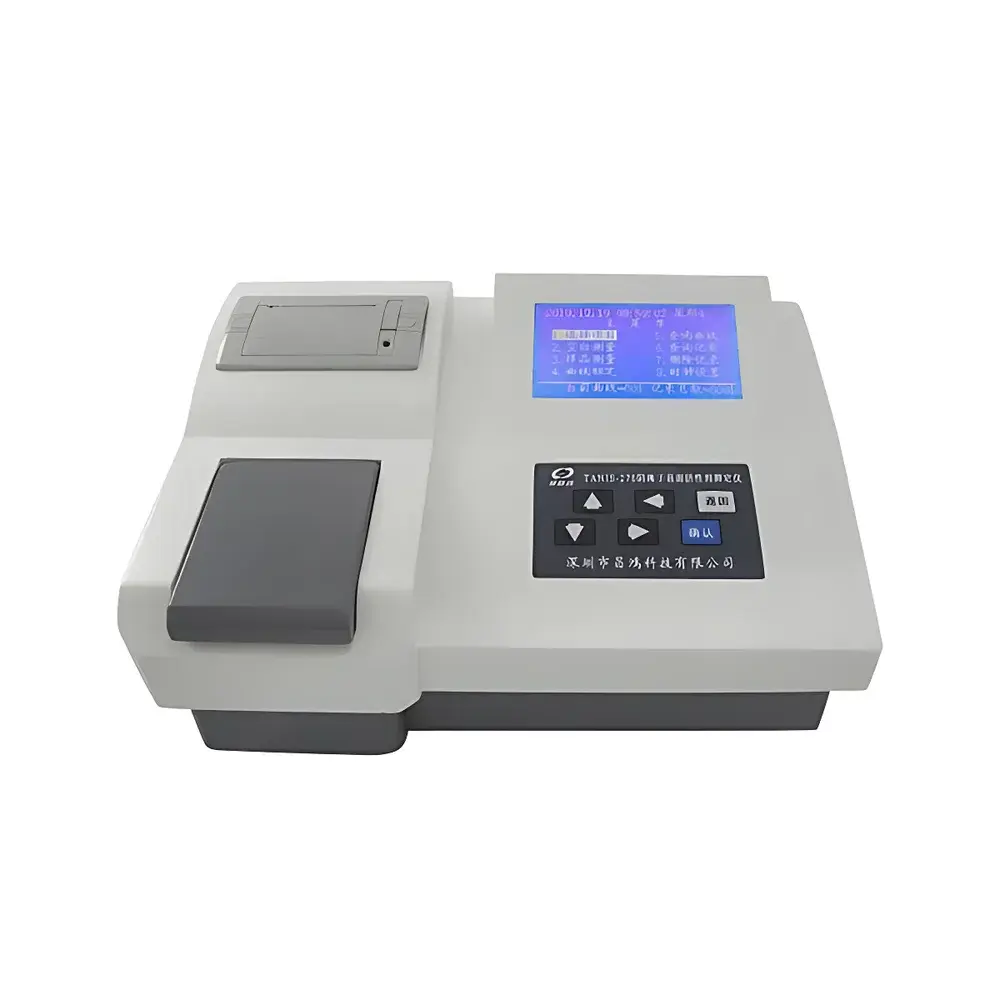
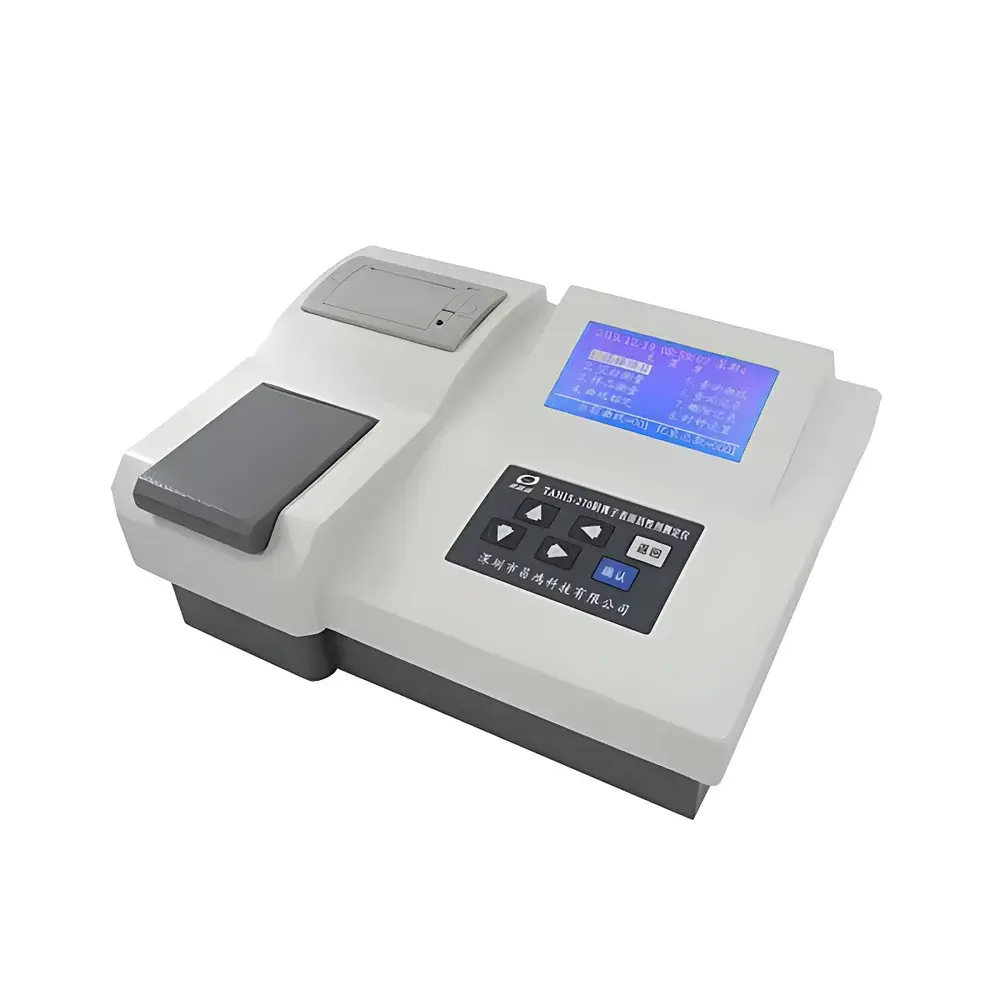
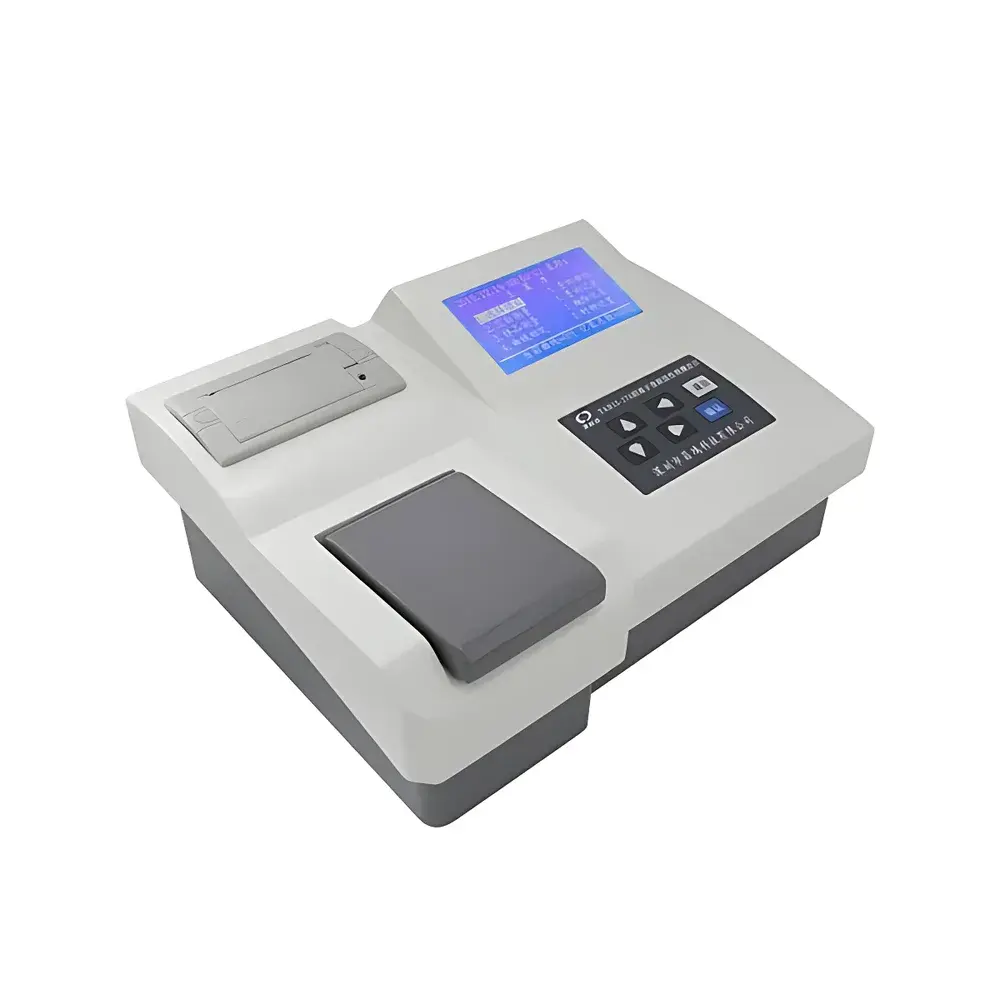
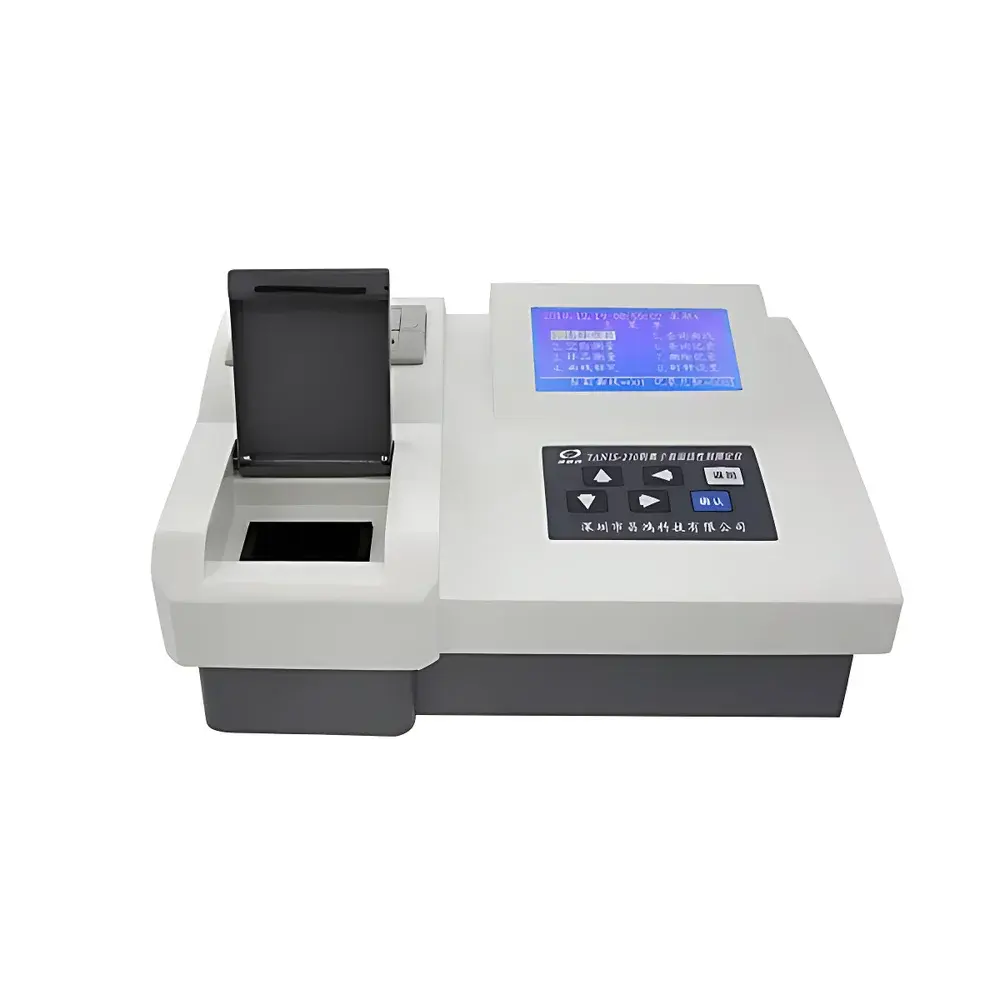
Shenchanghong TANIS-270 Anionic Surfactant Analyzer
| Brand | Shenchanghong |
|---|---|
| Origin | Guangdong, China |
| Manufacturer Type | Direct Manufacturer |
| Regional Classification | Domestic (China) |
| Model | TANIS-270 |
| Instrument Category | Multi-Ion Analyzer |
| Form Factor | Benchtop |
| Measurement Range | 0.01–1.00 mg/L (dilution applicable for higher concentrations) |
| Detection Limit | 0.01 mg/L |
| Response Time | ≤20 min |
| Accuracy | ±5% of Full Scale (F.S.) |
| Operating Temperature | 5–35 °C |
| Dimensions | 340 × 250 × 130 mm |
| Weight | 1.0 kg |
| Power Supply | AC 220 V ± 10%, 50 Hz ± 1% |
| Environmental Operating Conditions | Ambient temperature 5–40 °C |
Overview
The Shenchanghong TANIS-270 Anionic Surfactant Analyzer is a dedicated benchtop photometric instrument engineered for the quantitative determination of anionic surfactants—primarily linear alkylbenzene sulfonates (LAS) and related compounds—in aqueous environmental samples. It operates on the principle of methylene blue active substances (MBAS) spectrophotometry, compliant with standardized methodologies including ISO 7875-2:1986 and GB/T 7494–1987. The system employs a stable dual-beam optical architecture with high-brightness imported LED light source and precision interference filters to ensure long-term photometric stability and minimal drift. Designed specifically for regulatory and routine water quality laboratories, the TANIS-270 delivers reproducible, trace-level quantification in transparent, low-turbidity matrices—such as drinking water, surface water, treated effluent, and potable supply networks—where suspended solids and color interferences are minimized prior to analysis.
Key Features
- High-stability optical path with long-life, high-luminance LED source and thermally compensated photodetector for consistent absorbance measurement across extended operation cycles.
- Integrated microcontroller-based platform with large-backlit LCD display and intuitive Chinese-language menu interface—designed for rapid method navigation and real-time parameter verification.
- Onboard data storage supporting up to 100 user-defined calibration curves and 999 measurement records, all retained during power interruption via non-volatile memory.
- Rapid assay cycle: full analytical result within ≤10 minutes post-sample preparation under standard MBAS protocol conditions.
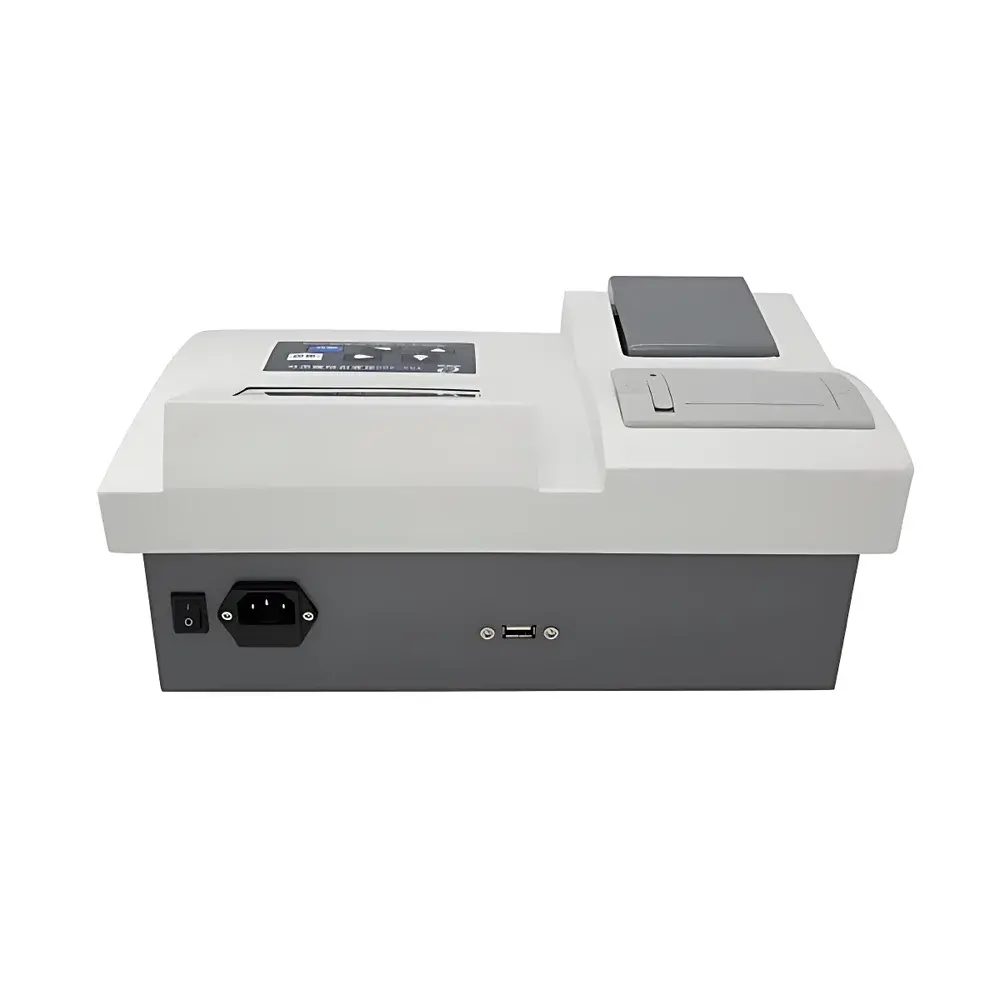
- Standard USB 2.0 interface enabling bidirectional data transfer to Windows-based laboratory PCs; compatible with common spreadsheet and LIMS import formats (CSV, TXT).
- Built-in thermal printer module for immediate hardcopy output of individual results or batch summaries—including date/time stamp, sample ID, concentration value, and operator tag.
- Compact footprint (340 × 250 × 130 mm) and lightweight design (1.0 kg) optimized for space-constrained QC labs, mobile field units, and teaching environments.
Sample Compatibility & Compliance
The TANIS-270 is validated for use with clarified, colorless to pale-yellow aqueous samples meeting turbidity < 5 NTU and absence of interfering cationic or nonionic surfactants. Sample pretreatment—including filtration (0.45 µm membrane), pH adjustment (pH 6.5–7.5), and chloroform extraction per MBAS methodology—is required prior to photometric measurement. The analyzer conforms to national and international reference methods for anionic surfactant quantification, including but not limited to ISO 7875-2, ASTM D2330 (withdrawn but historically referenced), and China’s GB/T 7494–1987. While not certified to IEC 61326-1 (EMC) or ISO/IEC 17025 for accredited testing, its performance characteristics support internal QA/QC programs, environmental monitoring compliance reporting (e.g., municipal wastewater discharge permits), and GLP-aligned data generation when operated within documented SOPs.
Software & Data Management
The included data acquisition software (provided on CD-ROM) enables PC-side calibration curve management, batch report generation, and export to CSV for integration into institutional LIMS or statistical analysis tools (e.g., JMP, Minitab). All stored measurements retain metadata: timestamp, operator ID (manually entered), curve ID, raw absorbance, and calculated concentration. Audit trail functionality is limited to chronological record logs; for FDA 21 CFR Part 11 compliance, external electronic lab notebook (ELN) integration or third-party validation protocols are recommended. No cloud connectivity or remote firmware update capability is embedded.
Applications
- Regulatory monitoring of LAS levels in municipal wastewater treatment plant (WWTP) effluents prior to environmental discharge.
- Verification of surfactant removal efficiency across coagulation–flocculation, activated carbon, and advanced oxidation process (AOP) trains.
- Drinking water safety assessment in distribution systems following detergent spill incidents or cross-connection events.
- Environmental impact studies evaluating surfactant persistence in rivers, lakes, and groundwater recharge zones.
- Educational use in undergraduate environmental chemistry and analytical instrumentation laboratories for teaching spectrophotometric quantitation principles.
FAQ
What sample pretreatment is required before analysis?
Samples must be filtered through a 0.45 µm membrane filter and adjusted to pH 6.5–7.5. Chloroform extraction per MBAS protocol is mandatory to isolate the methylene blue–surfactant ion-pair complex.
Can the TANIS-270 measure other surfactant classes (e.g., nonionic or cationic)?
No—the instrument is optimized exclusively for anionic surfactants detectable via the MBAS reaction. Nonionic and cationic species require alternative methodologies (e.g., HPLC-MS or two-phase titration).
Is the detection limit verified per IUPAC guidelines?
The stated LOD of 0.01 mg/L is determined experimentally using blank standard deviation (3σ) methodology per ISO 11843-2, based on ten replicate reagent blanks measured over three independent sessions.
Does the device support automatic dilution?
No—samples exceeding 1.00 mg/L must be manually diluted with surfactant-free deionized water prior to analysis; dilution factors must be applied post-measurement.
What maintenance is required for long-term optical stability?
Annual verification of LED intensity and filter transmission using NIST-traceable neutral density standards is recommended; cleaning of cuvette holder and optical windows with lint-free ethanol wipes every 200 runs ensures minimal scatter artifact.
Related Products







