
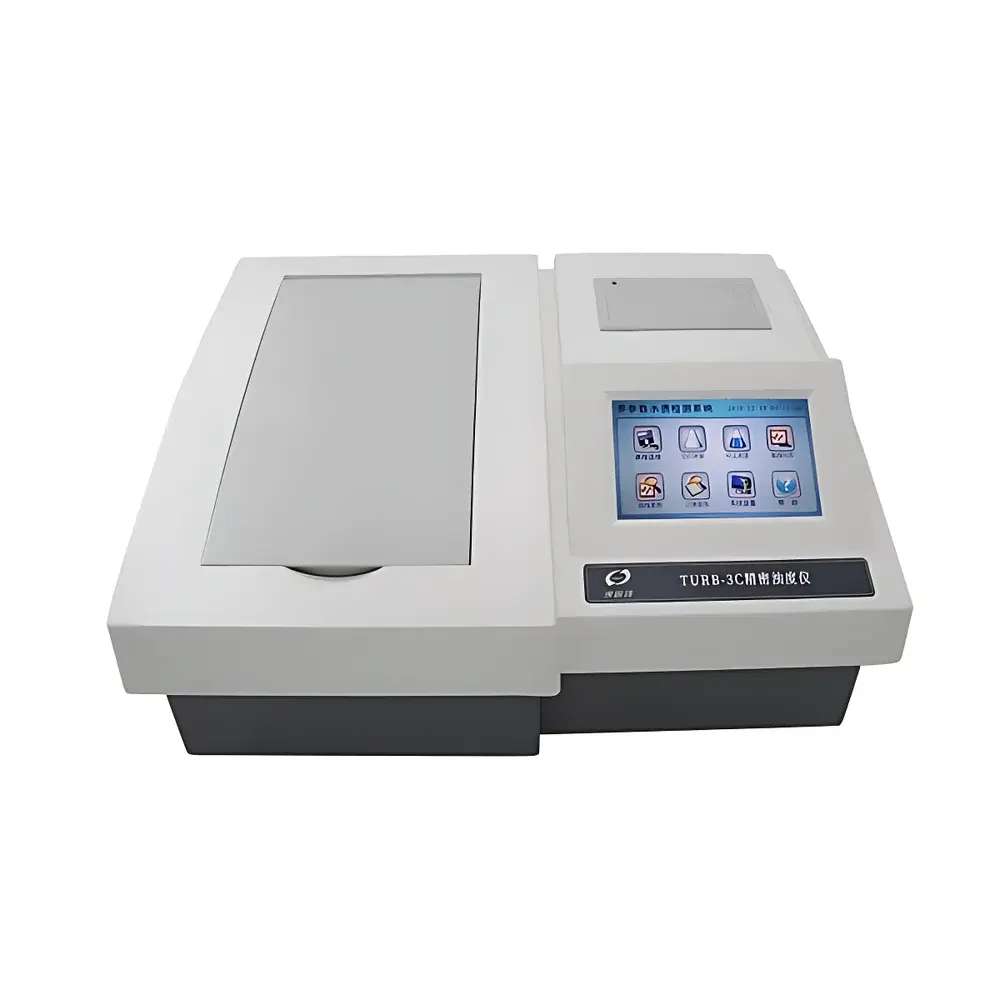
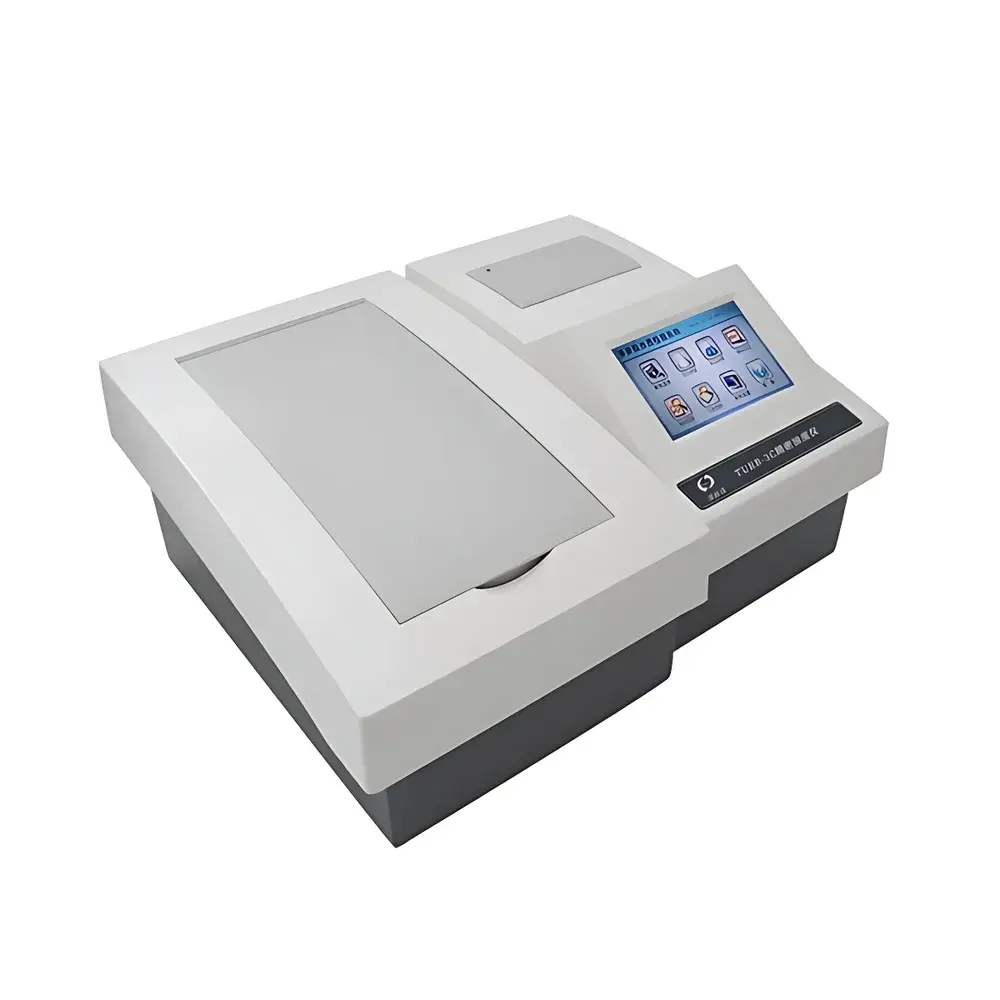
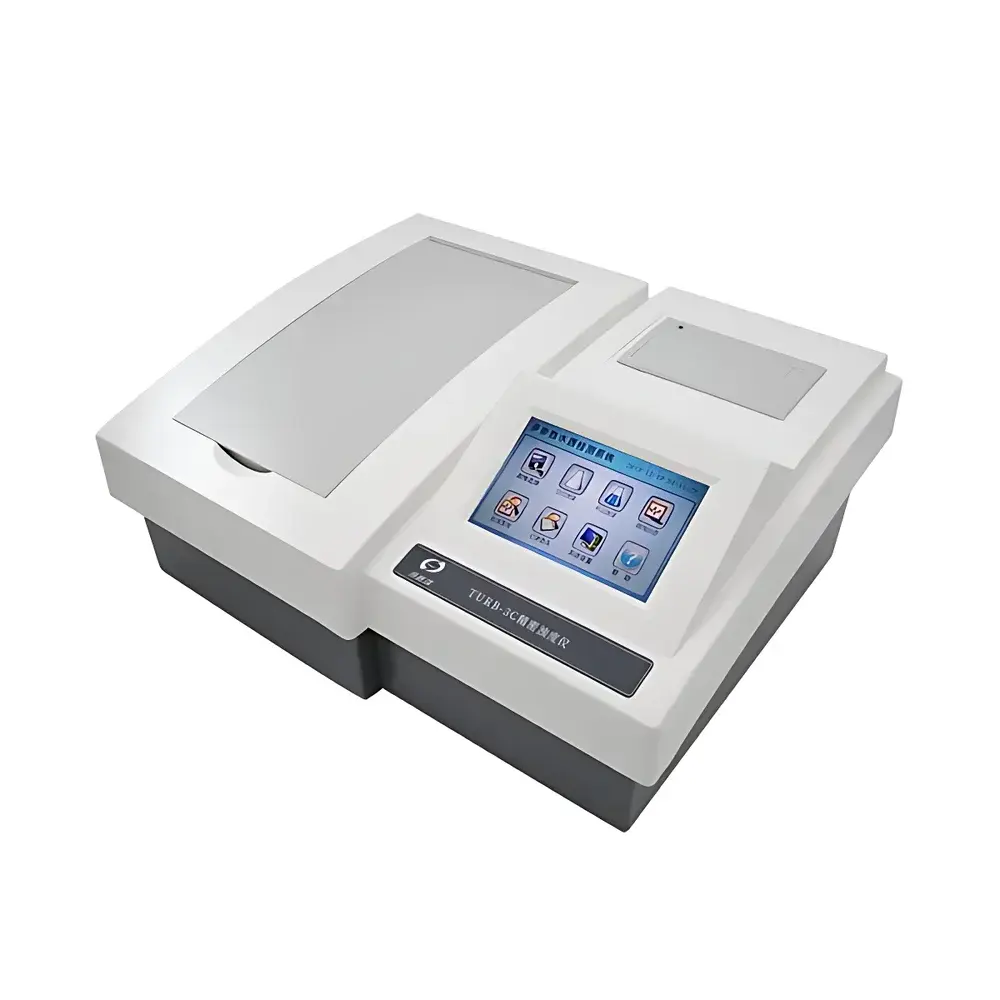
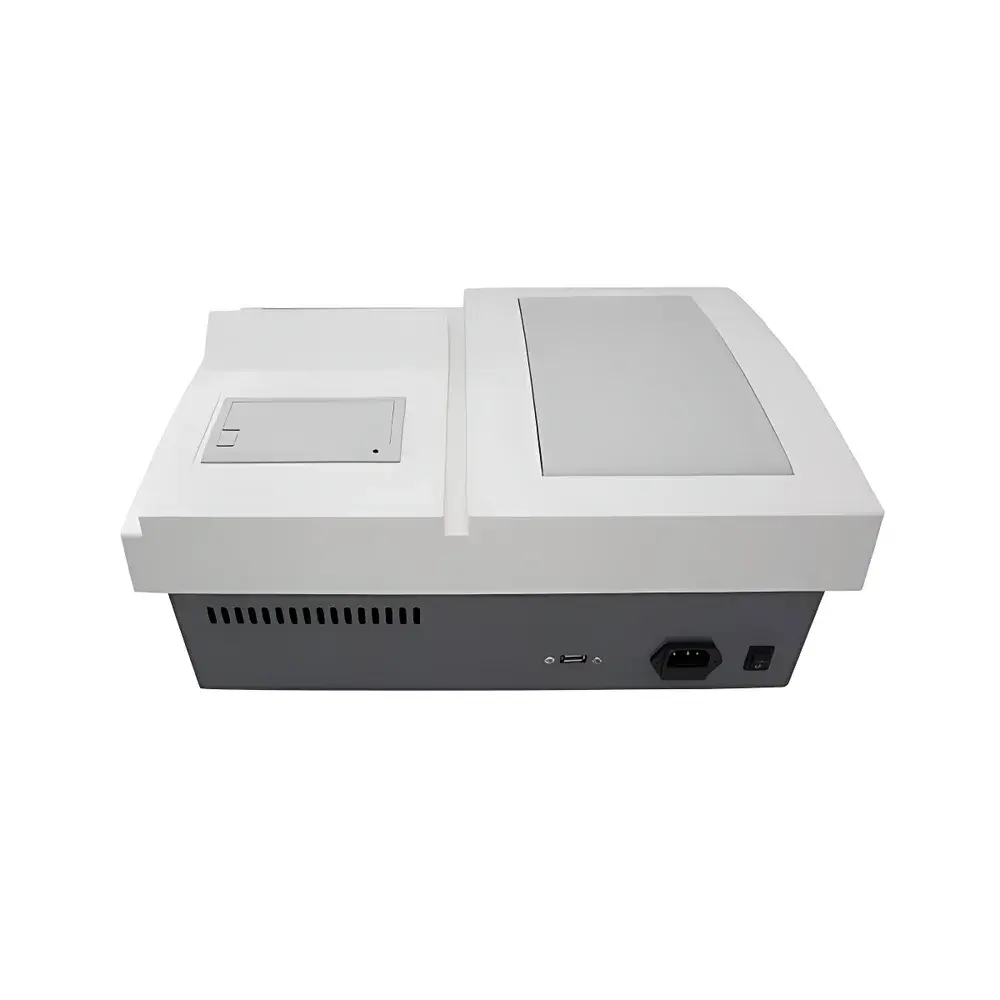
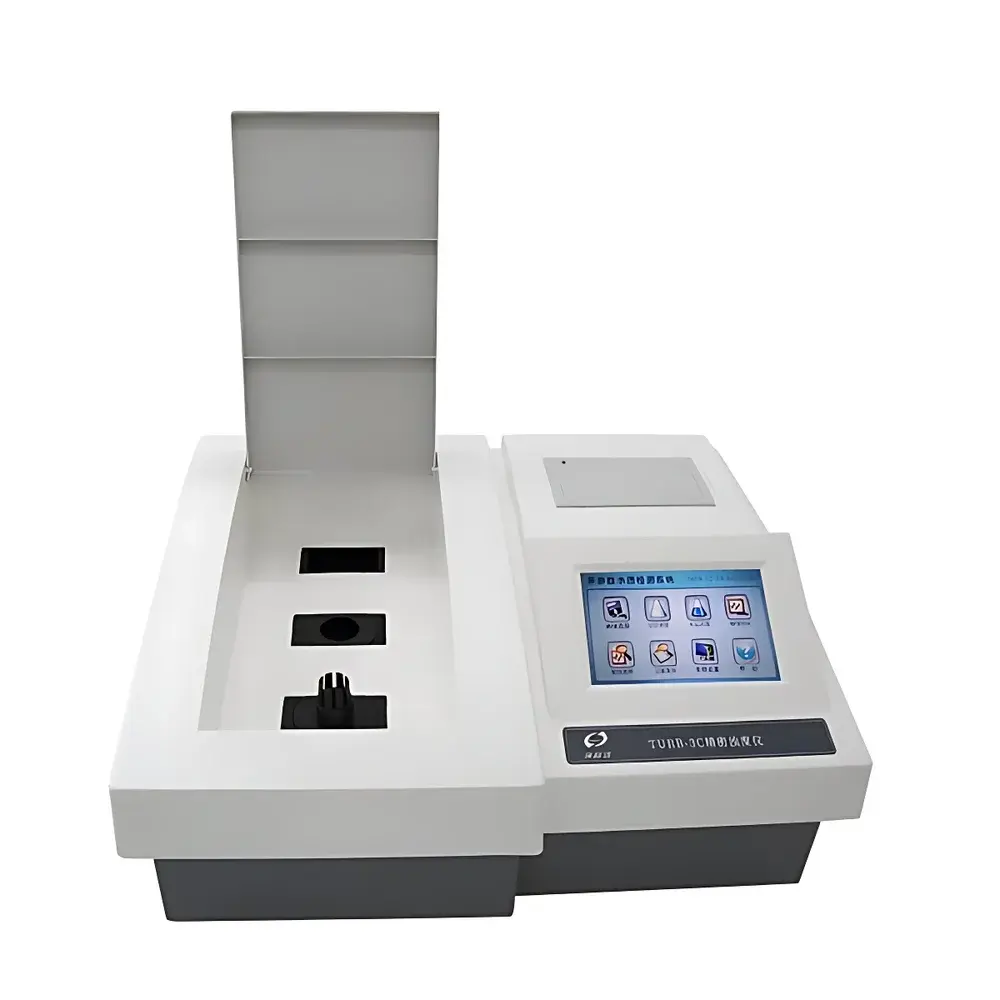
Shenchanghong TURB-3C Precision Turbidimeter
| Brand | Shenchanghong |
|---|---|
| Origin | Guangdong, China |
| Manufacturer Type | Direct Manufacturer |
| Origin Category | Domestic (China) |
| Model | TURB-3C |
| Form Factor | Benchtop / Laboratory |
| Measurement Range | 0–400 NTU |
| Resolution | 0.1 NTU |
| Operating Temperature | 5–40 °C |
| Accuracy | ≤ ±1 % FS |
| Repeatability | ≤ ±2 % FS |
| Drift | < 0.1 NTU/h |
| Display | 5-inch color TFT touchscreen (bilingual UI) |
| Data Interface | USB port for data export and PC connectivity |
| Calibration | Onboard self-calibration with user-defined standard curves |
| Memory | 300 calibration curves, 1,000 measurement records (non-volatile) |
| Housing | Molded ABS with corrosion resistance |
| Power Supply | AC 220 V ±10 %, 50 Hz |
| Dimensions | 400 × 310 × 158 mm |
| Weight | 5 kg |
Overview
The Shenchanghong TURB-3C Precision Turbidimeter is a benchtop optical instrument engineered for reliable, high-stability turbidity measurement in laboratory and quality control environments. It operates on the principle of nephelometry—measuring the intensity of light scattered at 90° by suspended particles in aqueous samples—conforming to ISO 7027 and EPA Method 180.1 standards for turbidity quantification. Designed for routine analysis in water treatment facilities, environmental monitoring labs, pharmaceutical QC units, and food & beverage production sites, the TURB-3C delivers traceable, repeatable results across its full 0–400 NTU range. Its optical architecture integrates a long-life, high-luminance LED source coupled with a precision narrow-band interference filter (center wavelength 850 nm), minimizing spectral drift and ambient light interference. The instrument achieves ≤ ±1 % full-scale accuracy and maintains < 0.1 NTU/h thermal drift after 30 minutes of warm-up—ensuring stability during extended batch testing.
Key Features
- Nephelometric detection system compliant with ISO 7027 and EPA Method 180.1
- 5-inch color TFT capacitive touchscreen with intuitive bilingual (English/Chinese) GUI
- Onboard thermal printer for immediate hardcopy output of measurements and calibration logs
- USB 2.0 interface for secure data export to Windows-based PCs; compatible with CSV and TXT formats
- Non-volatile memory storing up to 300 user-defined calibration curves and 1,000 measurement records
- Self-calibration function with real-time offset correction to compensate for optical aging or sensor drift
- Multi-layer security: password-protected system settings, startup lock, and configurable access levels
- Dual-language support with seamless toggle between English and Chinese interfaces
- One-touch system recovery to factory defaults without external tools or firmware reflash
- Corrosion-resistant molded ABS housing rated for continuous operation in controlled lab environments (5–40 °C, ≤70 % RH)
Sample Compatibility & Compliance
The TURB-3C accepts standard 25-mm round glass or quartz cuvettes (10-mm path length) and supports both formazin-based and StablCal® reference standards. It is validated for use with potable water, wastewater effluents, filtered process streams, and low-viscosity liquid pharmaceuticals per USP <<730> and EP 2.2.22 guidelines. Instrument performance meets GLP documentation requirements, including audit-trail-capable calibration logging, timestamped measurement records, and operator ID tagging (via optional password assignment). All firmware operations comply with IEC 61000-4 electromagnetic immunity standards, and the power supply satisfies IEC 61010-1 safety certification for laboratory electrical equipment.
Software & Data Management
Data generated by the TURB-3C is structured for interoperability with LIMS and ELN platforms. Measurement files include sample ID, date/time stamp, operator code (if assigned), calibration status flag, NTU value, and raw scatter signal intensity. USB exports retain metadata integrity and require no proprietary drivers—recognized natively by Windows Explorer. Internal storage implements cyclic overwrite protection: critical calibration curves are write-locked unless explicitly modified, and historical records persist through power loss. Firmware supports field-upgradable calibration algorithms via signed binary packages, ensuring traceability under FDA 21 CFR Part 11 when paired with validated PC software.
Applications
- Drinking water quality verification in municipal treatment plants and regulatory laboratories
- Effluent monitoring in industrial wastewater discharge compliance (e.g., ISO 10523, APHA Standard Methods 2130 B)
- In-process turbidity control during filtration, clarification, and sterilization steps in biopharma manufacturing
- Raw material qualification for excipients and solvents in pharmaceutical formulation development
- Educational use in university analytical chemistry and environmental engineering curricula
- Field-deployable lab verification where portable turbidimeters lack required precision and record-keeping capability
FAQ
What turbidity standards are supported for calibration?
The TURB-3C accepts formazin suspension (primary standard), StablCal® polymer standards, and custom user-defined standards traceable to NIST SRM 2100 series.
Does the instrument meet FDA 21 CFR Part 11 requirements?
Yes—when used with validated PC software and configured with operator passwords, audit trails, and electronic signature protocols, it supports Part 11-compliant workflows.
Can measurement data be exported in CSV format for statistical process control (SPC)?
Yes—USB export generates comma-delimited files with headers, timestamps, and units, directly importable into Minitab, JMP, or Excel-based SPC dashboards.
Is the optical system susceptible to fouling from high-turbidity samples?
The cuvette chamber is designed for easy cleaning; however, samples >200 NTU should be diluted prior to analysis to maintain linearity and prevent lens contamination.
How frequently must the instrument be recalibrated?
Daily verification with a mid-range standard (e.g., 100 NTU) is recommended; full multi-point calibration is required after maintenance, firmware updates, or every 30 days in regulated environments.



