
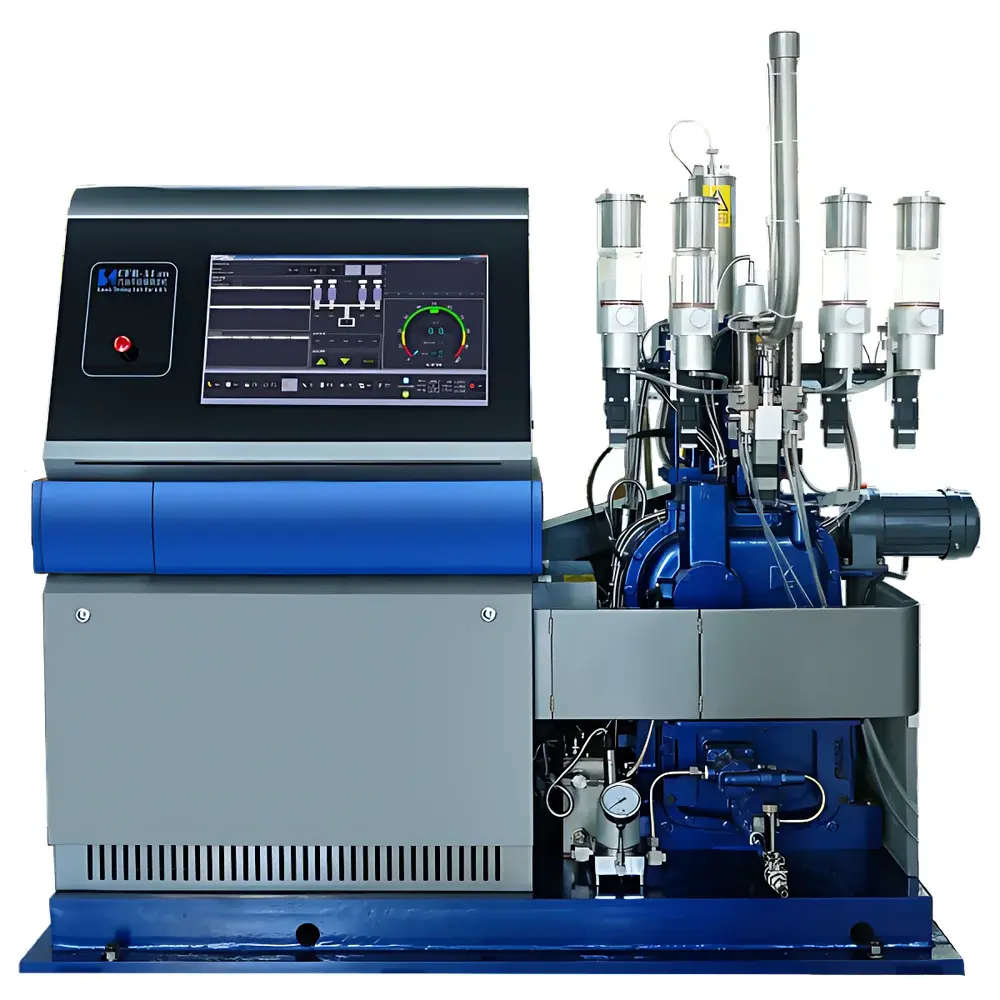
Shenkai CFR-A1 AUTO Gasoline Octane Number Analyzer
| Brand | Shenkai |
|---|---|
| Origin | Shanghai, China |
| Model | CFR-A1 AUTO |
| Application | Motor gasoline and aviation gasoline octane number determination (RON & MON) |
| Test Range | 40–120 O.N. |
| Configuration | Benchtop |
| Standards Compliance | GB/T 5487, GB/T 503, ASTM D2699, ASTM D2700, IP 236, IP 237, EN ISO 5163, EN ISO 5164 |
| Engine Type | CFR-standard single-cylinder, cast-iron monobloc construction |
| Cylinder Bore | 82.55 mm |
| Stroke | 114.30 mm |
| Displacement | 0.61 L |
| Compression Ratio Range | 4:1 to 18:1 |
| Engine Speed | 600 rpm ± 6 rpm (RON), 900 rpm ± 9 rpm (MON) |
| Intake Air Temperature Control | RON: 52 °C ± 1 °C |
| MON | 38 °C ± 2.8 °C (pressure-compensated) |
| Cylinder Jacket Coolant Temp | 100 °C ± 1.5 °C |
| Lubricating Oil Pressure | 172–207 kPa |
| Power Supply | AC 380 V ±10%, 50 Hz |
| Dimensions | 1700 × 760 × 1420 mm (W×D×H) |
| Net Weight | 1200 kg |
| Data Interface | USB, Wi-Fi, LIMS-compatible output |
| Safety Features | Soft-start motor, dual-stage oil filtration, coolant level protection, laser-based cylinder height positioning with mechanical limit safeguard, real-time vacuum monitoring, automatic fault alarm and status logging |
Overview
The Shenkai CFR-A1 AUTO Gasoline Octane Number Analyzer is a fully automated, benchtop single-cylinder research engine system engineered for precise determination of Research Octane Number (RON) and Motor Octane Number (MON) in motor gasoline and aviation gasoline. Based on the internationally recognized Cooperative Fuel Research (CFR) engine architecture, it implements standardized combustion knock detection under rigorously controlled thermodynamic conditions—adhering strictly to ASTM D2699 (RON), ASTM D2700 (MON), IP 236/237, EN ISO 5163/5164, and GB/T 5487–2015 and GB/T 503–2016. The instrument utilizes a monobloc cast-iron cylinder block with integrated cooling jacket, a five-gear crankshaft assembly with dual balancing modules, and a right-hand orientation optimized for repeatable knock intensity measurement. Its core operational principle relies on quantitative correlation between fuel autoignition resistance and the compression ratio at which standardized knock intensity (measured via piezoelectric transducers and calibrated acoustic analysis) is achieved—under fixed intake temperature, engine speed, ignition timing, and air–fuel mixture conditions.
Key Features
- True one-button automation: AI-driven sequence control enables full RON/MON test execution—including crankshaft positioning, compression ratio adjustment, intake temperature stabilization, ignition timing calibration, knock detection, and result calculation—without manual intervention.
- Dual-method flexibility: Intelligent variable-frequency drive allows seamless switching between RON and MON operating modes via software command; no mechanical reconfiguration required.
- Auto-knock-level detection: Precision vertical displacement sensing combined with adaptive pressure–temperature feedback enables fully autonomous identification and tracking of the爆震液面 (knock threshold liquid level) in the reference fuel blend chamber.
- Environmental compensation: Integrated absolute barometric pressure sensor feeds real-time atmospheric correction into intake temperature control algorithms, maintaining thermal setpoints within ±1 °C across varying elevation and weather conditions.
- Thermal management system: Dual-loop air conditioning (ice tower) and external recirculating coolant integration ensure stable cylinder head temperature (100 °C ±1.5 °C), lubricant temperature (57 °C ±8 °C), and precise intake manifold conditioning.
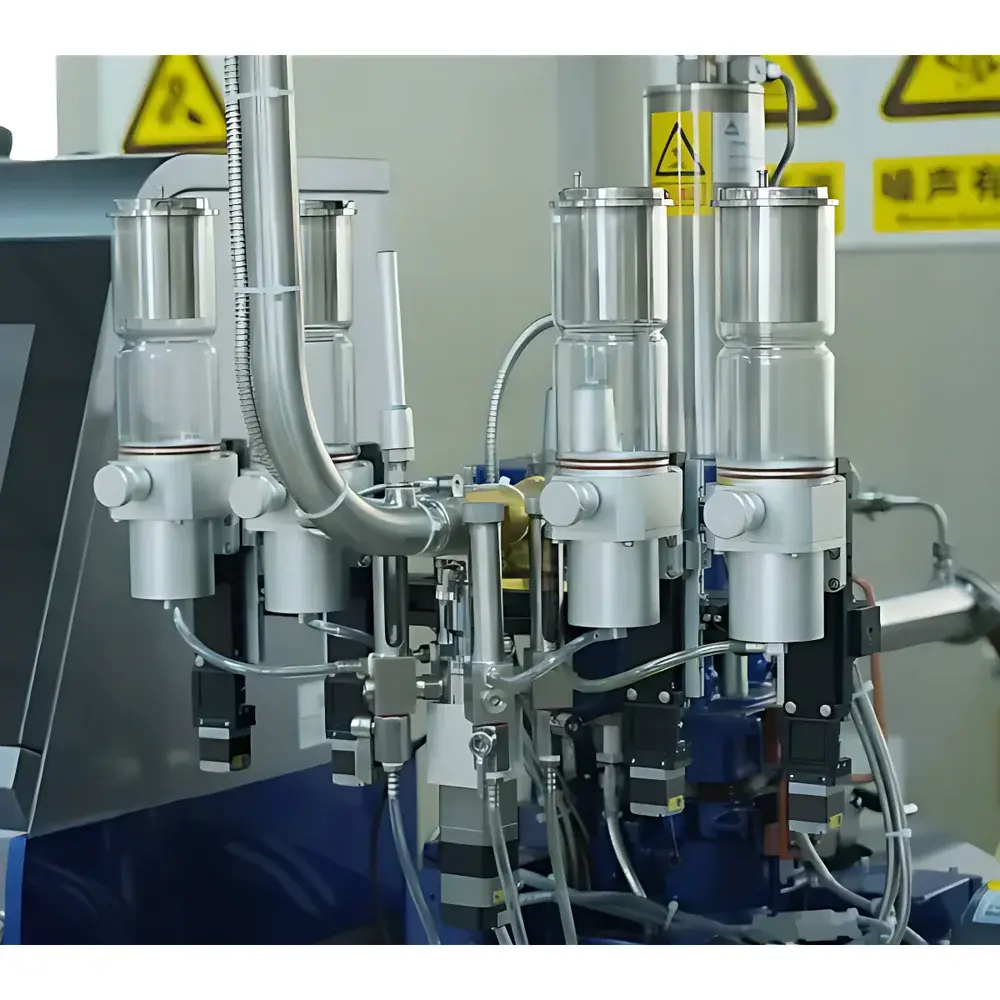
- High-fidelity fuel delivery: Vertically and horizontally oriented precision nozzles, coupled with a venturi-mixing carburetor and refrigerated fourth test cup, guarantee reproducible stoichiometric air–fuel ratios—even for highly volatile, light-end gasoline fractions.
- Comprehensive diagnostics: Embedded control module continuously monitors 28+ operational parameters—including oil pressure, coolant level, vacuum level, spark plug gap integrity, and crankcase vibration—and triggers visual/audio alerts upon deviation from validated thresholds.
Sample Compatibility & Compliance
The CFR-A1 AUTO accommodates all conventional gasoline formulations—including reformulated, oxygenated, ethanol-blended (E10–E15), and alkylate-rich fuels—as well as aviation gasoline per ASTM D910. It excludes diesel, jet fuel, or non-volatile hydrocarbons. All hardware components—including cylinder bore geometry, combustion chamber volume, valve timing profiles, and ignition advance mapping—conform to CFR engine Type F specifications defined in ASTM D2699 and D2700. The system supports GLP-compliant audit trails: every test record includes timestamped metadata (operator ID, ambient pressure, calibration certificate IDs, compression ratio used, knock intensity waveform snippets), stored in tamper-evident binary format compliant with FDA 21 CFR Part 11 requirements when paired with validated LIMS integration.
Software & Data Management
The embedded Windows-based control interface provides real-time visualization of engine parameters (intake vacuum, cylinder pressure waveform, knock intensity index, compression ratio position), with configurable data logging intervals (100 ms resolution). Raw sensor outputs and processed octane values are exportable in CSV, XML, and ASTM E1382-compliant formats. Wi-Fi connectivity enables remote monitoring via iOS/Android applications; push notifications alert users upon test completion or fault condition. Data synchronization with laboratory information management systems (LIMS) occurs via secure TLS 1.2–encrypted REST API or direct USB transfer. Audit logs retain full traceability of method changes, calibration events, and user access—meeting ISO/IEC 17025 clause 7.7 and CNAS-CL01:2018 documentation requirements.
Applications
This analyzer serves quality control laboratories in petroleum refineries, fuel additive development centers, regulatory testing agencies (e.g., CNPC, Sinopec QC divisions, provincial market supervision bureaus), and independent certification bodies accredited to ISO/IEC 17025. Typical use cases include batch release testing of finished gasoline, formulation optimization of antiknock additives (e.g., MMT, ethanol, ETBE), evaluation of biofuel blending effects on combustion stability, and technical support for ASTM round-robin interlaboratory studies. Its high repeatability (≤0.3 O.N. standard deviation per ASTM D2699 Annex A3) and long-term stability make it suitable for proficiency testing programs and metrological validation against NIST-traceable reference fuels.
FAQ
Does the CFR-A1 AUTO require periodic recalibration using primary reference fuels?
Yes—per ASTM D2699 Section 8.2 and GB/T 5487 Clause 7.3, calibration must be performed before each test series using certified primary reference fuels (e.g., iso-octane/toluene blends) traceable to NIST SRM 2710a or equivalent national standards.
Can the instrument operate unattended overnight?
Yes—its integrated safety architecture (coolant level sensors, oil pressure cutoff, thermal runaway protection, and emergency stop logic) permits unattended operation for up to 12 consecutive hours, provided ambient conditions remain within 5–35 °C and 20–90% RH.
Is third-party software validation available for 21 CFR Part 11 compliance?
Shenkai provides IQ/OQ documentation packages and supports vendor-qualified validation consultants; full computerized system validation (CSV) must be conducted by the end-user’s QA department per their internal SOPs.
What maintenance intervals are recommended for optimal performance?
Daily: Visual inspection of coolant/oil levels, air filter cleaning. Weekly: Spark plug gap verification and carbon deposit removal. Quarterly: Full oil change, fuel system flush, and compression ratio encoder recalibration. Annual: Full metrological verification against CFR reference engine benchmarks.
Does the system support custom ignition timing profiles beyond ASTM-specified values?
No—the ignition timing map is hard-coded per ASTM D2699/D2700; deviations would invalidate compliance with referenced standards and void certification of reported octane values.






