
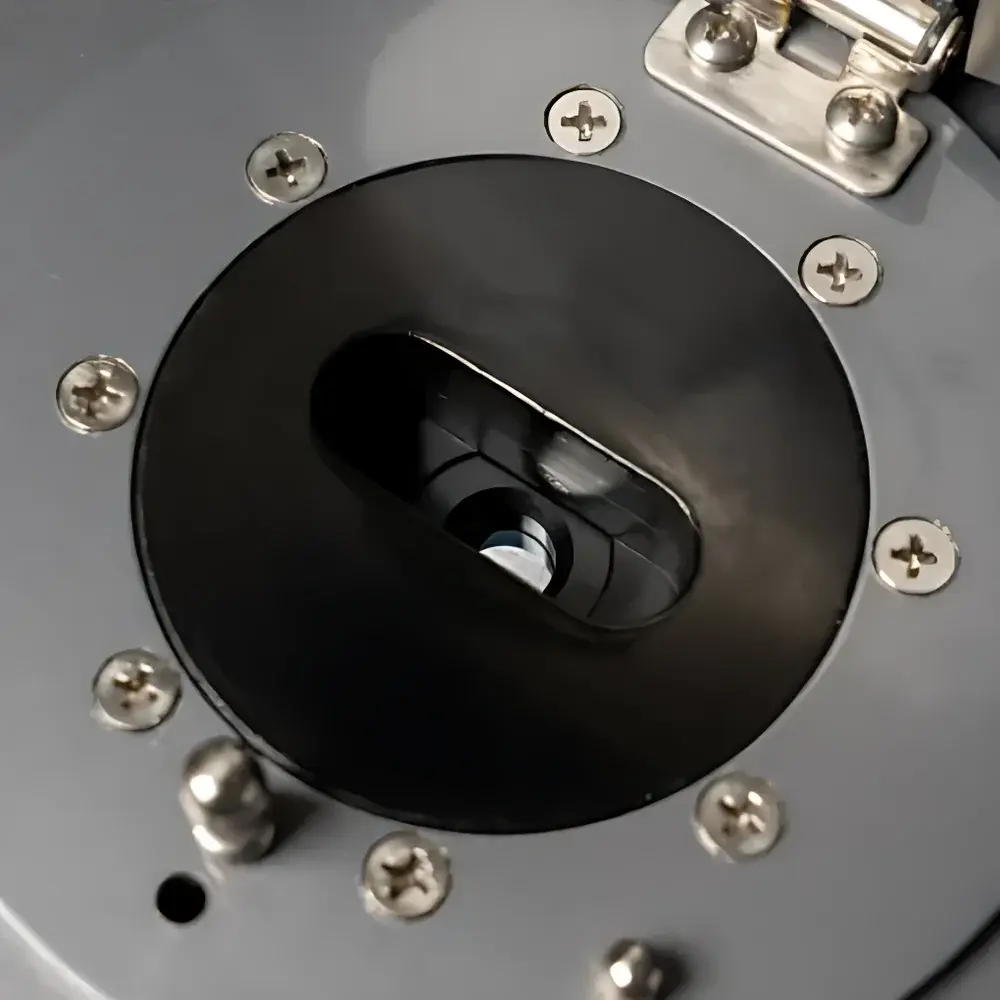
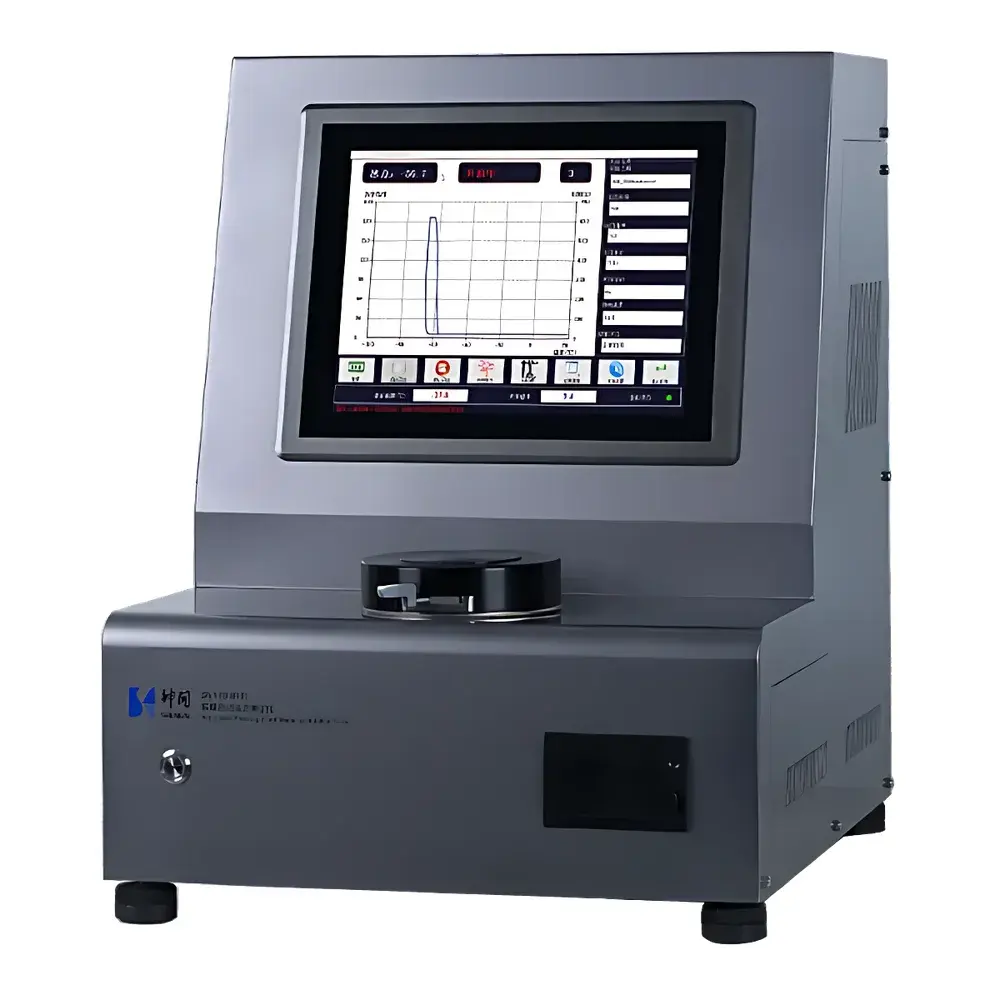
Shenkai SKY1016-IV Automatic Freezing Point Tester for Aviation Turbine Fuel
| Test Method | SH/T 0770, ASTM D5972, IP 435 |
|---|---|
| Temperature Range | +20 °C to –80 °C |
| Temperature Resolution | 0.1 °C |
| Temperature Accuracy | ±0.1 °C |
| Repeatability | ±0.5 °C |
| Reproducibility | ±0.8 °C |
| Sample Volume | 0.14–0.16 mL |
| Test Duration | ~15 min |
| Cooling Rate | 15 °C/min ±5 °C/min (adjustable) |
| Heating Rate | 10 °C/min ±0.5 °C/min |
| Detection Principle | Optical Phase Transition Sensing |
| Refrigeration System | Hybrid Peltier/Compressor |
| Temperature Sensor | PT100 Platinum Resistance Thermometer |
| Display | 12″ Capacitive Touchscreen |
| Data Storage Capacity | ≥5000 test records |
| Interface | USB, RJ-45 (LIMS-compatible) |
| Power Supply | AC 220 V ±10%, 50 Hz |
| Dimensions (W×D×H) | 430 × 510 × 560 mm |
| Net Weight | 37 kg |
Overview
The Shenkai SKY1016-IV Automatic Freezing Point Tester for Aviation Turbine Fuel is an engineered solution for precise, repeatable determination of the freezing point of jet fuels—specifically Jet A, Jet A-1, and JP-8—according to internationally recognized standard test methods including ASTM D5972, IP 435, and SH/T 0770. The instrument employs optical phase transition detection, a validated physical principle in low-temperature hydrocarbon analysis, where the onset of crystallization is identified by abrupt changes in light transmission or scattering within a controlled thermal ramp. Unlike manual or semi-automated methods relying on visual observation or thermocouple-based inflection detection, the SKY1016-IV integrates high-sensitivity optical sensing with real-time thermal profiling to deliver objective, operator-independent endpoint identification. Its hybrid Peltier/compressor refrigeration architecture enables rapid cooling to –80 °C while maintaining tight thermal stability (±0.1 °C) across the full operating range, ensuring compliance with the stringent temperature control requirements specified in ASTM D5972 Annex A1.
Key Features
- Automated phase transition detection using proprietary high-stability optical sensors with optimized signal-to-noise ratio and immunity to ambient light interference
- iSKvator™ intelligent workflow engine: fully autonomous sequence execution—including dry-air purge, controlled cooling, programmed heating ramp, and crystallization endpoint validation—with single-touch initiation
- Human-centered interface: 12-inch industrial-grade capacitive touchscreen with intuitive graphical navigation, real-time optical signal curve visualization, and multilingual UI support (English default)
- Microsample efficiency: validated operation with only 0.14–0.16 mL of fuel per test, minimizing reagent consumption and waste generation
- Integrated desiccated air supply system: built-in high-efficiency moisture trap eliminates dependency on external compressed air lines, enhancing lab safety and spatial flexibility
- Robust thermal management: dual-stage refrigeration delivers consistent cooling rates (15 °C/min ±5 °C/min) and precise heating control (10 °C/min ±0.5 °C/min), critical for accurate nucleation detection per ASTM D5972 Section 8.2
- Traceable metrology: calibrated PT100 platinum resistance thermometer traceable to NIST standards; temperature accuracy independently verified at multiple points across –60 °C to +20 °C
- Secure data governance: password-protected user access levels, audit-trail-enabled test logging, and timestamped metadata (sample ID, operator, environmental conditions, calibration status)
Sample Compatibility & Compliance
The SKY1016-IV is validated for aviation turbine fuels meeting ASTM D1655 and DEF STAN 91-91 specifications. It accommodates both undyed and dye-treated jet fuels, including those containing static dissipater additives (e.g., Stadis 450), without interference. All operational parameters—including cooling rate, hold time, and optical threshold settings—are configurable to align with method-specific procedural constraints. The system supports full regulatory compliance for quality control laboratories operating under ISO/IEC 17025, ASTM D5972 Annex B (precision statement validation), and internal QA/QC protocols requiring documented instrument performance verification. Routine verification includes daily system suitability checks using certified reference materials (CRM) traceable to NPL or NIST, with automated pass/fail reporting embedded in the firmware.
Software & Data Management
Firmware v3.2+ provides native support for 21 CFR Part 11-compliant electronic records, including role-based user authentication, electronic signatures, and immutable audit trails for all test events, parameter modifications, and data exports. Test results—including raw optical curves, temperature vs. time profiles, freeze point value, sample metadata, and operator ID—are stored in encrypted SQLite databases with automatic backup to USB media. The RJ-45 Ethernet port enables seamless integration into laboratory information management systems (LIMS) via HL7 or ASTM E1384-compliant protocols. Data export options include CSV, PDF (with embedded digital signature), and direct printer output. Remote diagnostics and firmware updates are supported over secure TLS-encrypted connections.
Applications
- Final product release testing of aviation turbine fuel at refineries and blending facilities
- In-process monitoring during hydrotreating and fractionation to ensure cold flow specification adherence
- Contract laboratory services supporting OEM fuel qualification programs (e.g., Airbus AIMS, Boeing D6-17487)
- Research and development of alternative aviation fuels (SAF), including Fischer–Tropsch, HEFA, and alcohol-to-jet blends, where freezing behavior deviates from conventional hydrocarbons
- Regulatory submission support for ASTM D7566 Annexes and ICAO CAEP/8 certification pathways
- Root cause analysis of field-reported fuel filter blocking incidents linked to marginal freezing point excursions
FAQ
What standards does the SKY1016-IV comply with for freezing point determination?
It fully implements ASTM D5972, IP 435, and SH/T 0770, with method-specific thermal ramp profiles and optical detection thresholds preloaded and user-verifiable.
Is external compressed air required for operation?
No—the integrated desiccant-based dry-air generator eliminates reliance on lab-supplied compressed air, reducing infrastructure dependencies and contamination risks.
How is temperature calibration maintained over time?
The PT100 sensor is factory-calibrated against NIST-traceable references; users perform periodic verification using certified low-temperature CRMs, with deviation logs automatically archived.
Can test data be exported directly to our LIMS?
Yes—via RJ-45 Ethernet using ASTM E1384-compliant message formatting; configuration templates for major LIMS platforms (e.g., LabWare, Thermo Fisher SampleManager) are provided.
What maintenance intervals are recommended for routine operation?
Optical cell cleaning every 50 tests; desiccant replacement every 6 months or after 1000 hours of operation; full system verification annually or per ISO/IEC 17025 internal audit schedule.






