
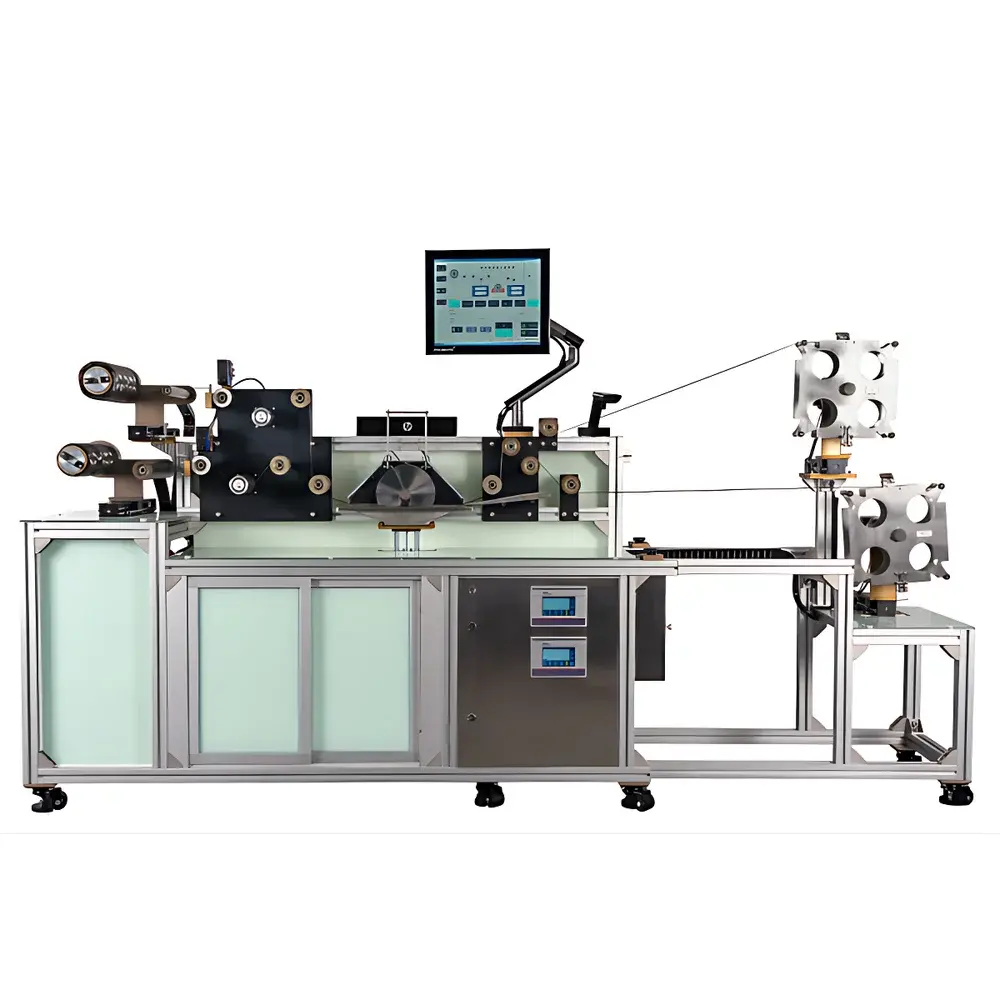
Shenkai SKY5101-I Automated Carbon Fiber Impregnation and Winding System
| Brand | Shenkai |
|---|---|
| Origin | Shanghai, China |
| Manufacturer Type | Authorized Distributor |
| Region | Domestic (China) |
| Model | SKY5101-I |
| Pricing | Upon Request |
Overview
The Shenkai SKY5101-I Automated Carbon Fiber Impregnation and Winding System is an engineered solution for standardized specimen preparation of large-tow carbon fiber tows—specifically 12K to 48K—intended for tensile property testing per ISO 10406-1, ASTM D4018, and Chinese national standards GB/T 3362 and GB/T 26749. The system implements a continuous, closed-loop controlled process combining precise tow handling, solvent-based or thermoset resin impregnation, controlled de-gelling, and geometrically defined winding into flat, dimensionally stable test specimens. Its core measurement and control architecture relies on real-time feedback from optical edge-detection sensors, load-cell-based tension transducers, and servo-driven actuation systems, ensuring reproducible fiber alignment, resin content (35–50 wt%), and cross-sectional geometry (7.0 ± 1.0 mm width, flat profile). Designed for integration into certified materials testing laboratories, the SKY5101-I supports traceable, auditable specimen fabrication workflows compliant with GLP and pre-qualification requirements for composite raw material certification.
Key Features
- Dual independent impregnation-winding stations housed within a single structural frame—enabling simultaneous processing of two fiber tows or staggered operation under unified HMI control
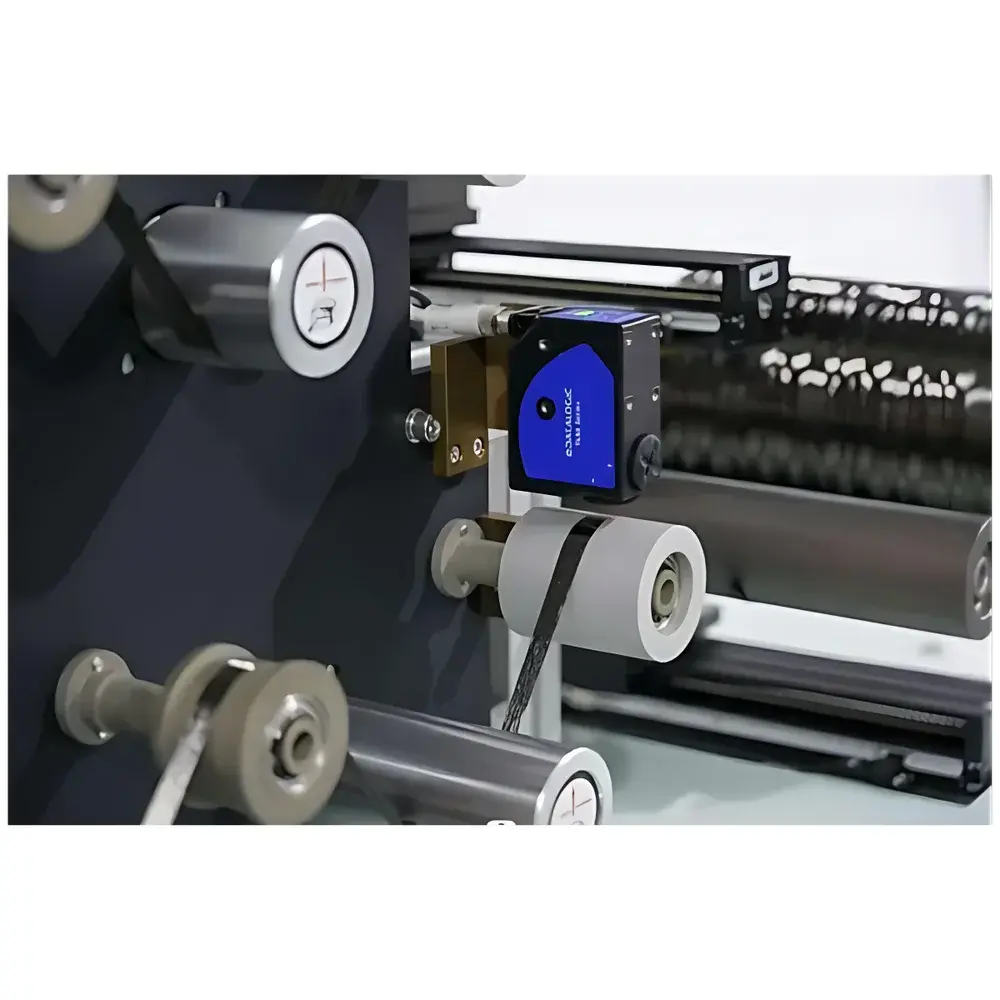
- Closed-loop, millisecond-response positional correction system using color-mark sensing and stepper-driven lateral actuators; positional deviation maintained within ±1 mm, adjustable correction speed (0–30 mm/s)
- High-fidelity tension control: 0–65 N range, ±0.2 N accuracy, implemented via magnetic particle brake and integrated load-cell feedback (max 90 N, ±0.1 N resolution)
- Automated resin bath with vertical lift mechanism and ≥300 mm effective wetting length; compatible with epoxy, vinyl ester, and BMI formulations
- Custom-engineered de-gelling rollers fabricated from chemically resistant, low-adhesion polymer—ensuring uniform resin distribution and facilitating rapid cleaning and tool-less replacement
- Integrated exhaust ducting for volatile organic compound (VOC) capture at the resin bath—designed to meet OSHA PEL and GBZ 2.1 occupational exposure limits
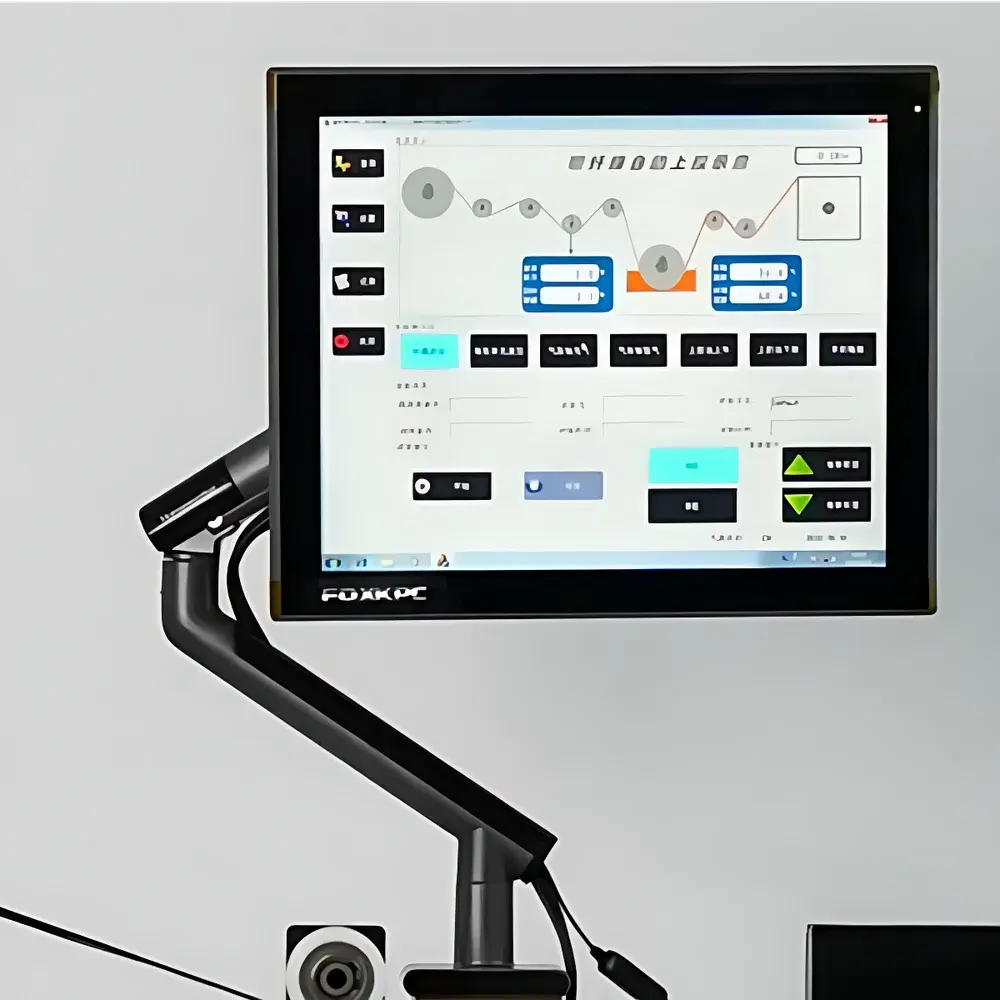
- Human-centered Windows-based HMI with animated process visualization, ergonomic height-adjustable monitor mount, and multi-level access control (operator, supervisor, administrator)
Sample Compatibility & Compliance
The SKY5101-I accommodates carbon fiber spools with standard 76.2 mm (±0.3 mm) inner diameter and 280 mm (±0.4 mm) maximum length. It supports tow widths from 12K to 48K, producing flat specimens with nominal width of 7.0 ± 1.0 mm and interfilament spacing adjustable from 0 to 30 mm (±1 mm). Specimen geometry and resin content are validated against reference measurements performed by the National Carbon Fiber Standardization Technical Committee (NCFS/TC). All operational parameters—including tension setpoints, winding speed (0.1–2.0 m/min, ±1 mm/min), and correction velocity—are logged with timestamped metadata to support ISO/IEC 17025-compliant quality records. The system’s firmware architecture enables audit-trail generation in accordance with FDA 21 CFR Part 11 principles when paired with validated electronic signature modules.
Software & Data Management
The embedded Windows 10 IoT Enterprise platform hosts a dedicated application suite supporting parameter library management, batch logging, and real-time diagnostics. Preloaded material profiles include default settings for common 12K–48K PAN-based carbon fibers (e.g., Toray T700, Toho Tenax IMS65), each containing optimized tension curves, correction speeds, and winding pitch configurations. All user actions—parameter changes, manual overrides, emergency stops—are recorded with operator ID, timestamp, and reason code. Export formats include CSV (for LIMS integration) and PDF (for QA documentation). Remote diagnostic ports support secure TLS-encrypted maintenance access via authorized service endpoints—no cloud storage or third-party telemetry is enabled by default.
Applications
- Preparation of standardized tensile test coupons for carbon fiber reinforcement qualification per GB/T 3362, GB/T 26749, and ISO 10406-1
- Resin content (RC) and fiber volume fraction (FVF) calibration specimen fabrication for DSC, TGA, and micro-CT validation studies
- Interlaboratory round-robin trials requiring cross-site specimen reproducibility
- Process development for prepreg manufacturing lines—particularly for high-speed, large-tow automated tape laying (ATL) feedstock evaluation
- Quality assurance workflows in Tier-1 aerospace composites suppliers where specimen traceability directly impacts AS9100 Rev D Clause 8.5.2 compliance
FAQ
What standards does the SKY5101-I support for specimen geometry and resin content?
It meets dimensional tolerances and resin content ranges specified in GB/T 3362 (width: 7.0 ± 1.0 mm; RC: 35–50%) and is verified against NCFS/TC reference testing protocols.
Can the system handle non-standard tow sizes beyond 48K?
No—the mechanical and control architecture is validated only for 12K–48K tows; operation outside this range requires formal requalification and is not covered under warranty.
Is the exhaust system compatible with existing lab HVAC infrastructure?
Yes—the integrated duct interface conforms to DN100 (4-inch) rigid PVC piping standards and includes static pressure compensation for connection to centralized fume extraction networks.
How is software validation performed for regulated environments?
Shenkai provides IQ/OQ documentation templates aligned with GAMP 5; final PQ must be executed on-site by the end user’s qualified personnel using NIST-traceable tension and dimensional metrology tools.
Does the system support external PLC integration for factory-wide MES synchronization?
Yes—Modbus TCP and OPC UA interfaces are available as optional hardware modules, enabling bidirectional data exchange with Siemens S7, Rockwell ControlLogix, or Schneider EcoStruxure platforms.





