
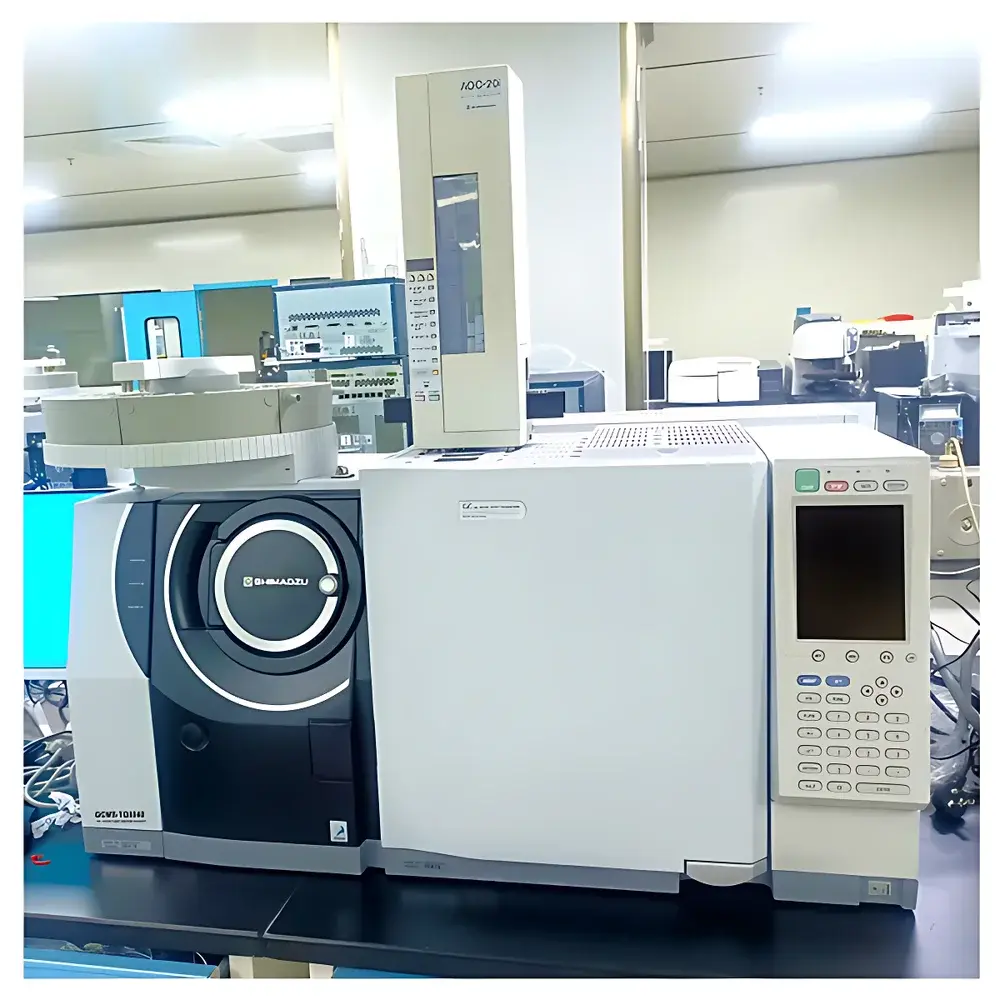
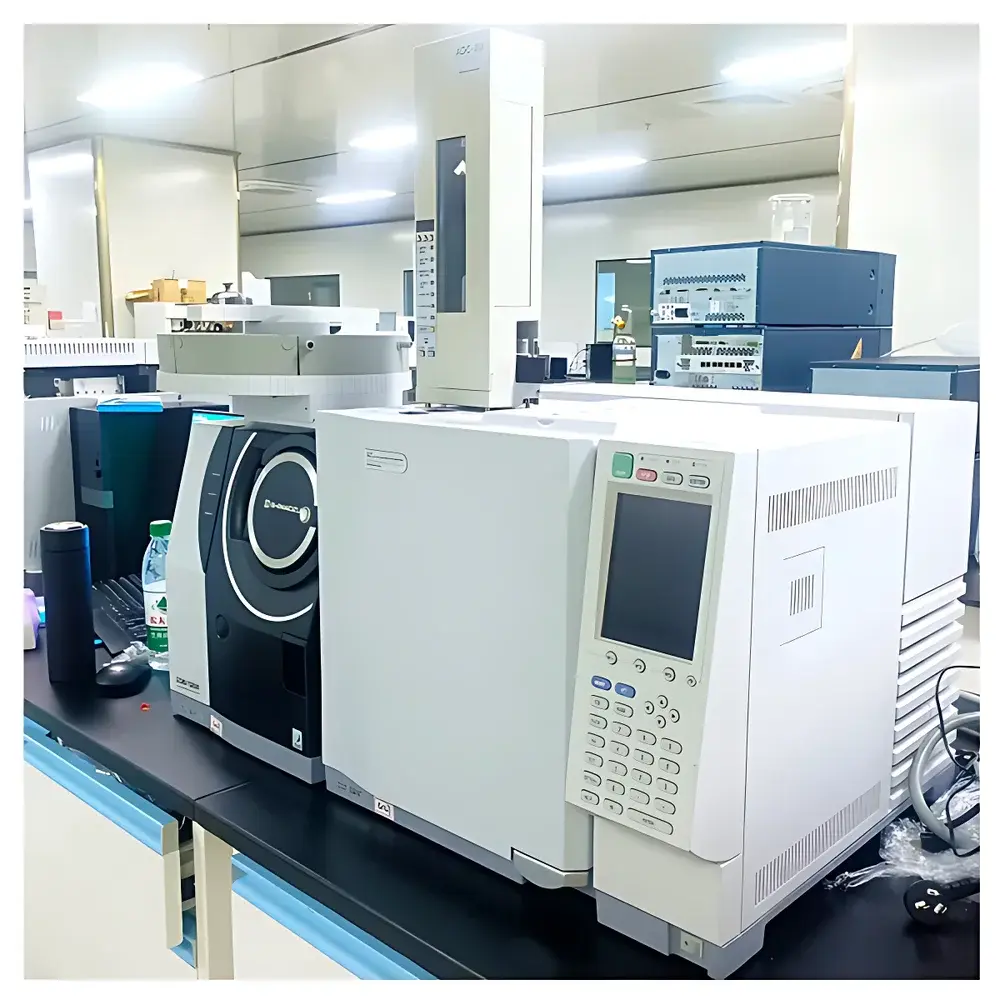
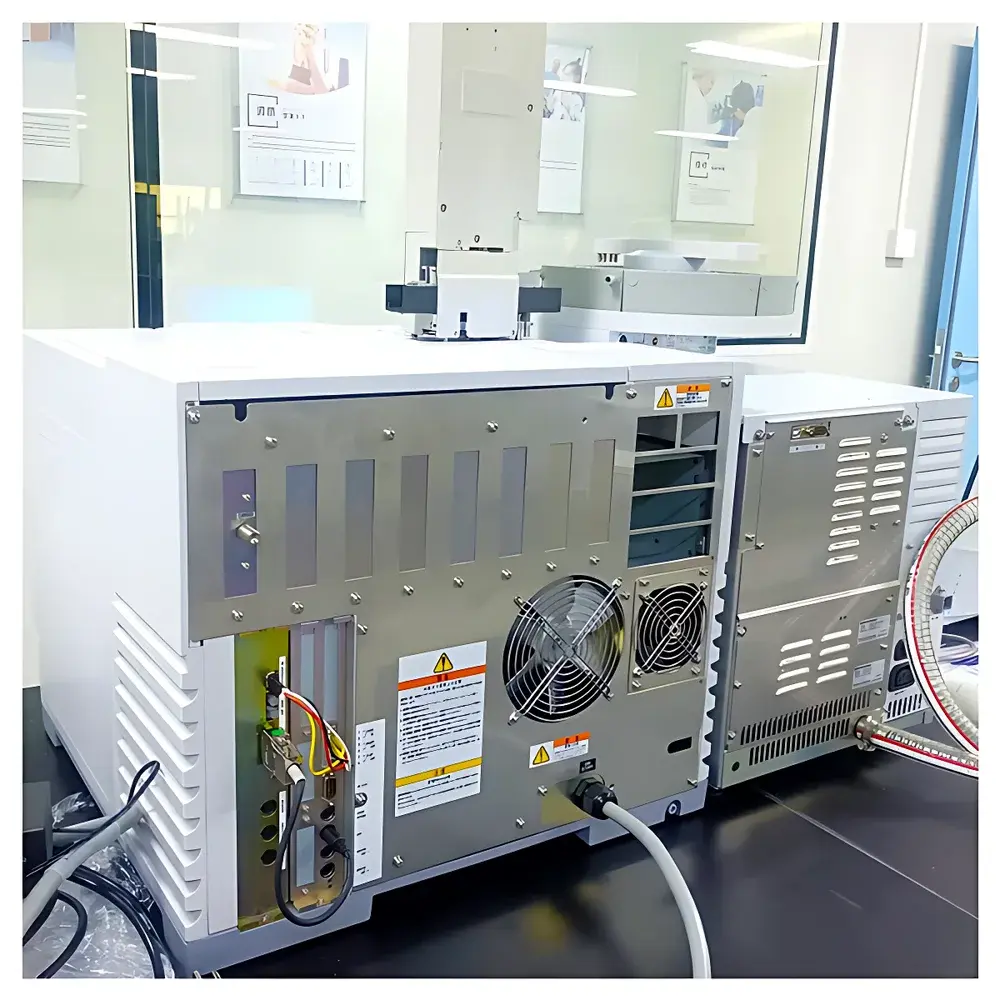
Shimadzu GCMS-TQ8040 Triple Quadrupole Gas Chromatography Mass Spectrometer
| Brand | Shimadzu |
|---|---|
| Origin | Japan |
| Model | GCMS-TQ8040 |
| Instrument Type | Triple Quadrupole Mass Spectrometer |
| GC Configuration | Conventional Gas Chromatography Interface |
| Mass Range | 10–1000 m/z |
| Resolution (FWHM) | ≥1000 (at m/z 502) |
| Sensitivity | ≥300 cps/pg (OFN, MRM mode) |
| Scan Speed | 15,000 Da/sec (MRM transition rate up to 1,000 transitions/sec) |
| Mass Accuracy | ≤0.1 Da (calibrated) |
| Oven Ramp Rate | Up to 130 °C/min |
| Detector | Dual-channel Electron Multiplier |
| Pressure Control Precision | ±0.001 psi (capillary flow control) |
Overview
The Shimadzu GCMS-TQ8040 is a high-performance triple quadrupole gas chromatography mass spectrometer engineered for robust, routine quantitative analysis in regulated and research laboratories. It operates on the principle of tandem mass spectrometry (MS/MS) via collision-induced dissociation (CID) in the second quadrupole (q2), enabling highly selective detection through multiple reaction monitoring (MRM). This architecture delivers exceptional specificity in complex matrices—such as environmental extracts, food residues, clinical biofluids, and pharmaceutical impurities—by isolating precursor ions in Q1, fragmenting them in the pressurized collision cell (q2), and detecting characteristic product ions in Q3. The system integrates a thermally stable, high-efficiency ion source with an optimized curved collision cell and advanced pulse-counting electron multiplier detection, ensuring reproducible signal response across wide dynamic ranges (up to 6 orders of magnitude). Designed for compliance-critical workflows, the GCMS-TQ8040 supports audit-ready data acquisition and meets core requirements for GLP, GMP, and ISO/IEC 17025 environments.
Key Features
- Smart MRM™ Method Automation: Fully automated method setup—including compound database import, optimal precursor/product ion selection, dwell time calculation, and retention time alignment—reduces manual optimization time by >70%.
- High-Throughput MRM Capacity: Firmware-enabled support for up to 32,768 MRM transitions per acquisition method, enabling comprehensive multi-analyte screening without sacrificing dwell time or sensitivity.
- Simultaneous Scan/MRM Acquisition: Real-time parallel scanning (full-scan or SIM) alongside MRM quantification allows retrospective qualitative confirmation and spectral library matching (NIST, Wiley) within the same run.
- Advanced Source & Collision Cell Design: Ultra-low-noise heated ion source with enhanced desolvation efficiency and a curved, pressurized collision cell delivering >95% transmission efficiency and minimal cross-talk between adjacent MRM channels.
- Precision Pneumatic Control: Capillary flow regulation with ±0.001 psi pressure stability ensures retention time reproducibility <0.02 min RSD (n=10) across multi-day sequences.
- ASSP (Advanced Scanning Speed Protocol): Hardware-accelerated scan timing synchronization minimizes cycle time overhead, maintaining quantitative precision even at >500 MRM transitions per second.
Sample Compatibility & Compliance
The GCMS-TQ8040 accommodates standard 0.25–0.53 mm ID capillary columns (e.g., DB-5ms, Rxi-5Sil MS, HP-5MS) and interfaces seamlessly with Shimadzu’s Nexis GC-2030 or legacy GC-2010 Plus systems. It supports split/splitless, PTV, and direct injection modes, with compatibility for derivatized analytes (e.g., silylation, acylation) and thermally labile compounds via programmable temperature vaporization. The platform complies with key regulatory frameworks: data integrity features include electronic signatures, full audit trail (per FDA 21 CFR Part 11), secure user access levels, and instrument method locking. All raw data files (.qgd) are stored in vendor-neutral formats compatible with third-party review software and LIMS integration via ASTM E1384-compliant APIs.
Software & Data Management
GCMS Insight software provides a unified interface for instrument control, method development, batch processing, and report generation. It includes built-in tools for peak integration validation (signal-to-noise ≥3, asymmetry 0.8–1.5), calibration curve fitting (weighted 1/x² linear regression), and automatic QC failure flagging (e.g., IS recovery outside 70–130%, RT shift >0.05 min). Raw data archives support long-term storage with SHA-256 checksum verification. For enterprise deployment, optional LabSolutions LCMS Link enables centralized method distribution, instrument status monitoring, and cross-platform data aggregation across GC-MS, LC-MS, and ICP-MS fleets.
Applications
The GCMS-TQ8040 is routinely deployed in environmental testing (EPA Methods 8270D, 8082A), food safety (EU SANTE/11312/2021 multiresidue protocols), clinical toxicology (benzodiazepines, opioids, stimulants), and pharmaceutical impurity profiling (ICH Q3B). Its MRM selectivity enables reliable quantification of sub-ppt analytes in soil extracts spiked with polycyclic aromatic hydrocarbons (PAHs), pesticide residues in baby formula (AOAC 2007.01), and mycotoxins in cereals without extensive sample cleanup. Method transfer from legacy single-quadrupole or QqQ platforms is facilitated by retention time lock (RTL) and auto-tuning wizards that adapt tuning parameters to column aging and carrier gas conditions.
FAQ
What regulatory standards does the GCMS-TQ8040 support for data integrity?
It fully implements FDA 21 CFR Part 11 requirements—including electronic signatures, audit trails with immutable timestamps, role-based access control, and data encryption at rest and in transit.
Can the system perform both quantitative and qualitative analysis in a single run?
Yes. Simultaneous Scan/MRM acquisition enables real-time spectral acquisition for library matching while maintaining quantitative MRM precision.
Is method transfer from older Shimadzu GC-MS systems supported?
Yes. GCMS Insight includes backward-compatible method import tools and Retention Time Lock (RTL) functionality to maintain consistency across instrument generations.
What maintenance intervals are recommended for routine operation?
Ion source cleaning every 2–4 weeks (depending on sample load), vacuum pump oil change every 6 months, and annual mass calibration verification using perfluorotributylamine (PFTBA) standard.
Does the system support unattended operation for overnight batches?
Yes. Integrated autosampler control, sequence error recovery, and email/SNMP alerting enable fully automated 24/7 operation with minimal operator intervention.
Related Products






