
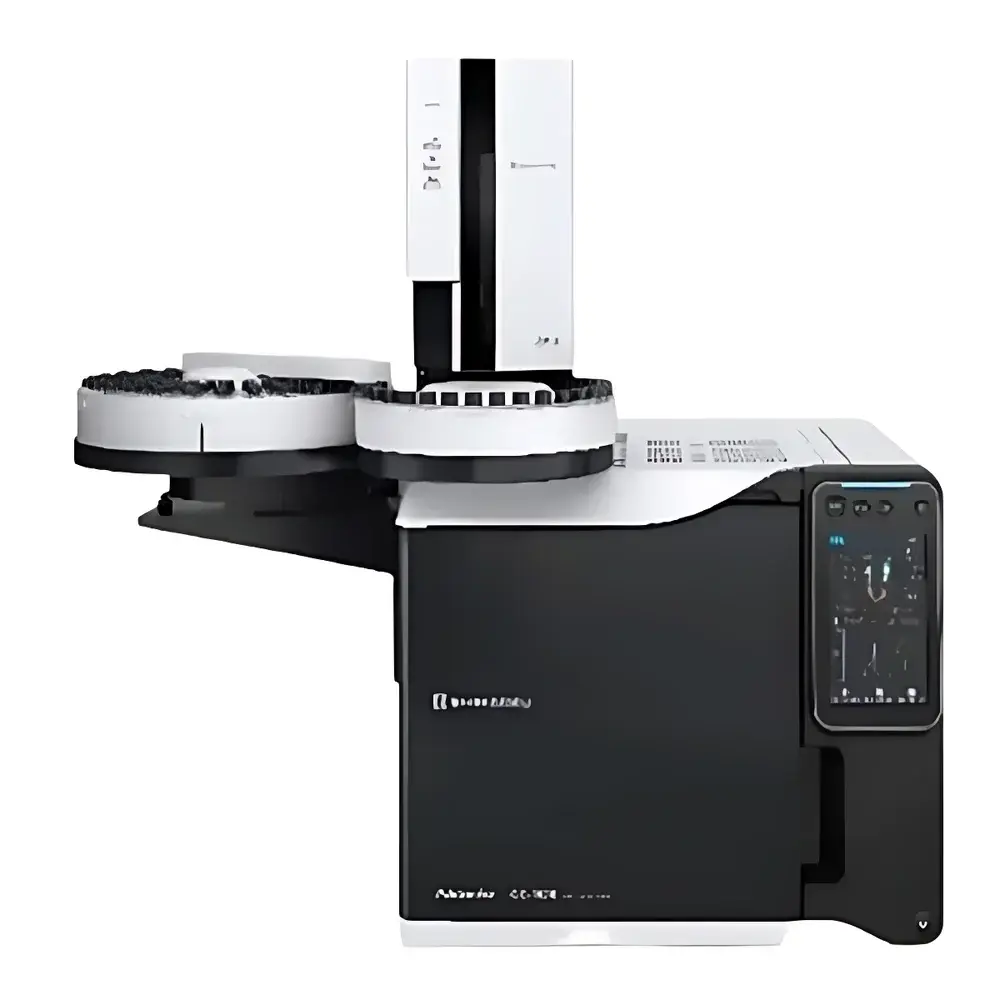

Shimadzu Nexis GC-2030 Enhanced Gas Chromatograph
| Brand | Shimadzu |
|---|---|
| Origin | Japan |
| Model | Nexis GC-2030 |
| Instrument Type | Laboratory Gas Chromatograph |
| Application Scope | General-purpose |
| Oven Temperature Range | Ambient +2 °C to 450 °C |
| Maximum Ramp Rate | 250 °C/min |
| Cool-down Time | ≤3.4 min (from 450 °C to 50 °C at ambient 22 °C) |
| Carrier Gas Flow Control Range | 0–1250 mL/min (7 programmable segments) |
| Carrier Gas Pressure Control Range | 0–1035 kPa (7 programmable segments) |
| Injector Maximum Operating Temperature | 450 °C |
| Injector Pressure Setting Range | 0–1035 kPa |
| Injector Total Flow Setting Range | 0–1300 mL/min (He or H₂), 0–600 mL/min (N₂) |
Overview
The Shimadzu Nexis GC-2030 Enhanced Gas Chromatograph is a high-performance, modular laboratory gas chromatograph engineered for precision, reproducibility, and operational flexibility in regulated and research-intensive environments. Based on proven capillary and packed column separation principles, it employs advanced carrier gas flow dynamics—leveraging both constant linear velocity (CLV), constant flow, and constant pressure control modes—to ensure retention time stability and peak shape fidelity across diverse analyte classes. Its oven architecture supports rapid thermal programming and precise temperature uniformity (±0.01 °C), critical for method transfer, multi-residue analysis, and compliance-driven workflows such as those defined in USP , EPA Method 8260, ISO 16000-6, and ASTM D3612. Designed for seamless integration into GLP/GMP-compliant laboratories, the system meets essential requirements for auditability, data integrity, and instrument qualification.
Key Features
- Intelligent pre-conditioning via software-embedded Pre-Aging Function, enabling automated column and inlet conditioning prior to sequence execution—reducing baseline drift and improving inter-run reproducibility.
- LabSolutions Direct remote access platform supporting real-time monitoring and control from iOS/Android devices, with secure HTTPS-based communication and session logging compliant with FDA 21 CFR Part 11 requirements.
- Integrated Carrier Gas Optimization Valve (optional) enabling automatic switching between He, H₂, and N₂ during standby phases—reducing helium consumption by up to 70% without compromising analytical performance.
- i-PeakFinder™ algorithm for automated, high-fidelity peak detection and integration across complex matrices—minimizing operator-dependent variability in baseline correction, shoulder resolution, and low-S/N peak identification.
- On-device Error Code QR Display on the front-panel touchscreen—scanning provides immediate access to context-specific troubleshooting guides, maintenance procedures, and service bulletins.
- Advanced AFC (Advanced Flow Controller) technology delivering ±0.05% flow accuracy and sub-second response time under dynamic gradient conditions.
Sample Compatibility & Compliance
The Nexis GC-2030 accommodates a broad range of sample introduction techniques—including split/splitless (SPL), direct (WBI), cold-on-column (OCI), programmed temperature vaporization (PTV), and packed-column (SINJ) inlets—enabling optimal handling of volatile organics, thermally labile compounds, and high-boiling residues. Detection flexibility includes FID, TCD, ECD, FPD, FTD, SCD, BID, and optional mass spectrometric interfaces (e.g., QQQ or TOF). All configurations support dual-column, multi-detector operation under synchronized timing control. The system conforms to ISO/IEC 17025:2017 calibration traceability requirements, supports electronic signatures and audit trails per 21 CFR Part 11, and is validated for routine use in pharmaceutical residual solvent testing (USP ), environmental VOC monitoring (EPA TO-17), food safety residue screening (AOAC 2017.16), and petrochemical hydrocarbon profiling (ASTM D5186, D6730).
Software & Data Management
LabSolutions GC software serves as the unified control and data processing environment—supporting simultaneous acquisition from up to four detectors, method development with retention time locking (RTL), and automated report generation compliant with LIMS export standards (e.g., ASTM E1702, ASTM E2524). Raw data files are stored in vendor-neutral .cdf format (NetCDF v4.0), ensuring long-term readability and third-party compatibility. The software incorporates built-in validation tools for system suitability testing (SST), peak purity assessment, and forced degradation analysis. Audit trail functionality records all user actions—including method edits, sequence modifications, and reprocessing events—with immutable timestamps and operator IDs.
Applications
- Pharmaceuticals: Residual solvent quantification in APIs and excipients per ICH Q3C and USP ; genotoxic impurity screening using ECD/FID dual detection.
- Food & Agriculture: Multi-class pesticide residue analysis in fruits/vegetables (QuEChERS extraction coupled with PTV-FID); sulfur compound profiling in beer and wine (SCD detection).
- Energy & Petrochemicals: Refinery gas composition (C₁–C₅ hydrocarbons) via backflush TCD; simulated distillation (SimDis) of diesel fractions; trace sulfur speciation in hydrogen fuel streams (SCD/BID).
- Environmental: Workplace air VOC monitoring (NIOSH 1501, OSHA 1007); soil and water extract analysis using purge-and-trap-GC/FID.
- Materials Science: Outgassing profile characterization of polymers and composites under thermal desorption-GC/MS coupling.
FAQ
Can the Nexis GC-2030 operate safely with hydrogen as carrier gas?
Yes. It features an integrated hydrogen leak sensor with automatic power cutoff and audible/visual alarms, meeting IEC 61010-1 and UL 61010-1 safety requirements for H₂ use.
Is LabSolutions GC compliant with 21 CFR Part 11?
Yes—when deployed with validated installation, electronic signature configuration, and enabled audit trail settings, it satisfies Part 11 requirements for electronic records and signatures.
What is the maximum number of detectors that can be simultaneously controlled?
Up to four detectors may be concurrently acquired and processed, subject to hardware configuration and detector type compatibility.
Does the system support packed column analysis?
Yes—via the SINJ inlet option, enabling legacy method migration and specialized applications such as permanent gas analysis.
How does the AFT flow path technology improve productivity?
AFT (Advanced Flow Technology) enables active backflush, heart-cutting, and detector splitting—reducing total cycle time by eliminating column re-equilibration and enabling parallel detection pathways.




