
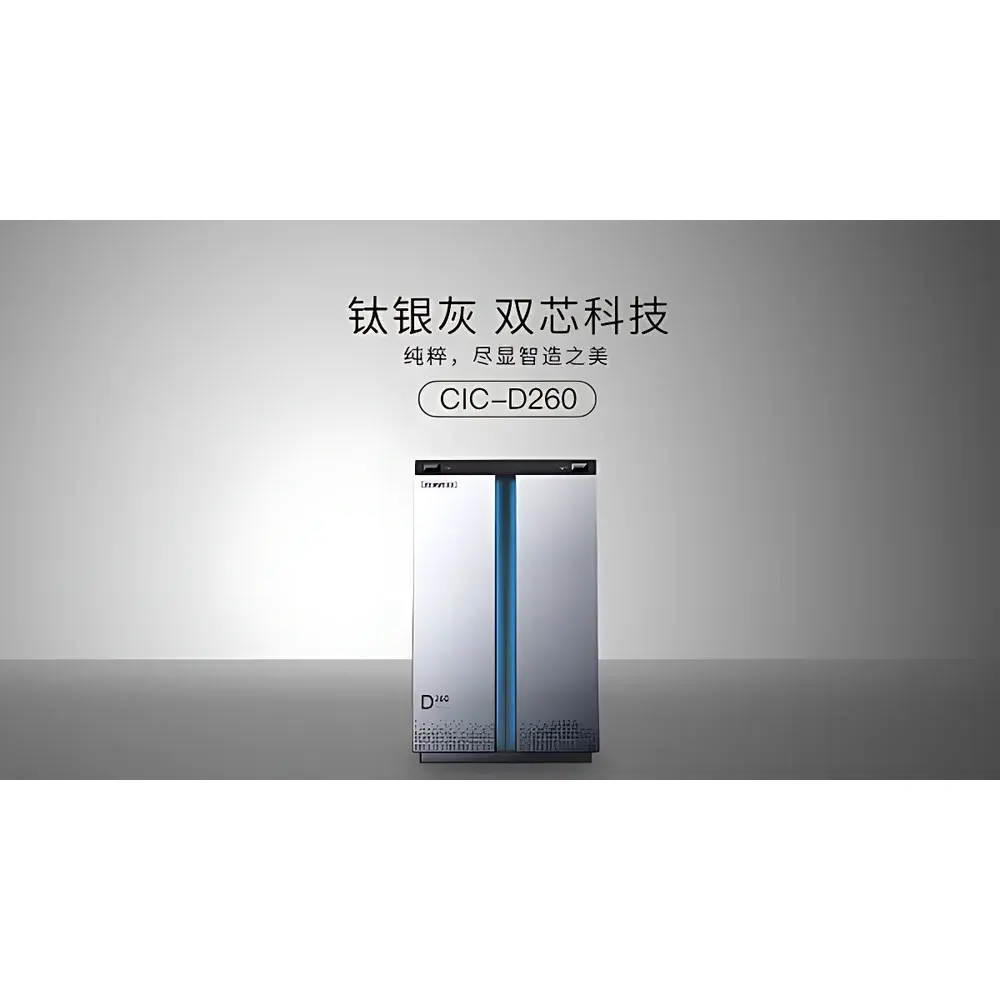
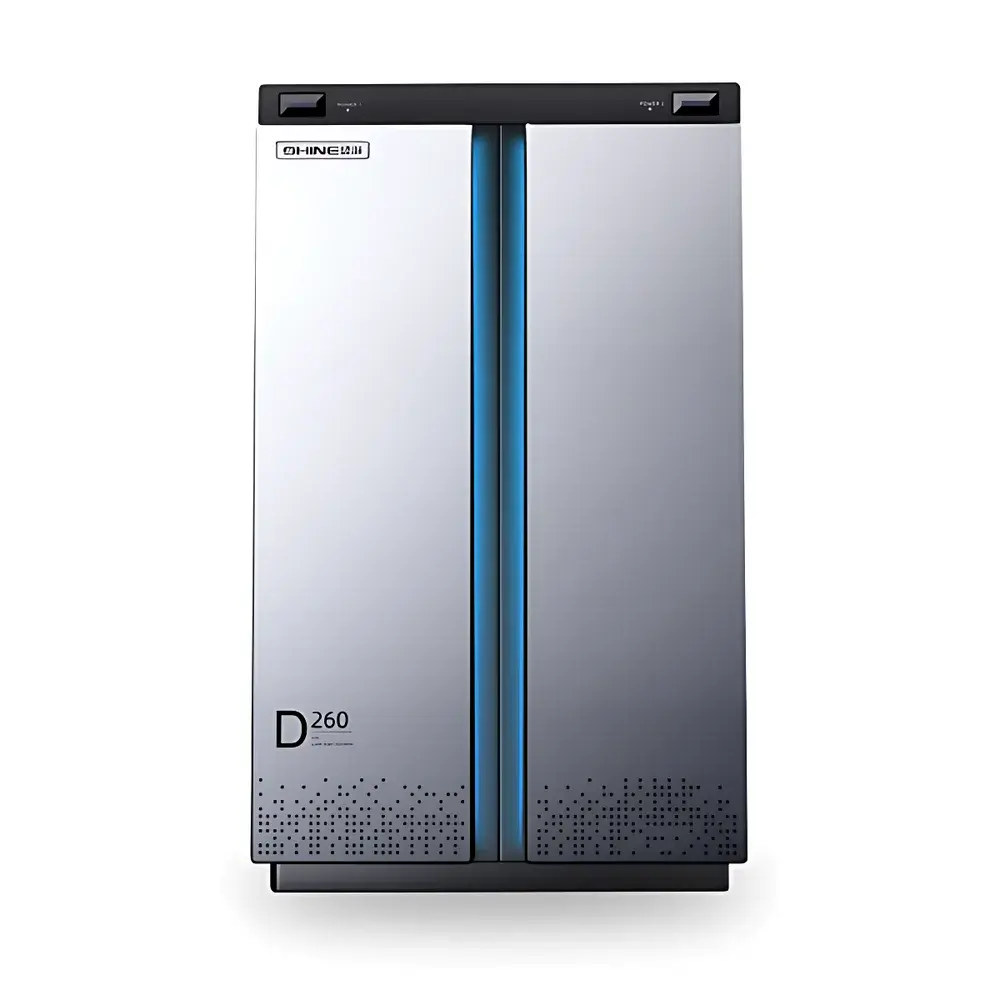
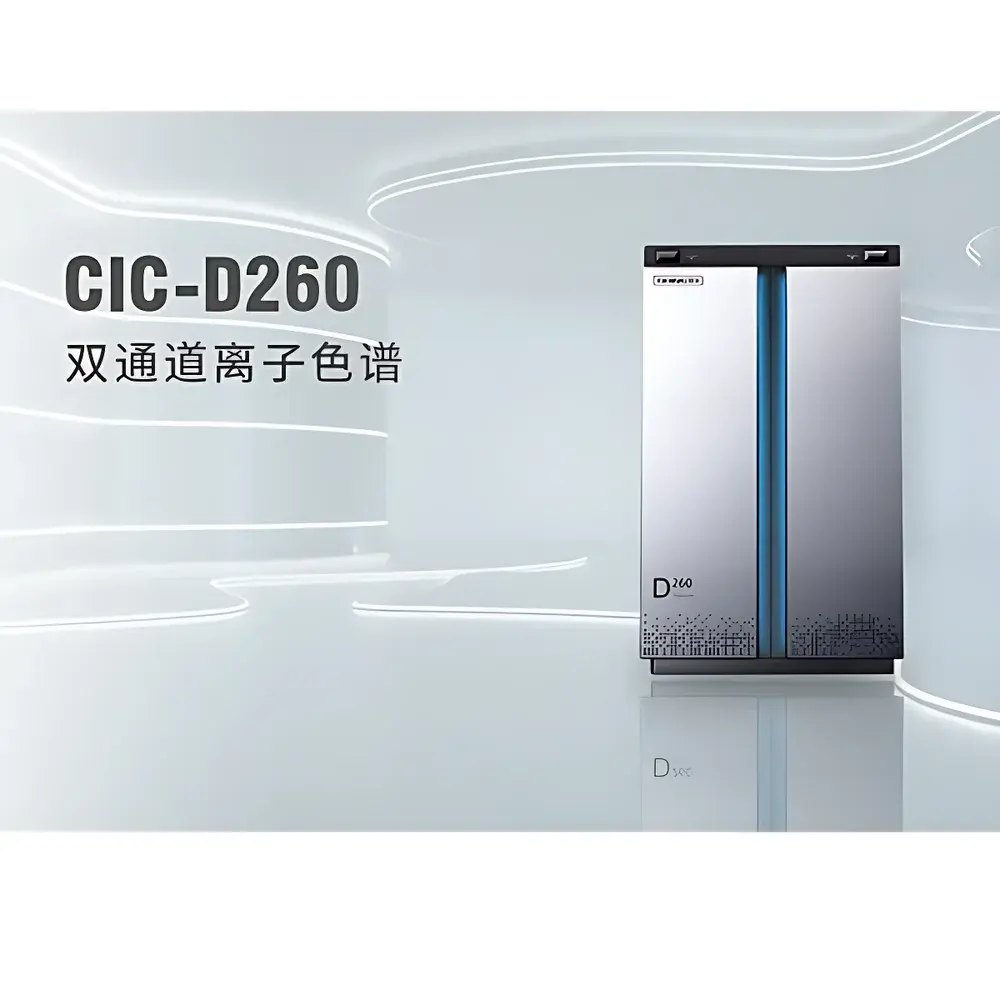
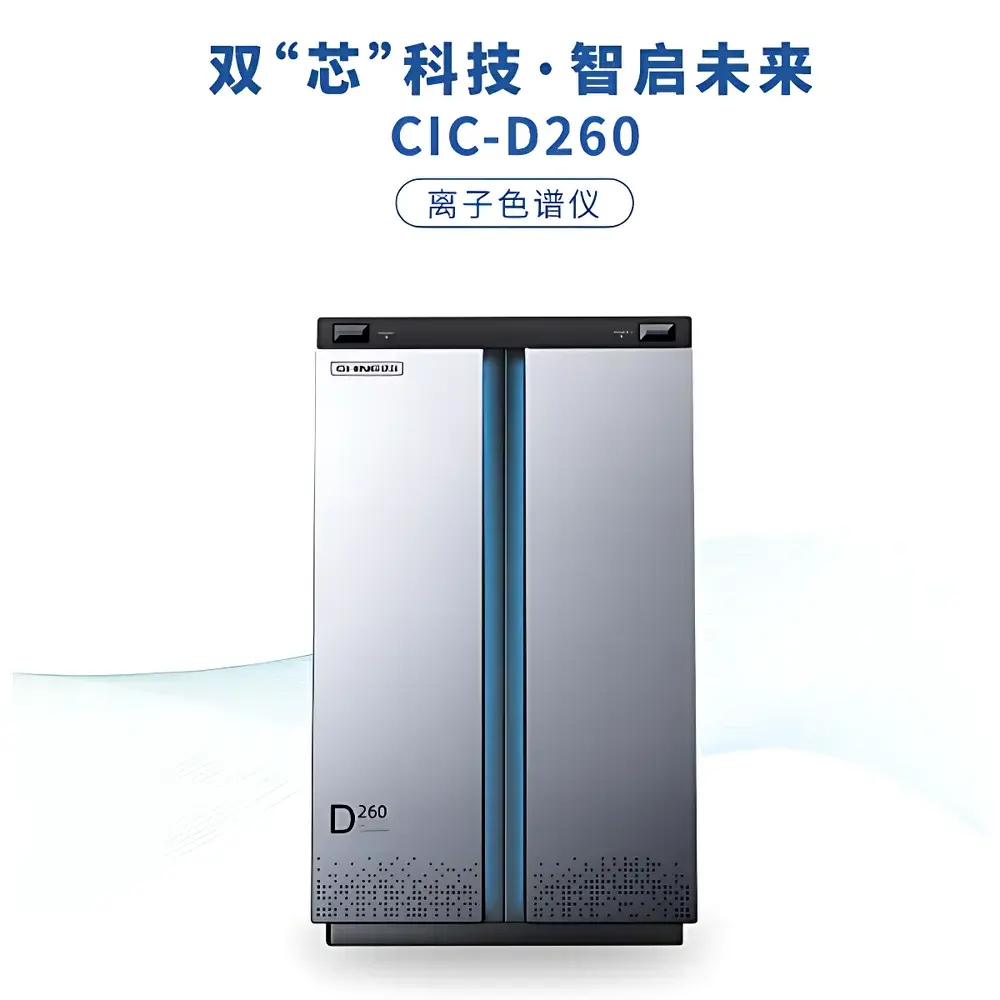
Shine CIC-D260 Dual-Channel Ion Chromatograph
| Brand | Shine |
|---|---|
| Origin | Shandong, China |
| Manufacturer Type | Original Equipment Manufacturer (OEM) |
| Instrument Type | Laboratory Benchtop Ion Chromatograph |
| Application Scope | General-Purpose Anion and Cation Analysis |
| Maximum System Pressure | 42 MPa |
| Flow Rate Range | 0.1–10.0 mL/min |
| Eluent Flow Rate Range | 0.1–5.0 mL/min |
| Operating Temperature | Ambient |
| Eluent Concentration Range | 0.1 mM |
| Detection Compatibility | Conductivity (CD), Electrochemical (ECD), UV-Vis, DAD, ICP-OES, AFS, MS |
Overview
The Shine CIC-D260 is a third-generation, dual-channel benchtop ion chromatograph engineered for high-throughput, simultaneous anion and cation analysis in routine laboratory environments. Built upon a fully domesticated architecture—featuring 100% independently developed core components—the system eliminates supply-chain dependencies while maintaining metrological integrity aligned with international chromatographic practice. Its operational principle relies on high-pressure liquid chromatography (HPLC) separation of ionic species on low-capacity, high-efficiency ion-exchange columns, followed by suppressed or non-suppressed conductivity detection. The dual-channel configuration enables concurrent elution and detection of anions and cations from a single injection, significantly reducing total analysis time and improving data correlation across complementary ionic species. Designed for ambient-temperature operation, the CIC-D260 integrates seamlessly into ISO/IEC 17025-accredited laboratories and supports method validation per ASTM D4327, ISO 14911, and EPA Method 300.0.
Key Features
- Dual-Channel Parallel Separation Architecture: Independent pump, injector, column oven, and detector paths for anion and cation channels—enabling true simultaneous quantification without compromise to resolution or retention time stability.
- PEEK-Based Tandem Dual-Piston High-Pressure Pump: Capable of sustained operation up to 42 MPa with flow precision ±0.1% RSD and pressure pulsation <1%, ensuring long-term gradient reproducibility and compatibility with sub-2-µm particle-packed columns.
- Click-Actuated High-Pressure Injection Valve: A fully integrated, motor-driven 10-port/2-position valve with >100,000 cycle lifetime; eliminates syringe-based manual injection variability and supports automated unattended operation.
- Advanced Bipolar Pulse Conductivity Detector: Wide linear dynamic range (ppb to ppm) without hardware range switching; temperature-compensated cell design with <0.1 nS baseline noise and real-time digital filtering.
- ANN-Based Intelligent Diagnostics (ANN Warning System): Embedded neural network algorithms continuously monitor pressure transients, solvent delivery anomalies, leak signatures, and temperature deviations—triggering contextual alerts via GUI and optional email/SNMP notifications.
- Consumable Lifecycle Tracking: RFID-tagged or firmware-registered column and suppressor modules log usage cycles, regeneration count, and cumulative runtime; generates maintenance recommendations based on empirical degradation models.
Sample Compatibility & Compliance
The CIC-D260 accommodates aqueous samples containing inorganic anions (F⁻, Cl⁻, NO₂⁻, Br⁻, NO₃⁻, PO₄³⁻, SO₄²⁻), organic acids (acetate, formate, oxalate), and cations (Li⁺, Na⁺, NH₄⁺, K⁺, Mg²⁺, Ca²⁺) across environmental, food safety, pharmaceutical, and industrial process control applications. It complies with GLP documentation requirements through audit-trail-enabled software (see Software & Data Management). Column chemistries support both hydroxide- and methanesulfonic acid–based eluents at concentrations as low as 0.1 mM, enabling ultra-low background conductivity and high sensitivity for trace-level analysis. All fluidic pathways are constructed from PEEK, PTFE, and chemically resistant stainless steel (316L), meeting USP material compatibility standards for pharmaceutical water testing.
Software & Data Management
Shine ChromoSoft v3.2 provides full instrument control, sequence management, peak integration, and report generation in compliance with FDA 21 CFR Part 11 (electronic signatures, audit trail, user role hierarchy). Raw data files adhere to ANDI/NetCDF format for cross-platform interoperability. The software supports method transfer from legacy systems and includes built-in tools for system suitability testing (SST), calibration curve linearity assessment (r² ≥ 0.999), and uncertainty propagation modeling per EURACHEM/CITAC guidelines. Optional LIMS integration via ASTM E1578-compliant API enables bidirectional sample tracking and result dissemination.
Applications
- Environmental monitoring: Nitrate/nitrite in drinking water per WHO guidelines and EPA Method 300.1
- Pharmaceutical excipient purity: Chloride and sulfate testing in APIs per USP
- Fertilizer and soil extract analysis: Quantification of NH₄⁺, NO₃⁻, and PO₄³⁻ under ISO 11265
- Battery electrolyte quality control: Li⁺, PF₆⁻, and HF impurity profiling in lithium-ion manufacturing
- Food and beverage safety: Bromate in bottled water, iodide in dairy, and preservative anions (benzoate, sorbate) per AOAC 999.10
- Hyphenated workflows: Online coupling with ICP-OES for elemental speciation or with ECD for redox-active species (e.g., Cr(VI), As(III)/As(V))
FAQ
Does the CIC-D260 support gradient elution?
Yes—the dual-pump architecture allows independent gradient programming for each channel, including multi-step hydroxide or acid gradients with programmable flow and composition ramp rates.
Is the system compatible with suppressed and non-suppressed detection modes?
It supports both configurations: chemical suppression using continuous or pulsed eluent generators, and non-suppressed conductivity detection with high-sensitivity cells optimized for low-conductivity matrices.
Can the CIC-D260 be validated for GMP-regulated environments?
Yes—full IQ/OQ/PQ documentation packages are available, including factory-verified performance qualification reports traceable to NIST SRMs and certified reference materials.
What is the minimum detectable concentration for chloride using the standard configuration?
Under optimized conditions (25 µL injection, carbonate/bicarbonate eluent, suppressed CD), the practical LOD is 0.05 µg/L (50 ng/L) with <5% RSD at 0.5 µg/L.
Are consumables such as columns and suppressors interchangeable with other Shine models?
CIC-D260 uses proprietary column fittings and electrical interfaces; however, all analytical and guard columns share identical dimensions and packing chemistries with the CIC-D150 and CIC-D300 series, enabling method portability.





