
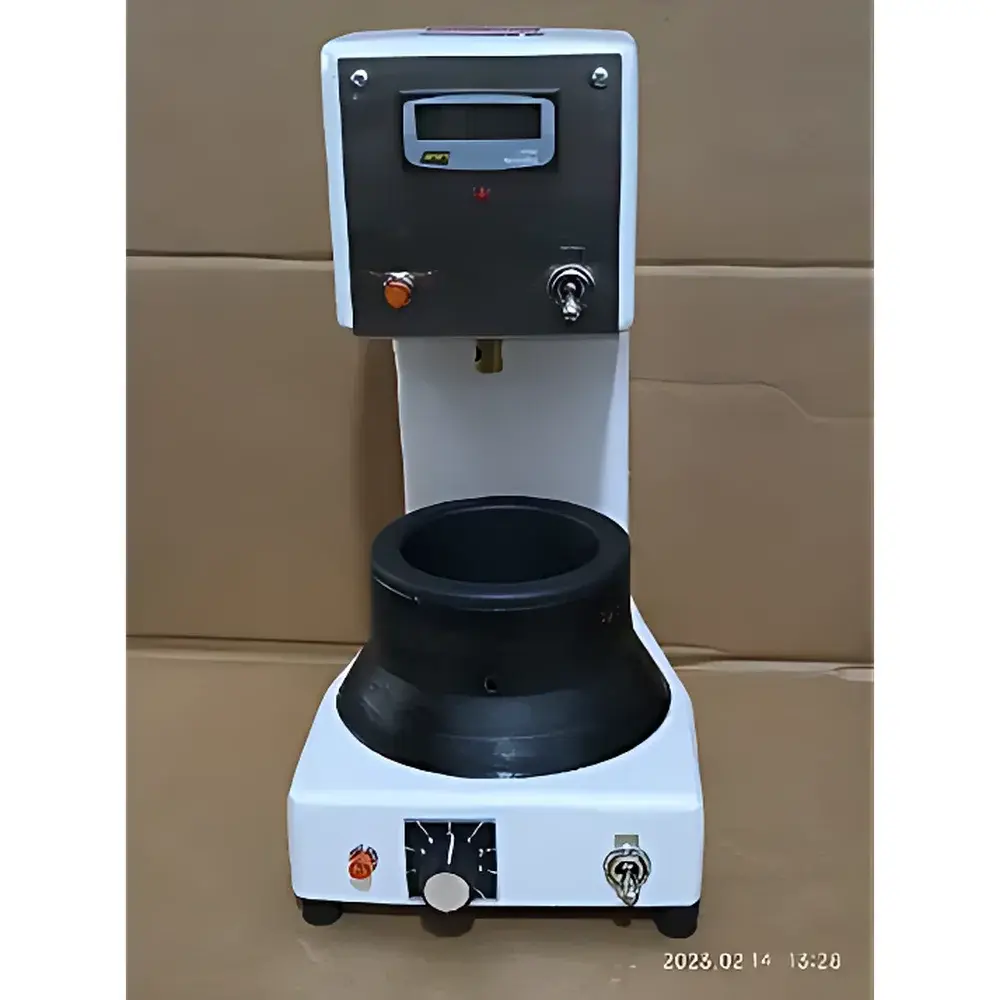
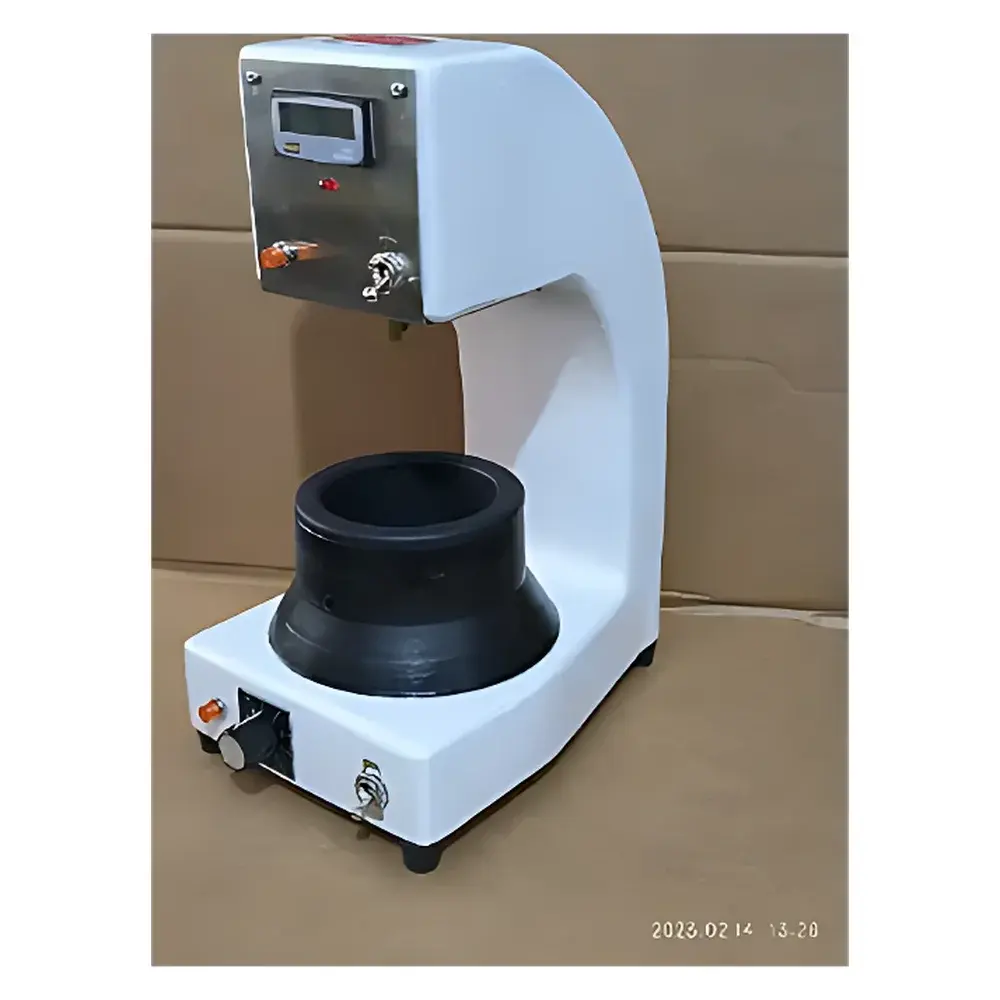
SHYODU GT-STHP-220 Stabltemp Hot Pot Gel Timer
| Brand | SHYODU |
|---|---|
| Origin | USA |
| Model | GT-STHP-220 |
| Maximum Recording Time | 9999 min 59 sec |
| Minimum Recording Time | 1 sec |
| Rotational Speed | 20 rpm |
| Temperature Control Range | 66–177 °C (±5% accuracy) |
| Input Voltage | 220 V / 50 Hz |
| Dimensions | 19.05 cm (L) × 22.86 cm (H) × 13.97 cm (W) |
| Power Interface | 3-prong grounded plug |
| Accessories Compatibility | GT-AC aluminum cup liners, GT-WS wire stirrers |
Overview
The SHYODU GT-STHP-220 Stabltemp Hot Pot Gel Timer is a precision-engineered thermal gelation timing instrument designed for reproducible measurement of gel time in thermosetting resins and reactive polymer systems under controlled elevated temperature conditions. It operates on the hot cup (or “hot pot”) principle: a calibrated stainless-steel stirrer rotates at a fixed speed (20 rpm) inside a thermostatically stabilized aluminum cup containing the sample. As the material undergoes sol-to-gel transition—marked by a sharp increase in viscosity and loss of fluidity—the rotational torque required to maintain motion exceeds the motor’s threshold, causing immediate cessation of rotation. The elapsed time from heating initiation to rotational arrest is recorded with second-level resolution, providing an objective, operator-independent endpoint indicative of network formation onset. This method aligns with industry-standard practices for quality control in composites manufacturing, aerospace prepreg processing, and electrical encapsulation validation.
Key Features
- Stabltemp™ thermal stabilization system ensures consistent cup-wall temperature uniformity across the 66–177 °C operating range, minimizing thermal gradients that compromise gel time repeatability.
- Dual-voltage compatibility (220 V / 50 Hz) enables seamless integration into global laboratory power infrastructures without external transformers.
- High-resolution timing circuitry captures gel point with 1-second minimum resolution and up to 9999 minutes 59 seconds maximum duration—sufficient for slow-curing epoxies and phenolic systems.
- Robust mechanical architecture features a brushless DC motor coupled to a precision-machined stirrer shaft, engineered for long-term stability and minimal drift over repeated thermal cycles.
- Ergonomic benchtop footprint (19.05 × 22.86 × 13.97 cm) supports integration into QC labs, R&D fume hoods, or production line stations without spatial constraints.
- Interchangeable consumables—including GT-AC anodized aluminum cup liners and GT-WS stainless-steel wire stirrers—ensure cross-sample contamination avoidance and compliance with ASTM D2471 and ISO 25358 test preparation guidelines.
Sample Compatibility & Compliance
The GT-STHP-220 is validated for use with low-to-medium viscosity thermoset formulations prior to gelation, including unsaturated polyesters, vinyl esters, epoxy novolacs, silicone elastomer precursors, and pressure-sensitive adhesive dispersions. Its design conforms to the physical test methodology referenced in ASTM D2471 (“Standard Test Method for Gel Time of Thermosetting Resins”), and supports traceable execution of internal SOPs aligned with ISO/IEC 17025 requirements. While the instrument itself does not generate electronic records compliant with FDA 21 CFR Part 11, its analog-timing output may be documented manually within GLP/GMP audit trails when paired with controlled logbooks and witnessed calibration entries.
Software & Data Management
The GT-STHP-220 is a stand-alone, microprocessor-controlled hardware timer with no embedded software stack, cloud connectivity, or data export capability. All timing events are displayed on a high-contrast LED screen and require manual transcription into laboratory notebooks or LIMS databases. This architecture eliminates firmware vulnerabilities, reduces validation burden in regulated environments, and ensures deterministic behavior across decades of service life. Calibration verification is performed annually using NIST-traceable stopwatches and certified thermal probes per manufacturer-recommended protocol (SHYODU Tech Note TN-GT-003).
Applications
- Quality assurance of resin batches in fiberglass-reinforced plastic (FRP) manufacturing lines.
- Development and shelf-life assessment of fast-cure structural adhesives used in automotive bonding applications.
- Process window definition for autoclave cure cycles in carbon fiber prepreg layup operations.
- Formulation screening of silicone gels for medical device encapsulation where gel time correlates with biocompatibility stability.
- Teaching laboratories demonstrating polymer kinetics and crosslinking theory in materials science curricula.
FAQ
What distinguishes the “Stabltemp” variant (GT-STHP-220) from the standard GT-SHP-220?
The Stabltemp version incorporates enhanced thermal mass distribution and optimized heater-sensor feedback geometry, reducing temperature fluctuation to ±5% across the full range—critical for low-slope gel transitions in high-performance resins.
Can the unit be used with non-aluminum cups?
No. Only SHYODU-certified GT-AC aluminum cup liners are supported; alternative materials introduce uncontrolled heat transfer coefficients and invalidate timing reproducibility.
Is periodic calibration required?
Yes. Annual verification of both timing accuracy (using Class A stopwatch) and thermal uniformity (via multi-point cup-wall probe mapping) is recommended per SHYODU Maintenance Schedule MS-GT-2023.
Does the instrument meet CE or UKCA marking requirements?
As a Class I electrical appliance with grounded 3-prong input and no RF emissions, it complies with IEC 61010-1 safety standards; however, formal CE/UKCA certification is not held as it is distributed through authorized industrial instrumentation partners outside the EU/UK regulatory submission pathway.
How is stirrer wear managed during high-volume testing?
GT-WS wire stirrers are supplied in packs of 100 and intended for single-use per test to prevent residue carryover and torque variability from surface oxidation or polymer buildup.



