
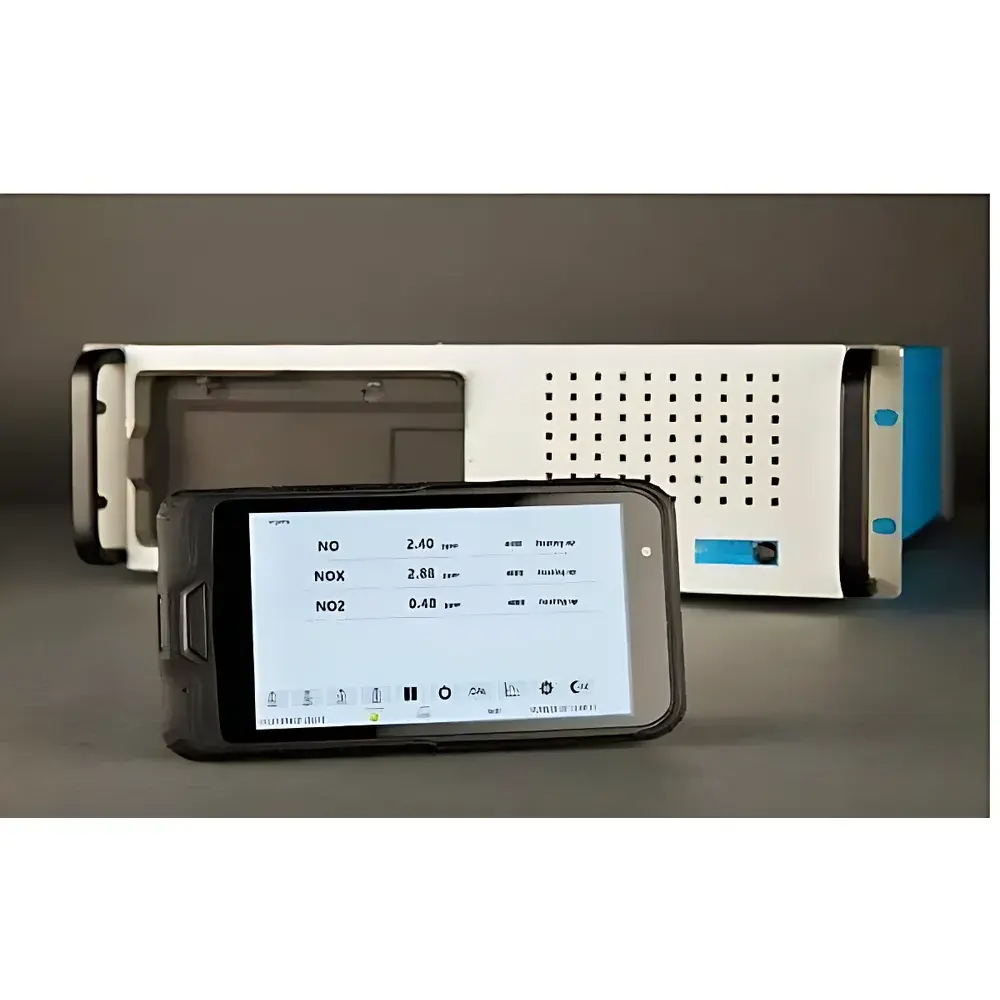
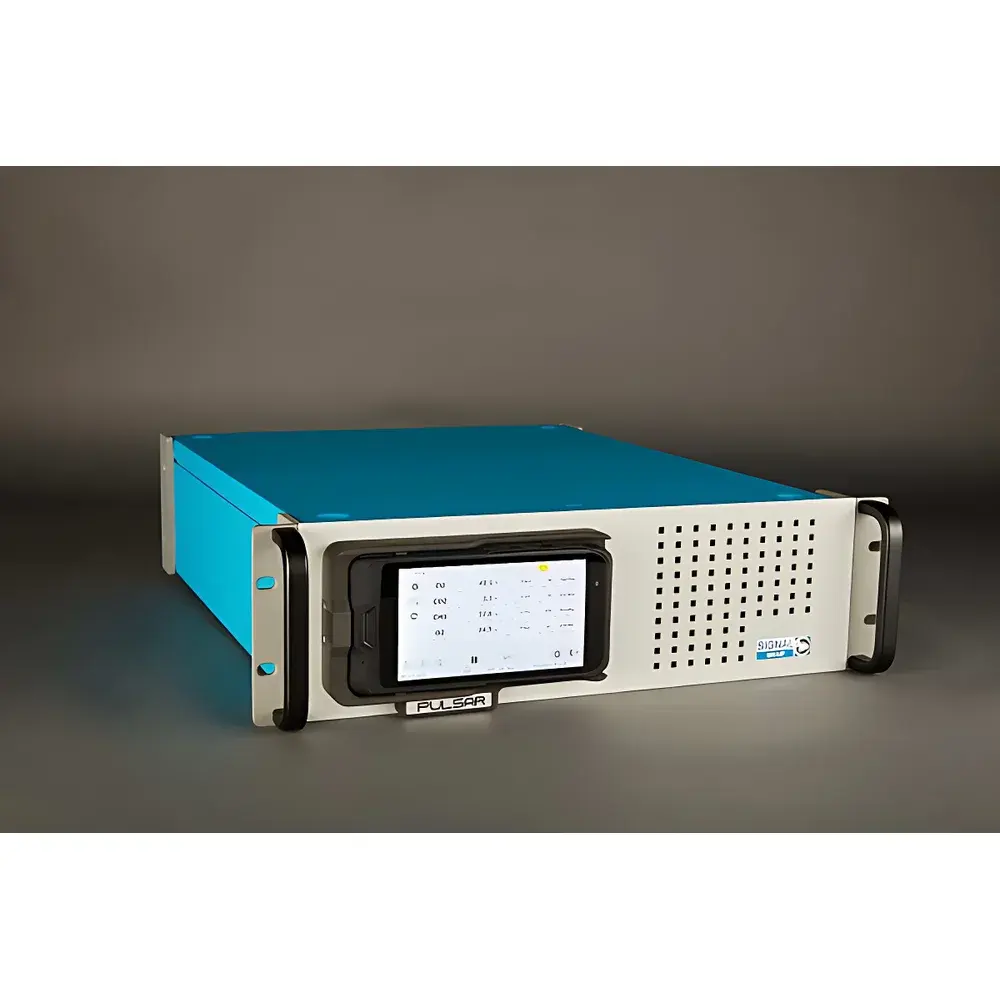
SIGNAL PULSAR Portable Total Hydrocarbons, Methane & Non-Methane Hydrocarbons Analyzer
| Brand | SIGNAL |
|---|---|
| Origin | UK |
| Model | PULSAR |
| Detection Principle | Dual-Heated FID with High-Temperature Catalytic Oxidation Module |
| Instrument Type | Online Gas Analyzer |
| Detection Range | CO, CO₂, CH₄, N₂O, SO₂ |
| Resolution | 0.001 % vol |
| Accuracy | ±0.01 % of reading |
| Response Time | 2 s |
Overview
The SIGNAL PULSAR Portable Total Hydrocarbons (THC), Methane (CH₄), and Non-Methane Hydrocarbons (NMHC) Analyzer is an engineered solution for real-time, field-deployable gas analysis in regulatory compliance, industrial emissions monitoring, and combustion research applications. Unlike conventional single-FID analyzers requiring catalytic conversion switching between THC and CH₄ measurement modes, the PULSAR integrates two independently heated flame ionization detectors (FIDs) coupled with a high-temperature catalytic oxidation module. This dual-FID architecture enables true simultaneous quantification of total hydrocarbons, methane, and non-methane hydrocarbons—eliminating mode-switching delays and calibration hysteresis. The system operates on a robust gas filter correlation (GFC) optical platform, where infrared absorption is measured selectively at wavelengths specific to target analytes, minimizing spectral interference from background gases such as H₂O, CO₂, or NOₓ. The optical bench resides within a thermally stabilized chamber, eliminating the need for external chillers and ensuring stable performance under variable ambient humidity and temperature conditions.
Key Features
- Dual-heated FID detection system enabling concurrent THC, CH₄, and NMHC measurement without mechanical valving or catalytic switching
- High-temperature catalytic oxidation module (≥600 °C) for complete oxidation of non-methane VOCs prior to secondary FID detection
- Gas Filter Correlation (GFC) optical design with dual-path sampling cells—configurable for low-range (ppm-level) and high-range (%-level) measurements within a single instrument
- 4th-order polynomial software linearization per channel and range, supporting independent calibration and traceable linearity correction across full dynamic range
- Integrated particulate-resistant optical path and heated sample transport lines (up to 180 °C), preventing condensation and particle deposition in harsh industrial exhaust streams
- Modular multi-gas configuration: supports up to five independent measurement channels (e.g., CO, CO₂, CH₄, N₂O, SO₂, HCl, NO) with user-selectable ranges and auto-calibration relays
- Standard S4i remote interface software (open architecture, Windows-based) for real-time data acquisition, diagnostic logging, and firmware updates
- OEM-ready version available without front-panel touchscreen—fully operable via remote PC using SIGNAL’s native control suite
Sample Compatibility & Compliance
The PULSAR is designed for direct analysis of hot, wet, and particulate-laden process and stack gases without pre-conditioning. Its heated sample path (up to 180 °C) and catalytic oxidation stage ensure compatibility with complex emission matrices encountered in thermal oxidizers, incinerators, biogas upgrading systems, and internal combustion engine exhaust. The analyzer meets functional requirements aligned with EPA Method 25A, EN 15267-3 (QAL1 certified instrumentation), and ISO 14064-3 for greenhouse gas quantification. Data integrity is maintained through audit-trail-enabled calibration logs, time-stamped event records, and configurable alarm thresholds compliant with IEC 61508 SIL2 principles. Optional oxygen sensing (paramagnetic or zirconia) allows stoichiometric correction of NMHC results per ASTM D6348–22.
Software & Data Management
The embedded S4i software provides secure, encrypted remote access via Ethernet or RS232, supporting Modbus TCP, OPC UA, and custom API integration. All calibration events—including span gas selection, zero verification, and range switching—are automatically logged with operator ID, timestamp, and deviation metrics. Touchscreen-equipped units feature intuitive GUI navigation for field calibration, fault diagnostics, and real-time trend visualization. Data export supports CSV, XML, and PDF formats; onboard USB/SD card storage enables autonomous logging at user-defined intervals (1 Hz to 1 min). For regulated environments, optional 21 CFR Part 11 compliance packages include electronic signatures, role-based access control, and immutable audit trails.
Applications
- Regulatory stack testing and continuous emissions monitoring (CEMS) for NMHC and methane under EU IED and US EPA NSPS Subpart OOOOa
- Combustion efficiency optimization and air-fuel ratio tuning in gas turbines, reciprocating engines, and industrial boilers
- Leak detection and repair (LDAR) programs for natural gas transmission and distribution infrastructure
- Process gas purity verification in semiconductor fabrication, pharmaceutical manufacturing, and hydrogen production facilities
- Research-grade quantification of VOC speciation and oxidation intermediates in catalytic converter and thermal oxidizer development
- Mobile emissions testing for light- and heavy-duty vehicles, including RDE (Real Driving Emissions) campaigns
- Biogas quality monitoring (CH₄/CO₂ ratio, siloxane surrogate detection via NMHC correlation)
FAQ
Does the PULSAR require external cooling or drying for humid sample streams?
No—the optical bench and sample path are fully heated (up to 180 °C), eliminating condensation and enabling direct analysis of saturated gas streams without permeation dryers or chiller units.
Can the instrument be calibrated automatically?
Yes—integrated relay-controlled calibration gas selection enables scheduled or triggered automatic zero/span calibration for each configured range, with full traceability in the S4i log.
Is the PULSAR suitable for Class I Div 1 hazardous areas?
The standard unit is rated for non-hazardous environments; ATEX/IECEx-certified enclosures are available as factory options upon request.
What is the minimum detectable level for methane in ambient air?
At the 0–10 ppm range setting, the typical limit of detection (LOD) is 0.05 ppm (S/N = 3), verified per ISO 11843-1 using certified reference materials.
Can third-party software interface with the PULSAR?
Yes—S4i exposes RESTful APIs and supports OPC UA server functionality, enabling seamless integration into SCADA, DCS, and LIMS platforms.
Related Products







