
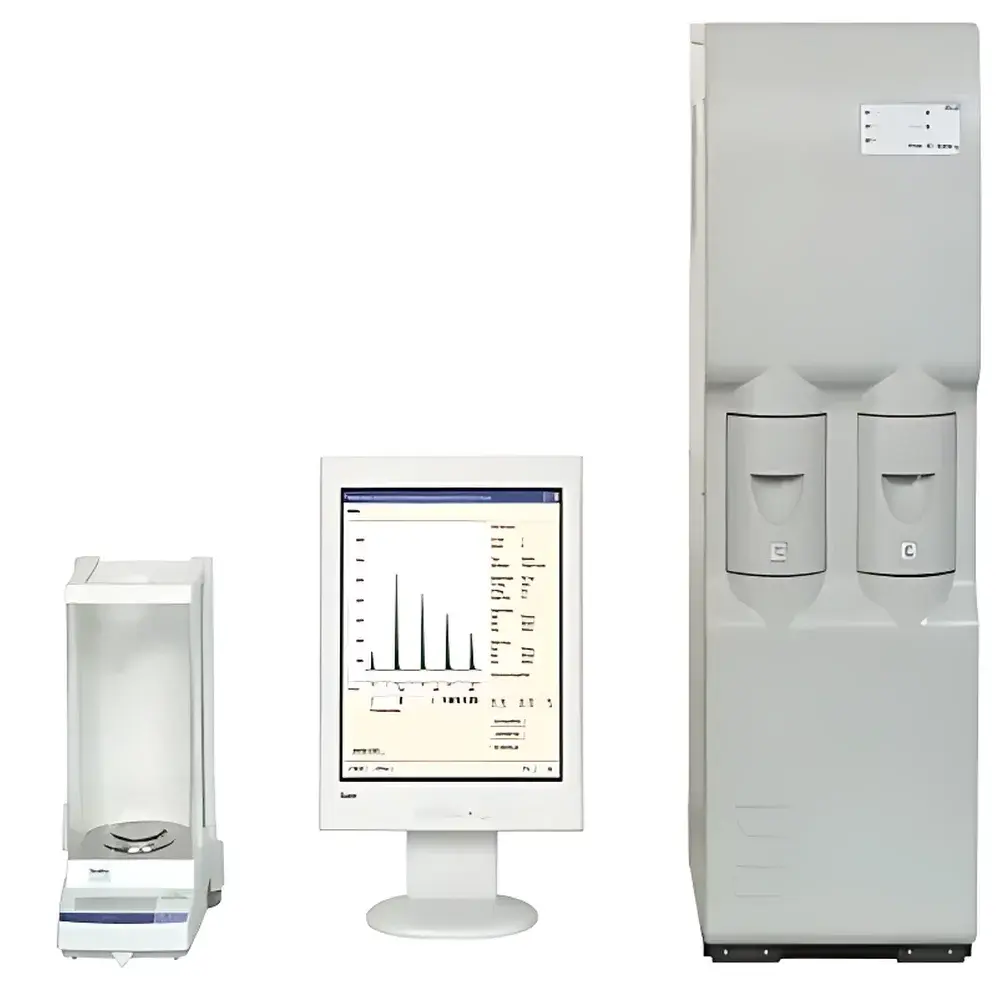
Skalar Primac SLC Solid/Liquid Total Organic Carbon Analyzer
| Origin | Netherlands |
|---|---|
| Manufacturer Type | Authorized Distributor |
| Origin Category | Imported |
| Model | Primac SLC |
| Instrument Type | Laboratory TOC Analyzer |
| Detection Principle | Non-Dispersive Infrared (NDIR) Absorption |
| Oxidation Method | High-Temperature Catalytic Combustion |
| Measurement Range | 0–50,000 ppm C |
| Accuracy | ±3% of reading |
| Resolution | 0.001 ppb C |
| Detection Limit | 0.05 ppm C |
| Repeatability | ≤3% RSD |
Overview
The Skalar Primac SLC Solid/Liquid Total Organic Carbon Analyzer is a laboratory-grade, dual-furnace combustion system engineered for precise quantification of total carbon (TC), inorganic carbon (IC), and total organic carbon (TOC) in heterogeneous environmental and industrial matrices. Unlike conventional aqueous-only TOC analyzers, the Primac SLC employs a robust high-temperature catalytic oxidation pathway (900–1100 °C) coupled with acid liberation at 150 °C to independently resolve TC and IC in solid and liquid samples—including soils, sludges, sediments, plant tissues, fertilizers, acidic/alkaline effluents, and industrial waste streams. Carbon quantification relies on NDIR detection of CO2 generated from both oxidation and acidification steps, with dual-wavelength infrared optics ensuring high selectivity and minimizing spectral interference from water vapor or other combustion byproducts. The instrument operates under strict adherence to ASTM D7573, ISO 8245, USP , and EPA Method 415.3 frameworks for TOC determination in complex matrices.
Key Features
- Dual independent reaction furnaces: one for high-temperature catalytic combustion (TC), another for low-temperature acidification (IC), enabling sequential or parallel analysis without cross-contamination
- Reusable quartz crucibles rated for up to 3 g sample mass—validated for ash-free combustion of organic-rich solids including compost, activated sludge, and humic soils
- Vertical auto-sampling architecture with integrated balance interface: real-time mass acquisition via RS-232 or USB; weight data automatically embedded into analytical records for traceable sample normalization
- Compact vertical footprint (≤0.8 m2) optimized for regulated lab environments—meets IEC 61010-1 safety requirements for Class II operation and thermal containment
- Self-diagnostic subsystems monitor furnace temperature stability, acid injection integrity, Peltier-based IR detector cooling performance, carrier gas flow consistency (He or synthetic air), and NDIR optical path alignment
- Automated method switching between TC-only, IC-only, and full TC/IC/TOC workflows—no manual hardware reconfiguration required
Sample Compatibility & Compliance
The Primac SLC accommodates a broad spectrum of challenging sample types without pretreatment dilution or filtration: undiluted strong acids (e.g., HNO3, HCl up to 6 M), caustic solutions (NaOH up to 4 M), suspended solids (TSS >10,000 mg/L), and heterogeneous solids with particle sizes ≤2 mm. All sample introduction pathways are chemically inert (quartz, Hastelloy, and PTFE-lined components), preventing adsorption or catalytic memory effects. Data integrity complies with FDA 21 CFR Part 11 requirements through electronic signature support, audit-trail-enabled software, and role-based user access control. Routine calibration verification follows ISO/IEC 17025 guidelines using certified reference materials (CRMs) traceable to NIST SRM 2974 (soil) and NIST SRM 1643e (aqueous TOC).
Software & Data Management
Control and data processing are managed via Skalar’s Windows-based TOC-Link software, featuring a validated GxP-ready interface compliant with GLP and GMP documentation standards. The software supports linear and peak-area integration modes, multi-point calibration curve generation (up to 12 points), outlier rejection algorithms, automatic blank subtraction, and statistical reporting (mean, SD, RSD, confidence intervals). All raw detector signals, method parameters, calibration logs, and operator actions are time-stamped and archived in encrypted .tdb format. Export options include CSV, PDF analytical reports, and LIMS-compatible XML templates aligned with ASTM E1468 and HL7 standards.
Applications
- Environmental monitoring labs performing regulatory compliance testing per EPA 415.3 and EU Directive 2000/60/EC for wastewater, landfill leachate, and contaminated soil
- Pharmaceutical QC laboratories verifying TOC levels in purified water (PW), water for injection (WFI), and cleaning validation swab extracts per USP and EP 2.2.44
- Agricultural research facilities quantifying carbon sequestration potential in biochar-amended soils and organic fertilizer decomposition kinetics
- Industrial hygiene departments assessing organic load in process coolants, electroplating baths, and semiconductor rinse waters
- Academic and contract research organizations conducting method development for carbon speciation in extreme pH matrices and high-salinity brines
FAQ
How does the Primac SLC differentiate TC and IC in solid samples?
The instrument uses two physically separated reaction zones: IC is liberated by phosphoric acid addition at 150 °C in a dedicated low-temperature furnace, while TC is oxidized at 900–1100 °C in a platinum-catalyzed high-temperature furnace. Independent NDIR detection ensures no carryover or spectral overlap.
Is manual crucible cleaning required between runs?
No—reusable quartz crucibles undergo in situ high-temperature ashing (≥1000 °C) during each TC cycle, eliminating residual carbon carryover; routine maintenance consists only of periodic catalyst bed inspection per 500 analyses.
Can the system be integrated into an existing LIMS?
Yes—TOC-Link supports ASTM E1468-compliant data export via ODBC, direct SQL database write, or secure SFTP transfer with configurable field mapping and metadata tagging.
What carrier gas is recommended for optimal NDIR stability?
Ultra-high-purity helium (99.999%) is preferred for baseline stability and moisture suppression; synthetic air (with <0.1 ppm hydrocarbons) is acceptable for routine aqueous analysis when cost optimization is prioritized.
Does the software support audit trail review for regulatory inspections?
Yes—all user logins, method edits, calibration events, result approvals, and data deletions are immutably recorded with timestamps, operator IDs, and IP addresses in accordance with 21 CFR Part 11 Subpart B requirements.







