
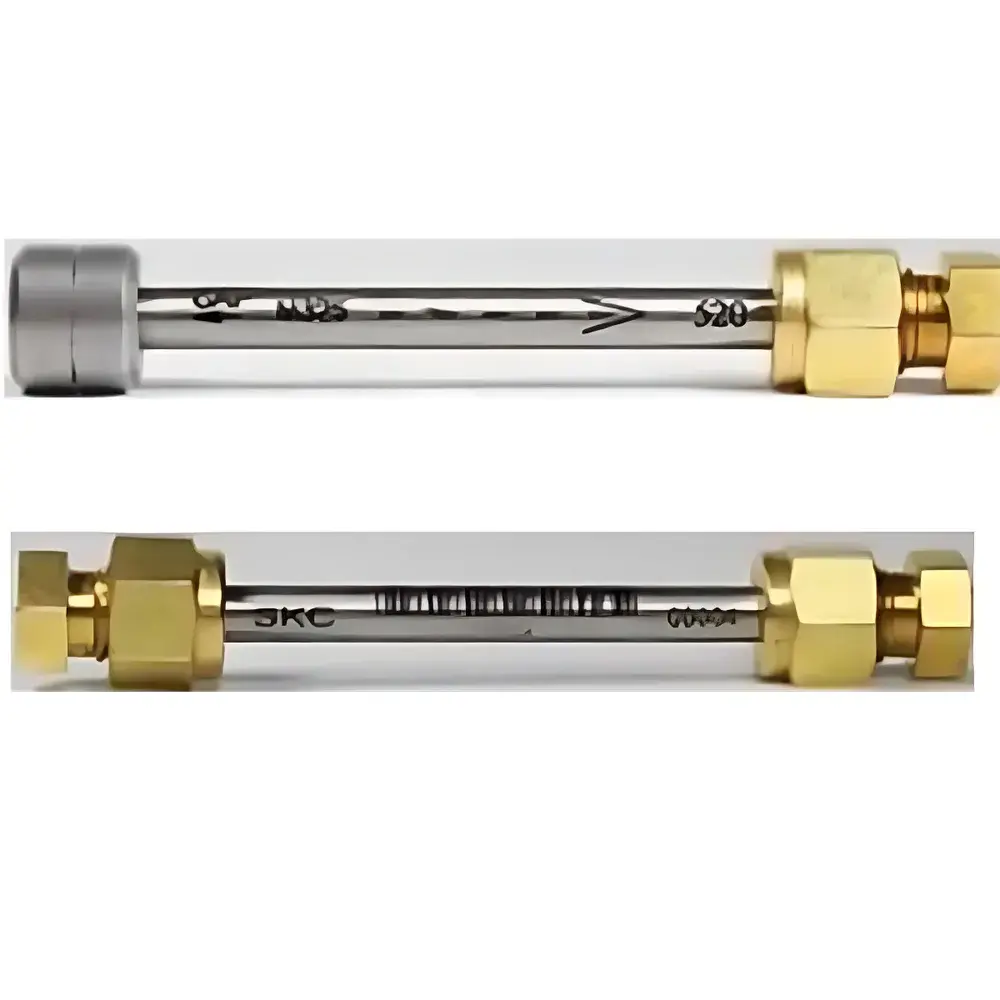
SKC Diffusive Thermal Desorption Tube for Benzene Analysis
| Brand | SKC |
|---|---|
| Origin | USA |
| Model | TD Tube |
| Adsorbent | Carbopack X |
| Tube Material | SilcoNert 2000-coated stainless steel |
| Dimensions | 3.5 in × 0.25 in OD |
| Diffusion Rate (Benzene) | 0.67 mL/min |
| Compliance | EPA Method 325A, HSE MDHS 104 |
| Analytical Method | GC-FID or GC-MS per EPA Method 325B |
| Storage Requirement | Use within 30 days after conditioning |
| Fitting | Brass Swagelok nut with PTFE ferrule |
| Includes | Diffusion cap (P/N 10526-100), shelter (P/N 526-100), barcode & orientation arrow marking |
| Sample Duration | 14-day integrated sampling |
Overview
The SKC Diffusive Thermal Desorption (TD) Tube for Benzene is a passive, time-integrated air sampling device engineered for regulatory-compliant ambient and perimeter monitoring of benzene vapor in industrial environments. Designed in accordance with U.S. Environmental Protection Agency (EPA) Method 325A and the UK Health and Safety Executive (HSE) MDHS 104, this tube enables accurate quantification of average benzene concentrations over extended deployment periods—typically 14 days—within the validated range of 0.5 to 500 µg/m³. Unlike active sampling systems requiring pumps and power, this diffusive TD tube operates on molecular diffusion principles: benzene molecules migrate through a calibrated diffusion barrier (the diffusion cap) at a precisely characterized rate (0.67 mL/min for benzene), ensuring reproducible uptake kinetics independent of wind speed or turbulence. The tube’s internal adsorbent—Carbopack X—is selected for its high capacity, low breakthrough volume, and thermal desorption compatibility with gas chromatography–flame ionization detection (GC-FID) or gas chromatography–mass spectrometry (GC-MS), as specified in EPA Method 325B.
Key Features
- Passive, pump-free operation ideal for long-term fence-line and ambient air monitoring programs
- SilcoNert 2000 deactivation coating on 3.5 in × 0.25 in OD stainless steel tubing ensures ultra-low analyte adsorption and carryover, critical for trace-level benzene recovery
- Standardized Swagelok brass compression fittings with PTFE ferrules provide leak-tight, reusable sealing and compatibility with standard thermal desorption autosamplers
- Integrated diffusion cap (P/N 10526-100) functions as a precision-dimensioned diffusion barrier and particulate/insect filter—equivalent in function to the front plate of a passive badge
- Each tube is laser-marked with unique identification number and scannable barcode; directional arrow indicates correct cap orientation during field deployment
- Designed for use with SKC’s outdoor shelter (P/N 526-100), which accommodates up to four tubes simultaneously and positions them with diffusion caps oriented downward to minimize rain ingress and dust accumulation
- Conditioned tubes must be deployed within 30 days to maintain adsorbent integrity and method-defined performance specifications
Sample Compatibility & Compliance
This TD tube is validated exclusively for benzene under EPA Method 325A and HSE MDHS 104. Its diffusion rate and adsorbent loading are optimized for benzene’s vapor pressure and molecular diffusivity in air. It is not intended for multi-analyte applications or compounds with significantly different physicochemical properties (e.g., highly polar or reactive VOCs). All components—including tube body, diffusion cap, and Swagelok hardware—meet material compatibility requirements for trace-level organic analysis. The system supports GLP-compliant data generation when used with documented chain-of-custody procedures, calibrated thermal desorption instrumentation, and laboratory accreditation to ISO/IEC 17025. While not inherently 21 CFR Part 11 compliant, raw chromatographic data generated from these tubes may be incorporated into audit-trail-enabled LIMS platforms meeting FDA regulatory expectations.
Software & Data Management
No embedded firmware or proprietary software is associated with the physical TD tube. However, integration into compliant analytical workflows requires alignment with instrument control software (e.g., Thermo Fisher Chromeleon, Agilent OpenLab CDS) capable of managing calibration curves, integration parameters, and audit trails per EPA 325B validation criteria. Laboratories routinely assign sample IDs matching the tube’s barcode to ensure traceability across field deployment logs, lab accession records, and final reporting. SKC provides printable label templates and shelter mounting documentation to support standardized metadata capture—including deployment date, location coordinates, duration, and environmental conditions—for regulatory submission packages.
Applications
- Fence-line monitoring at petroleum refineries, chemical manufacturing facilities, and bulk storage terminals
- Long-term ambient air quality assessment in communities adjacent to industrial zones
- Verification of engineering controls and leak detection and repair (LDAR) program effectiveness
- Baseline characterization prior to facility expansion or process modification
- Regulatory compliance reporting under Clean Air Act Section 112(r) or local air permitting requirements
- Comparative exposure assessment between multiple monitoring locations over seasonal cycles
FAQ
What is the maximum recommended deployment duration?
The tube is validated for 14-day sampling per EPA Method 325A; longer durations risk breakthrough or humidity-induced degradation of Carbopack X performance.
Can this tube be reused after thermal desorption?
Yes—provided the tube is properly cleaned, reconditioned, and verified for blank integrity and recovery efficiency prior to subsequent use.
Is humidity correction required during analysis?
While not explicitly mandated by EPA 325A, laboratories operating in high-humidity environments (>80% RH) should evaluate moisture interference via co-spike studies and apply correction factors if necessary.
What GC inlet configuration is recommended for optimal desorption transfer?
A cold trap–based thermal desorption system with splitless injection and programmable temperature vaporization (PTV) inlet is strongly recommended to maximize sensitivity and minimize band broadening.
Does SKC supply certified reference standards for method validation?
SKC does not manufacture or distribute calibration standards; users must obtain NIST-traceable benzene standards and prepare matrix-matched calibration gases or permeation tubes per EPA 325B protocol.
Related Products







