
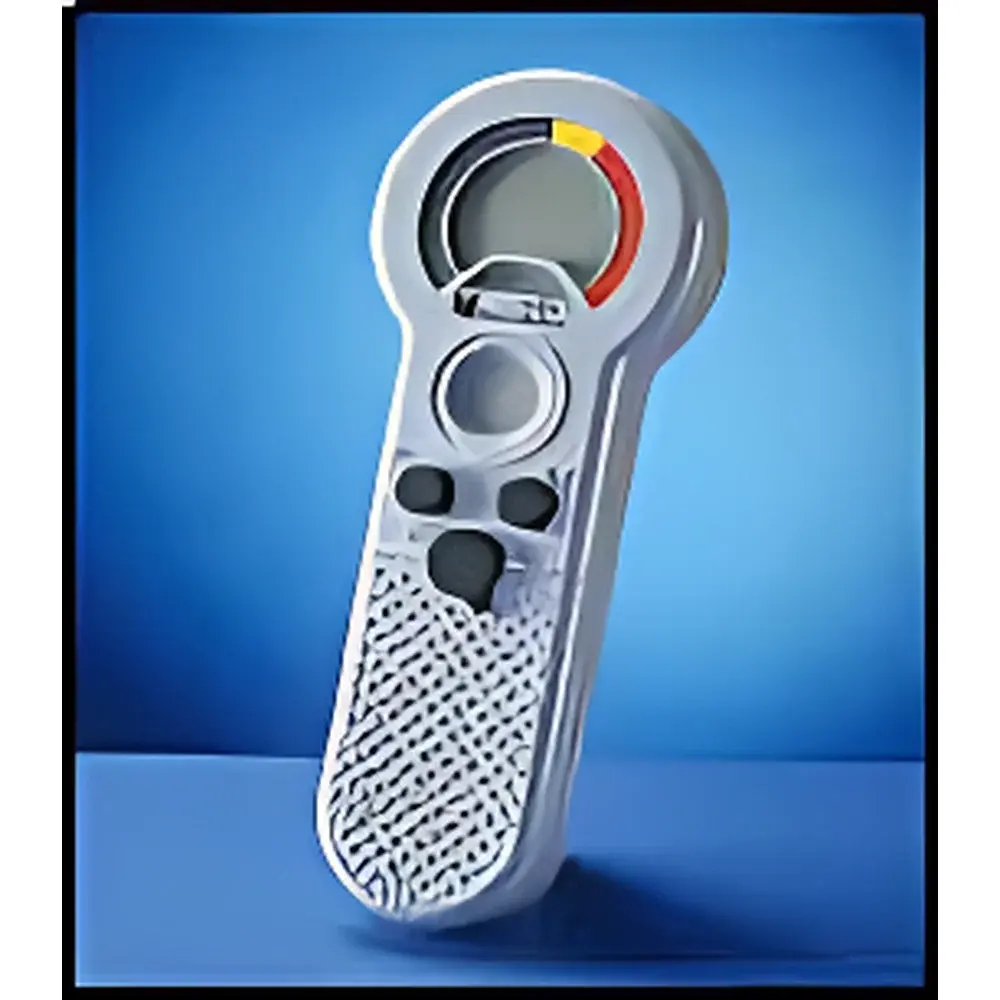
SKF TMEH 1 Oil Condition Checker
| Origin | Imported |
|---|---|
| Manufacturer Type | Authorized Distributor |
| Model | TMEH 1 |
| Pricing | Upon Request |
| CE Compliance | Fully Compliant with Applicable EU Directives |
| Oil Types Supported | Mineral Oils, Synthetic Lubricants |
| Repeatability | < 5% RSD |
| Display | Dual-mode — Color-coded (Green/Red) + Digital Scale (0–100) |
| Power Supply | 9 V Alkaline Battery (IEC 6LR61) |
| Battery Life | Up to 150 hours operational time or ~3,000 measurements |
| Dimensions (L × W × H) | 250 × 95 × 32 mm |
Overview
The SKF TMEH 1 Oil Condition Checker is a portable, field-deployable dielectric fluid analyzer engineered for rapid, non-invasive assessment of in-service lubricant degradation. It operates on the principle of capacitance-based dielectric constant measurement: as oil degrades—through oxidation, thermal stress, water ingress, fuel dilution, or particulate contamination—the dielectric permittivity of the fluid changes measurably relative to its baseline condition. By comparing the dielectric response of a used sample against a reference (typically new oil of the same grade), the TMEH 1 generates a normalized condition index from 0 to 100. This index reflects cumulative chemical and physical changes in the oil matrix without requiring laboratory infrastructure, solvent handling, or consumables. Designed specifically for maintenance engineers and reliability technicians in industrial, marine, and power generation environments, the device delivers repeatable, operator-independent results in under 10 seconds per test.
Key Features
- Dielectric sensing architecture calibrated for broad compatibility across mineral- and synthetic-based lubricants—including turbine oils, hydraulic fluids, gear oils, and compressor lubricants.
- Integrated dual-output display: intuitive color-coded status indicator (green = acceptable condition; red = critical degradation) paired with a high-resolution digital readout (0–100 scale) enabling quantitative trend tracking over time.
- Rugged, ergonomic handheld housing (IP54-rated enclosure) with tactile keypad and low-power LCD—optimized for use in noisy, vibration-prone, or temperature-variable environments such as engine rooms, wind turbine nacelles, or manufacturing floors.
- No sample preparation required: direct dip-probe measurement eliminates need for filtration, centrifugation, or solvent extraction—reducing analysis time and cross-contamination risk.
- Factory-calibrated sensor with built-in drift compensation ensures long-term stability and repeatability better than 5% relative standard deviation (RSD) across repeated measurements under controlled conditions.
Sample Compatibility & Compliance
The TMEH 1 is validated for use with ISO VG 10–680 mineral and PAO/PAG-based synthetic lubricants commonly specified in rotating equipment OEM manuals. It is not intended for use with highly conductive fluids (e.g., water-glycol hydraulics), brake fluids (DOT 3/4), or bio-based esters lacking stable dielectric baselines. The instrument complies fully with the essential requirements of the EU Electromagnetic Compatibility (EMC) Directive 2014/30/EU and Low Voltage Directive 2014/35/EU, bearing the CE marking. Its design aligns with ISO 23771:2022 (Condition monitoring — Guidelines for oil analysis) and supports implementation of ISO 55001 asset management systems through objective, auditable lubricant health data.
Software & Data Management
While the TMEH 1 operates as a standalone field instrument, its digital output (0–100 index) is compatible with common CMMS and EAM platforms via manual entry or optional Bluetooth-enabled data loggers (sold separately). For traceability in regulated environments—including those subject to ISO 9001, ISO 14001, or ISO 45001—the device supports GLP-aligned recordkeeping: users may annotate each reading with timestamp, asset ID, operator ID, and environmental notes. Though not FDA 21 CFR Part 11 compliant out-of-the-box, its deterministic output and battery-backed memory (retains last 50 readings) facilitate audit-ready documentation when integrated into validated workflows.
Applications
- Preventive maintenance screening of critical assets: gearboxes, compressors, hydraulic power units, and electric motor bearings.
- Trending oil life in off-grid or remote installations where lab turnaround exceeds oil change intervals.
- Verification of oil reclamation effectiveness post-filtration or dehydration.
- Root cause analysis during failure investigations—correlating dielectric shifts with spectrographic wear metal data or FTIR oxidation peaks.
- Training tool for lubrication technicians to visualize real-time impact of contamination events (e.g., water ingress after seal failure).
FAQ
Does the TMEH 1 require calibration with reference oils before each use?
No. The instrument performs automatic zero stabilization upon startup and maintains factory calibration for typical field service intervals. Annual verification using certified reference oil (available from SKF) is recommended for metrological traceability.
Can it distinguish between water contamination and oxidation?
Not independently—the dielectric index reflects total polar degradation. However, combined interpretation with other field tests (e.g., crackle test for water, RULER for antioxidant depletion) enables differential diagnosis.
Is the probe submersible in hot oil?
Yes—the stainless-steel sensor tip is rated for continuous immersion in oils up to 100 °C. Avoid prolonged exposure above 120 °C to preserve electrode integrity.
How does battery life vary with ambient temperature?
At −10 °C, battery life decreases by approximately 25%; at +50 °C, self-discharge accelerates—store unused units between 0–25 °C for optimal longevity.
Does the device meet ATEX or IECEx requirements for hazardous areas?
No—the TMEH 1 is not intrinsically safe certified. It must be operated outside classified zones per IEC 60079-0.



