
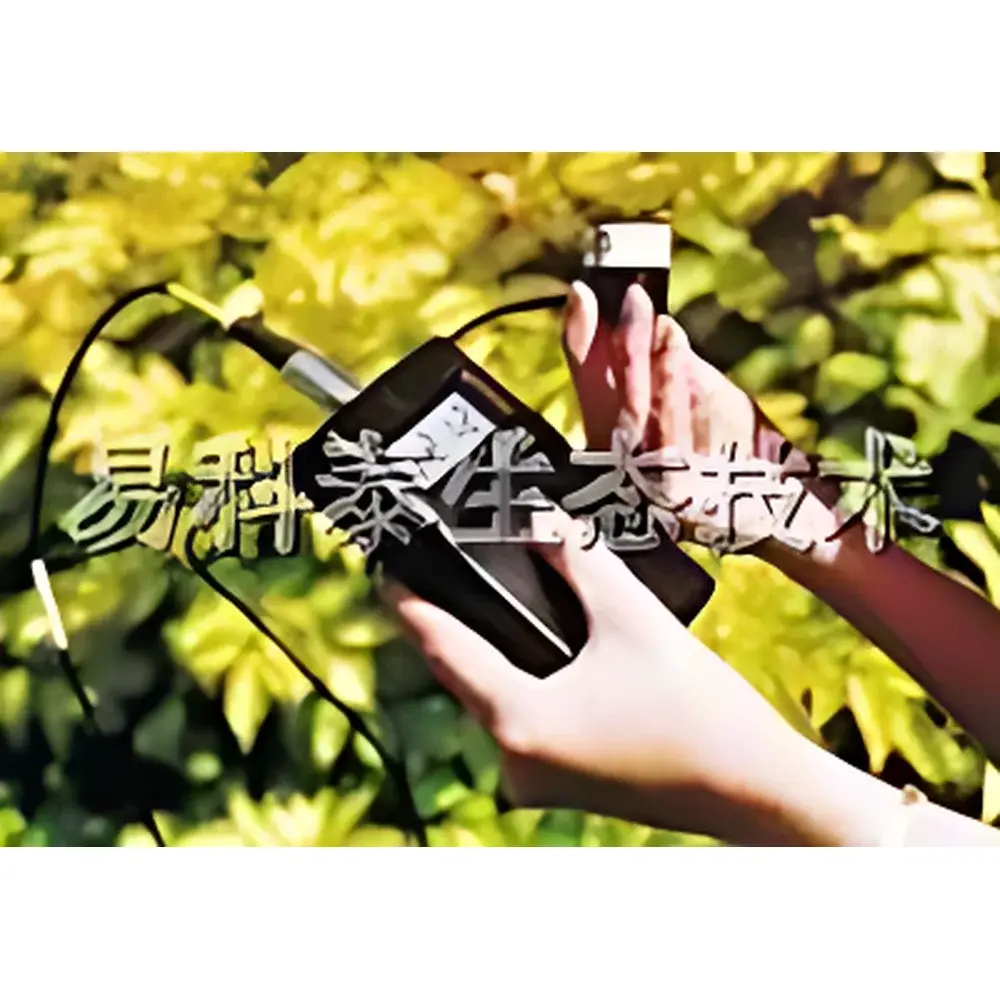
Skye Instruments Handheld Spectral Radiometer for PAR, Lux, and UV/FR Measurements
| Origin | United Kingdom |
|---|---|
| Supplier Type | Authorized Distributor |
| Origin Category | Imported |
| Model | Handheld Spectral Radiometer |
| Pricing | Available Upon Request |
Overview
The Skye Instruments Handheld Spectral Radiometer is a field-deployable, precision optical measurement system engineered for quantitative characterization of photosynthetically active radiation (PAR; 400–700 nm), photosynthetic photon flux density (PPFD), irradiance (W/m²), illuminance (lux), red/far-red ratio (R:FR), and spectral band-specific radiant quantities. Based on calibrated silicon photodiode sensors with optical interference filters and cosine-corrected diffusers, the instrument operates on the principle of spectrally resolved radiometric detection—enabling traceable, NIST-traceable measurements aligned with ISO/CIE standard observer functions. Designed for rigorous environmental and agricultural research, it delivers high reproducibility under variable ambient conditions—including outdoor solar exposure, greenhouse environments, controlled growth chambers, and aquatic settings up to 4 m depth. Its modular architecture separates sensor head and display unit, ensuring mechanical robustness and metrological integrity across long-term deployments.
Key Features
- Modular sensor–meter interface: Each sensor (e.g., SKR 110, SKP 215, SKL 310) is factory-calibrated and electrically matched to its designated meter (SKR 100, SKP 200, SKL 300, etc.); cross-sensor interchange is not supported without recalibration.
- Dual-sensor operation: When two compatible sensors are connected simultaneously, the meter displays three real-time values: Sensor 1 reading, Sensor 2 reading, and their ratio (e.g., R:FR)—critical for phytochrome-mediated developmental studies.
- Auto-power management: Meter powers down automatically upon sensor disconnection, conserving battery life during transport or storage.
- Environmental resilience: All sensors (except fiber-optic variants) meet IP64 or higher ingress protection; rated for continuous operation from −35 °C to +70 °C and 0–100% RH; submersible up to 4 m depth for aquatic PAR profiling.
- Portable ergonomics: Compact meter dimensions (35 × 80 × 145 mm), total weight 280 g (including 9 V PP3 battery); alkaline battery life exceeds 250 hours under typical use.
- Three-range manual scaling: User-selectable measurement ranges ensure optimal resolution across low-light (e.g., canopy understory) and high-irradiance (e.g., full sun) conditions.
Sample Compatibility & Compliance
The radiometer supports standardized optical sensor heads optimized for distinct spectral domains: SKP 215 (PAR, 400–700 nm), SKR 110 (Red: 600–670 nm / Far-Red: 720–780 nm), SKL 310 (photopic lux, CIE 1931), SKE 510 (broadband PAR energy), and SKS 1110 (global solar irradiance, 280–3000 nm). All sensors comply with CIE S 023/E:2013 for PAR instrumentation and adhere to ISO 17166:2019 (CIE S 008/E) for photometric response accuracy. Calibration certificates are traceable to UK National Physical Laboratory (NPL) standards. The system meets GLP documentation requirements for field-based environmental monitoring and is routinely deployed in studies requiring compliance with ASTM E2912 (Standard Practice for Solar Radiation Measurements) and ISO 9060:2018 (Classification of solar irradiance sensors).
Software & Data Management
While the handheld unit operates independently without PC connectivity, raw analog outputs (0–2.5 V) are available via optional analog interface cables for integration into custom DAQ systems. Skye Instruments provides calibration reports with individual sensor responsivity curves, temperature coefficients, and angular response data—essential for post-processing corrections in non-ideal incidence geometries. For regulatory applications (e.g., USDA-funded agronomy trials or EU Horizon projects), the device supports audit-ready documentation including calibration date, uncertainty budget (±0.1% LSD), and sensor serial traceability—fully compatible with 21 CFR Part 11-compliant electronic lab notebook (ELN) workflows when paired with validated third-party acquisition software.
Applications
- Agronomy & Controlled Environment Agriculture: Quantifying light interception efficiency, optimizing LED spectral recipes, mapping vertical light gradients in multi-tier hydroponic systems, and validating supplemental lighting uniformity per ASABE S633.
- Plant Phenotyping & Photobiology: Measuring R:FR ratios to assess shade avoidance responses; correlating PPFD distribution with stomatal conductance and chlorophyll fluorescence parameters (e.g., Fv/Fm).
- Ecological & Hydrological Monitoring: Subsurface PAR profiling in freshwater ecosystems; UV-A/B irradiance assessment for algal bloom forecasting; snow/ice albedo estimation using SKS 1110.
- Cultural Heritage Science: Non-invasive evaluation of light-induced degradation risk for pigments and organic binders in museum galleries (per ISO 18937).
- Building Physics & Human Factors: Daylight factor analysis, circadian lighting validation (melanopic EDI), and façade solar heat gain modeling.
FAQ
Can I use an SKR 110 sensor with an SKL 300 meter?
No. Sensors and meters are individually calibrated as matched pairs; interchanging units invalidates factory calibration and introduces unquantified measurement error.
What is the uncertainty specification for PPFD measurements?
The system achieves ±0.1% least significant digit (LSD) repeatability under stable thermal conditions; overall expanded uncertainty (k=2) is ±3% for PAR measurements, as stated in NPL-traceable calibration certificates.
Is underwater PAR measurement possible with all sensor models?
Only non-fiber-optic sensors (e.g., SKP 215, SKR 110, SKS 1110) are IP64-rated and submersible to 4 m; fiber-optic probes require separate waterproof housings and are not rated for immersion.
Does the meter support data logging?
No internal memory or timestamped logging is provided; however, analog output enables external logging via programmable logic controllers (PLCs) or USB DAQ devices with appropriate signal conditioning.
How often is recalibration recommended?
Annual recalibration is advised for research-grade applications; biennial recalibration suffices for routine agricultural monitoring where absolute accuracy is secondary to relative trend analysis.






