
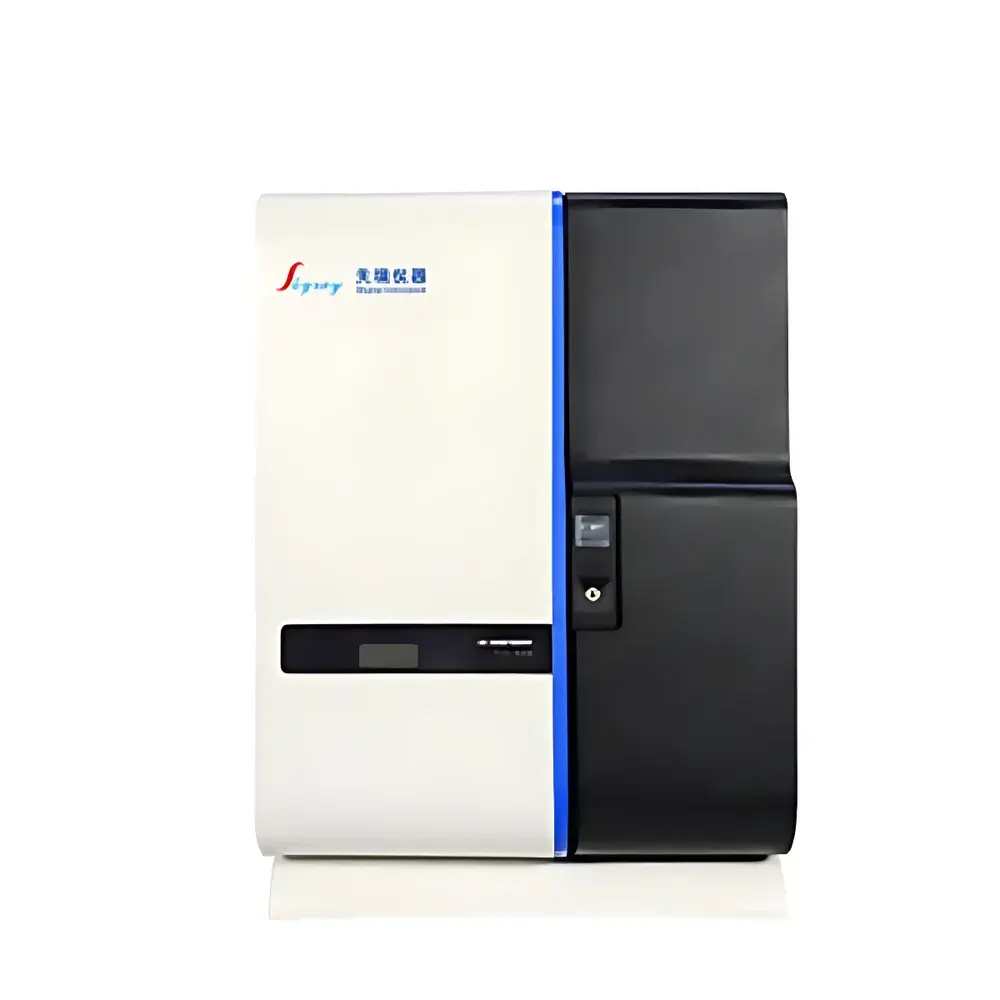
SkyRay Instrument TIC-660 Ion Chromatograph
| Brand | SkyRay Instrument |
|---|---|
| Origin | Jiangsu, China |
| Manufacturer Type | Original Equipment Manufacturer (OEM) |
| Product Category | Domestic |
| Model | TIC-660 |
| Instrument Type | Laboratory Benchtop |
| Application Scope | Universal Multi-Analyte Ion Analysis |
Overview
The SkyRay Instrument TIC-660 Ion Chromatograph is a high-performance, modular benchtop system engineered for precise, reproducible, and compliant quantitative analysis of inorganic anions, cations, cyanide, and low-molecular-weight organic acids in complex matrices. Built upon the proven architecture of the TIC-600 platform, the TIC-660 integrates dual-polarity conductivity detection, electromagnetic valve-based sample introduction, and full compatibility with electrolytically generated eluents—enabling gradient elution per modern regulatory requirements including GB 5750.10–2023 for disinfection by-products in drinking water. Its design adheres to fundamental ion chromatography principles: separation via ion-exchange chromatography under controlled eluent composition and flow, followed by sensitive, selective detection—either via suppressed conductivity (for common ions) or amperometric/UV detection (for electroactive or chromophoric species). The system supports hyphenated workflows, including coupling with atomic fluorescence spectrometry (AFS), inductively coupled plasma optical emission spectrometry (ICP-OES), and ICP-mass spectrometry (ICP-MS) for elemental speciation analysis.
Key Features
- Dual-Polarity Auto-Ranging Conductivity Detector: Simplified four-electrode cell architecture delivers enhanced thermal stability and lower baseline drift versus conventional five-electrode designs; integrated temperature compensation ensures ±0.02 °C column oven–detector thermal synchronization, yielding sub-ppb detection limits and <1.5% RSD for replicate injections.
- Integrated Circulating Column Oven: Monolithic Peltier-based heating/cooling module with variable-frequency 3D airflow control maintains column temperature uniformity within ±0.1 °C across 15–60 °C operating range; programmable ramp/soak profiles support method transfer and retention time stability.
- Electromagnetic Sample Valve: Ceramic-sealed rotary valve actuated by micro-stepping motor ensures >100,000 injection cycles without seal degradation; position repeatability ≤0.1° eliminates manual valve misalignment errors and guarantees inter-run retention consistency.
- Self-Regenerating Electrolytic Micro-Membrane Suppressor: Continuous chemical suppression without external acid reservoirs; compatible with both carbonate/bicarbonate and hydroxide eluent systems; maximum operating pressure 35 MPa; dead volume <15 µL; background conductivity <0.15 µS/cm.
- Dual-Stage PEEK Dual-Piston Pump: Pulse-dampened serial pump head with electronic flow damping reduces baseline noise to <0.5 nS; factory-calibrated multi-point flow verification across 0.1–2.0 mL/min; built-in overpressure cutoff (≥30 MPa) and auto-shutdown logic.
Sample Compatibility & Compliance
The TIC-660 accommodates aqueous extracts from environmental waters (surface, groundwater, wastewater), food digests (AOAC 984.27, ISO 14911), pharmaceutical excipients (USP ), semiconductor rinse solutions (SEMI F57), and geological leachates. It meets essential functional criteria for GLP and GMP environments: audit-trail-enabled software logging, user-access-level controls, electronic signature support (aligned with FDA 21 CFR Part 11 Annex 11 expectations), and traceable calibration records. System suitability testing per ISO 16239 and ASTM D4327 is fully supported through automated sequence validation protocols.
Software & Data Management
The SkyRay Intelligent Analysis Workstation provides unified control of all hardware modules—including detector, pump, autosampler (optional), eluent generator, and external detectors (UV-Vis, amperometric, fluorescence). It features native drivers for third-party mass spectrometers and fluorescence detectors via RS-232, USB, or Ethernet interfaces. Data acquisition supports 20-bit ADC resolution at up to 20 Hz sampling rate; peak integration follows ISO 17025-compliant algorithms (tangent skim, valley-to-valley, exponential curve fitting). Reports are exportable in PDF, CSV, and XML formats—with customizable templates compliant with CNAS, CMA, and EPA reporting structures.
Applications
Primary use cases include routine monitoring of nitrate/nitrite, sulfate, chloride, fluoride, phosphate, bromide, and perchlorate in environmental compliance labs; speciation of Cr(III)/Cr(VI), As(III)/As(V), and Se(IV)/Se(VI) via IC-ICP-MS coupling; quantification of organic acids (acetate, formate, oxalate) in fermentation broths; and trace anion profiling in ultrapure water used in microelectronics fabrication. End-user sectors span national CDC laboratories, provincial environmental monitoring centers, food safety inspection agencies, pharmaceutical QC departments, and university analytical chemistry core facilities.
FAQ
Does the TIC-660 support gradient elution with hydroxide eluents?
Yes—when equipped with the optional Eluent Generator Module (EGM-660), it delivers on-demand KOH or NaOH gradients with concentration precision ±0.5 mM across 1–100 mM range.
Is the system compatible with EPA Method 300.1 for anion analysis?
Yes—the TIC-660 meets all instrumental performance criteria specified in EPA Method 300.1, including resolution >2.0 for Cl⁻/NO₂⁻, MDL ≤0.5 µg/L for F⁻, and system precision <3% RSD.
Can the conductivity detector be used simultaneously with an amperometric detector?
Yes—dual-detector configuration is supported via parallel flow-cell routing and synchronized data acquisition in the workstation software.
What column chemistries are validated for use with this instrument?
Certified methods exist for Dionex IonPac AS23/AG23 (anions), CS19/CG19 (cations), and Hamilton RCX-30 (cyanide); custom column validation kits are available upon request.
Is remote monitoring and troubleshooting supported?
Yes—via secure TLS-encrypted VNC access and embedded diagnostic logging; firmware updates are delivered through signed package deployment with SHA-256 verification.





