
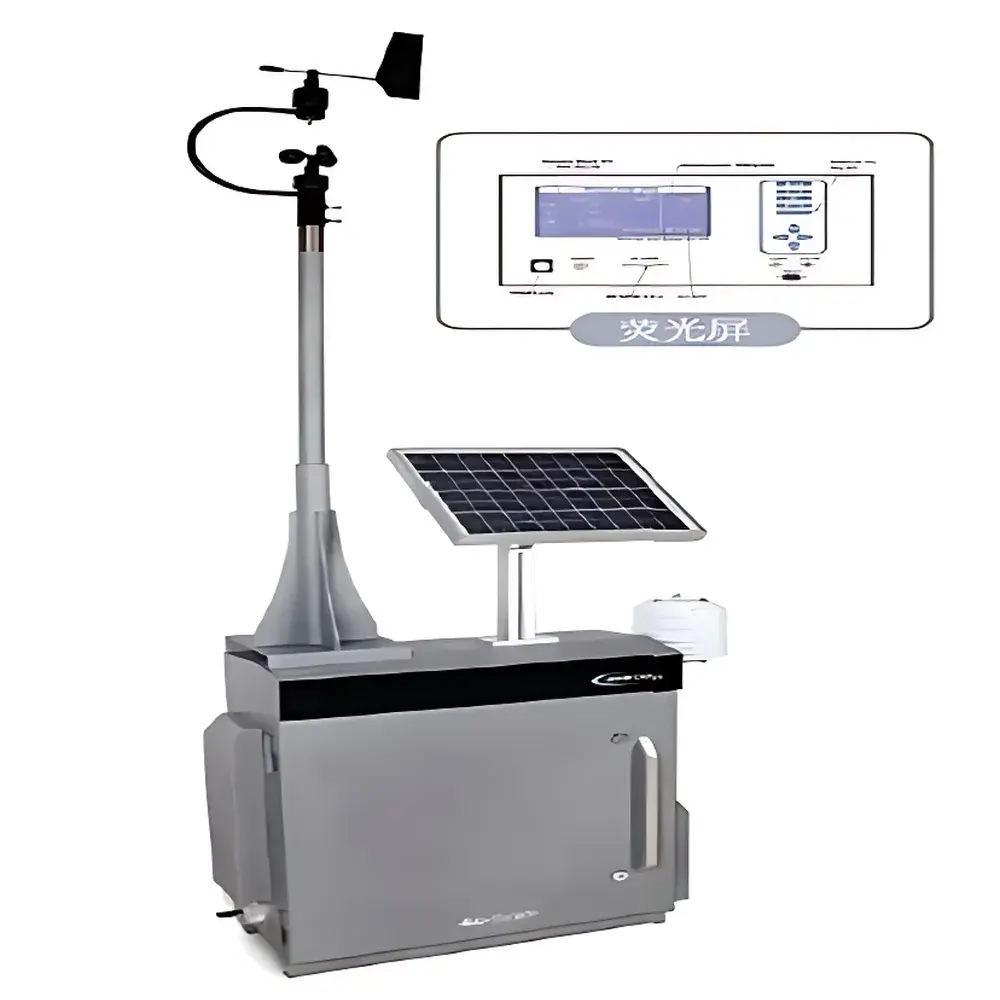
SLC-ON Series Online Odor Monitoring System
| Origin | South Korea |
|---|---|
| Manufacturer Type | Authorized Distributor |
| Origin Category | Imported |
| Model | SLC-ON |
| Instrument Type | Online Continuous Monitoring System |
| Power Supply | 220 VAC (20 W) or Optional Solar Power |
| Dimensions | 170 × 280 × 230 mm (H × W × D) |
| Weight | 30 kg |
| Enclosure | Anodized Aluminum Alloy Housing |
| Detection Targets | Gaseous Odorous Compounds |
| Sensor Capacity | Up to 9 Integrated Sensors (MOS, Electrochemical for S/N-compounds, PID) |
| Accuracy | ≤3% RSD |
| Sampling Cycle | 1–5 min (configurable) |
| Data Storage | 1 GB SD Card (internal) |
| Display | Touchscreen LCD, 114 × 64 mm |
| Environmental Parameters Measured | Temperature, Relative Humidity (optional) |
| Output | OU (Odor Unit), OI (Odor Intensity), Gas Identification & Quantification |
| Built-in Features | Temperature-Controlled Sensor Chamber, Vibrating Armature Pump (long-life), Auto-Restart After Power Failure |
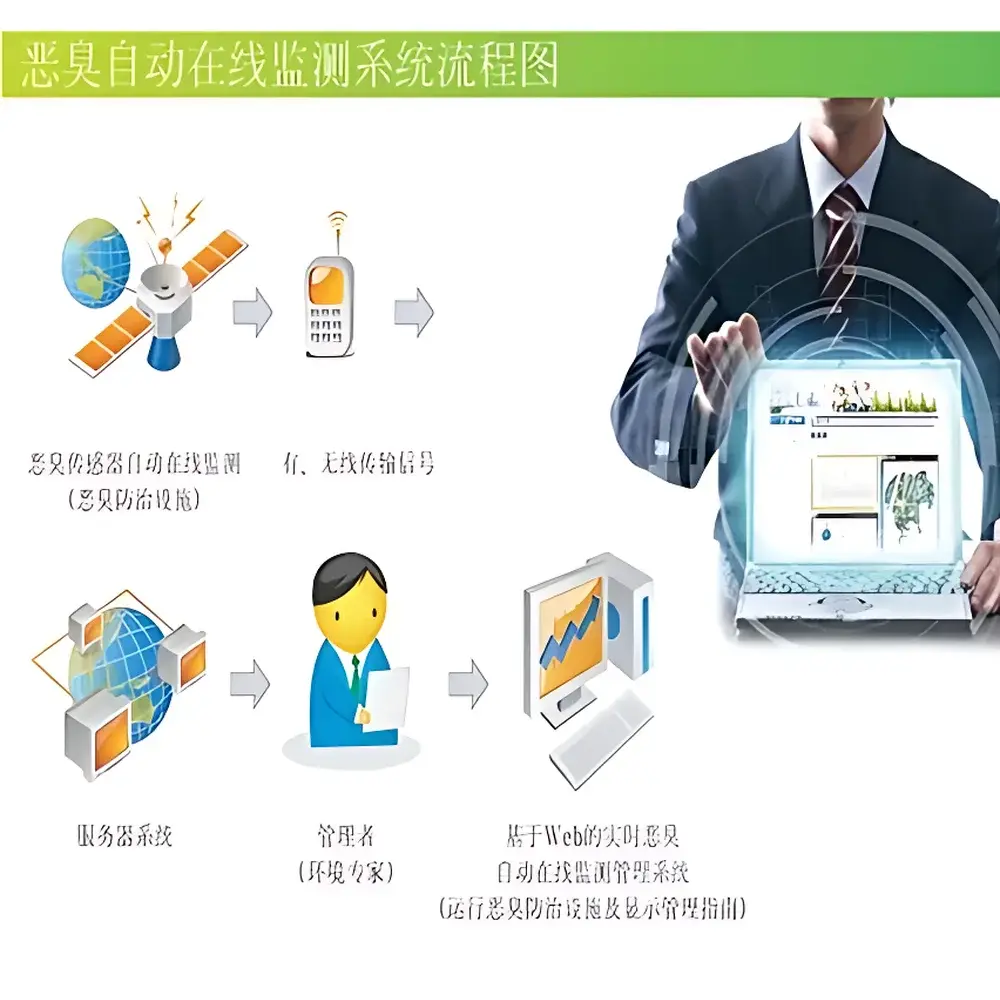
| Connectivity | Wired (RS-485/Ethernet) and Wireless (LTE/LoRaWAN) Transmission Options |
Overview
The SLC-ON Series Online Odor Monitoring System is an engineered solution for continuous, real-time quantification of odor emissions in ambient air and industrial exhaust streams. Designed in accordance with international odor assessment frameworks—including the European Standard EN 13725 (Determination of Odour Concentration by Dynamic Olfactometry) and ISO 16000-28 (Indoor Air — Determination of Odour Emissions from Building Products)—the system delivers trace-level detection of volatile organic compounds (VOCs), sulfur-containing species (e.g., H₂S, mercaptans), nitrogenous compounds (e.g., ammonia, amines), and other odor-active substances. Unlike laboratory olfactometry, which relies on human panelists, the SLC-ON employs a multi-sensor array architecture combining metal oxide semiconductor (MOS), electrochemical (EC), and photoionization detector (PID) technologies to generate objective, reproducible metrics: Odor Units (OU/m³), Odor Intensity (OI), and compound-specific concentration profiles. Its operational principle centers on calibrated sensor response modeling, where each gas contributes a weighted signal to a composite odor index—validated against reference dilution olfactometry data during factory calibration.
Key Features
- 24/7 unattended operation with automatic self-diagnostic routines and pump status monitoring
- Vibrating armature sampling pump rated for >20,000 hours MTBF, ensuring stable airflow under variable pressure and particulate load conditions
- Modular sensor bay accommodating up to nine interchangeable sensing elements—pre-configured for H₂S, NH₃, VOCs, NO₂, SO₂, CH₃SH, trimethylamine, and total reduced sulfur (TRS)
- Integrated temperature-regulated sensor chamber (±0.5 °C stability) to minimize thermal drift and improve long-term repeatability
- Onboard data logging with 1 GB SD card supporting ≥12 months of minute-resolution records (timestamped, GPS-tagged when paired with AWS)
- Auto-recovery function: resumes measurement sequence and re-establishes network connection within 60 seconds after power interruption
- Dual communication interface: RS-485/Ethernet for local SCADA integration; optional LTE Cat-M1 or LoRaWAN for remote telemetry in low-infrastructure zones
Sample Compatibility & Compliance
The SLC-ON is validated for use in heterogeneous gaseous matrices typical of livestock facilities, wastewater treatment plants, composting sites, rendering operations, and municipal landfills. It meets IP65 ingress protection requirements and operates reliably across −20 °C to +50 °C ambient temperatures and 10–95% RH (non-condensing). Sensor cross-sensitivity profiles are documented per IUPAC guidelines and corrected via embedded multivariate regression algorithms. The system supports audit-ready data integrity through time-stamped event logs, sensor calibration history tracking, and firmware version control—all compliant with GLP documentation standards. When deployed with optional AWS (Automatic Weather Station), it enables spatial interpolation of odor plume dispersion using wind speed/direction, temperature inversion layer analysis, and humidity-corrected dilution modeling.
Software & Data Management
Data acquisition and visualization are managed via the web-based SLC-Cloud platform (accessible via secure HTTPS), offering role-based user access, configurable alarm thresholds (OU > 30, OI > 3.5), and automated report generation in PDF/CSV formats. Raw sensor outputs undergo real-time baseline correction, humidity compensation, and outlier rejection using robust statistical filtering (median absolute deviation). All data transfers comply with TLS 1.2 encryption, and system authentication follows OAuth 2.0 protocols. For regulated environments, optional FDA 21 CFR Part 11 compliance packages include electronic signatures, audit trails, and immutable record archiving—fully traceable to individual sensor readings and calibration events.
Applications
- Regulatory compliance monitoring at permitted emission sources under national odor ordinances (e.g., Korea’s Act on the Control of Malodorous Substances, EU Industrial Emissions Directive)
- Source identification and temporal trend analysis in odor complaint investigations
- Performance verification of biofilters, chemical scrubbers, and activated carbon systems
- Long-term environmental impact assessment near sensitive receptors (schools, residential zones)
- Research-grade odor mapping in conjunction with meteorological data and GIS-based dispersion modeling (e.g., CALPUFF, AERMOD)
FAQ
What calibration standards are used for sensor validation?
Factory calibration is performed using certified gas mixtures traceable to NIST SRMs, with secondary validation against dynamic olfactometer reference measurements per EN 13725.
Can the system operate without grid power?
Yes—integrated solar charge controller supports 12 V DC input; compatible with 40–100 W panels and deep-cycle LiFePO₄ battery banks for off-grid deployment.
Is remote firmware update supported?
Yes—over-the-air (OTA) updates are delivered via encrypted HTTP(S) channels with checksum verification and rollback capability.
How is sensor drift compensated over time?
Automated zero-point adjustment occurs during scheduled idle cycles; periodic span checks (user-initiated or time-triggered) maintain accuracy within ±3% RSD over 6-month intervals.
Does the system meet cybersecurity requirements for industrial networks?
It implements IEEE 802.1X port-based authentication, firewall rulesets, and disabled default credentials—certified to IEC 62443-3-3 SL2 baseline security profile.
Related Products







