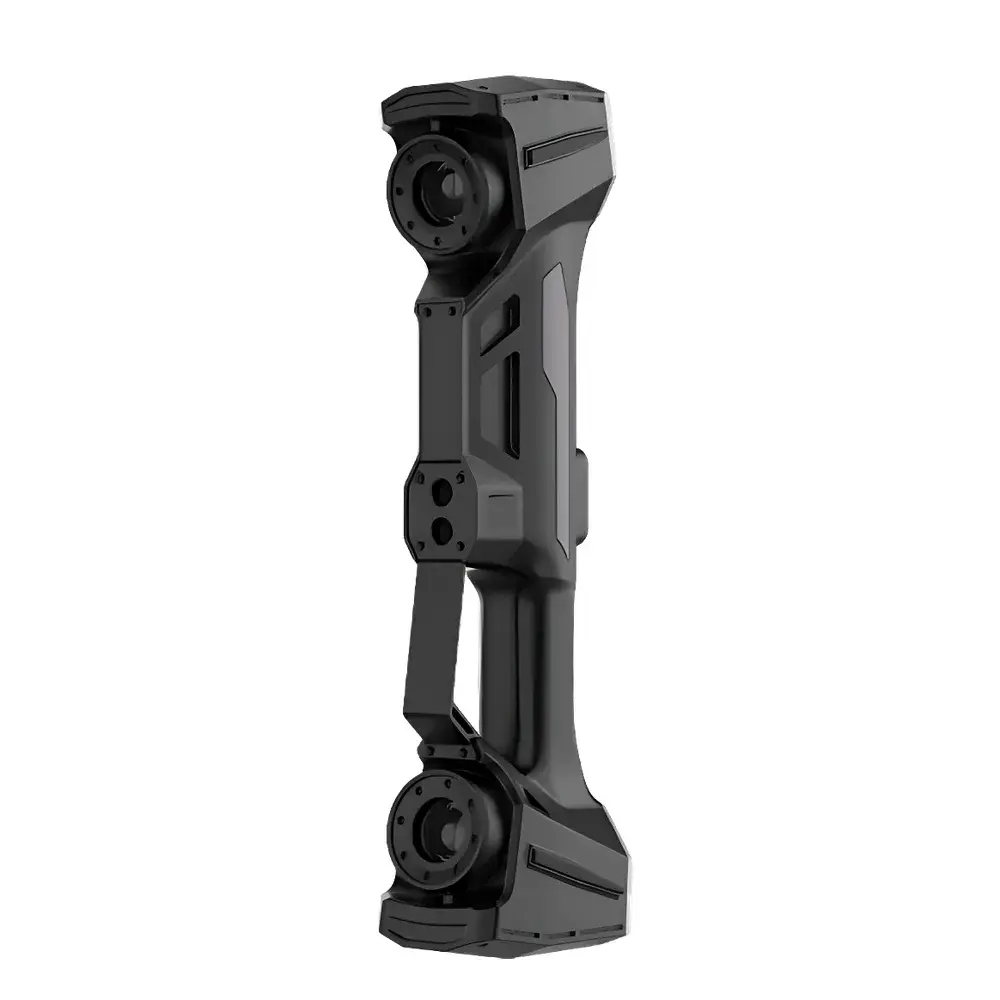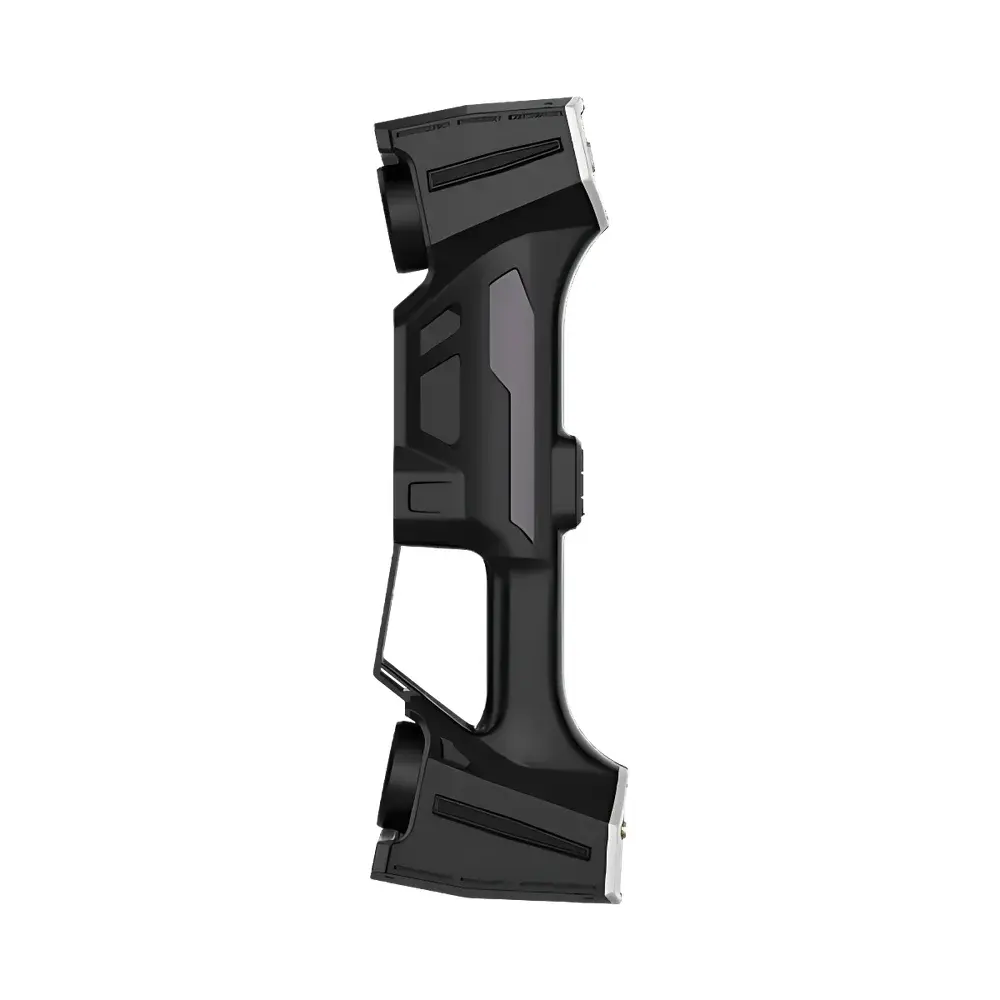
Smart Eye Pro Non-Contact Eye Tracking System
| Brand | Smart Eye |
|---|---|
| Origin | Sweden |
| Model | Smart Eye Pro |
| Measurement Principle | Pupil-Corneal Reflection (PCCR) |
| Camera Support | 2–8 synchronized cameras |
| Subject Distance Range | 30–300 cm |
| Field of View | Up to 360° horizontal |
| Output Interfaces | TCP/IP, UDP, CAN (optional), ASCII text files |
| Compliance | CE, FCC, RoHS |
Overview
The Smart Eye Pro Non-Contact Eye Tracking System is a high-fidelity, research-grade eye tracking platform engineered for precise, real-time measurement of oculomotor behavior in naturalistic and controlled environments. Built upon the established pupil-corneal reflection (PCCR) principle, the system captures infrared-reflected features from the cornea and pupil center to compute gaze vector orientation with sub-degree angular accuracy. Unlike invasive or head-mounted alternatives, Smart Eye Pro operates entirely without physical contact—enabling unobtrusive monitoring across extended sessions while preserving ecological validity. Its modular architecture supports scalable camera configurations (2–8 synchronized units), allowing flexible adaptation to diverse experimental geometries—from desktop-based cognitive studies to vehicle cockpit integration, immersive VR/AR setups, and large-scale behavioral labs. The system delivers synchronized, time-stamped data streams including gaze point (x,y,z in world coordinates), head pose (6-DOF rotation and translation), blink detection, eyelid aperture, and dynamic pupil diameter—all sampled at configurable rates up to 120 Hz per camera node.
Key Features
- Non-contact, remote operation over distances ranging from 30 cm to 300 cm—eliminating constraints on subject mobility or comfort.
- Multi-camera synchronization engine enabling seamless coverage of wide-angle or panoramic fields of view (up to 360° horizontal), critical for driving simulation, spatial navigation, and multi-display interaction studies.
- Dual-output architecture supporting both low-latency streaming (TCP/UDP) for real-time integration with stimulus presentation software (e.g., MATLAB PsychToolbox, Unity, Unreal Engine) and high-integrity logging (ASCII text files) for post-hoc analysis and audit compliance.
- Optional CAN bus interface for direct integration into automotive HMI validation workflows, meeting OEM requirements for in-vehicle driver monitoring system (DMS) development.
- Robust calibration-free operation under moderate lighting variation; adaptive algorithms compensate for minor head movements without requiring re-calibration during session.
- Embedded real-time processing unit minimizes host CPU load and ensures deterministic timing—essential for event-related potential (ERP) and reaction-time-critical paradigms.
Sample Compatibility & Compliance
The Smart Eye Pro accommodates a broad demographic range—including children, elderly participants, and individuals wearing prescription eyeglasses or contact lenses—without performance degradation. It maintains stable tracking across varying skin tones and iris pigmentation due to optimized near-infrared illumination and spectral filtering. From a regulatory standpoint, the system complies with CE marking (EMC Directive 2014/30/EU and Low Voltage Directive 2014/35/EU), FCC Part 15 Class B emissions limits, and RoHS 2011/65/EU material restrictions. While not a medical device, its data output architecture supports alignment with GLP-compliant documentation practices, including timestamped metadata, operator logs, and version-tracked configuration files—facilitating traceability in academic, industrial R&D, and human factors certification contexts.
Software & Data Management
Smart Eye Pro is operated via Smart Eye Lab, a cross-platform (Windows/macOS) application providing intuitive calibration workflows, live gaze visualization, and session management. Raw data exports adhere to open, documented formats (CSV, HDF5), ensuring compatibility with Python (NumPy, Pandas), MATLAB, R, and industry-standard analysis pipelines. The SDK supports C++, C#, Python, and LabVIEW bindings, enabling custom integration with third-party acquisition systems. For regulated environments, optional audit trail modules log all user actions, parameter changes, and calibration events—supporting alignment with FDA 21 CFR Part 11 principles where electronic records require attribution, integrity, and retention controls. Data encryption at rest and role-based access control are available through enterprise deployment packages.
Applications
- Human Factors & Ergonomics: Quantifying visual attention distribution in cockpit, control room, and surgical display interfaces.
- Cognitive Neuroscience: Investigating attentional bias, visual search strategies, and saccadic latency in clinical and healthy populations.
- Automotive ADAS Development: Validating driver distraction thresholds, gaze contingency in Level 2+ automation, and DMS false-positive/negative rates per ISO 15007-1 and NHTSA guidelines.
- Immersive Technology Research: Mapping fixation density, dwell time, and scanpath dynamics within VR/AR environments for UX optimization.
- Marketing & Consumer Behavior: Measuring implicit attention to packaging, shelf layout, and digital advertising under realistic viewing conditions.
- Educational Psychology: Analyzing reading patterns, multimodal learning engagement, and instructor gaze modeling in classroom simulations.
FAQ
What is the minimum and maximum working distance for reliable tracking?
The system maintains robust tracking performance between 30 cm and 300 cm from the subject’s eyes, with optimal accuracy typically achieved between 60–150 cm depending on camera resolution and lens configuration.
Does Smart Eye Pro support real-time integration with EEG or fNIRS systems?
Yes—via TTL pulse synchronization, network time protocol (NTP)-aligned timestamps, and shared clock referencing through the SDK, enabling millisecond-level temporal alignment with neurophysiological acquisition platforms.
Is calibration required before each session?
A single 5-point or 9-point calibration is recommended per participant per session; however, the system’s head pose estimation and adaptive PCCR modeling allow for sustained tracking across moderate movement without recalibration.
Can the system operate in ambient lighting conditions?
It is designed for operation under typical indoor lighting (300–1000 lux); strong direct sunlight or rapidly fluctuating illumination may reduce signal-to-noise ratio and should be mitigated via environmental control or optional IR-filtering accessories.
What level of technical support and warranty is provided?
Smart Eye offers a standard 24-month hardware warranty, remote diagnostics, and access to certified application engineers for protocol design, validation support, and methodological consultation—available globally through authorized partners.